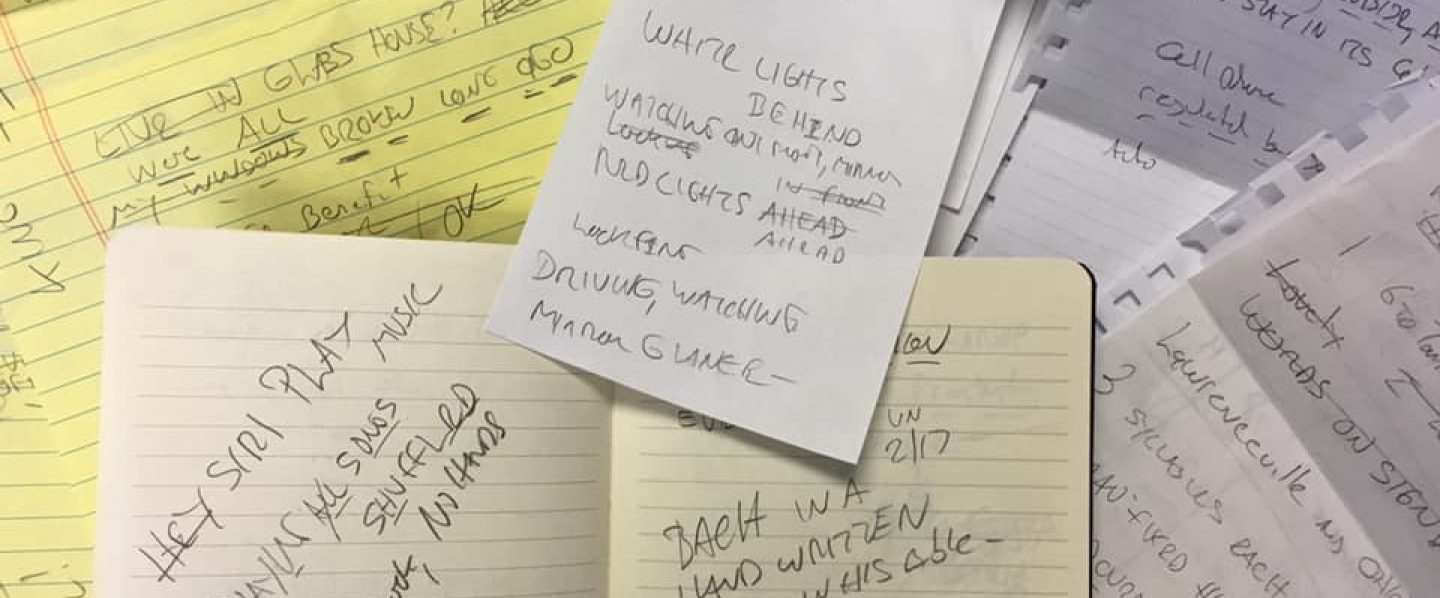
structure no longer concerned with the purpose for which it was designed
Adapted from:
The last mile or so he had been concentrating on suits and the government and decided he no longer much believed in either.
Suits obviously had helped to promote bad government and he was as guilty as anyone for wearing them so steadfastly for twenty years.
Of late he had become frightened of the government for the first time in his life, the way the structure of democracy had begun debasing people rather than enlivening them in their mutual concern.
The structure was no longer concerned with the purpose for which it was designed, and a small part of the cause, Nordstrom thought, was probably that all politicians and bureaucrats wore suits.
From the Man Who Gave Up his Name as published in Legends of the Fall by Jim Harrison, (Grove Press Collection,: New York, 2016).
Suits.
Congress.
The Courts.
The Executive Branch.
The structure is no longer concerned with the purpose for which it was designed, and a small part of the cause, is probably that all politicians and bureaucrats wear the same suit.
send these, the homeless, tempest-tost to me, lift my lamp beside the door
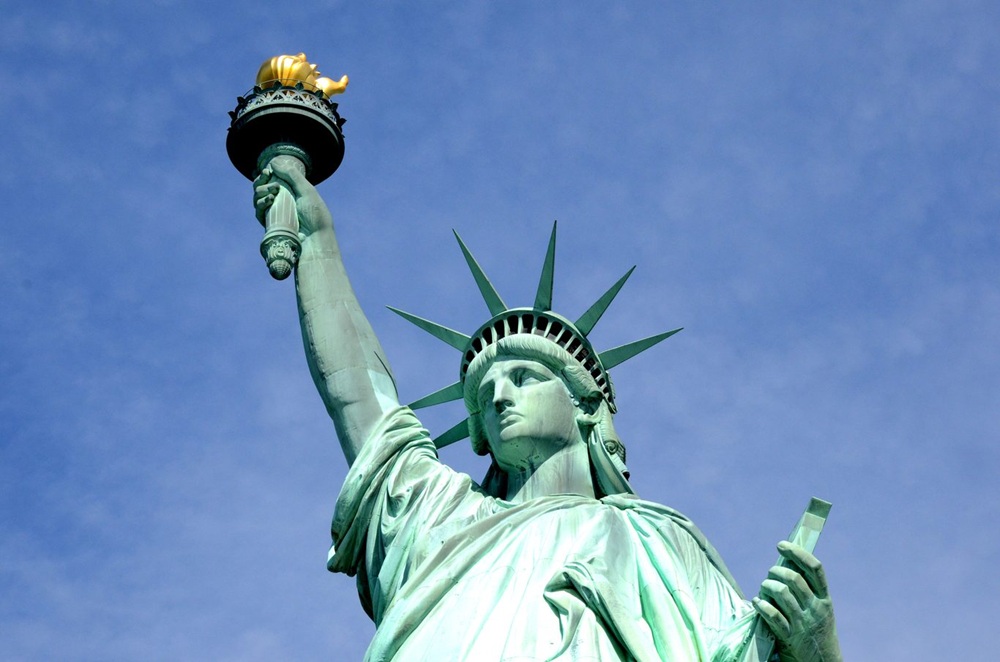
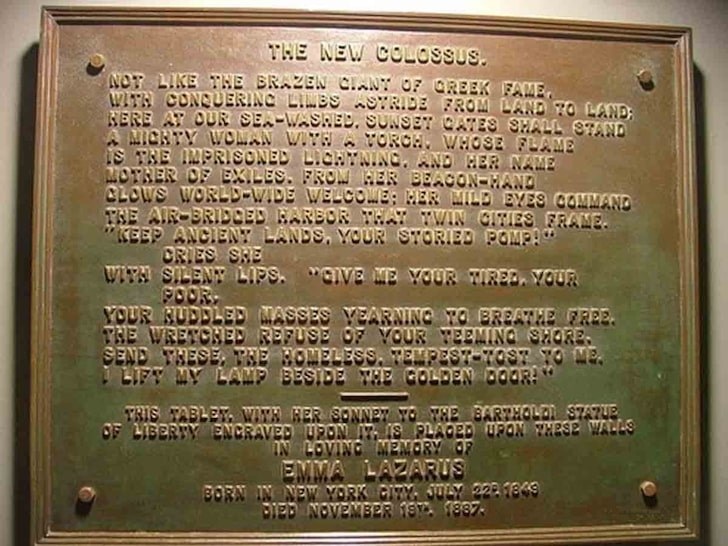
Not like the brazen giant of Greek fame, With conquering limbs astride from land to land; Here at our sea-washed, sunset gates shall stand A mighty woman with a torch, whose flame Is the imprisoned lightning, and her name Mother of Exiles. From her beacon-hand Glows world-wide welcome; her mild eyes command The air-bridged harbor that twin cities frame. “Keep, ancient lands, your storied pomp!” cries she With silent lips. “Give me your tired, your poor, Your huddled masses yearning to breathe free, The wretched refuse of your teeming shore. Send these, the homeless, tempest-tost to me, I lift my lamp beside the golden door!”
“The New Colossus” is a sonnet by American poet Emma Lazarus written in 1883 to help raise money for the construction of a pedestal for the Statue of Liberty. In 1903, the poem was cast onto a bronze plaque and mounted inside the pedestal’s lower level.
It is fitting that the role America picked for itself as the place that the tired, the poor, the huddled masses yearning to breathe free found world wide welcome was reaffirmed by the United States Supreme Court so close to the the 250th anniversary of the Declaration of Independence.
I guess I should be happy.
Now, don’t get me wrong, I am happy that this victory in the courts took place.
But I am angry that it ever became an issue.
And I am very angry that we had to wait so long for the United States Supreme Court to figure this one out.
That we had to wait so long for the United States Supreme Court to act like the United States Supreme Court.
And do I think we should thank you to the United States Supreme Court for reaffirming this decision?
In the back of my mind is the episode of the tv show, M*A*S*H.
Late in its run the show descended into a showcase of these people playing practical jokes on each other.
In the show titled, April Fools, Colonel Potter, commanding the hospital, tells the staff they have gone too far and now another Colonel from the Inspector General’s office is coming to inspect the unit and he tells the staff to stop with the jokes.
This Inspector Colonel comes and drives everyone nuts until they can’t resist and pull a stunt that cause this feller to have a heart attack and die and then those Doctors realize they have gone to far.
The twist is the Inspector Colonel was a friend of Potters of they knew if they pushed the staff too far, they would finally pull some stunt and the plan was to fake the heart attack and catch them all.
No one knows this watching the show and the Inspector Colonel spends his time getting under the skin of the other doctors.
And how does it do this?
By acting a like a Colonel in the US Army and holding the other doctors to that standard.
The doctors in MASH were famous for being the best doctors ever and the lived on the that the whole show.
So when the Inspector Colonel observes the operating room, Dr. Pierce informs him that he, Pierce, has just saved the wounded soldiers life and maybe the Colonel should appreciate that.
The Inspector Colonel stares at him for a moment then says: “Oh, I am so sorry. I should give the good doctors a round of applause for doing their jobs. Hear, hear, Doctors. Hear, hear.“
A long discourse to get to a point but there it is.
Am I happy over the Birth Right Citizenship decision?
YOU BET!
Do I think the court made the right call?
YOU BET!
Do I appreciate what the court did, standing up to that current man in office and do I feel I should thank the court?
Oh, I am so sorry.
I should give the good justice’s a round of applause for doing their jobs.
loved true things but knew it could be a very dangerous mistress
It took Doc longer to go places than other people.
He didn’t drive fast and he stopped and ate hamburgers very often.
Driving up to Lighthouse Avenue he waved at a dog that looked around and smiled at him.
In Monterey before he even started, he felt hungry and stopped at Herman’s for a hamburger and beer.
While he ate his sandwich and sipped his beer, a bit of conversation came back to him.
Blaisdell, the poet, had said to him, “You love beer so much. I’ll bet some day you’ll go in and order a beer milk shake.”
It was a simple piece of foolery but it had bothered Doc ever since.
He wondered what a beer milk shake would taste like. The idea gagged him but he couldn’t let it alone. It cropped up every time he had a glass of beer.
Would it curdle the milk? Would you add sugar?
It was like a shrimp ice cream.
Once the thing got into your head you couldn’t forget it.
He finished his sandwich and paid Herman.
He purposely didn’t look at the milk shake machines lined up so shiny against the back wall.
If a man ordered a beer milk shake, he thought, he’d better do it in a town where he wasn’t known.
But then, a man with a beard, ordering a beer milk shake in a town where he wasn’t known—they might call the police. A man with a beard was always a little suspect anyway.
You couldn’t say you wore a beard because you liked a beard.
People didn’t like you for telling the truth.
You had to say you had a scar so you couldn’t shave.
Once when Doc was at the University of Chicago he had love trouble and he had worked too hard. He thought it would be nice to take a very long walk.
He put on a little knapsack and he walked through Indiana and Kentucky and North Carolina and Georgia clear to Florida.
He walked among farmers and mountain people, among the swamp people and fishermen. And everywhere people asked him why he was walking through the country.
Because he loved true things he tried to explain.
He said he was nervous and besides he wanted to see the country, smell the ground and look at grass and birds and trees, to savor the country, and there was no other way to do it save on foot.
And people didn’t like him for telling the truth.
They scowled, or shook and tapped their heads, they laughed as though they knew it was a lie and they appreciated a liar.
And some, afraid for their daughters or their pigs, told him to move on, to get going, just not to stop near their place if he knew what was good for him.
And so he stopped trying to tell the truth.
He said he was doing it on a bet—that he stood to win a hundred dollars.
Everyone liked him then and believed him.
They asked him in to dinner and gave him a bed and they put lunches up for him and wished him good luck and thought he was a hell of a fine fellow.
Doc still loved true things but he knew it was not a general love and it could be a very dangerous mistress.
From Cannery Row by John Steinbeck (Viking Press: New York, 1945 – There is a note in the frontpiece that states: THIS EDITION IS PRODUCED IN FULL COMPLIANCE WITH ALL WAR PRODUCTION BOARD CONSERVATION ORDERS).
People didn’t like him for telling the truth.
And so he stopped trying to tell the truth.
Doc still loved true things but he knew it was not a general love and it could be a very dangerous mistress.
If a man ordered a beer milk shake, he thought, he’d better do it in a town where he wasn’t known.
Way back when I lived through the summer of Mark Fydrich.
IYKYK.
It was the summer of 1976.
Also known as the bicentennial.
A local guy from Grand Rapids who had graduated from my Mom’s old high school, was President of the United States.
And it was the summer of Mark Fydrich.
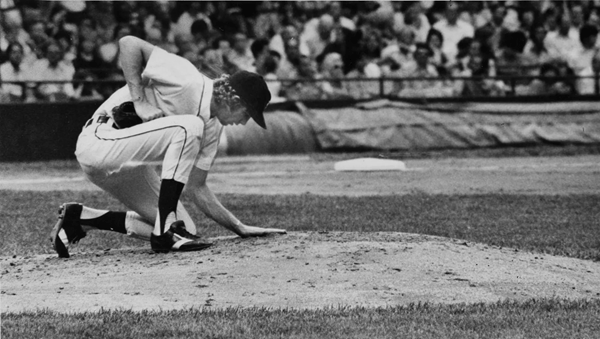
He was this kid who pitched for the Detroit Tigers who would have ordered a beer milkshake regardless of where he was if that was what he wanted.
He pitched and just acted like he would have if he had been playing catch on a beach or in Tiger Stadium and because he won, the crowd fell in love with him.
He ran to mound and got down on his hands and knees and smoothed out the dirt.
He ran around and thanked everyone for everything.
He talked to himself constantly on the mound and since no one else was around to be talked too, it was reported in the papers that he must be talking to the ball.
He would say things that he didn’t like using a ball that had been hit.
He wanted that ball to go back in the ball bag and goof around with the other balls and loose the desire to be hit.
Back then, growing up in Grand Rapids, Michigan, my Dad subscribed to the Detroit Free Press.
Though the paper was written and printed in Detroit, 150 miles and 3 hours away by car, it was somehow written and printed and driven to Grand Rapids where our local paperboy had it on our front porch by 7 A.M.
I fail to see how the digital age has improved on this.
Dad’s routine was to get up, start the coffee then open the front door and take a deep breath of outside air, regardless of season.
He said it cleansed his lungs and got him ready for his day.
That was the extent of his exercise regime.
Then he would step out on the porch and pick up the paper.
He would get his coffee and go through the paper and who ever else was up would wait for him to finish and it wasn’t until he announced, “here you go”, did we have a shot at the sports section.
This one summer morning it was my brother Pete who got the paper first.
Most likely Dad had already announced that Fidrych won again last night but we needed details.
I was 16 and drinking coffee by that time so I would have poured a cup and maybe I grabbed the front section of the Free Press while I waited for the Sports Section.
I always suspected Pete of reading extra slow with me sitting there, including going over ever line of the box scores so I made a big deal of being interested in the front page and the editorials.
We were sitting next to each other on high stools along the kitchen counter.
Pete finally sat back and folder the sports section back together and slid it over to me.
“It say’s,” said Pete slowly, looking at me, “that after a game, Fidrych can’t wait for his favorite post game meal.”
I looked at him and waited, a little perturbed that he was telling me something I would soon read for myself, but still listening and looking at him.
Dad, looking over back sections of the paper with his coffee, paused and looked over from where he sat at the table.
“It say’s, said Pete slowly, looking at me, “that his favorite post game meal is a bottle of ice cold beer and a glass of ice cold milk.”
For some reason that statement hit me, Pete and Dad just the right way that morning and we all burst out laughing.
Milk and Beer!
Only that Fidrych.
It was one of those summer mornings where nothing was wrong and everything was funny both between ourselves and the whole world.
Miss mornings like that.
It was just normal, the way it was the day before and the next day.
They don’t seem to happen anymore.
Is it me?
Is it this crummy news cycle?
Maybe I need to order a beer and some ice cold milk.
If a man ordered a beer milk shake, I thought, he’d better do it in a town where he wasn’t known.
Doc still loved true things but he knew it was not a general love and it could be a very dangerous mistress.
older people know that they are not going to become young again
Adapted from the line, “Young people seem not to know that they are going to get old, but older people know that they are not going to become young again.”
From Off to the side by Jim Harrison (Atlantic Monthly Press: New York,2002).
Then a few lines further down the page, Mr. Harrison warns, “There is a specific melancholy to hardship that accrues later as a collection of gestures, glances, and dire events.”
Holding my grandson, Ian, I was thinking of that bit of writing.
I was thinking that this little guy has no idea he is going to get old.
Using the word “old” as a state of being, as in ‘old people old’.
Ian will get older, we all know that, but Ian being OLD?
Then, there is me in that picture.
Certainly not young.
And very much assured that I am not going to become young again.
But then again, I live in a place where the median age is 64 so I am middle aged and I do see a lot of people who are both old and much older than I am.
So I feel young at least, young enough and as for knowing I am not going to become young again?
I am sure that wouldn’t go through all of that getting old all over again for anything.
how stands the union? current state of crystal clear blue water is proof
Way back in 1936, Stephen Vincent Benét wrote a short story titled, The Devil and Daniel Webster that was first published in The Saturday Evening Post on October 24th of that year.
The short story opens with:
Yes, Dan’l Webster’s dead — or, at least, they buried him.
But every time there’s a thunder storm around Marshfield, they say you can hear his rolling voice in the hollows of the sky.
And they say that if you go to his grave and speak loud and clear, “Dan’l Webster — Dan’l Webster!” the ground ‘ll begin to shiver and the trees begin to shake.
And after a while you’ll hear a deep voice saying, “Neighbour, how stands the Union?”
Then you better answer the Union stands as she stood, rock-bottomed and copper sheathed, one and indivisible, or he’s liable to rear right out of the ground.
At least, that’s what I was told when I was a youngster.
Today if Dan’l called out, “Neighbour, how stands the Union?” I am afraid that the answer would not be that the Union stands as she stood, rock-bottomed and copper sheathed, one and indivisible.
If you gave the current answer, Old Dan’l would not rear right out of the ground, but dig deeper in the ground and pull his gravestone in right after him.
Dig down deep and weep I would think.
According to the Guardian, the answer to the question, Neighbour, how stands the Union? is:
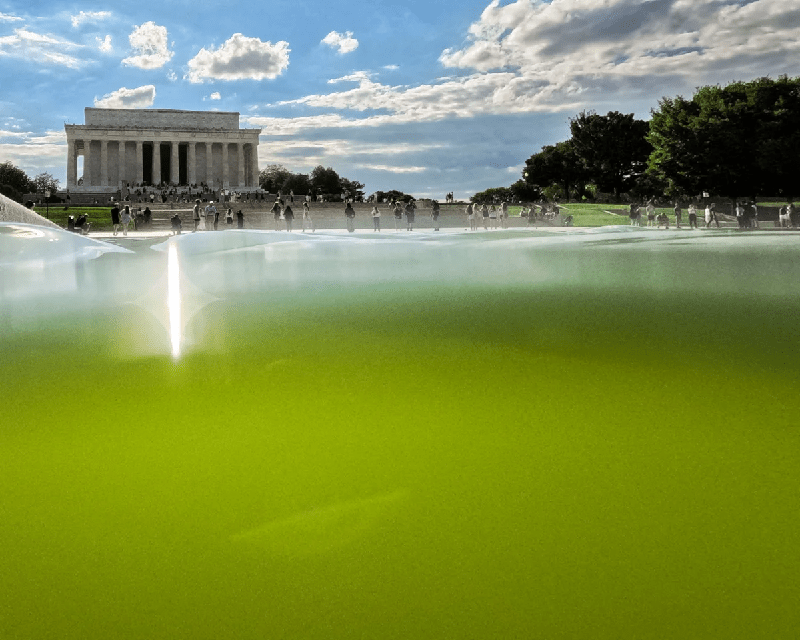
The state of the Lincoln Memorial reflecting pool rehabilitation effort has become the primary crisis affecting the United States. That is, if you ask the current administration. Limiting the right to vote is running a close second in the World Cup of Political Football, but it’s the reflecting pool that is attracting the most fervent attention. As emergencies go, it’s as thrilling as watching a really large body of still water in the middle of a park. The paint is peeling and it’s full of green algae. (Forget crumbling democracy: America’s biggest crisis is a stagnant, murky pool by Dave Schilling.)
I thought can that be true?
I am not so sure that the state of the Lincoln Memorial reflecting pool rehabilitation effort has become the primary crisis affecting the United States.
At least I hope not but I deep down I think its just a case of that current man in office doing his rage-bait shtick while his minions make off with the contents of the US Treasury.
But what if I said this?
The state of the Lincoln Memorial reflecting pool rehabilitation effort has become the perfect metaphor for the political crisis affecting the United States.
The online dictionary defines metaphor as vivid imagery and explains abstract ideas by transferring the qualities of a familiar object to something else, without using comparative words.
And when you read that the New York Times quotes, Katie Martin, a spokeswoman for the Interior Department, as saying about the reflecting pool that, “The current state of the crystal clear blue water is proof.” *
An example of vivid imagery that explains an abstract idea by transferring the qualities of a familiar object to something else, without using comparative words would be that the Lincoln Memorial reflecting pool rehabilitation effort explains the political crisis affecting the United States and you can take the current state of the crystal clear blue water as proof.
I think as my 8th grade Algebra teacher, Mr. Papke would say, Q E D.