the sea answers all questions and always same way and saying: so soon?
The sound of the sea is the most time-effacing sound there is.
The centuries reroll in a cloud and the earth becomes green again when you listen, with eyes shut, to the sea —a young green time when the water and the land were just getting acquainted and had known each other for only a few billion years and the mollusks were just beginning to dip and creep in the shallows; and now man the invertebrate, under his ribbed umbrella, anoints himself with oil and pulls on his Polaroid glasses to stop the glare and stretches out his long brown body at ease upon a towel on the warm sand and listens.
The sea answers all questions, and always in the same way;
for when you read in the papers the interminable discussions
and the bickering
and the prognostications
and the turmoil,
the disagreements
and the fateful decisions
and agreements
and the plans
and the programs
and the threats
and the counter threats,
then you close your eyes and the sea dispatches one more big roller in the unbroken line since the beginning of the world and it combs and breaks and returns foaming and saying: “So soon?”
From the essay, On a Florida Key by EB White as published in The Essays of E.B. White by E.B. White ( Harper Colophon Book: New York, 1979).
sea-wash never ends the sea-wash repeats, repeats that all the sea knows?
The sea-wash never ends. The sea-wash repeats, repeats. Only old songs? Is that all the sea knows? Only the old strong songs? Is that all? The sea-wash repeats, repeats.
Sea-Wash by Carl Sandburg as published under Mist Forms in Smoke and Steel in The Complete Poems of Carl Sandburg (Harcourt, Brace: New York, 1970).
I am reminded of the Bible verses in the Book of Jeremiah 5:22:
I made the sand a boundary for the sea, an everlasting barrier it cannot cross.
The waves may roll, but they cannot prevail; they may roar, but they cannot cross it.
Only old songs? Is that all the sea knows? Only the old strong songs? Is that all? The sea-wash repeats, repeats.
they were forced to leave last year account of Hitler’s feelings about things
Stay with me while I connect the dots for today’s Haiku.
Starting with the Thurber Cartoon, it was first published in the New Yorker Magazine on October 13, 1934, 92 years ago today.
If you look at the two page spread of the magazine that you would have seen back in 1934, you will find a short profile, titled The Big Man.
It is a short piece about Director Otto Klemperer.
According to Wikipedia, Otto Nossan Klemperer (14 May 1885 – 6 July 1973) was a German composer and conductor, originally based in Germany, and then the United States, Hungary and finally, Great Britain. He began his career as an opera conductor, but he was later better known as a conductor of symphonic music.
A protégé of the composer and conductor Gustav Mahler, from 1907 Klemperer was appointed to a succession of increasingly senior conductorships in opera houses in and around Germany. Between 1927 and 1931 he was director of the Kroll Opera in Berlin, where he presented new works and avant-garde productions of classics. He was from a Jewish family, and the rise of the Nazis caused him to leave Germany in 1933. Shortly afterwards he was appointed chief conductor of the Los Angeles Philharmonic, and guest-conducted other American orchestras, including the San Francisco Symphony, the New York Philharmonic and later the Pittsburgh Symphony, which he reorganised as a permanent ensemble.
What struck me in reading through that short profile was the short, common place sentence, “They were forced to leave Germany last year, Mr. Klemperer giving up the directorship of the Berlin State Opera on account of Hitler’s feelings about things.”
This was 1934.
Hitler had come to power in 1932.
Within 2 years, folks felt forced to leave on account of … Hitler’s feelings about things.
I would think that it would be hard to grasp that things took place and decisions were made and lives disrupted … on account of one man’s feelings about things.
I would think that had I not lived in the United States of America and experienced that last 10 years first hand.
In commenting on the self proclaimed ‘Energy Ceasefire” between Russia and Ukraine, that man in office said, “They agreed. You know why? Because I said, ‘You agree’ – that’s why. They agreed because I said they agreed, and that thing has to get settled.”
I guess Russia and Ukraine “agreed” on account of the feelings of that man currently in office.
The home of a member was Congress was ransacked yesterday.
Why?
That man currently in office said, “I’ve always found her to be totally crooked, personally, but that has nothing to do with me. I think she’s a terrible person.”
I guess on account of his feelings.
Come to think of it, I have a constant ringing in my ears as well.
PS: Available classic music recordings abound with the name Otto Klemperer, Directing on the label. But the family maybe more remembered for Mr. Klemperer’s son, Werner. In the profile, Mr. Klemperer refers to his 14 year old son as being interested only “in football and the cinema, particularly Mickey Mouse.” Werner would go into acting and played the part of Colonel Klink in the TV show, Hogan’s Hero’s. Somewhat goody considering the family left Germany “on account of Hitler’s feelings.”
our great inventions corkscrew and toilet paper real value to man
From the book, The etiquette of freedom : Gary Snyder, Jim Harrison, and The practice of the wild by Gary Snyder and Jim Harrison (Counterpoint: Berkeley, CA, 2010).
A documentary was made of the two poets, Gary Snyder and Jim Harrison, standing in a field, talking titled The Practice of the Wild and this book, The etiquette of freedom, is the transcript of their conversation plus some extra thoughts and commentary about the thoughts expressed by these poets.
As can be imagined, their conversation was all over the place and full of deep thoughts as poets standing in fields are filled with deep thoughts of the type that deep thinking poets think when standing in a field talking with another deep thinking poet.
Lots of nuggets to dig up here but one that caught my eye this morning was this short exchange.
Gary Snyder : Captain Cook, sailing around the Pacific in order to be the very first person out of Western culture to contact a lot of different island people, said the one thing that they really got interested in was nails. It was a really good trade item.
And Ishi says that the best thing the white man invented was glue, because it makes it so much easier to finish an arrow.
Jim Harrison: Maybe our great inventions are the corkscrew and toilet paper, more so than space stations — of real value to man.
On a rainy Saturday Morning in the Low Country of South Carolina, elevation 5 feet above sea level, I find the statement hard to argue with.
Nails?
Toilet Paper?
Corkscrew?
Things of real value to man.
Maybe our great inventions!
Because its fall and thinking of football, I remember once back when I was a student in Ann Arbor.
I was with friends on what TV would call a gorgeous, sunny, fall afternoon in the State of Michigan, gathered together with 100,000 other people to watch a football game.
Down here in the south, fans still talk about ladies and their ‘game day dress’ but that’s a southern thing and may have to do with what Mark Twain was thinking about when he said sunny fall days are just June days, tuned down.
Fall in Michigan means gray rainy cold days.
Days not fit for a dress but for cold weather clothes
But back then when I was in school, it wasn’t unusual to see fans who still dressed up to go to a game in Ann Arbor..
And understand this was in the day before ‘luxury boxes’ so no matter what, if you wanted to go to a football game in Ann Arbor, you couldn’t sit anywhere else but among the plebians in the stands.
Several rows in front of me and my friends was a party of shall we say, affluent folks.
As an aside, living in a resort town, I have made the acquaintance of some law enforcement officers and am learning some of the code they use to describe the people they have to deal with in this vacation paradise. One code is EMF. It stands for Entitled M … F… (you can fill in the blanks), but I digress.
I won’t say that these folks were EMF’s as they went along with the crowd and made no special demands or anything but they were all dressed, tastefully, more for church than a football game.
They also had brought along a wicker hamper of goodies for later in the game and we did wonder how that got past the security guards so maybe they were EMFs.
As it comes to me, it seems like they had a ticket for the hamper and it sat on the bench in the middle of this group.
The afternoon wore on and as halftime approached it was time to open the hamper.
Not saying the game was boring or anything but the focus of most of us in that section of the stadium was, what did people like this, who came dressed in church clothes to a Michigan football game and bought a ticket for their wicker hamper, would pack for lunch in that wicker hamper.
One feller seemed to be the host of this outing and he took charge of the hamper.
Out came plates and napkins and boxed sandwiches and other finger foods.
The plates were passed out.
The food was offered up.
Then wine glasses came out of the hamper and passed up and down the row.
And lastly, a bottle of wine, which the host of this outing held up for all to see.
This feller then reached back in the hamper and fumbled around.
He turned and hunched over to look down into the hamper and dug and dug and fumbled, a level of frustration building up.
He sat back up and looked at the bottle of wine.
He took a breath and stood up.
He was wearing a blue blazer and light blue shirt and a striped maize and blue tie and pressed khakis.
He stretched out his arms wide in supplication and yelled to the crowd around him, “Does anybody have a corkscrew?”
Maybe our great inventions are the corkscrew and toilet paper, more so than space stations — of real value to man.
OLD Michigan Stadium – If you wanted to go to a game, you sat with all the rest of us. No Luxury Boxes – No Private Potties – No Mr. Brightside
clock stopped 5:30 now always time to quit work, have drink, cook dinner
The clock stopped at 5:30 for three months.
Now it’s always time to quit work,
have a drink, cook dinner.
From Braided Creek: A Conversation in Poetry by Jim Harrison as published in Jim Harrison: Complete Poems by Jim Harrison (Copper Creek Press: 2021).
Braided Creek: A Conversation in Poetry is pages of seemingly unconnected, random thoughts expressed in three lines.
Every three lines is a thought unto itself and no connection to the previous or following lines.
Not sure what Mr. Harrison meant by a conversation in poetry, but there it is.
Reading through the poem, this triplet caught my imagination.
For no greater reason, I just like the concept.
I was reminded of the story of how the Marx Brothers would be on a movie set in Los Angeles and at 2 p.m., one of them would yell, “It’s quitting time in New York!”
I am reminded of the old drinking saying, “it’s five o’clock somewhere”.
Which is not just a saying but, according to Wikipedia, is a song performed by Alan Jackson and Jimmy Buffett, and written by Jim “Moose” Brown and Don Rollins. It was released in June 2003 as the lead single from Jackson’s 2003 compilation album Greatest Hits Volume II. It spent eight non-consecutive weeks at #1 on Billboard Hot Country Songs in the summer of 2003, and ranked #4 on the year-end chart. In addition, the song peaked at #17 on the Billboard Hot 100 in September, and ranked #65 on the year-end Hot 100, making it the biggest pop hit for Jackson and the first top forty hit for Buffett since the 1970s.
On November 5, 2003, it won the Country Music Association (CMA) Award for Vocal Event of the Year. It was Buffett’s first award in his 30-year career. It also won two Academy of Country Music awards for Single Record of the Year and Vocal Event of the Year. The song became the #3 song of the decade on Hot Country Song.
Also according to Wikipedia, The title refers to a popular expression used to justify drinking at any time of day, given that somewhere in the world, it is 5:00 p.m., the end of the workday for a traditional “nine-to-five” worker. The narrator states that he has not had a day off in over a year and that he wants to leave work and relieve his stress by drinking alcohol. The lyrics include the phrase, “It’s only half-past twelve but I don’t care. It’s five o’clock somewhere”: even though it is not 5:00 in the narrator’s time zone, it is in another part of the world. For example, a time of 12:30 p.m. in Newnan, Georgia, Jackson’s hometown, usually translates to a time of 5:30 p.m. in London, England. Even though it would not exactly be 5:00 p.m. in London, one can still assume that it is five o’clock in London. If Jackson is narrating in the Pacific Time Zone, a time of 12:30 p.m. there coincides with a time of 5:00 p.m. in Newfoundland.
That may be the most bizarre passage of wikipedia I have ever read.
Do I reply with a loud, “Reaaaaaaaaaaaaaaaaaaallllllllllllly?”
Or … “NO KIDDDDDDDDDDDDDDDDDDDDDDDDDDDING.”
It’s just goofy that things that come across my screen to my fingertips somedays.
First of all, it’s based on the assumption of Standard Time as if Daily Savings Time (EDT) or British Summer Time (BST) then the Eastern US is 5 hours different from UTC.
Also, I love to tell folks that I listen to an online radio station from London because it is 5 hours ahead so I know, somewhere, someone has made it through the next 5 hours.
Then the selection of Newfoundland and 12:30 p.m. (Pacific) is 5:00 p.m. in Newfoundland which just cracked me up.
See, when I was in college in Ann Arbor, Michigan I listened to the Canadian Broadcasting Company or CBC for their music.
AS an aside, thinking of Ann Arbor and Canadian Radio, back in the day, Univ of Michigan Football used to be broadcast by CKLW in Windsor.
Folks who didn’t know would comment how odd it was that that feller who invented the modern Collegiate Athletic Corporation, Michigan Athletic Director Don Canham, would choose a canadian radio station.
Canham would then explain that CKLW was outside of the US and did not have to comply with FCC regulations on signal strength and it had 50,000-watt a clear-channel signal (“blowtorch signal”) that reached numerous U.S. states.
But I digress.
In Ann Arbor, I would listen to the CBC and they would announce an upcoming show saying that it would be on at 10 a.m. in Ontario, 7 a.m. in the Pacific, 11 a.m. in the Atlantic .. and then they would always add …. one half hour earlier in Newfoundland.
Pronouncing it New FOUND land.
I heard that so often than for the longest time, when making plans to meet with friends and a time would be settled on, I would add …. one half hour earlier in Newfoundland, which made my friends smile, as they moved a little further down the bench.
ANYWAY, I was tickled to see that someone, whoever wrote that wikipedia article on 5 o’clock somewhere picked on poor old NT or Newfoundland Time.
Then whoever wrote the wikipedia article picked out little old Newnan, Georgia.
I have been there!
I have friend in who live there.
When I lived in Lawrenceville, Ga we used to joke that Newnan and Lawrenceville was about as far away two places could be (70 miles) where you could live and STILL say, you were from Atlanta.
I did not know Alan Jackson was from Newnan but I bet my friends did.
What I knew about Newnan was that was where the a spur of the railroad broke off and went to Warm Springs, GA where Franklin Roosevelt built a house.
There was no turn around in Warm Springs so when the FDR took the train, the train had to turn around in Newnan, and the back all the way down the 80 miles to Warm Springs.
An interesting footnote to history that got messed up, as in her book, No Ordinary Time by Doris Kearns Goodwin, a book about Mr. and Mrs. Roosevelt, either Ms. Goodwin or her editor watched too much Seinfeld as in the book the town is identified as Newman, GA.
TO get back to the point.
The clock stopped at 5:30 for three months.
Now it’s always time to quit work,
have a drink, cook dinner.
I like the concept and it appeals to me greatly.
And that is all I wanted to say.
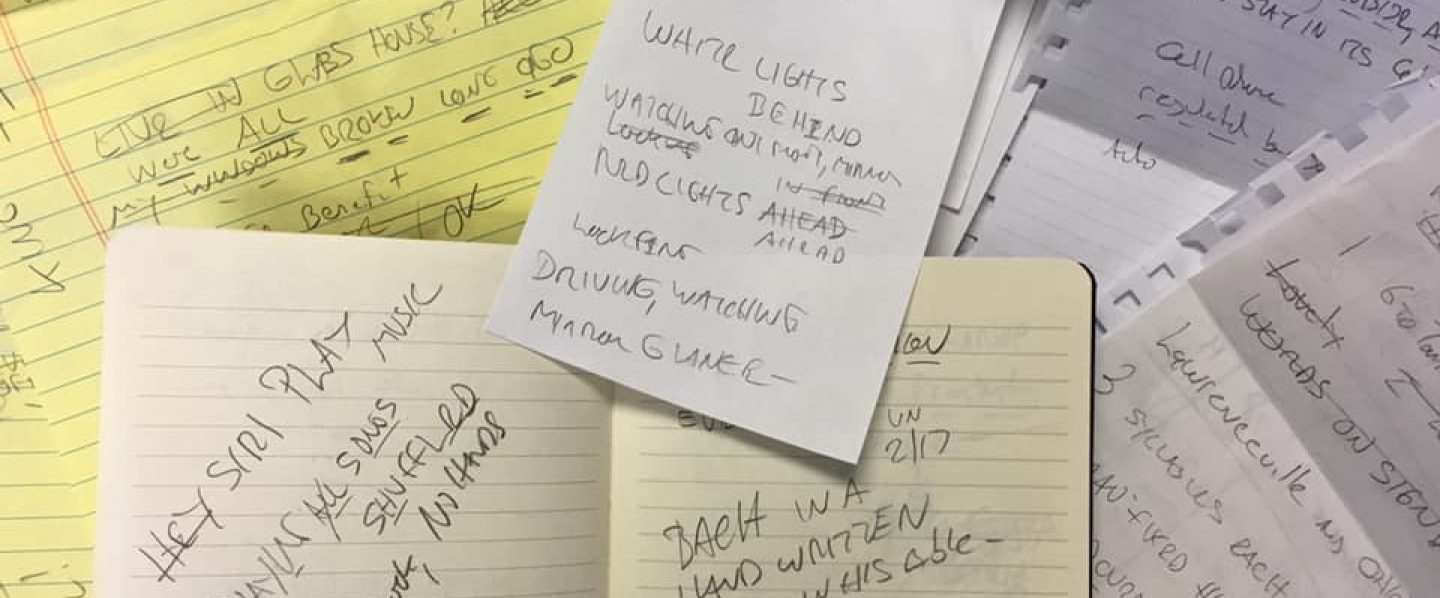
Lastly, of late, I have had lots of queries on ‘how do I write these essays’ with, as a professor of mine in Ann Arbor might say, a touch of a suspect animus that I got the feeling folks wonder how much of these are written with help of AI.
Happy to say, none of it.
I cannot explain it, but these just spill out of my brain like cider out of spigot on a barrel.
This morning I sat down with that bit of Mr. Harrison in mind and now I look down and its 4 pages and 1200 words later.
One thought led to another and it came out my finger tips.
And believe me, this was planned as a quick in and out – type out the lines of the poem and say i liked the thought and be done … but nooooo – the way my brain works kicked in and the horse was out of the barn!
Sometimes in the middle of these things I think of an Aunt of James Thurber who, according to a Thurber story, set out to prove she could fix some mechanical device and after hours of trying yells, “Won’t someone take this G*DD*MN thing away from me!”
As Harold Ross of the New Yorker might say, “There you are.”