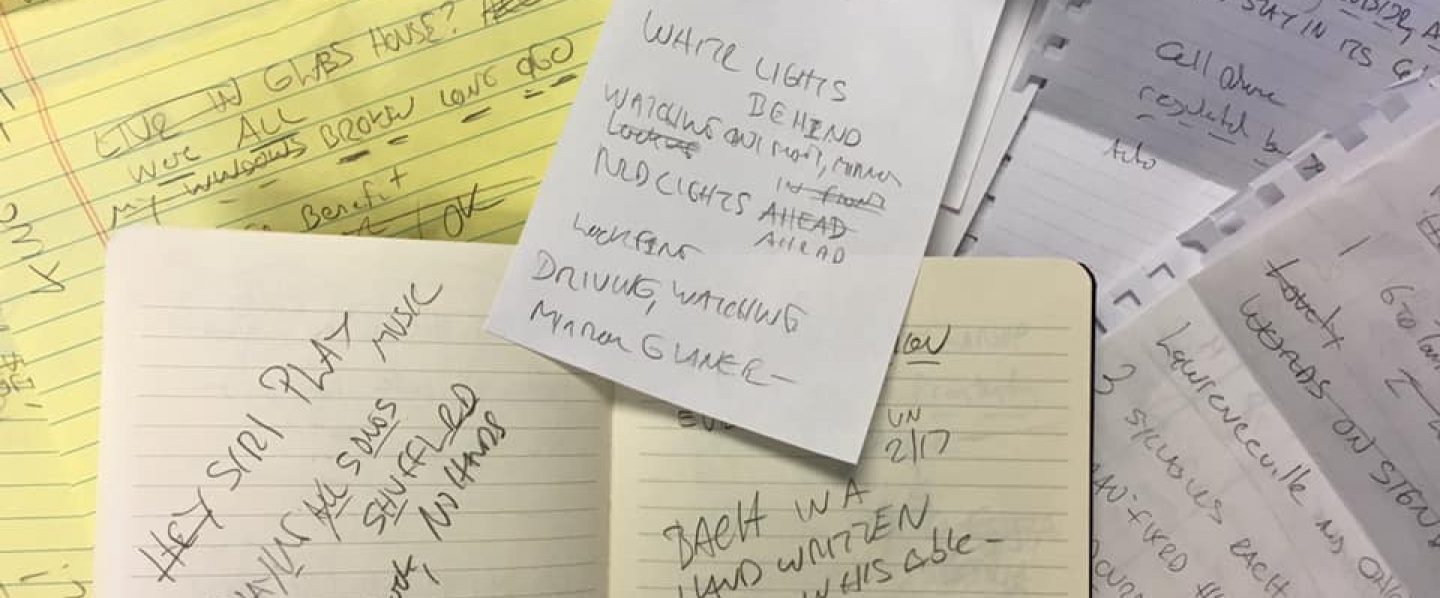
11.16.2026 – stocking up on tea

stocking up on tea
getting thick socks, eating soup
planning little treats

In the Guardian article, Not ready for the cold and dark? Maybe you need a ‘winter transition week’, Emma Beddington writes:

How are you feeling about the rapid dying of the light? Are you already sluggish and glum, poleaxed by the “polar vortex” or seasonal lurgy? That might be because you’re doing winter wrong: according to health psychologist Kari Leibowitz, writing in the Washington Post, we’d all benefit from a “winter transition week”.

Leibowitz, the author of a book, How to Winter, based on her time living in the Arctic, explains: “I intentionally clear out my calendar … say no to extra obligations, try to cancel or postpone unnecessary meetings and make time for rest and slowness.” During this time, she also recommends stocking up on tea, getting out thick socks, eating soup and planning little treats.

I grew in Michigan.

Lived there for 50 years.

I never really liked the cold but I couldn’t get rid of it so I lived with it.

Then I moved south.

Then I moved more south.

SO far south that I am South Carolina.

The state motto is Famously Hot South Carolina.

The outside temp goes above 90 around Memorial Day.

By July the average humidity has also built up to about 90.

That might sound hot, but I spend most of day in an office where the air conditioning is just on.

That’s the only setting anyone touches.

On.

More than likely the thermostat is set to some where around 32 but it’s so hot outside that the indoor temp never gets there so the AC just runs all day.

Warm … if not hot … water comes out of the tap.

SO its hot but I still freeze.

Wear sweaters and hoodies all summer long.

At least I can go outside and thaw out a bit.

Then, as it always does, fall showed up.

I woke on Saturday and it was cold.

My wife wouldn’t let me turn the heat on.

In my memory is the memory of the one spring break trip I made south with a friend and as we crossed the Ohio River in West Virginia we where thrilled to see a sign that said it was 56 degrees outside.

What bliss, 56!

I miss those days when 56 felt warm.

It was just below 60 outside for crying out loud.

And I was cold.

Colder than I ever remember being.

I curse the rapid dying of the light

I am already sluggish and glum.

I am poleaxed by the “polar vortex”.

I am poleaxed by the seasonal lurgy, whatever that is.

Cold and sleepy.

Spent the weekend under blankets until the wife relented and let me have a little heat.

And I can clear out my calendar.

I can say no to extra obligations.

I can try to cancel or postpone unnecessary meetings.

I can make time for rest and slowness.

I can stock up on tea.

I got out thick socks.

I am eating soup.

I am planning little treats.

All just because I just want to be warm again.

PS – according to an online search, the “seasonal lurgy” is a casual British and Commonwealth term for common, low-grade viral infections that circulate as the weather turns colder. I like that. Like the British and Commonwealth term for the common stomach flu is … Winter Vomiting. If anything makes me vomit today, its Winter.

PS – Isn’t vomit a great word? Describes the sound and the feeling and the disgust at having to all in one word.

10.8.2026 – does this bother you?

does this bother you?
desperate need of mending?
feel need to fix it?

Based on the article, Experts Agree: Nobody Knows What ‘Bimonthly’ or ‘Biweekly’ Means By Nitsuh Abebe in the New York Times Magazine where Mr. Abebe writes:

There are also usage guides for “biweekly” and “bimonthly,” but most of their advice just face-plants right back into uncertainty. Merriam-Webster suggests using “semimonthly” for “twice a month,” which doesn’t much clarify “bimonthly” unless people know you’re doing it. An English professor named Michael Adams told CBS News that we should bring back “fortnight,” the old shortening of “14 nights,” so that we “don’t have to worry about ‘biweekly’ or ‘bimonthly’ meaning two things.” But two weeks and half a month are not the same: A semimonthly paycheck arrives 24 times per year, a fortnightly one 26. Every “biweekly” or “bimonthly” explainer seems to arrive at the same drastic conclusion: Abandon these words. They are hopelessly compromised. Just say “twice a month” or “every other month” or whatever.

The trouble is that deciding what is “correct” does not really resolve ambiguity. There is, for instance, solid agreement that bi- will for some reason affect “annual” in the opposite way it affects “monthly,” giving us “biannual” (twice a year) and “biennial” (every two years). This does not remotely stop people from confusing the two: Clarity solves nothing.

My question is: Does this bother you? Does it feel like a tiny piece of linguistic machinery has snapped off and is clanking around in desperate need of mending? Do you feel a need to fix it?

I enjoyed reading the article very much as it was focused on words.

But that last quote.

Does this bother you?

Does it feel like a tiny piece of machinery has snapped off and is clanking around in desperate need of mending?

Do you feel a need to fix it?

I really need to ask these questions of just about everything today.

Because …

So many things bother me.

So many tiny pieces of machinery have snapped off and are clanking around in desperate need of mending?

I feel a need to fix these things.

And I don’t want things to bother me.

I don’t want to feel anything is in desperate need of mending.

I don’t want to fix anything.

Just let me go to the beach and I am good.

Maybe in a fortnight or so I will be ready to get back into letting things bother me.

9.22.2026 – missing my missing

missing my missing
hour each morning disappears
where does the time go

I wake up, or I am already awake, staring at my bedside clock and I know it is time to get out of bed.

I look at the time and no matter how hard I look, the time keeps changing out from under me.

Then suddenly, it is an hour later and I am dressed and my back pack is on one shoulder and the wife says she is ready and I am off to work with her driving.

In that hour I know that I:

Showered.

Drank a lot of coffee (moving closer to the brink of awareness with each sip).

Read several newspapers.

Played wordle and some other games.

Ate some breakfast or broke my fast with anything from left over pizza, to cereal, to raisin bread toast or maybe an ice cream sandwich.

Got dressed.

Checked the tide.

Checked the route to work for accidents or alligators or accidents with alligators.

Checked the time.

And it is a hour later.

That hour seems to be missing.

And I am missing that missing hour.

And I feel like I haven’t moved a muscle or thought a thought.

Maybe I am looking at this wrong.

Instead of worrying, wondering where I was when the time went.

I should say look at what I did all so effortlessly.

Later in my lunch time walk along the beach I watch the local catermerans moving up and down the Atlantic Coast.

All so effortlessly, just like my mornings.

I ain’t missing nuthin.

9.15.2026 – all deeds of men are

all deeds of men are
dreams at first, in the end, deeds
dissolve into dreams

Based on the Epilogue to the book, Old-New Land by Theodor Herzl (Bloch Publishing: New York, 1902), where Mr. Herzl writes:

When, however, you come among friendly folk, give them greetings from your father.

Tell them that he believes Dreams also are a fulfillment of the days of our sojourn on Earth.

Dreams are not so different from Deeds as some may think.

All the Deeds of men are only Dreams at first.

And in the end, their Deeds dissolve into Dreams.

Rain squall clearing the beach over Hilton Head Island, 9/13/2026.

In the book, Old New Land, Mr. Herzl dreams of a Jewish Homeland and dreams of a new nation in Palestine.

According to Wikipedia, when the book came out, “The book was immediately translated into Hebrew by Nahum Sokolow, who gave it the poetic title “Tel Aviv”, using tel (‘ancient mound’) for ‘old’ and aviv (‘spring’) for ‘new’.”

The Hebrew title of the book was chosen by Jewish residents as the name for the newly purchased twelve acres of sand dunes, north of Jaffa, established in 1909 under a company name “Ahuzat Bayit (lit. “homestead”) society”, and with the financial assistance of the Jewish National Fund. The town was originally named Ahuzat Bayit. On 21 May 1910, the name Tel Aviv was adopted. Eventually, Tel Aviv would become known as “the first [modern] Hebrew city”

It is explained that the epligogue I am quoting is addressed to the book itself.

Mr. Herzl writes, “Now, dear Book, after three years we must part.“

When he writes, When, however, you come among friendly folk, give them greetings from your father, he is referring to himself as the father of the book.

It is Mr. Herzl who believes Dreams also are a fulfillment of the days of our sojourn on Earth.

And, as the epigram opens the book …

“If you will it, it is no dream.”

Deep stuff for a Tuesday morning.

Dreams.

Deeds.

Old for New.

Maybe we are watching the dreams of those founding father fellers that they turned into deeds are once more, becoming just a dream.

6.25.2026 – daily dawns – summer

daily dawns – summer,
winter, spring, and fall — I’m a
fool to rise at all!

Daily dawns another day;
I must up, to make my way.
Though I dress and drink and eat,
Move my fingers and my feet,
Learn a little, here and there,
Weep and laugh and sweat and swear,
Hear a song, or watch a stage,
Leave some words upon a page,
Claim a foe, or hail a friend—
Bed awaits me at the end.

Though I go in pride and strength,
I’ll come back to bed at length.
Though I walk in blinded woe,
Back to bed I’m bound to go.
High my heart, or bowed my head,
All my days but lead to bed.
Up, and out, and on; and then
Ever back to bed again,
Summer, Winter, Spring, and Fall—
I’m a fool to rise at all!

Inscription for the Ceiling of a Bedroom by Dorothy Parker as published in Enough Rope (New York: Boni & Liveright, 1926).

This from the woman who famously would yell What Fresh Hell is This? anytime the phone rang.

Try that at work some day, I betcha!

High my heart, or bowed my head.

All my days but lead to bed.

I just wish I wouldn’t start thinking about it an hour after I get to work.

I mean, if I went right home and went to bed when I wanted to, I would miss my after dinner nap.

I start looking forward to that as soon as I get up each day.