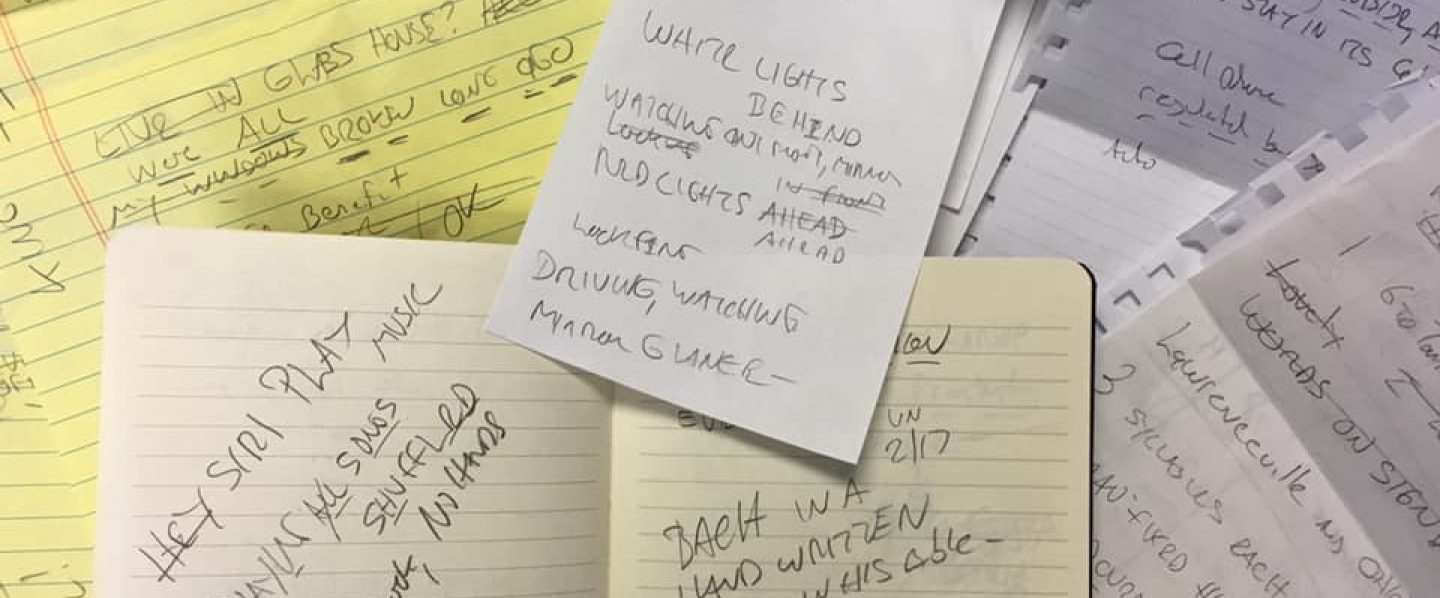
4.12.206 – the offensiveness

the offensiveness
may be a distraction from
the destructiveness

Adapted from the Guardian Opinion piece, The United States is destroying itself by Rebecca Solnit which has the slug line, The daily news can’t adequately convey the administration’s sabotaging of our government, economy, alliances and environment.

Ms. Solnit writes:

The United States is being murdered, and it’s an inside job. Every department, every branch, every bureau and function of the federal government is being fatally corrupted or altogether dismantled or disabled. All this is common knowledge, but because it dribbles out in news stories about this specific incident or department, the reports never adequately describe an administration sabotaging the functioning of the federal government and also trashing the global economy, international alliances and relationships, and the national and global environment in ways that will have downstream consequences for decades and perhaps, especially when it comes to climate, centuries.

But the offensiveness may be a distraction from the destructiveness. A whole sector of mainstream media now functions as spirit mediums attempting to interpret Trump’s actions to try to fit them into the context of competent leadership and coherent and consistent agendas. If there was a coherent agenda, it would be a destructive one, a malevolent one. The newly popular slogan “the purpose of a system is what it does” is useful here, because what this system does is weaken, damage, corrupt and harm. The idea that there’s a coherent agenda driven by Vladimir Putin works in the sense that most of what Trump has done is good for the ageing Russian dictator while also bad for the US.

But the offensiveness may be a distraction from the destructiveness.

We are seeing without seeing.

Has the Titanic has hit the iceberg with no one seemingly understanding that the ship is filling with water?

My wife and I got to talking the other day.

I had another contact from the Medicare folks to let me know I was past retirement age and it was time for retirement.

All fine and good but I cannot afford to retire.

No real problem as I am in good health and I have good job.

Still there are those in our circle who have managed their lives so they can retire.

They managed a career with a single employer and made contributions to their funds and navigated the iceberg of 2009 successfully.

And to those folks, I take my hat off and say good for you!

I do feel good that the ‘American Dream’ can still work!

Then I read this article by Ms. Solnit.

As much as my friends have a plan, their plan depends on one thing.

The ongoing financial and political success of the United States of America.

5, 10, 15 or 30 years years ago, that worked.

I mean who among us could imagine us without the USA?

Today we read headlines that say, The United States is destroying itself.

Today we read stories that say, the offensiveness may be a distraction from the destructiveness.

And I have to ask, who saw 2009 coming?

Who say 1929 coming?

And I am reminded of Psalm 146.

Do not put your trust in princes,
in human beings, who cannot save.
When their spirit departs, they return to the ground;
on that very day their plans come to nothing.
Blessed are those whose help is the God of Jacob,
whose hope is in the Lord their God.

I don’t know what the future holds for the USA.

Hope we come out OK but there is no going back to where we were.

I don’t have much of a 401k.

I don’t own anything of value.

My hope is in the Lord our God.

In the long run, I feel my retirement is pretty secure.

3.16.2026 – always same story

always same story
always kids and nothing you
can do about it

Adapted from the passage in the novel, The Dogs of War by Frederick Forsyth where Mr. Forsyth writes:

Behind him they lit up a weird spectacle which could have been drawn by Dor6 in one of his blacker moods. The floor of the aircraft was carpeted with sodden and fouled blankets. Their previous contents lay writhing in rows down both sides of the cargo space, forty small children, shrunken, wizened, deformed by malnutrition. Sister Mary Joseph rose from her crouch behind the cabin door and began to move among the starvelings, each of whom had a piece of sticking plaster stuck to his or her forehead, just below the line of the hair long since turned to an ocher red by anemia. The plaster bore in ball-point letters the relevant information for the orphanage outside Libreville. Just name and number; they don’t give rank to losers.

In the tail of the plane the five mercenaries blinked in the light and glanced at their fellow passengers. They had seen it all before, many times, over the past months. Each man felt some disgust, but none showed it. You can get used to anything eventually. In the Congo, Yeman, Katanga, Sudan. Always the same story, always the kids. And always nothing you can do about it.

The dogs of war is a phrase spoken by Mark Antony in Act 3, Scene 1, of William Shakespeare’s play Julius Caesar: “Cry ‘Havoc!’, and let slip the dogs of war.

3.11.2026 – effect doesn’t seem

effect doesn’t seem
to have been priced into the
decision making

Adapted from the article, How Trump’s War With Iran Changed the World in a Week, by Jim Tankersley who report on Germany and Europe as Berlin bureau chief for The New York Times where Mr. Tankersley writes:

Mr. Trump’s war, now nearly two weeks old, is already reshaping travel patterns, energy dependencies, living costs, trade routes and strategic partnerships. Countries typically shielded from regional conflict, like Cyprus and the United Arab Emirates, have faced retaliatory Iranian fire. The fallout could disrupt midterm elections in the United States, tilt the war calculus in Ukraine and force China into a major economic pivot.

Those effects may compound if Mr. Trump presses ahead with the war, particularly if Iran escalates its counterattacks and blocks ship traffic through the critical oil passage of the Strait of Hormuz. Some economists are already invoking a dreaded memory for any U.S. president — the specter of oil-shock-induced stagflation, with growth stalling and prices roaring upward.

“I’m old enough to remember the events of the ’70s, and a world in which oil price spikes were a significant issue both economically and for a president who might be facing elections,” said Suzanne Maloney, an Iran expert at the Brookings Institution. “That doesn’t seem to have been priced into the decision making,” she added.

What happened in the ’70s?

Two things.

There was the Oil Crisis of 1973 and the Oil Crisis of 1979.

It’s that first one in 1973 I want to talk about.

I was 13.

Inflation at the grocery store was 14%.

According to Wikipedia:

On 6 October 1973, the Yom Kippur/October War began when Egypt attacked the Bar Lev Line in the Sinai Peninsula and Syria launched an offensive in the Golan Heights.

Israel took heavy losses in men and materiel during the fighting against Egypt and Syria, and on 18 October 1973, Meir requested $850 million worth of American arms and equipment to replace its materiel losses

On the afternoon of 19 October 1973, Faisal was in his office when he learned about the United States sending $2.2 billion worth of weapons to Israel.

The arms lift enraged King Faisal of Saudi Arabia. Faisal was angry that Israel had only asked for $850 million worth of American weapons, and instead received an unsolicited $2.2 billion worth of weapons, which he perceived as a sign of the pro-Israeli slant of American foreign policy.

On 20 October 1973, he retaliated by placing a total embargo on oil shipments to the United States, to be joined by most of the other oil-producing Arab states.

The embargo imposed on the United States led to shortages of oil in the United States, which set an inflationary spiral.

Nixon later boasted in his memoirs that the US Air Force flew more sorties to Israel in October 1973 than it had during the Berlin Airlift of 1948–49, flying in a gargantuan quantity of arms, though he also admitted that by the time the arms lift had begun, the Israelis had already “turned the tide of battle” in their favor, making the arms lift irrelevant to the outcome of the war.

In an interview with the British historian Robert Lacey in 1981, Kissinger later admitted about the arms lift to Israel: “I made a mistake. In retrospect it was not the best considered decision we made”.

Why do I have this feeling that, old as I am, I will live to hear on some documentary or read in some book that someone from this current administration will talk about this current war and say, In retrospect it was not the best considered decision we made.

Why do I have this feeling that this current war won’t be the only topic about which someone from this current administration will talk about and say, In retrospect it was not the best considered decision we made.

Why do I have this feeling that this current administration won’t be the only topic about which someone from this current generation of voters will talk about and say, In retrospect it was not the best considered decision we made.

3.4.2026 – trivial effort

trivial effort
man can lie, does he believe
oh, probably not

If we would learn what the human race really is, at bottom, we need only observe it in election times.

A Hartford clergyman met me in the street, and spoke of a new nominee – denounced the nomination, in strong, earnest words – words that were refreshing for their independence, their manliness.

He said, “I ought to be proud, perhaps, for this nominee is a relative of mine; on the contrary I am humiliated and disgusted; for I know him intimately – familiarly – and I know that he is an unscrupulous scoundrel, and always has been.”

You should have seen this clergyman preside at a political meeting forty days later; and urge, and plead, and gush – and you should have heard him paint the character of this same nominee.

You would have supposed he was describing the Cid, and Great-heart, and Sir Galahad, and Bayard the Spotless all rolled into one.

Was he sincere?

Yes – by that time; and therein lies the pathos of it all, the hopelessness of it all.

It shows at what trivial cost of effort a man can teach himself a lie, and learn to believe it, when he perceives, by the general drift, that that is the popular thing to do.

Does he believe his lie yet?

Oh, probably not;

From The Character of Man in The Autobiography of Mark Twain by Mark Twain (Berkeley : University of California Press, 2010).

2.24.2026 – important that one

important that one
not say any foolish things
if he can help it

I appear before you, fellow-citizens merely to thank you for this compliment. The inference is a very fair one that you would hear me for a little while, at least, were I to commence a speech.

I do not appear before you for the purpose [of speechifying] and for several substantial reasons.

The most substantial of these is that I have no speech to make.

It is somewhat important in my position that one should not say any foolish things if he can help it and to help it is to say nothing at all.

Believing that that is my precise position this evening, I must beg you from saying “one word.”

Abraham Lincoln in response to a ‘serenade’ from the crowd on the night of November 18, 1863 as reported in the Gettysburg Star & Banner.

The next day, after spending the night in Gettysburg, Mr. Lincoln would deliver his short remarks in dedicating a cemetery on the site of the battle.

Gabor Boritt, in his book, The Gettysburg gospel : the Lincoln speech that nobody knows (New York: Simon and Schuster, 2006), writes:

In 118 or so words, Lincoln acquitted himself: his first Gettysburg address. The following day, he would speak in a different vein and would not need many more than twice the number of words to say his piece. This night the crowds got the bantering, vintage Westerner, funny and humble. They applauded long when he finished. Thursday, the 19th, would be another day.

Young Hay wrote in his diary: “The President appeared at the door said his half dozen words meaning nothing & went in.” Lincoln knew better. He had shown the people that he was one of them. That was not unimportant. That his opponents would fault him, “the great American humorist,” he also knew. And if he had even more serious purpose in coming to Gettysburg, he understood that the throngs came in no small measure to enjoy themselves. Nor would all of them make sharp distinctions. Local butcher Harvey Sweeney heard Lincoln that evening and on the next day, too, and in a letter to his brother ten days later would lump it all together as “noble speeches”: “the greatest of the great men,” whose words “endeared him to the hearts of the people and added thousands of friends to him….

When Lincoln went back indoors after his speech, he could hear people whooping, singing, carrying on, and going next door to serenade the next dignitary. In the Harpers’ house, the Secretary of State was the most honored guest. Seward had been the president’s stand-in until a few days ago. On the train, had the two men talked about what they would say? They were heading into a festive town and Seward knew that he would be asked to speak, too. He had his backup speech ready.

Brevity.

Not sure why that thought is on my mind today.