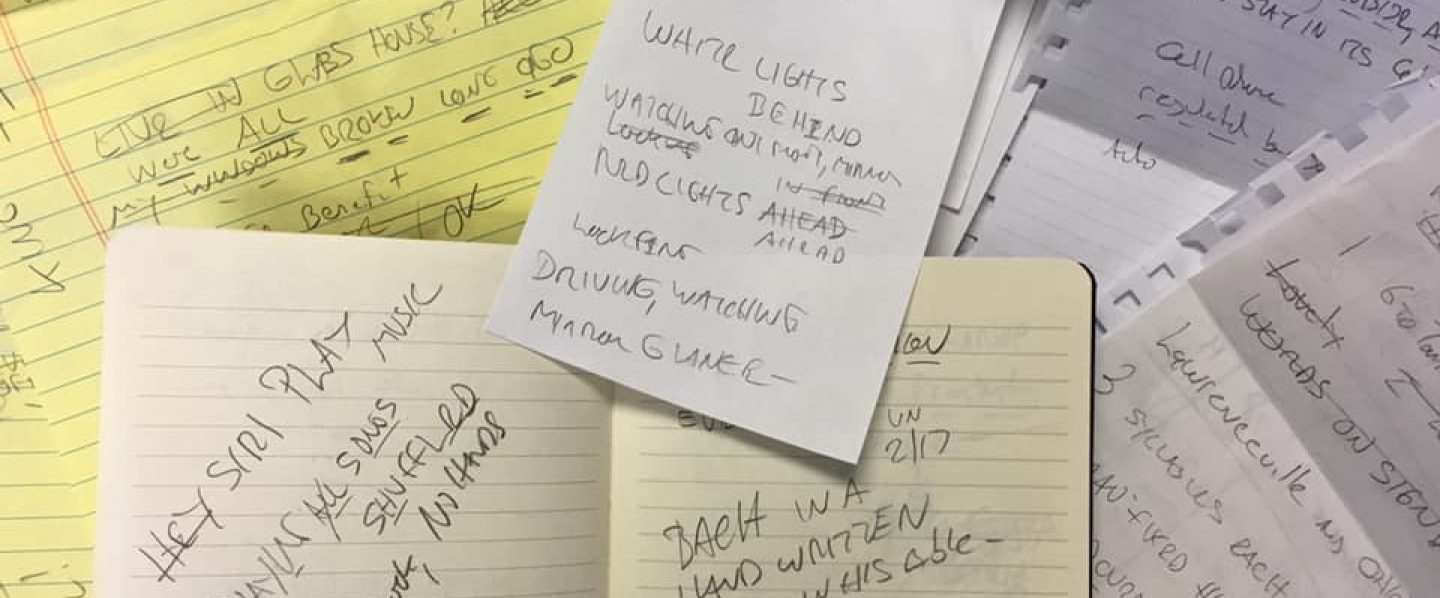
5.28.2026 – to shoot the wall clock

to shoot the wall clock
make it stop, better yet, keep
backing up slowly

It’s not so comic the way that clocks race themselves with us in fragile tow and it’s not enough to say “What are we waiting for?” or “Why are we holding back?” though that might occur to us later.

We are far less capable of those radical emotional moves advocated by magazines that specialize in puddle-deep psychologisms, the usual seven steps to a victorious emotional life, as if we could put ourselves on a figurative grease rack or automated assembly line for overhaul.

It was all so ordinary though I wanted to shoot the wall clock, over and over. Anything to make it stop or, better yet, keep backing up slowly.

From True North by Jim Harrison (New York, Grove Press, 2004).

I woke from a dream the other morning where all was as it was when I was a kid on the shore of Lake Michigan.

It was a disappointment when I woke and realized it was a dream.

It was all so ordinary though I wanted to shoot the wall clock, over and over.

Anything to make it stop or, better yet, keep backing up slowly.

You can’t can you?

It’s not so comic the way that clocks race themselves with us in fragile tow and it’s not enough to say “What are we waiting for?” or “Why are we holding back?” though that might occur to us later.

5.22.2026 – weren’t satisfied with

weren’t satisfied with
having money unless there
were many who didn’t

Oddly, it wasn’t the poverty that ground against the sensibilities so hard that depressed me the most but the attitude of many of the more fortunate who weren’t satisfied with having money unless there were many who didn’t have it.

Even quasi-religious people liked to quote Jesus as saying, “The poor you have with you always,” neglecting to add that he didn’t say to sit on your ass and don’t do anything about it.

The thought that my country accepts the idea that a quarter of its citizens are destined to be social mutants peels my nerves.

Our compassion quotient has seemed to lower a bit more every year of my adult life.

I never much minded when my colleagues would tease me for being a “bleeding heart” because if your heart doesn’t bleed you’re dead, and you’ve become just another greedy little shit factory on life’s way.

From The Road Home by Jim Harrison (New York, Grove Press, 2004).

Yes of late I have been drawing a lot of inspiration from Mr. Harrison and The Road Home of late.

You can guess that I am re-reading it again and wonder if the power of some of Mr. Harrison’s writing would have been lessened had he left some of the rawness out of it.

But this is like trying to draw life lessons from watching the Soprano’s and wishing they could have dropping the violence.

The life frustrations of Tony in his sessions with the psychiatrist (“If my calling is so important, PICK UP THE PHONE”) I guess need the contrast with the miserable life of a mobster.

But I digress.

Our compassion quotient has seemed to lower a bit more every year of my adult life.

I could start with the compassion quotient but you could add almost any other aspect of life and it has seemed to lower a bit more every year.

It seems that I have read stories that for the first time, the next generation of Americans are looking at a worse world then the previous generation had.

We could start with that current man in the oval office and go down hill from there.

I read books and poems about a filled with bird song and all I have around my house is the caw caw of crows.

I read books filled with exclamations of wonder and beauty over the salt sea breeze and where I live on the Atlantic Coast of South Carolina, what you get is the pluff mud of the salt march which smells of dirty diapers.

Sports are money pits with nothing to do about sports.

I am tired of raging against the machine.

There is just too much money, dead money, money that isn’t doing anything but sitting in banks in account and doing nothing.

I don’t like to go to Woody Allen but in Annie Hall, the artist (Max von Sydow) says:

Money, money, money! If Jesus came back, and saw what’s going on in his name, he’d never stop throwing up.

5.20.2026 – the question, of course

the question, of course,
is how you can make your soul
clap its hands and sing

The question, of course, is how you make your soul clap its hands and sing.

My bones seemed built out of incomprehension.

The road was rutted enough by winter rains so that the car drove itself.

I was ringed by four mountain ranges in this valley but then natural beauty seems to offer no more than you can bring to it. There was scarcely a patch in a thousand square miles I hadn’t covered on foot.

Looking down you see blue and black gama, side oats gama, curly mesquite, sprangle-top, and the grassy skin of the local earth.

Straight up is invariably sky.

Up in my own country it was apparently our nature to kill seventy million buffalo just as it was our nature to destroy the Native cultures.

History will not help your soul clap its hands and sing but it is unconscionable to proceed without knowing it.

From True North by Jim Harrison (New York, Grove Press, 2004).

Mr. Harrison is referencing the poem, Sailing to Byzantium by William Butler Yeats.

Mr. Harrison quotes the 2nd of 4 stanzas.

An aged man is but a paltry thing,
A tattered coat upon a stick, unless
Soul clap its hands and sing, and louder sing
For every tatter in its mortal dress,
Nor is there singing school but studying
Monuments of its own magnificence;
And therefore I have sailed the seas and come
To the holy city of Byzantium.

Soul clap its hands and sing, and louder sing.

And louder sing.

An aged man is but a paltry thing.

History will not help your soul clap its hands and sing but it is unconscionable to proceed without knowing it.

So much news of late.

How frail our constitution was.

How frail life is.

Therefore I have sailed the seas and come
To the holy city of Byzantium.

BTW – to make this work, I had to add a word to Mr. Harrison’s words … have a feeling he would not have been happy but when I do the same thing to Shakespeare and Sandburg …

5.9.26 – mighty effort to

mighty effort to
rigidify society
to protect the top

Adapted from the book, The Road Home by Jim Harrison (New York : Atlantic Monthly Press, 1988) where Mr. Harrison writes:

It struck me for the thousandth time that when you were on the move you noted the bottom third,

at least a third it seemed had become social mutants and were scratching along as minimum-wage menial laborers and without any reliable way to get anyplace else for a fresh look;

those in Washington who could help simply had never noticed these people,

that there was something about the xenophobic power trance in politics that made them unable to extrapolate any other reality than the effort toward reelection.

They were making a mighty effort to rigidify the society to protect the top, and the bottom third were being openly sacrificed.

It struck me as I read this how hard folks who have ‘got there’ work to maker sure their place is secure rather than look to help anyone else ‘get there’, where ever your ‘there’ is.

Tom Wolfe writes in Back to Blood how the simple act of being able to gain access to a road through the ‘Owners Gate’ gave satisfaction to rich people as they passed the long line of cars in the ‘Employees/Guest’ Gate.

Me?

I am with Bob Dylan and got nothing so I got nothing to lose as I continue to bankroll my kids best I can one my way to bankruptcy so its easy for me to say we should remember the poor.

So it was with some satisfaction when I read in today’s New York Times, Maureen Dowd’s column, My Ted Talk, as she recounted the life and times of Mr. Ted Turner.

Mr. Turner was rich and he knew it but he lived a life that, in contrast to other rich lives currently in the news cycle, lived free of law suits and court filings.

Mr. Turner was BIG.

And I am not sure he was ever small in the ways that get you negative headlines aside from his manic Lead, Follow or Get Out of the Way mantra.

For me, he was that sailor guy who won the America’s Cup sailing races for the New York Yacht club, owner the Atlanta Braves and created CNN.

The mouth from the south but also seemed to be real if you know what I mean.

Ms. Dowd writes …

He was generous — another quality missing from many modern plutocrats. In 1996, at his friend Tom Brokaw’s urging, I called Turner to write a column on a pet peeve of his: the parsimony of fellow billionaires like Bill Gates and Warren Buffett.

Turner had, two years earlier, forked over $200 million to charity. He told me that he empathized with the fear of giving away so much money that you would fall off the Forbes 400 list of wealthiest Americans.

But he challenged his peers — or “ol’ skinflints,” as he called them — to shut down that fear and open up their purse strings.

He suggested a list focused on who did the giving rather than the having, proposing an “Ebenezer Scrooge Prize” to embarrass stingy billionaires and a “Heart of Gold Award” to honor the biggest givers.

“Scrooge felt a lot happier when he saved Tiny Tim and bought the turkey for the poor family, right?” he said. The column I wrote spurred Michael Kinsley, then the editor of Slate, a pioneering online magazine, to start the Slate 60, a list of the most generous philanthropists. The following year, he donated $1 billion to the U.N.

Now lets do some creative imagining and imagine that current man in office saying, “Scrooge felt a lot happier when he saved Tiny Tim and bought the turkey for the poor family, right?

Doesn’t work does it.

5.6.2026 – not here and now but

not here and now but
now and here – a matter of
life, death, ticking watch

Fish Haul Beach at Low Tide – Spring 2026

Adapted from the collection of poems, After Ikkyū & Other Poems, where Jim Harrison writes:

Not here and now but now and here.
If you don’t know the difference
is a matter of life and death, get down
naked on bare knees in the snow
and study the ticking of your watch.

This collection of poems by Jim Harrison, released in 1996, is deeply influenced by his long-term engagement with Zen practice and is named after the eccentric 15th-century Zen monk Ikkyū Sōjun and was republished in The Complete Poems of Jim Harrison by Jim Harrison (Denver: Copper Canyon Press 2022).

Mr Harrison once wrote, To write a poem you must first create a pen that will write what you want to say. For better or worse, this is the work of a lifetime.

Not here and now

but now and here.

If you don’t know the difference is a matter of life and death,

get down naked on bare knees in the snow …

and study the ticking of your watch.

Not sure OF the difference of here and now or now and here so I am studying the ticking of my watch.

But I wear a watch that winds itself as I walk.

If its ticking I must be walking and if I am walking now I am here now.

For reasons of its own, my watch has stopped.

Now not sure if I am here.