5.9.26 – mighty effort to

mighty effort to
rigidify society
to protect the top

Adapted from the book, The Road Home by Jim Harrison (New York : Atlantic Monthly Press, 1988) where Mr. Harrison writes:

It struck me for the thousandth time that when you were on the move you noted the bottom third,

at least a third it seemed had become social mutants and were scratching along as minimum-wage menial laborers and without any reliable way to get anyplace else for a fresh look;

those in Washington who could help simply had never noticed these people,

that there was something about the xenophobic power trance in politics that made them unable to extrapolate any other reality than the effort toward reelection.

They were making a mighty effort to rigidify the society to protect the top, and the bottom third were being openly sacrificed.

It struck me as I read this how hard folks who have ‘got there’ work to maker sure their place is secure rather than look to help anyone else ‘get there’, where ever your ‘there’ is.

Tom Wolfe writes in Back to Blood how the simple act of being able to gain access to a road through the ‘Owners Gate’ gave satisfaction to rich people as they passed the long line of cars in the ‘Employees/Guest’ Gate.

Me?

I am with Bob Dylan and got nothing so I got nothing to lose as I continue to bankroll my kids best I can one my way to bankruptcy so its easy for me to say we should remember the poor.

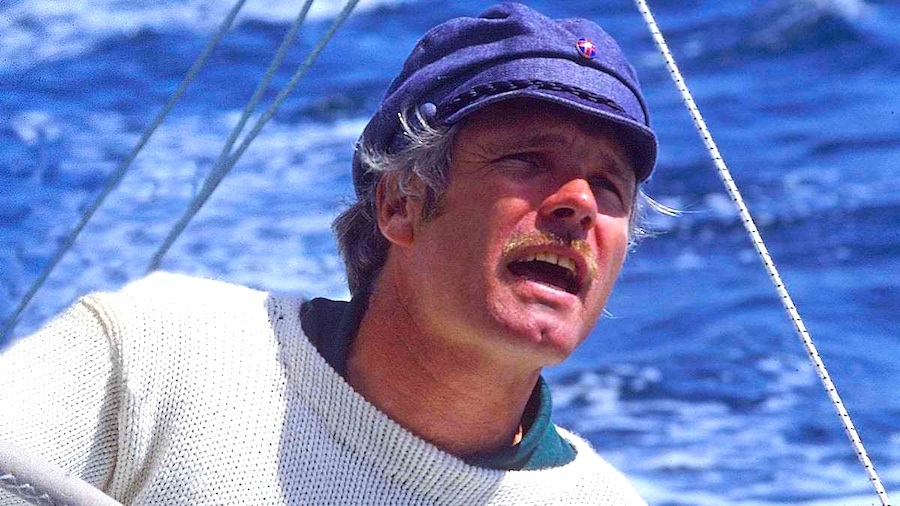
So it was with some satisfaction when I read in today’s New York Times, Maureen Dowd’s column, My Ted Talk, as she recounted the life and times of Mr. Ted Turner.

Mr. Turner was rich and he knew it but he lived a life that, in contrast to other rich lives currently in the news cycle, lived free of law suits and court filings.

Mr. Turner was BIG.

And I am not sure he was ever small in the ways that get you negative headlines aside from his manic Lead, Follow or Get Out of the Way mantra.

For me, he was that sailor guy who won the America’s Cup sailing races for the New York Yacht club, owner the Atlanta Braves and created CNN.

The mouth from the south but also seemed to be real if you know what I mean.

Ms. Dowd writes …

He was generous — another quality missing from many modern plutocrats. In 1996, at his friend Tom Brokaw’s urging, I called Turner to write a column on a pet peeve of his: the parsimony of fellow billionaires like Bill Gates and Warren Buffett.

Turner had, two years earlier, forked over $200 million to charity. He told me that he empathized with the fear of giving away so much money that you would fall off the Forbes 400 list of wealthiest Americans.

But he challenged his peers — or “ol’ skinflints,” as he called them — to shut down that fear and open up their purse strings.

He suggested a list focused on who did the giving rather than the having, proposing an “Ebenezer Scrooge Prize” to embarrass stingy billionaires and a “Heart of Gold Award” to honor the biggest givers.

“Scrooge felt a lot happier when he saved Tiny Tim and bought the turkey for the poor family, right?” he said. The column I wrote spurred Michael Kinsley, then the editor of Slate, a pioneering online magazine, to start the Slate 60, a list of the most generous philanthropists. The following year, he donated $1 billion to the U.N.

Now lets do some creative imagining and imagine that current man in office saying, “Scrooge felt a lot happier when he saved Tiny Tim and bought the turkey for the poor family, right?

Doesn’t work does it.

5.6.2026 – not here and now but

not here and now but
now and here – a matter of
life, death, ticking watch

Fish Haul Beach at Low Tide – Spring 2026

Adapted from the collection of poems, After Ikkyū & Other Poems, where Jim Harrison writes:

Not here and now but now and here.
If you don’t know the difference
is a matter of life and death, get down
naked on bare knees in the snow
and study the ticking of your watch.

This collection of poems by Jim Harrison, released in 1996, is deeply influenced by his long-term engagement with Zen practice and is named after the eccentric 15th-century Zen monk Ikkyū Sōjun and was republished in The Complete Poems of Jim Harrison by Jim Harrison (Denver: Copper Canyon Press 2022).

Mr Harrison once wrote, To write a poem you must first create a pen that will write what you want to say. For better or worse, this is the work of a lifetime.

Not here and now

but now and here.

If you don’t know the difference is a matter of life and death,

get down naked on bare knees in the snow …

and study the ticking of your watch.

Not sure OF the difference of here and now or now and here so I am studying the ticking of my watch.

But I wear a watch that winds itself as I walk.

If its ticking I must be walking and if I am walking now I am here now.

For reasons of its own, my watch has stopped.

Now not sure if I am here.

4.29.2026 – ignorant of how

ignorant of how
they see, don’t see unless work
very hard at it

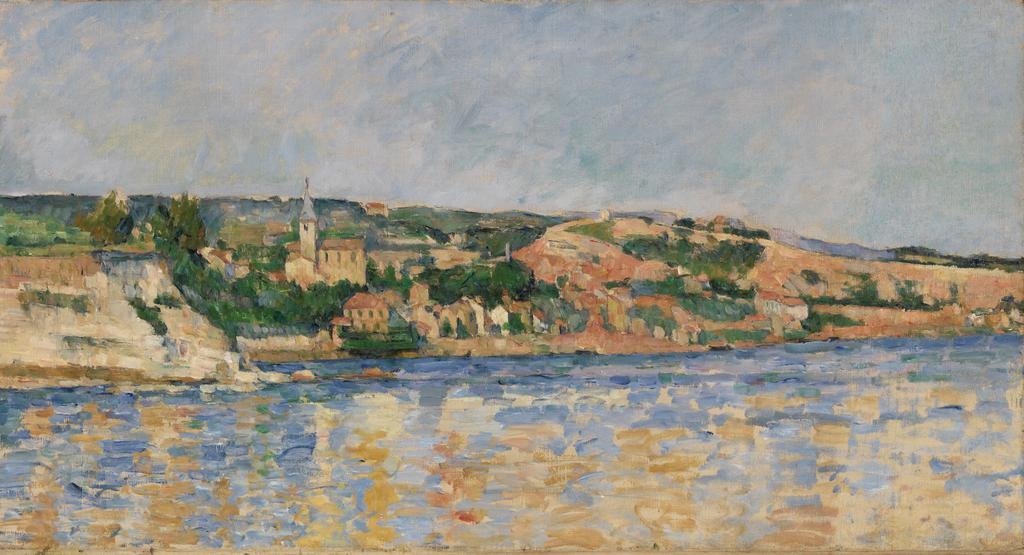
Paul Cézanne – The Village of L’Estaque Seen from the Sea (Le village de l’Estaque vu de la mer)

Sprawled there by the creek and cautioning myself against my canteen whiskey I stared at the assortment of dead leaves that had gathered themselves in the spring, with some floating, a few suspended in the clear water, and the bottom of the spring pasted yellow and dull red with the others.

I had once tried to paint this phenomenon, unsuccessfully in the minds of others because it is not the sort of thing one can see clearly.

There was the odd thought, absent for years, that nearly everyone was ignorant of how they see, lost as they were in the attraction for the simplicity of photographs, which is not how anyone sees.

We don’t see all at once unless we work very hard at it.

When I first saw Cézanne’s work I was dumbstruck at his comprehension of true vision.

From True North by Jim Harrison (New York, Grove Press, 2004).

I think that is why I enjoy the beach.

I want to see it all at once.

I work very hard at it.

4.13.2026 – sense of proportion

sense of proportion
in good and bad experience
loses its appeal

Adapted from the passage in the book, The Road Home by Jim Harrison (Atlantic Monthly Press New York, 1998) where Mr. Harrison writes:

With age I need not make judgments about their comparative merits, having lost the impulse to be right.

One is one, and the other is another.

With age one loses all sense of the supposed inevitability of art and life.

Vivid moments are no longer strung together by imagined fate.

The sense of proportion in good and bad experience loses its appeal.

Bad is bad and you let it go.

Good you cherish as it whizzes by.

Mental struggles become lucid and muted with particular visual images attached to them, somewhat irrationally or beyond ordinary logic.

Money shrinks to money.

Fear is always recognizable rather than generalized.

It is sharp and its aim is very good indeed.

If there is wisdom as such, it is boiled down by fatigue.

The sense of proportion in good and bad experience loses its appeal.

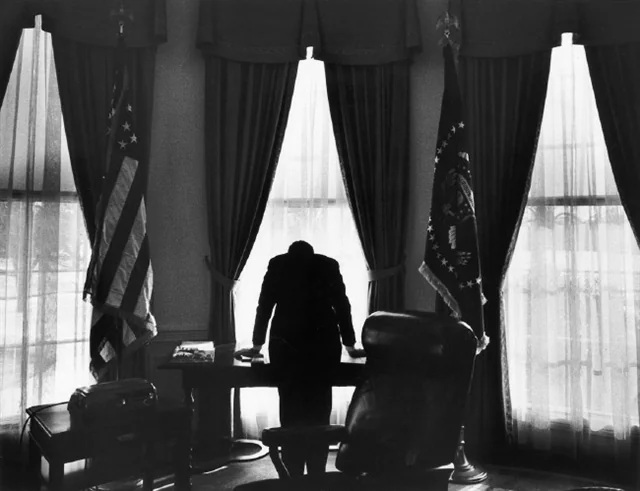
When you have a man who sits in the office of president of the United States who post images of himself portrayed as Jesus Christ, all things, good and bad, lose their proportion on a level of good of bad.

Landing in the land of the unbelievable, I need not make judgments about their comparative merits, having lost the impulse to be right.

The sense of proportion in good and bad experience loses its appeal.

When there are no comparative merits, their is little effort needed to be right.

As I wrote the other day that I struggle mentally to become lucid and I feel muted with particular visual images attached to them, somewhat irrationally or beyond ordinary logic and ask how a man could become not immoral, not amoral but, somehow infinitely worse, morally extinguished and president.

The sense of proportion in good and bad experience loses its appeal.

Beyond belief.

I what for the outcry but where your treasure is, their your heart will be also.

3.25.2026 – I like fallacies …

I like fallacies …
the mistakes that men make … why …
was I against it

Adapted from the passage in the book, The Etiquette of Freedom and The Practice of the Wild by Gary Snyder, Jim Harrison (Counterpoint: Brooklyn, NY, 2016) where Mr. Snyder writes:

I like fallacies, the mistakes that men make.

For seventeen years, I had an open firepit in the center of my house.

The smoke was supposed to go out an opening in the gables, but a lot of the time it didn’t.

I was trying to live like I was in a Japanese farmhouse.

I even had a hook for the pot over the firepit.

But, you know, it takes a long time to realize certain things, and I realized, yeah, the stovepipe was a good invention.

So finally I boarded it over and started living with chairs and a table, like Americans do.

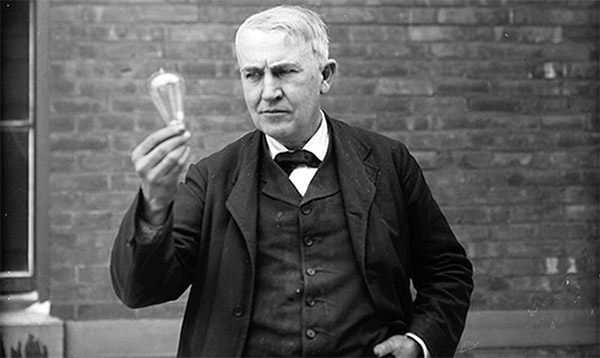
It’s like a friend of mine who did without electricity for fifteen years, and when he finally connected up to an electric line, he said to me, “You know, I can’t even remember why I was against it.”