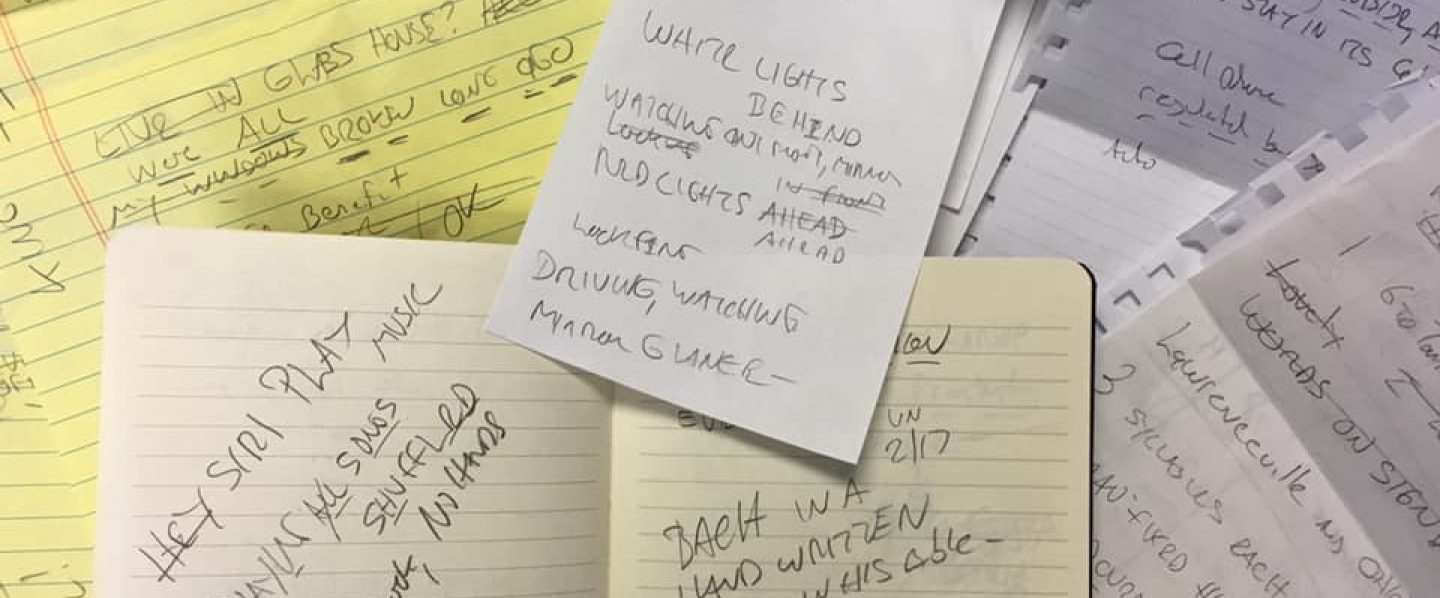
4.28.2026 – current climate leaves

current climate leaves
rational-minded feeling
hopeless powerless

Adapted from the article, “If it feels like the world is rejecting science and truth, here are five ways to fight back” by Helen Pearson, editor for Nature and author of Beyond Belief: How Evidence Shows What Really Works where MS. Pearson writes:

The current climate can leave rational-minded people feeling hopeless or powerless.

But fighting back in small ways can make a big difference.

All of us can choose to consider facts, not vibes, in our next decision.

One hack is simply to ask for the evidence behind claims.

Even if a claim is all over social media, it could be nonsense if there’s no credible research that backs it up.

The current climate can leave rational-minded people feeling hopeless or powerless.

BOY Howdy BUT NO KIDDING!

The comeback We are better than this … doesn’t seem to work and THIS IS WHO WE ARE and The current climate can leave rational-minded people feeling hopeless or powerless.

Ms. Pearson closes with:

… it’s important to be humble about science and about what changes minds.

Research is complex, changing, frequently uncertain, sometimes flawed and often fails to provide clear answers.

Simple stories resonate, which is why one person’s experience (“it worked for me”) often feels more convincing than data about thousands of people.

But we have plenty of good stories and big wins in our corner too – so let’s tell people those stories.

Sounds good right?

Let me tell you the story how this country beat measles.

Let me tell you the story how this country beat polio.

We got the good stories and we tell the good stories.

But the current climate can leave rational-minded people feeling hopeless or powerless.

Ggggggggggggggggggggggeeee whiz.

The Day the Dam Broke by James Thurber

My memories of what my family and I went through during the 1913 flood in Ohio I would gladly forget. And yet neither the hardships we endured nor the turmoil and confusion we experienced can alter my feeling toward my native state and city. I am having a fine time now and wish Columbus were here, but if anyone ever wished a city was in hell it was during that frightful and perilous afternoon in 1913 when the dam broke, or, to be more exact, when everybody in town thought that the dam broke. We were both ennobled and demoralized by the experience. Grandfather especially rose to magnificent heights which can never lose their splendor for me, even though his reactions to the flood were based upon a profound misconception; namely, that Nathan Bedford Forrest’s cavalry was the menace we were called upon to face. The only possible means of escape for us was to flee the house, a step which grandfather sternly forbade, brandishing his old army sabre in his hand. “Let the sons — —- come!” he roared. Meanwhile hundreds of people were streaming by our house in wild panic, screaming “Go east! Go east!” We had to stun grandfather with the ironing board. Impeded as we were by the inert form of the old gentleman–he was taller than six feet and weighed almost a hundred and seventy pounds–we were passed, in the first half-mile, by practically everybody else in the city. Had grandfather not come to, at the corner of Parsons Avenue and Town Street, we would unquestionably have been overtaken and engulfed by the roaring waters–that is, if there had been any roaring waters. Later, when the panic had died down and people had gone rather sheepishly back to their homes and their offices, minimizing the distances they had run and offering various reasons for running, city engineers pointed out that even if the dam had broken, the water level would not have risen more than two additional inches in the West Side. The West Side was, at the time of the dam scare, under thirty feet of water–as, indeed, were all Ohio river towns during the great spring floods of twenty years ago. The East Side (where we lived and where all the running occurred) had never been in any danger at all. Only a rise of some ninety-five feet could have caused the flood waters to flow over High Street–the thoroughfare that divided the east side of town from the west–and engulf the East Side.

The fact that we were all as safe as kittens under a cookstove did not, however, assuage in the least the fine despair and the grotesque desperation which seized upon the residents of the East Side when the cry spread like a grass fire that the dam had given way. Some of the most dignified, staid, cynical, and clear-thinking men in town abandoned their wives, stenographers, homes, and offices and ran east. There are few alarms in the world more terrifying than “The dam has broken!” There are few persons capable of stopping to reason when that clarion cry strikes upon their ears, even persons who live in towns no nearer than five hundred miles to a dam.

The Columbus, Ohio, broken-dam rumor began, as I recall it, about noon of March 12, 1913. High Street, the main canyon of trade, was loud with the placid hum of business and the buzzing of placid businessmen arguing, computing, wheedling, offering, refusing, compromising. Darius Conningway, one of the foremost corporation lawyers in the Middle-West, was telling the Public Utilities Commission in the language of Julius Caesar that they might as well try to move the Northern star as to move him. Other men were making their little boasts and their little gestures. Suddenly somebody began to run. It may be that he had simply remembered, all of a moment, an engagement to meet his wife, for which he was now frightfully late. Whatever it was, he ran east on Broad Street (probably toward the Maramor Restaurant, a favorite place for a man to meet his wife). Somebody else began to run, perhaps a newsboy in high spirits. Another man, a portly gentleman of affairs, broke into a trot. Inside of ten minutes, everybody on High Street, from the Union Depot to the Courthouse was running. A loud mumble gradually crystallized into the dread word “dam.” “The dam has broke!” The fear was put into words by a little old lady in an electric, or by a traffic cop, or by a small boy: nobody knows who, nor does it now really matter. Two thousand people were abruptly in full flight. “Go east!,” was the cry that arose–east away from the river, east to safety. “Go east! Go east! Go east!”

Black streams of people flowed eastward down all the streets leading in that direction; these streams, whose headwaters were in the drygoods stores, office buildings, harness shops, movie theatres, were fed by trickles of housewives, children, cripples, servants, dogs, and cats, slipping out of the houses past which the main streams flowed, shouting and screaming. People ran out leaving fires burning and food cooking and doors wide open. I remember, however, that my mother turned out all the fires and that she took with her a dozen eggs and two loaves of bread. It was her plan to make Memorial Hall, just two blocks away, and take refuge somewhere in the top of it, in one of the dusty rooms where war veterans met and where old battle flags and stage scenery were stored. But the seething throngs, shouting “Go east!” drew her along and the rest of us with her. When grandfather regained full consciousness, at Parsons Avenue, he turned upon the retreating mob like a vengeful prophet and exhorted the men to form ranks and stand off the Rebel dogs, but at length he, too, got the idea that the dam had broken and, roaring “Go east!” in his powerful voice, he caught up in one arm a small child and in the other a slight clerkish man of perhaps forty-two and we slowly began to gain on those ahead of us.

A scattering of firemen, policemen, and army officers in dress uniforms–there had been a review at Fort Hayes, in the northern part of town–added color to the surging billows of people. “Go east!” cried a little child in a piping voice, as she ran past a porch on which drowsed a lieutenant-colonel of infantry. Used to quick decisions, trained to immediate obedience, the officer bounded off the porch and, running at full tilt, soon passed the child, bawling “Go east!” The two of them emptied rapidly the houses of the little street they were on. “What is it? What is it?” demanded a fat, waddling man who intercepted the colonel. The officer dropped behind and asked the little child what it was. “The dam has broke!” gasped the girl. “The dam has broke!” roared the colonel. “Go east! Go east! Go east!” He was soon leading, with the exhausted child in his arms, a fleeing company of three hundred persons who had gathered around him from living-rooms, shops, garages, backyards, and basements.

Nobody has ever been able to compute with any exactness how many people took part in the great rout of 1913, for the panic, which extended from the Winslow Bottling Works in the south end to Clintonville, six miles north, ended as abruptly as it began and the bobtail and ragtag and velvet-gowned groups of refugees melted away and slunk home, leaving the streets peaceful and deserted. The shouting, weeping, tangled evacuation of the city lasted not more than two hours in all. Some few people got as far east as Reynoldsburg, twelve miles away; fifty or more reached the Country Club, eight miles away; most of the others gave up, exhausted, or climbed trees in Franklin Park, four miles out. Order was restored and fear dispelled finally by means of militiamen riding about in motor lorries bawling through megaphones: “The dam has not broken!” At first this tended only to add to the confusion and increase the panic, for many stampeders thought the soldiers were bellowing “The dam has now broken!,” thus setting an official seal of authentication on the calamity.

All the time, the sun shone quietly and there was nowhere any sign of oncoming waters. A visitor in an airplane, looking down on the straggling, agitated masses of people below, would have been hard put to it to divine a reason for the phenomenon. It must have inspired, in such an observer, a peculiar kind of terror, like the sight of the Marie Celeste, abandoned at sea, its galley fires peacefully burning, its tranquil decks bright in the sunlight.

An aunt of mine, Aunt Edith Taylor, was in a movie theatre on High Street when, over and above the sound of the piano in the pit (a W. S. Hart picture was being shown), there rose the steadily increasing tromp of running feet. Persistent shouts rose above the tromping. An elderly man, sitting near my aunt, mumbled something, got out of his seat, and went up the aisle at a dogtrot. This started everybody. In an instant the audience was jamming the aisles. “Fire!” shouted a woman who always expected to be burned up in a theatre; but now the shouts outside were louder and coherent. “The dam has broke!” cried somebody. “Go east!” screamed a small woman in front of my aunt. And east they went, pushing and shoving and clawing, knocking women and children down, emerging finally into the street, torn and sprawling. Inside the theatre, Bill Hart was calmly calling some desperado’s bluff and the brave girl at the piano played “Row! Row! Row!” loudly and then “In My Harem.” Outside, men were streaming across the Statehouse yard, others were climbing trees, a woman managed to get up onto the “These Are My Jewels” statue, whose bronze figures of Sherman, Stanton, Grant, and Sheridan watched with cold unconcern the going to pieces of the capital city.

“I ran south to State Street, east on State to Third, south on Third to Town, and out east on Town,” my Aunt Edith has written me. “A tall spare woman with grim eyes and a determined chin ran past me down the middle of the street. I was still uncertain as to what was the matter, in spite of all the shouting. I drew up alongside the woman with some effort, for although she was in her late fifties, she had a beautiful easy running form and seemed to be in excellent condition. ‘What is it?’ I puffed. She gave me a quick glance and then looked ahead again, stepping up her pace a trifle. ‘Don’t ask me, ask God!’ she said.

“When I reached Grant Avenue, I was so spent that Dr. H. R. Mallory–you remember Dr. Mallory, the man with the white beard who looks like Robert Browning?–well, Dr. Mallory, whom I had drawn away from at the corner of Fifth and Town, passed me. ‘It’s got us!’ he shouted, and I felt sure that whatever it was did have us, for you know what conviction Dr. Mallory’s statements always carried. I didn’t know at the time what he meant, but I found out later. There was a boy behind him on roller-skates, and Dr. Mallory mistook the swishing of the skates for the sound of rushing water. He eventually reached the Columbus School for Girls, at the corner of Parsons Avenue and Town Street, where he collapsed, expecting the cold frothing waters of the Scioto to sweep him into oblivion. The boy on the skates swirled past him and Dr. Mallory realized for the first time what he had been running from. Looking back up the street, he could see no signs of water, but nevertheless, after resting a few minutes, he jogged on east again. He caught up with me at Ohio Avenue, where we rested together. I should say that about seven hundred people passed us. A funny thing was that all of them were on foot. Nobody seemed to have had the courage to stop and start his car; but as I remember it, all cars had to be cranked in those days, which is probably the reason.”

The next day, the city went about its business as if nothing had happened, but there was no joking. It was two years or more before you dared treat the breaking of the dam lightly. And even now, twenty years after, there are a few persons, like Dr. Mallory, who will shut up like a clam if you mention the Afternoon of the Great Run.

4.26.2026 – they cannot supply

they cannot supply
courage itself – each must look
into their own soul

Adapted from the passage in the book, Profiles in Courage by John F. Kennedy (New York: Harper & Brothers. 1055), where the author writes:

To be courageous, these stories make clear, requires no exceptional qualifications, no magic formula, no special combination of time, place and circumstance.

It is an opportunity that sooner or later is presented to us all.

Politics merely furnishes one arena which imposes special tests of courage.

In whatever arena of life one may meet the challenge of courage, whatever may be the sacrifices he faces if he follows his conscience—the loss of his friends, his fortune, his contentment, even the esteem of his fellow men—each man must decide for himself the course he will follow.

The stories of past courage can define that ingredient—they can teach, they can offer hope, they can provide inspiration.

But they cannot supply courage itself.

For this each man must look into his own soul.

It is an opportunity that sooner or later is presented to us all.

For this each man must look into his own soul.

4.24.2026 – compromise away

compromise away
principles have lost very
freedom of conscience

Adapted from the passage in the book, Profiles in Courage by John F. Kennedy (New York: Harper & Brothers. 1055), where the author writes:

These, then, are some of the pressures which confront a man of conscience.

He cannot ignore the pressure groups, his constituents, his party, the comradeship of his colleagues, the needs of his family, his own pride in office, the necessity for compromise and the importance of remaining in office.

He must judge for himself which path to choose, which step will most help or hinder the ideals to which he is committed.

He realizes that once he begins to weigh each issue in terms of his chances for re-election, once he begins to compromise away his principles on one issue after another for fear that to do otherwise would halt his career and prevent future fights for principle, then he has lost the very freedom of conscience which justifies his continuance in office.

But to decide at which point and on which issue he will risk his career is a difficult and soul-searching decision.

Lets say that one sentence again.

He realizes that once he begins to weigh each issue in terms of his chances for re-election,

once he begins to compromise away his principles on one issue after another for fear that to do otherwise would halt his career and prevent future fights for principle,

then he has lost the very freedom of conscience which justifies his continuance in office.

Lets go that one part.

Once he begins to compromise away his principles on one issue after another …

Then he has lost the very freedom of conscience which justifies his continuance in office.

… justifies his continuance in office.

Just something to think about.

4.23.2026 – this didn’t open

this didn’t open
my eyes – his words had drawn me
into his madness

“In the spring of 1937,” he [Albert Speer] said, “Hitler said something to me that should have made me realize the extent of his megalomania.

He came to my Berlin showrooms to look at the seven-foot-high model of the stadium.

Talking about the Olympic Games, I pointed out to him that the athletic field did not conform to the proportions prescribed by the Olympic Committee. ‘

That’s immaterial,’ said Hitler.

In 1940 the Games will be held in Tokyo, but after that, for all time to come, they will take place in Germany, in this stadium.

And then it is we who will prescribe the necessary dimensions.’

“Thinking of this later, it was almost incredible to me that this didn’t open my eyes.

I was after all a sportsman, passionately interested in the Olympic Games since childhood, and I knew perfectly well that the whole universal concept of the event presupposed a change of venue every four years.

How could he have thought he could bend the powerful world of sports to his will?

How could he have wanted it?

How could I not have realized that day that he was mad?

Well, I didn’t;

I can almost still see myself smiling in admiration at his prophetic words.

He had drawn me into his madness.”

From Albert Speer: His Battle with Truth by Gitta Sereny (Knopf: New York, 1995).

Albert Speer – The good Nazi

To repeat, “How could I not have realized that day that he was mad? Well, I didn’t; I can almost still see myself smiling in admiration at his prophetic words. He had drawn me into his madness.

Sounds like a lines from a whole batch of upcoming explain-it-all biographies that will be written in the next 10 to 20 to 30 years.

According to Wikipedia, Albert Speer was a German architect who served as Minister of Armaments and War Production in Nazi Germany during most of World War II. A close friend and ally of Adolf Hitler, he was convicted at the Nuremberg trials and served 20 years in prison.

After the war, Speer was among the 24 major war criminal defendantscharged by the International Military Tribunal for Nazi atrocities. He was found guilty of war crimes and crimes against humanity, principally for the use of slave labor, narrowly avoiding a death sentence. Having served his full term, Speer was released in 1966. He used his writings from the time of imprisonment as the basis for two autobiographical books, Inside the Third Reich and Spandau: The Secret Diaries. Speer’s books were a success; the public was fascinated by the inside view of the Third Reich he provided. He died of a stroke in 1981.

4.20.2026 – have smart president

have smart president
whereas in the past we have
had dumb presidents

Adapted from the opinion piece How Much Humiliation Can JD Vance Take? By Dana Milbank (April 7, 2026 NYT) Where Mr. Milbank writes:

While anonymous White House officials let it be known that the vice president was skeptical about the war in the lead-up to the invasion, Mr. Trump has cut off that route of escape, saying Mr. Vance was “maybe less enthusiastic about going, but he was quite enthusiastic.” Mr. Vance is reduced to maintaining that war is OK now because “we have a smart president whereas in the past we’ve had dumb presidents.”

Mr. Milbank is referring to a scene in the Oval Office that was reported in Buzzfeed by Curtis Wong who writes:

The heated exchange between Vance and RealClearPolitics reporter Philip Wegmann went down at an Oval Office press event, during which Wegmann pointed to reports of the vice president’s skepticism on Operation Epic Fury while asking if he was “completely on board with the current war” in Iran.

“Look, I think that I know what you’re trying to do, Phil, you’re trying to drive a wedge between members of the administration, between me and the president,” Vance said. “What the president said consistently, going back to 2015, and I agreed with him, is that Iran should not have a nuclear weapon.”

“We have taken this military action under the president’s leadership,” he continued. “I think all of us, whether you’re a Democrat or Republican, should pray for success and pray for the safety of our troops.”

When Wegmann pointed to Vance’s “past statements,” however, the vice president doubled down.

“I think one big difference, Phil, is that we have a smart president, whereas in the past we’ve had dumb presidents,” he said. “And I trust President Trump to get the job done, to do a good job for the American people and to make sure that the mistakes of the past aren’t repeated.”

It should be understood that when the current vice president said this, he was standing next to the current president.

You can’t make this stuff up.

The current vice president is a relatively young man.

He will get to live with this for a long time.

As has been said, its hard to land this airplane.