5.12.2026 – to me, was wholly

to me, was wholly
simple, without vanity,
grandiosity

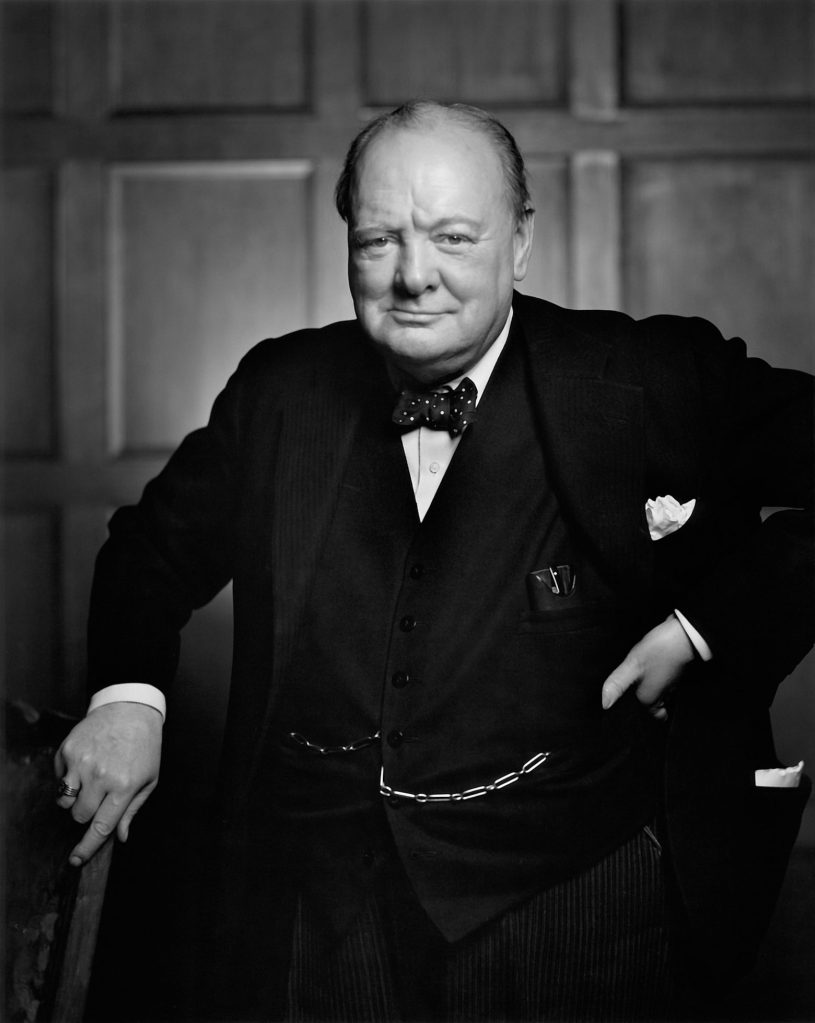
To me he seems one of the two or three greatest men ever born of our blood.

You will observe that I am talking as if we were one household and speaking of our blood, for no drop ran in his veins which was not British in its ultimate origin.

I like to think that in him we see at its highest that kind of character and mind which is the special glory of our common race.

He was wholly simple, without vanity or grandiosity or cant.

He was a homely man, full of homely common sense and homely humour, but in the great moment he could rise to a grandeur which is for ever denied to posturing, self-conscious talent.

He conducted the ordinary business of life in phrases of a homespun simplicity, but when necessary he could attain to a nobility of speech and a profundity of thought which have rarely been equalled.

He was a plain man, loving his fellows and happy among them, but when the crisis came he could stand alone.

He could talk with crowds and keep his virtue; he could preserve the common touch and yet walk with God.

There is no such bond between peoples as that each should enter into the sacred places of the other, and in the noble merchantry of civilization let us remember that, if we of England have given Shakespeare to America, you have paid us back with Lincoln.

From Two Ordeals of Democracy, an address delivered on the Alumni War Memorial Foundation at Milton Academy, Massachusetts, October 16, 1924 and republished in his book Homilies and Recreations by John Buchan (Books For Libraries Press. Freeport, NE, 1926).

John Buchan, 1st Baron Tweedsmuir (born Aug. 26, 1875, Perth, Perthshire, Scot.—died Feb. 11, 1940, Montreal) was a statesman and writer best known for his swift-paced adventure stories. His 50 books, all written in his spare time while pursuing an active career in politics, diplomacy, and publishing, include many historical novels and biographies.

John Buchan, 1st Baron Tweedsmuir (born Aug. 26, 1875, Perth, Perthshire, Scot.—died Feb. 11, 1940, Montreal) was a statesman and writer best known for his swift-paced adventure stories. His 50 books, all written in his spare time while pursuing an active career in politics, diplomacy, and publishing, include many historical novels and biographies.

According to Wikipedia, “Outside the field of literature he was, at various times, a barrister, a publisher, a lieutenant colonel in the Intelligence Corps, the Director of Information—reporting directly to prime minister David Lloyd George—during the First World War and a Unionist MP who served as Governor General of Canada, the fifteenth to hold the office since Canadian Confederation.

Canadian history professor Roger Hall noted in a book review that “a great deal of [Buchan’s] success resulted from the extraordinary person he was, adding that “not many of our contemporary [Governor General] candidates come with those credentials” and “in the end it is Buchan’s role as a moral compass that seems most worthy.”

Buchan’s moral certainty was, as historian Sir John Keegan wrote, “one of his strengths as a writer [giving] him the power to achieve something particularly elusive: moral atmosphere”

John Buchan was and is an “inspiring example of a life lived for others”, as Ursula Buchan has written, from humble origins “without money or family influence, he nevertheless carved out a hugely successful writing and public career … His strengths, underpinned by a sincere and unwavering Christian faith, were his intelligence, humanity, clarity of thought, wit, moral and physical courage, a capacity to get on with everybody, from monarchs to miners, and an elegant prose style that appealed to a very wide readership.

Mr. Buchan saw something in Mr. Lincoln.

I think often of Mr. Lincoln today.

As President, Mr. Lincoln governed a nation that was so split, that a good part of the country fought tooth and nail to stop being a part of the country.

Luckily or maybe unluckily, the feelings were regional and the divide by feelings accommodated the geography.

He was wholly simple, without vanity or grandiosity or cant.

Wholly simple.

Without vanity.

Without grandiosity (what a great word).

Without cant.

In this case, one source states: cant here means insincere, fake, preachy, or hypocritical talk, especially moralizing language someone doesn’t truly mean.

Not insincere,

fake,

preachy,

or hypocritical talk,

especially moralizing language someone doesn’t truly mean.

Buchan’s moral certainty was, as historian Sir John Keegan wrote, “one of his strengths as a writer [giving] him the power to achieve something particularly elusive: moral atmosphere”

In this moral atmosphere of Mr. Buchan’s was Mr. Lincoln.

I have this feeling that had Mr. Buchan been around today and asked to describe that current man in office, he would take up his pen and think and put it down and take it up and think and put it down and finally, give it up.

What can one do when your subject lives outside any moral atmosphere.

Back to Mr. Lincoln.

Where have you gone, Joe DiMaggio.

5.11.2026 – the greatest city,

the greatest city,
the greatest nation, nothing …
like us ever was

It has happened before.
Strong men put up a city and got
a nation together,
And paid singers to sing and women
to warble: We are the greatest city,
the greatest nation,
nothing like us ever was.

And while the singers sang
and the strong men listened
and paid the singers well
and felt good about it all,
there were rats and lizards who listened
… and the only listeners left now
… are … the rats … and the lizards.

And there are black crows
crying, “Caw, caw,”
bringing mud and sticks
building a nest
over the words carved
on the doors where the panels were cedar
and the strips on the panels were gold
and the golden girls came singing:
We are the greatest city,
the greatest nation:
nothing like us ever was.

The only singers now are crows crying, “Caw, caw,”
And the sheets of rain whine in the wind and doorways.
And the only listeners now are … the rats … and the lizards.

Four Preludes on Playthings of the Wind, #3 by Carl Sandburg as published in Smoke and Steel in The Complete Poems of Carl Sandburg (Harcourt, Brace: New York, 1970).

We don’t carry One Dollar bills any more but I had Professor back in college where I studied United States History who gave a one hour lecture based on the back of the One Dollar Bill.

He hit on the In God We Trust and pointed out the Mason’s All Seeing Eye at the top of the unfinished pyramid.

Then he hit on Novus ordo seclorum and that meant, The New Order of the Ages.

And finished with Annuit Coeptis or God has approved our undertaking.

Well sir, it has happened before.

The only singers now are crows crying, “Caw, caw,”

And the sheets of rain whine in the wind and doorways.

And the only listeners now are … the rats … and the lizards.

I will also mention the Great Seal of the United States.

Notice the Eagle looks towards the olive branches.

This was a change made by President Truman after WW2.

Had anyone in the current administration had any education in the Presidency, they might have caught and changed that too.

But I ain’t going tell them.

5.9.26 – mighty effort to

mighty effort to
rigidify society
to protect the top

Adapted from the book, The Road Home by Jim Harrison (New York : Atlantic Monthly Press, 1988) where Mr. Harrison writes:

It struck me for the thousandth time that when you were on the move you noted the bottom third,

at least a third it seemed had become social mutants and were scratching along as minimum-wage menial laborers and without any reliable way to get anyplace else for a fresh look;

those in Washington who could help simply had never noticed these people,

that there was something about the xenophobic power trance in politics that made them unable to extrapolate any other reality than the effort toward reelection.

They were making a mighty effort to rigidify the society to protect the top, and the bottom third were being openly sacrificed.

It struck me as I read this how hard folks who have ‘got there’ work to maker sure their place is secure rather than look to help anyone else ‘get there’, where ever your ‘there’ is.

Tom Wolfe writes in Back to Blood how the simple act of being able to gain access to a road through the ‘Owners Gate’ gave satisfaction to rich people as they passed the long line of cars in the ‘Employees/Guest’ Gate.

Me?

I am with Bob Dylan and got nothing so I got nothing to lose as I continue to bankroll my kids best I can one my way to bankruptcy so its easy for me to say we should remember the poor.

So it was with some satisfaction when I read in today’s New York Times, Maureen Dowd’s column, My Ted Talk, as she recounted the life and times of Mr. Ted Turner.

Mr. Turner was rich and he knew it but he lived a life that, in contrast to other rich lives currently in the news cycle, lived free of law suits and court filings.

Mr. Turner was BIG.

And I am not sure he was ever small in the ways that get you negative headlines aside from his manic Lead, Follow or Get Out of the Way mantra.

For me, he was that sailor guy who won the America’s Cup sailing races for the New York Yacht club, owner the Atlanta Braves and created CNN.

The mouth from the south but also seemed to be real if you know what I mean.

Ms. Dowd writes …

He was generous — another quality missing from many modern plutocrats. In 1996, at his friend Tom Brokaw’s urging, I called Turner to write a column on a pet peeve of his: the parsimony of fellow billionaires like Bill Gates and Warren Buffett.

Turner had, two years earlier, forked over $200 million to charity. He told me that he empathized with the fear of giving away so much money that you would fall off the Forbes 400 list of wealthiest Americans.

But he challenged his peers — or “ol’ skinflints,” as he called them — to shut down that fear and open up their purse strings.

He suggested a list focused on who did the giving rather than the having, proposing an “Ebenezer Scrooge Prize” to embarrass stingy billionaires and a “Heart of Gold Award” to honor the biggest givers.

“Scrooge felt a lot happier when he saved Tiny Tim and bought the turkey for the poor family, right?” he said. The column I wrote spurred Michael Kinsley, then the editor of Slate, a pioneering online magazine, to start the Slate 60, a list of the most generous philanthropists. The following year, he donated $1 billion to the U.N.

Now lets do some creative imagining and imagine that current man in office saying, “Scrooge felt a lot happier when he saved Tiny Tim and bought the turkey for the poor family, right?

Doesn’t work does it.

5.7.2026 – an ugly era

an ugly era
of ugly choices that is …
all I am saying

Adapted from the New York Times Joint Opinion piece, Graham Platner Is a Rorschach Test, by Frank Bruni and Bret Stephens where Mr. Bruni writes:

… an election is a binary, and, yes, Bret, I would choose him over Collins, who voted to confirm Robert F. Kennedy Jr., Tulsi Gabbard and Russell Vought and whose vaunted moderation doesn’t match her fear of President Trump’s supporters.

You think that the guardrails are mostly containing Trump, and I think that he’s showing us how fragile they are and what peril we’re in. To believe as I do is to root for the candidate less likely to rubber-stamp his agenda. It’s that simple.

I don’t think we have the luxury of such big-picture, long-term philosophizing. Democratically speaking, it’s do-or-die time, and it’s essential that Trump not have a Congress under Republican control for the final two years of his current term. Sure, Democrats are favored as of now to win the House, but they might not: Look at all the gerrymandering still going on. So they must do everything possible to win the Senate. The Republican Party — to which Collins belongs, no matter her discrete and admirable rebellions — has shown that it cannot be trusted to stand up to Trump. So my relentlessly practical, far-from-jubilant take is that Platner is the better choice.

When I say I’d vote for him, Bret, that’s not “giving him a pass.” That phrase — that concept — doesn’t really apply. This is an ugly era of ugly choices. I’m saying that I’m less scared of Platner than of a Congress under Trump’s thumb. That’s really all I’m saying. But if we’re going to talk passes, it’s Trump I refuse to give one.

The Scotty Who Knew Too Much

Several summers ago there was a Scotty who went to the country for a visit. He decided that all the farm dogs were cowards, because they were afraid of a certain animal that had a white stripe down its back. “You are a pussy-cat and I can lick you,” the Scotty said to the farm dog who lived in the house where the Scotty was visiting. “I can lick the little animal with the white stripe, too. Show him to me.” “Don’t you want to ask any questions about him?” said the farm dog. “Naw,” said the Scotty. “You ask the questions.”

So the farm dog took the Scotty into the woods and showed him the white-striped animal and the Scotty closed in on him, growling and slashing. It was all over in a moment and the Scotty lay on his back. When he came to, the farm dog said, “What happened?” “He threw vitriol,” said the Scotty, “but he never laid a glove on me.”

A few days later the farm dog told the Scotty there was another animal all the farm dogs were afraid of. “Lead me to him,” said the Scotty. “I can lick anything that doesn’t wear horseshoes.” “Don’t you want to ask any questions about him?” said the farm dog. “Naw,” said the Scotty. “Just show me where he hangs out.” So the farm dog led him to a place in the woods and pointed out the little animal when he came along. “A clown,” said the Scotty, “a pushover,” and he closed in, leading with his left and exhibiting some mighty fancy footwork. In less than a second the Scotty was flat on his back, and when he woke up the farm dog was pulling quills out of him. “What happened?” said the farm dog. “He pulled a knife on me,” said the Scotty, “but at least I have learned how you fight out here in the country, and now I am going to beat you up.” So he closed in on the farm dog, holding his nose with one front paw to ward off the vitriol and covering his eyes with the other front paw to keep out the knives. The Scotty couldn’t see his opponent and he couldn’t smell his opponent and he was so badly beaten that he had to be taken back to the city and put in a nursing home.

Moral: It is better to ask some of the questions than to know all the answers.

By James Thurber in Fables for For Our Time as published in The Thurber Carnival (Modern Library Edition, 1957).

5.4.2026 – often to win us

often to win us
to harm, instruments of
darkness tell us truths

Into yet another Monday of my life and Big Bill’s Tomorrow and tomorrow and tomorrow was running through my mind which led me to look, anew, at the play Macbeth and I came across Banquo’s speech where Banquo says …

And oftentimes, to win us to our harm,
The instruments of darkness tell us truths,
Win us with honest trifles, to betray ’s
In deepest consequence


I need not remind you that this is prefaced by Banquo’s question, What, can the devil speak true?

According to Wikipedia, Banqo or: Lord Banquo, the Thane of Lochaber, is a semi-historical character in William Shakespeare’s 1606 play Macbeth.

In the play, he is at first an ally of Macbeth (both are generals in the King’s army) and they meet the Three Witches together.

After prophesying that Macbeth will become king, the witches tell Banquo that he will not be king himself, but that his descendants will be.

Later, Macbeth in his lust for power sees Banquo as a threat and has him murdered by three hired assassins; Banquo’s son, Fleance, escapes. Banquo’s ghost returns in a later scene, causing Macbeth to react with alarm in public during a feast.

It came to me that Banquo would fit right in with today’s executive branch of Government.

He would fit in, but what might Banquo say if he were here?

I asked ChatGPT and I got this:

If Banquo from Shakespeare’s Macbeth were suddenly serving at a modern table and addressing Donald Trump, he’d likely speak in measured, wary verse—ever mindful of ambition, power, and the uneasy nature of prophecy.

Something like this:

“My lord, though fortune sets thee high in state,
Yet crowns are hollow when they court the storm.
I’ve seen how words, once feathered with fair hope,
May turn and prick the hand that feeds the flame.
So tread thou light where praise grows loud and fast,
For vaulting pride oft breaks the rider’s back.”

Ever mindful of ambition, power, and the uneasy nature of prophecy.

For vaulting pride oft breaks the rider’s back.

Banquo might well say this.

But who in the executive branch would understand it and its warnings.