
to me, was wholly
simple, without vanity,
grandiosity
To me he seems one of the two or three greatest men ever born of our blood.
You will observe that I am talking as if we were one household and speaking of our blood, for no drop ran in his veins which was not British in its ultimate origin.
I like to think that in him we see at its highest that kind of character and mind which is the special glory of our common race.
He was wholly simple, without vanity or grandiosity or cant.
He was a homely man, full of homely common sense and homely humour, but in the great moment he could rise to a grandeur which is for ever denied to posturing, self-conscious talent.
He conducted the ordinary business of life in phrases of a homespun simplicity, but when necessary he could attain to a nobility of speech and a profundity of thought which have rarely been equalled.
He was a plain man, loving his fellows and happy among them, but when the crisis came he could stand alone.
He could talk with crowds and keep his virtue; he could preserve the common touch and yet walk with God.
There is no such bond between peoples as that each should enter into the sacred places of the other, and in the noble merchantry of civilization let us remember that, if we of England have given Shakespeare to America, you have paid us back with Lincoln.
From Two Ordeals of Democracy, an address delivered on the Alumni War Memorial Foundation at Milton Academy, Massachusetts, October 16, 1924 and republished in his book Homilies and Recreations by John Buchan (Books For Libraries Press. Freeport, NE, 1926).
John Buchan, 1st Baron Tweedsmuir (born Aug. 26, 1875, Perth, Perthshire, Scot.—died Feb. 11, 1940, Montreal) was a statesman and writer best known for his swift-paced adventure stories. His 50 books, all written in his spare time while pursuing an active career in politics, diplomacy, and publishing, include many historical novels and biographies.
John Buchan, 1st Baron Tweedsmuir (born Aug. 26, 1875, Perth, Perthshire, Scot.—died Feb. 11, 1940, Montreal) was a statesman and writer best known for his swift-paced adventure stories. His 50 books, all written in his spare time while pursuing an active career in politics, diplomacy, and publishing, include many historical novels and biographies.
According to Wikipedia, “Outside the field of literature he was, at various times, a barrister, a publisher, a lieutenant colonel in the Intelligence Corps, the Director of Information—reporting directly to prime minister David Lloyd George—during the First World War and a Unionist MP who served as Governor General of Canada, the fifteenth to hold the office since Canadian Confederation.
Canadian history professor Roger Hall noted in a book review that “a great deal of [Buchan’s] success resulted from the extraordinary person he was, adding that “not many of our contemporary [Governor General] candidates come with those credentials” and “in the end it is Buchan’s role as a moral compass that seems most worthy.”
Buchan’s moral certainty was, as historian Sir John Keegan wrote, “one of his strengths as a writer [giving] him the power to achieve something particularly elusive: moral atmosphere”
John Buchan was and is an “inspiring example of a life lived for others”, as Ursula Buchan has written, from humble origins “without money or family influence, he nevertheless carved out a hugely successful writing and public career … His strengths, underpinned by a sincere and unwavering Christian faith, were his intelligence, humanity, clarity of thought, wit, moral and physical courage, a capacity to get on with everybody, from monarchs to miners, and an elegant prose style that appealed to a very wide readership.
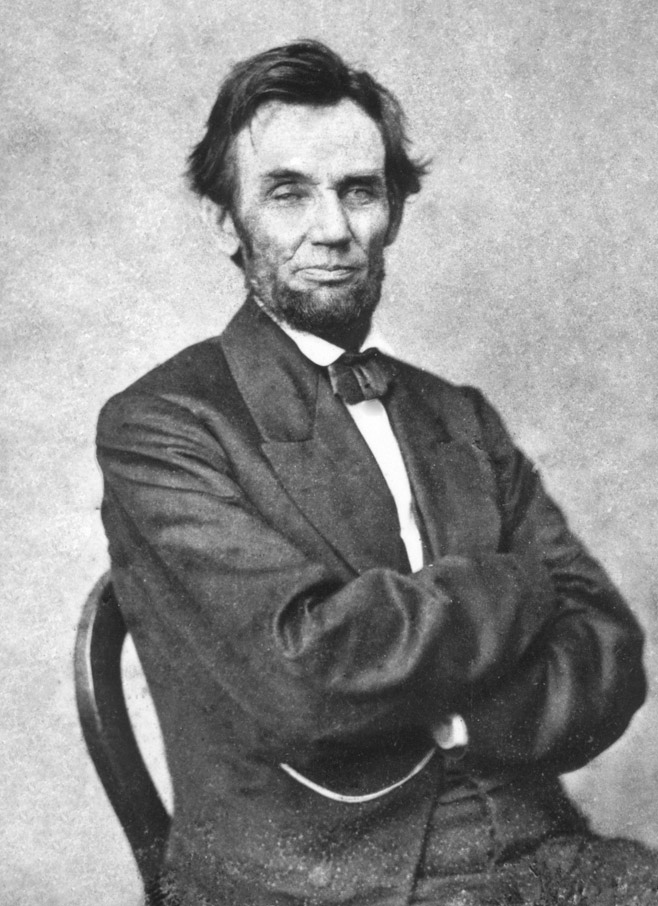
Mr. Buchan saw something in Mr. Lincoln.
I think often of Mr. Lincoln today.
As President, Mr. Lincoln governed a nation that was so split, that a good part of the country fought tooth and nail to stop being a part of the country.
Luckily or maybe unluckily, the feelings were regional and the divide by feelings accommodated the geography.
He was wholly simple, without vanity or grandiosity or cant.
Wholly simple.
Without vanity.
Without grandiosity (what a great word).
Without cant.
In this case, one source states: cant here means insincere, fake, preachy, or hypocritical talk, especially moralizing language someone doesn’t truly mean.
Not insincere,
fake,
preachy,
or hypocritical talk,
especially moralizing language someone doesn’t truly mean.
Buchan’s moral certainty was, as historian Sir John Keegan wrote, “one of his strengths as a writer [giving] him the power to achieve something particularly elusive: moral atmosphere”
In this moral atmosphere of Mr. Buchan’s was Mr. Lincoln.
I have this feeling that had Mr. Buchan been around today and asked to describe that current man in office, he would take up his pen and think and put it down and take it up and think and put it down and finally, give it up.
What can one do when your subject lives outside any moral atmosphere.
Back to Mr. Lincoln.
Where have you gone, Joe DiMaggio.
Discover more from No Haiku For You
Subscribe to get the latest posts sent to your email.
