daily dawns – summer, winter, spring, and fall — I’m a fool to rise at all!
Daily dawns another day; I must up, to make my way. Though I dress and drink and eat, Move my fingers and my feet, Learn a little, here and there, Weep and laugh and sweat and swear, Hear a song, or watch a stage, Leave some words upon a page, Claim a foe, or hail a friend— Bed awaits me at the end.
Though I go in pride and strength, I’ll come back to bed at length. Though I walk in blinded woe, Back to bed I’m bound to go. High my heart, or bowed my head, All my days but lead to bed. Up, and out, and on; and then Ever back to bed again, Summer, Winter, Spring, and Fall— I’m a fool to rise at all!
Inscription for the Ceiling of a Bedroom by Dorothy Parker as published in Enough Rope (New York: Boni & Liveright, 1926).
This from the woman who famously would yell What Fresh Hell is This? anytime the phone rang.
Try that at work some day, I betcha!
High my heart, or bowed my head.
All my days but lead to bed.
I just wish I wouldn’t start thinking about it an hour after I get to work.
I mean, if I went right home and went to bed when I wanted to, I would miss my after dinner nap.
I start looking forward to that as soon as I get up each day.
Readers of this blog will know that I bemoan that I started this haiku nonsense to recognize word play and use of words and not as an avenue to point out the shortcomings of the man currently in the high office of president.
While that is a short and easy avenue to take, I do want to return to my roots and recognize the word play in the NYT Opinion piece, If You Love America, Cringe for Itby Bret Stephens.
Mr. Stephens is a NYT contributor who takes part in a weekly piece called the conversation where he takes the conservative view of things in a conversation with another writer, Frank Bruni, who takes the liberal view side and they converse and write up their conversation as a column.
For today, Mr. Stephens did not need a liberal view to counter to write If You Love America, Cringe for It.
His feelings did not need a conversation with a liberal to show themselves and he did with marvelous word choices when he wrote:
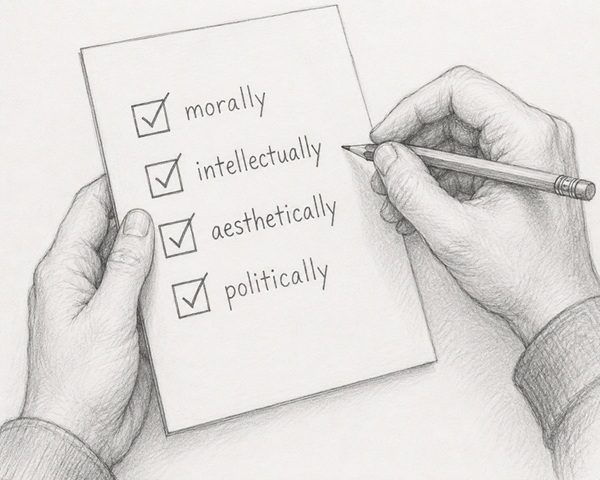
To exist as a sentient American in the age of Trump is to live in a perpetual cringe — morally, aesthetically, intellectually, politically. If the administration were a play or film script, it would be neither farce nor tragedy but instead a kind of absurdist travesty, “Waiting for Godot” meets “Pulp Fiction” meets “Dumb and Dumber.”
Lets take that paragraph apart.
That first sentence first.
To exist as a sentient American in the age of Trump is to live in a perpetual cringe.
(Remember the scene in the movie Amadeus when the Emperor wants Mozart to write an Opera in German and his Director of the State Theater say … But not German, I beg your Majesty! Italian is the proper language for opera. All educated people agree on that. Too which the Emperor replies, ‘ahaaa’.)
Once again that first line, To exist as a sentient American in the age of Trump is to live in a perpetual cringe and I admit that would eliminate most of his followers. I mean, define sentient?
The Merriam-Webster online dictionary says, “capable of sensing or feeling : conscious of or responsive to the sensations of seeing, hearing, feeling.”
So to exist as an American capable of sensing or feeling, conscious of or responsive to the sensations of seeing, hearing, feeling, certainly excludes anyone who supports this guy.
Then live in a perpetual cringe.
Yes! That so perfectly describes life since George W. Bush described the 2016 Inaugural Screech as That’s Some Weird Shit!
I have lived in a perpetual state of cringe since then and let me tell you, its taking a toll!
What might he do next?
What might he NOT do next?
What might he say next?
What might he NOT say next?
CRINGE!
Then the wonderful word choice, like battleships majestically steaming through a harbor.
Morally!
Aesthetically!
Intellectually!
Politically!
BOOOM BOOM BOOM BOOM!
Sadly it is …
Morally!
Cringe!
Aesthetically!
Cringe!
Intellectually!
Cringe!
Politically!
Cringe!
Mr. Stephens then states: For 10 years, I’ve watched my former political party work overtime not to cringe; to pretend that the Vesuvius of verbal infamies erupting daily from Trump’s mouth is either unimportant, or hilarious, or calculating and shrewd.
Republicans turned their tolerance for the president’s mental goo into a shot-drinking contest — the more you drank, the manlier you were supposed to be.
John McCain and Mitt Romney refused to play, to their everlasting credit; other Republicans, less admirably, did so only after Trump had ended their political futures.
To be sure, Mr. Stephens is a Republican and he brings in the other party writing:
But for 10 years, too, I’ve also watched the president’s opponents fail to appreciate the necessity of cringing — by understanding their role in Trump’s rise.
The Democrats and their media enablers who, until June of 2024, insisted Joe Biden was fit for a second term (surely knowing, somewhere in the dim recesses of their minds, that this could only help Trump) are complicit.
So are the progressives who, on one cultural issue after another, shoved the Democratic Party so far to the left that it became the very caricature of what MAGA-world said it was.
Not sure I can hold with that entirely but here is the problem.
We cannot afford the luxury of pointing out who is more to blame for where we are now.
We are all in this together.
Its the Americans capable of sensing or feeling, conscious of or responsive to the sensations of seeing, hearing, feeling against those folks who are out searching for the whoever vandalized the reflecting pool in Washington and don’t let anyone tell you different.
No time to point fingers.
No time to try for the high ground between members of the Americans capable of sense.
As Mr. Lincoln said, We must disenthrall ourselves, and then we shall save our country. We — even we here — hold the power, and bear the responsibility.
my father paints the summer, caught summer always an imagined time
A smoky rain riddles the ocean plains, Rings on the beaches’ stones, stomps in the swales, Batters the panes Of the shore hotel, and the hoped-for summer chills and fails. The summer people sigh, “Is this July?”
They talk by the lobby fire but no one hears For the thrum of rain. In the dim and sounding halls, Din at the ears, Dark at the eyes well in the head, and the ping-pong balls Scatter their hollow knocks Like crazy clocks.
But up in his room by artificial light My father paints the summer, and his brush Tricks into sight The prosperous sleep, the girdling stir and clear steep hush Of a summer never seen, A granted green.
Summer, luxuriant Sahara, the orchard spray Gales in the Eden trees, the knight again Can cast away His burning mail, Rome is at Anzio: but the rain For the ping-pong’s optative bop Will never stop.
Caught Summer is always an imagined time. Time gave it, yes, but time out of any mind. There must be prime In the heart to beget that season, to reach past rain and find Riding the palest days Its perfect blaze.
My Father Paints the Summer by Richard Purdy Wilbur in The Poems of Richard Wilbur (Harcourt, Brace: New York, 1947).
About Mr. Wilbur, Wikipedia says, “Richard Purdy Wilbur (March 1, 1921 – October 14, 2017) was an American poet and literary translator, and one of the foremost poets of the World War II generation. Wilbur’s work, often employing rhyme, and composed primarily in traditional forms, was marked by its wit, charm, and gentlemanly elegance. He was acclaimed in his youth as the heir to Robert Frost, translated the verse dramas of Moliere, Corneille, and Racine into rhymed English, collaborated with Leonard Bernstein as the lyricist for the opera Candide, and in his old age acted, particularly through his role in the annual West Chester University Poetry Conference, as a mentor to the younger poets of the New Formalist movement. He was appointed the second Poet Laureate Consultant in Poetry to the Library of Congress in 1987 and received the Pulitzer Prize for Poetry twice, in 1957 and 1989.”
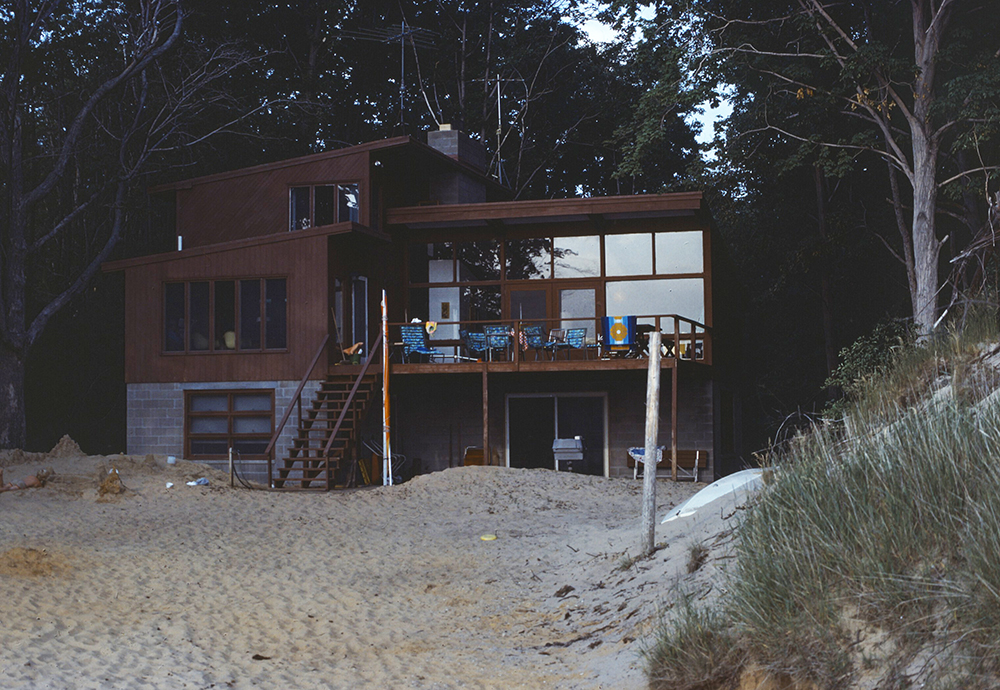
About the photo, if I think about my Dad, I cannot but think of my Dad at what we called ‘The Cottage.”
In the Spring of 1964, when I was 4 years, my Dad but a piece of property on the shore of Lake Michigan, a straight drive out M-45 to the lake from Grand Rapids where we lived.
It became our summer place and our place for summer time and it is where my Dad painted the summer.
In a letter written home from Europe during World War 2, my Dad told the woman who would become my Mom that “He liked to live in the whole house” which I took to mean that in his home, there would be nothing for show, no rooms reserved for company, he would live in the WHOLE house.
You could not have described life at our cottage any better.
My Dad lived in the whole place.
Every inch of property, cottage and beach was set aside to be used and used pretty much for anyone’s personal enjoyment.
I have never been any where else in the world that I experienced such freedom to live, explore, read, think or do anything that came to mind.
There was a lot of trust involved here and for the most part, we repaid that trust and just LIVED the heck out of this place.
Look at the photo.
A large, ungainly structure covered with windows for viewing the lake, chairs for sitting, towels drying, toys scattered all over for playing, a grill for cooking, sails for the sailboat propped up against the stairs and thousands of footprints of the 100s of people that made up our summers at the lake.
All in a place provided by my Dad.
My father painted the summer with a big thick brush and broad strokes.
The year after my Dad died, Mom sold the place.
She said, and understand the entire time we had the cottage it was the Hotel Lorraine and everyone was welcome, she said, “It was my place to be with Dad.”
Caught Summer is always an imagined time.
Time gave it, yes, but time out of any mind.
There must be prime
In the heart to beget that season, to reach past rain and find
Riding the palest days
Its perfect blaze.
Forgive but I have to repeat that line again where Mr. Wilbur writes, Caught Summer is always an imagined time.
Was it real?
Could it have been that way?
Caught Summer is always an imagined time.
I am here to tell you, it was all too real and when I think about it, I think of my Dad and I say thank you for the gift of all those summers you painted for us.
old foole, unruly Sunne, why dost thou thus through windows, through curtaines call on us?
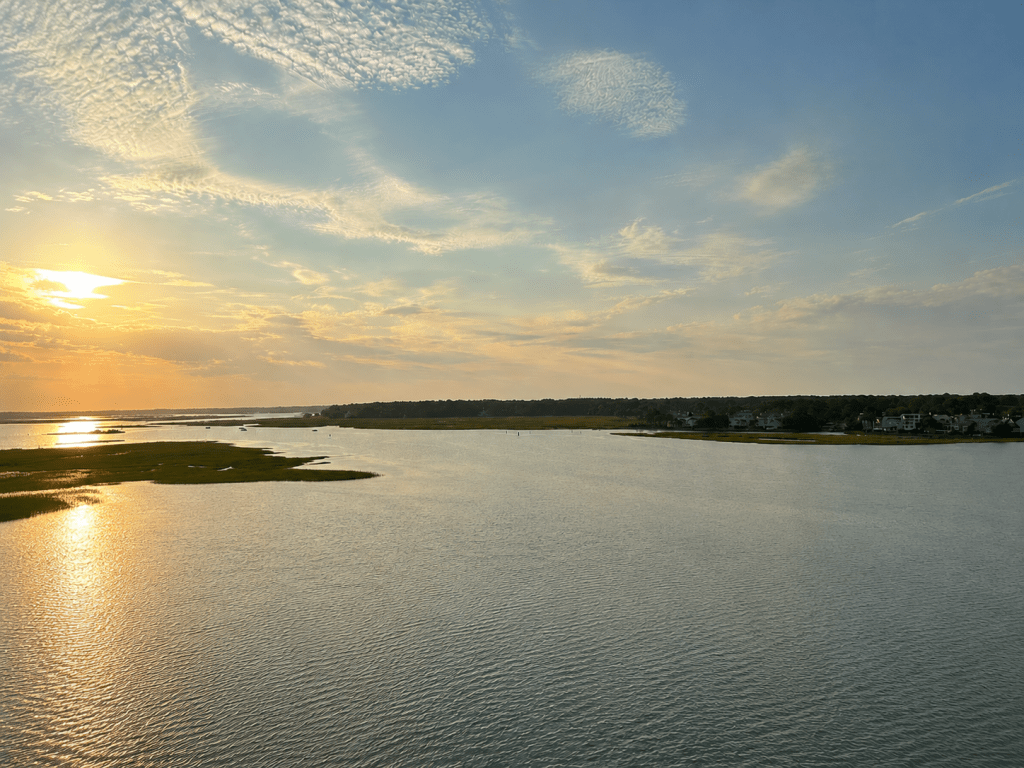
For midsummers day I wanted a photo of the sun at its highest point on the compass for sunrise … and it rained so this a photo from last week when I did catch the moments just after sunrise.
But as I checked and found out that midsummers day and the summer solstice may not mean the same thing to all people, I thought, oh well.
Anyway for the longest day of the year or the day with the most sunlight, if the sun is out, here is John Dunne’s The Sun ne Rising, from 1633.
I list it first it was it close to the english of the day and then a more modern spelling.
I will point that even 400 years ago, no one wanted to get up.
The Sunne Rising
Busie old foole, unruly Sunne, Why dost thou thus, Through windowes, and through curtaines call on us? Must to thy motions lovers seasons run? Sawcy pedantique wretch, goe chide Late schoole boyes, and sowre prentices, Goe tell Court huntsmen, that the King will ride, Call countrey ants to harvest offices; Love, all alike, no season knowes, nor clyme, Nor houres, dayes, moneths, which are the rags of time.
Thy beames, so reverend, and strong Why shouldst thou thinke? I could eclipse and cloud them with a winke, But that I would not lose her sight so long: If her eyes have not blinded thine, Looke, and to morrow late, tell mee, Whether both the’India’s of spice and Myne Be where thou leftst them, or lie here with mee. Aske for those Kings whom thou saw’st yesterday, And thou shalt heare, All here in one bed lay.
She’is all States, and all Princes, I, Nothing else is. Princes doe but play us; compar’d to this, All honor’s mimique; All wealth alchimie. Thou sunne art halfe as happy’as wee, In that the world’s contracted thus; Thine age askes ease, and since thy duties bee To warme the world, that’s done in warming us. Shine here to us, and thou art every where; This bed thy center is, these walls, thy spheare.
As published in The complete English poems of John Donne by John Donne, Edited by C. A. Patrides is G. B. Harrison Professor of English Literature in the University of Michigan at Ann Arbor. (London: Dent Collection, 1985).
The Sun Rising By John Donne
Busy old fool, unruly sun, Why dost thou thus,
Through windows, and through curtains call on us? Must to thy motions lovers’ seasons run? Saucy pedantic wretch, go chide Late school boys and sour prentices, Go tell court huntsmen that the king will ride, Call country ants to harvest offices, Love, all alike, no season knows nor clime, Nor hours, days, months, which are the rags of time.
Thy beams, so reverend and strong Why shouldst thou think?
I could eclipse and cloud them with a wink, But that I would not lose her sight so long; If her eyes have not blinded thine, Look, and tomorrow late, tell me, Whether both th’ Indias of spice and mine Be where thou leftst them, or lie here with me. Ask for those kings whom thou saw’st yesterday, And thou shalt hear, All here in one bed lay.
She’s all states, and all princes, I, Nothing else is.
Princes do but play us; compared to this, All honor’s mimic, all wealth alchemy. Thou, sun, art half as happy as we, In that the world’s contracted thus. Thine age asks ease, and since thy duties be To warm the world, that’s done in warming us. Shine here to us, and thou art everywhere; This bed thy center is, these walls, thy sphere.
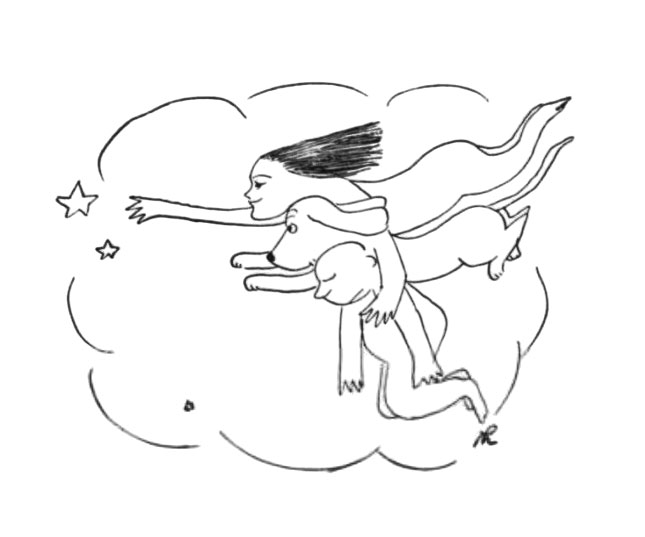
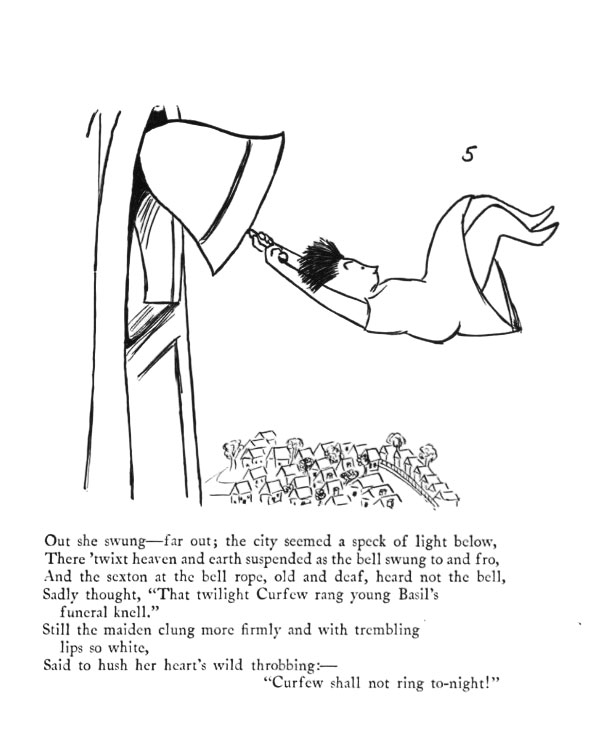
out she swung – far out twixt heaven and earth .. curfew shall not ring tonight
According to Wikipedia, Curfew Must Not Ring Tonight is a narrative poem by Rose Hartwick Thorpe, written in 1867 and set in the 17th century.
Thorpe wrote her poem in 1867, following the American Civil War, while living in Litchfield, Michigan. She traded the manuscript to a Detroit newspaper in exchange for a subscription. The original newspaper printing has never been found, but the poem was widely printed before the first version in book form in 1882.
Thorpe’s poem, a favorite of Queen Victoria’s, was one of the most popular of the 19th century, but later faded into obscurity. An 8-foot monument in Litchfield, Michigan along State Highway 99 honors the poem and author’s connection to that town.
Litchfield adopted the title of the poem as a symbol, having fire trucks and the city website show the symbol of a bell reading “Curfew Shall Not Ring Tonight”. A bell in the center of Litchfield commemorates the poem and Thorpe’s time spent in the town
Oddly enough while Wikipedia entry for the poem, it mentions that the poem was written in Litchfield, Michigan and that a highway marker commemorates that fact, the Wikipedia entry for Litchfield does not list Rose Hartwick Thorpe under famous people from Litchfield.
But I digress.
Wikipedia does mention that An illustrated version of this poem is contained in Fables for Our Time and Famous Poems Illustrated by James Thurber (1940).
My research shows that the James Thurber’s Illustrated Poem first appeared in the New Yorker Magazine 87 years ago today, June 17, 1939.
In his book working at the New Yorker Magazine, The Years with Ross, Thurber writes that editor Harold Ross was fond of the Illustrated Poem series writing, “Why in God’s name did you stop doing the illustrated poems? There are forty million other verses in the English language, many of them unquestionably suitable for Thurber illustration.”
Thurber says he responded, “As for the illustrated poems, they began when I sent St. Clair McKelway, from Frederick, Maryland, the Barbara Frietchie drawings, and they ended when I tried Poe’s Raven, and it turned into a common cornfield crow.”
My research shows that The Raven never appeared in the magazine, but was published in the book, Thurber and Company, in 1966.
Here is the complete poem.
Curfew Must Not Ring Tonight
England’s sun was slowly setting oe’r the hilltops far away, Filling all the land with beauty at the close of one sad day; And its last rays kissed the forehead of a man and maiden fair,– He with steps so slow and weary; she with sunny, floating hair; He with bowed head, sad and thoughtful, she, with lips all cold and white, Struggling to keep back the murmur, “Curfew must not ring to-night!”
“Sexton,” Bessie’s white lips faltered, pointing to the prison old, With its walls so tall and gloomy, moss-grown walls dark, damp and cold,– “I’ve a lover in the prison, doomed this very night to die At the ringing of the curfew, and no earthly help is nigh. Cromwell will not come till sunset;” and her lips grew strangely white, As she spoke in husky whispers, “Curfew must not ring to-night!”
“Bessie,” calmly spoke the sexton (every word pierced her young heart Like a gleaming death-winged arrow, like a deadly poisoned dart), “Long, long years I’ve rung the curfew from that gloomy, shadowed tower; Every evening, just at sunset, it has tolled the twilight hour. I have done my duty ever, tried to do it just and right: Now I’m old, I will not miss it. Curfew bell must ring to-night!”
Wild her eyes and pale her features, stern and white her thoughtful brow, As within her secret bosom, Bessie made a solemn vow. She had listened while the judges read, without a tear or sigh, “At the ringing of the curfew, Basil Underwood must die.” And her breath came fast and faster, and her eyes grew large and bright; One low murmur, faintly spoken. “Curfew must not ring to-night!”
She with quick step bounded forward, sprang within the old church-door, Left the old man coming slowly, paths he’d trod so oft before. Not one moment paused the maiden, But with eye and cheek aglow, Staggered up the gloomy tower, Where the bell swung to and fro; As she climbed the slimy ladder, On which fell no ray of light, Upward still, her pale lips saying, “Curfew shall not ring to-night!”
She has reached the topmost ladder, o’er her hangs the great dark bell; Awful is the gloom beneath her, like the pathway down to hell. See! the ponderous tongue is swinging; ’tis the hour of curfew now, And the sight has chilled her bosom, stopped her breath, and paled her brow. Shall she let it ring? No, never! Her eyes flash with sudden light, As she springs, and grasps it firmly: “Curfew shall not ring to-night!”
Out she swung,– far out. The city Seemed a speck of light below,– There twixt heaven and earth suspended, As the bell swung to and fro. And the sexton at the bell-rope, old and deaf, heard not the bell, Sadly thought that twilight curfew rang young Basil’s funeral knell. “Still the maiden, clinging firmly, quivering lip and fair face white, Stilled her frightened heart’s wild throbbing: “Curfew shall not ring tonight!”
It was o’er, the bell ceased swaying; and the maiden stepped once more Firmly on the damp old ladder, where, for hundred years before, Human foot had not been planted. The brave deed that she had done Should be told long ages after. As the rays of setting sun Light the sky with golden beauty, aged sires, with heads of white, Tell the children why the curfew did not ring that one sad night.
O’er the distant hills comes Cromwell. Bessie sees him; and her brow, Lately white with sickening horror, has no anxious traces now. At his feet she tells her story, shows her hands, all bruised and torn; And her sweet young face, still haggard, with the anguish it had worn, Touched his heart with sudden pity, lit his eyes with misty light. “Go! your lover lives,” said Cromwell. “Curfew shall not ring to-night!”
Wide they flung the massive portals, led the prisoner forth to die, All his bright young life before him. Neath the darkening English sky, Bessie came, with flying footsteps, eyes aglow with lovelight sweet; Kneeling on the turf beside him, laid his pardon at his feet. In his brave, strong arms he clasped her, kissed the face upturned and white, Whispered, “Darling, you have saved me, curfew will not ring to-night.”