7.13.2026 – permitting over

permitting over
accumulation of books
in the premises

Adapted from the article, Too Many Books? and sub headed, Mendel Uminer faced a crisis when his landlord objected to the 10,000 volumes in his New York studio apartment by Alex Vadukul, a features writer for the Styles section of The New York Times, specializing in stories about New York City.

Mr. Vadukul quotes Mr. Uminer as saying, ““I’m always reading,” Uminer, 31, said. “I’m reading to extract knowledge. Every book I own, I need. My library is my manual for life.”

Mr. Vadukul writes about Mr. Uminer, “that He worked as a freelance Hebrew translator and used the apartment as the headquarters for his fledgling literary journal, Notarikon Review, hosting parties that gained a reputation among quarters of New York’s literary underclass. Striving writers drank beer among the teetering stacks while arguing over foreign affairs and Greek poetry.

The stacks kept rising as Uminer added his hauls from thrift shops, book dealers and eBay deliveries. “I don’t think of myself as a hoarder,” he said, “but I guess my building did.”

This past winter, he received a notice from building management. “You are violating a substantial obligation of your tenancy,” it began. “You are maintaining the Premises in a severely overcluttered condition; permitting the over-accumulation of books in the Premises; creating a fire hazard by over-accumulating combustible books in the Premises.”

Mr. Vadukul quotes a friend of Mr. Uminer, “I think it’s possible his landlord might have their priorities misplaced, or might not understand him. If you’re not steeped in his culture, maybe his library does look chaotic. But I’d argue it only looks like a mess. I’ll bet he can tell you where every single book is in his apartment.”

I did not know that maintaining the Premises in a severely overcluttered condition by permitting the over-accumulation of books in the Premises; creating a fire hazard by over-accumulating combustible books in the Premises, was a crime.

I sure knew books burned.

Think of the stories of the burning of the Library of Alexandria by Julius Caesar and the stories of the great Los Angeles Public Library Fire of 1986.

But that you could be cited for the over-accumulation of books in the premises?

Just something wrong there.

I think of the self graded quiz prepared by writer Paul Fussell so that readers could look over their homes and come up a rating for the ‘class’ radiated by said home.

The higher the score, the more ‘class’ inherent in the home.

These questions were part of the quiz.

Bookcase(s) partially filled with books – add 5
Any old leather bindings more than 75 years old – add 6
Bookcase(s) filled with books – add 7
Overflow books stacked on floor, chairs, ETC – add 6

Today, maintaining the Premises in a severely overcluttered condition by permitting the over-accumulation of books in the Premises; creating a fire hazard by over-accumulating combustible books in the Premises, is a violation.

Just one more sign of the approaching apocalypse.

7.12.2026 – count your own blessings

count your own blessings
and let your neighbor count theirs –
secure as a vault

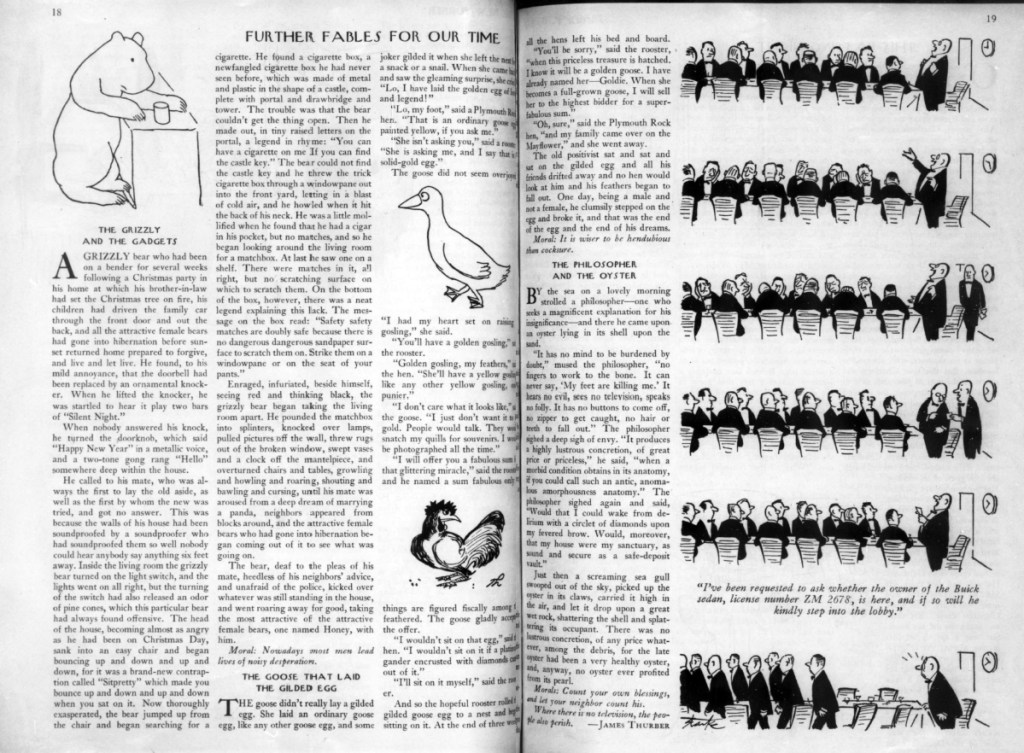
Based on the James Thurber Further Fable for Our Time, The Philosopher and the Oyster.

By the sea on a lovely morning strolled a philosopher — one who seeks a magnificent explanation for his insignificance — and there he came upon an oyster lying in its shell upon the sand.

“It has no mind to be burdened by doubt,” mused the philosopher, “no fingers to work to the bone.

It can never say, ‘My feet are killing me.’

It hears no evil, sees no television, speaks no folly. It has no buttons to come off, no zipper to get caught, no hair or teeth to fall out.”

The philosopher sighed a deep sigh of envy.

“It produces a highly lustrous concretion, of great price or priceless,” he said, “when a morbid condition obtains in its anatomy, if you could call such an antic, anomalous amorphousness anatomy.”

The philosopher sighed again and said, “Would that I could wake from delirium with a circlet of diamonds upon my fevered brow.

Would, moreover, that my house were my sanctuary, as sound and secure as a safe-deposit vault.”

Just then a screaming sea gull swooped out of the sky, picked up the oyster in its claws, carried it high in the air, and let it drop upon a great wet rock, shattering the shell and splattering its occupant.

There was no lustrous concretion, of any price whatever, among the debris, for the late oyster had been a very healthy oyster, and, anyway, no oyster ever profited from its pearl.

MORALS: Count your own blessings, and let your neighbor count his.

Where there is no television, the people also perish.

I quote from Mr. Thurber today because, if you subscribed to the New Yorker Magazine in the year 1956, and on this day in 1956, you got your copy of the New Yorker from your mailbox and read later that night after dinner, on page 19, you would have read The Philosopher and the Oyster as that was when the story was first published.

Seventy years ago today or as Mr. Lincoln might say, Three Score and Ten.

The Further Fables, according to one biography were all written in a Columbus, Ohio hotel where Thurber was staying as he visited with his family for a month in 1955.

According the biography, James Thurber : his life and times by Harrison Kinney (Holt: New York, 1995), Thurber began a new series of fables. Thirty-seven of them ran in the New Yorker from May 12 to October 13, 1956. Katharine White had obtained permission from Harper & Bros, to run certain illustrations from the 1940 Fables for Our Time with the new fables, and, beyond her official call of duty, obtained additional permission for their use in both the American and British editions of Further Fables for Our Time. Most of the other illustrations in the books are composites of Thurber’s cartoons and spots over the years.

Mr. Kinney continues: Further Fables for Our Time, complete with the New Yorker rejects, was published October 31, 1956, with a first printing of thirty thousand copies. The Book Find Club accounted for another fifteen thousand, and the New Yorker s business department had five thousand complimentary copies bound to send to advertising space buyers. S. J. Perelman let it be known that the fables contained “the finest writing of our time,” but Thurber was upset to be told that one reviewer had called them “the tired writing of a tired man.” That another critic had said, “He writes with the verve of a young man” didn’t compensate him for the put-down.

In a letter to a Miss Carolyn Wilson, dated West Cornwall, Connecticut, May 2, 1960, Mr. Thurber writes:

Our mutual friend Libba Thayer has given me your address and reminded me that you and I were great friends of Elmer Davis,’ so I felt like writing to you. 

Elmer Davis was my favorite American of this century, as I have said in private and in print, and I was happy that he lived to read my dedication to him of Further Fables for Our Time. He wrote me a brief, painful, but bright note about it, saying that it made him feel like a cross between Abraham Lincoln and Dr. Schweitzer. I know a great many other admirers of Elmer, including Edward P. Morgan, who broadcasts for WABC, and many newspapermen. (Selected letters of James Thurber by James Thurber (London : Hamish Hamilton, 1982)).

Mr. Kinney commented: The dedication page of Further Fables for Our Time reads: “To Elmer Davis, whose comprehension of people and persons has lighted our time, so that we can see where we are going, these fables are dedicated with admiration, affection and thankfulness.” Thurber had been a faithful listener to Davis, whose defiant radio broadcasts against McCarthyism had somehow stayed on the air despite warnings to the ABC network from Vincent Hartnett, editor of Red Channels. Davis was in the hospital with an illness that would prove fatal. He was moved by Thurber’s compassionate efforts to cheer him, and wrote Thurber that given his years of blindness, Thurber surely had too many He was moved by Thurber’s compassionate efforts to cheer him, and wrote Thurber that given his years of blindness, Thurber surely had too many of his own travails to worry about Davis’s.

According to Wikipedia, Elmer Holmes Davis (January 13, 1890 – May 18, 1958) was an American news reporter, author, the Director of the United States Office of War Information during World War II and a Peabody Award recipient. Beginning on January 3, 1954, he had a program on ABC Radio on Sundays from 10:15 to 10:30 Eastern Time. Davis used the platform to criticize Senator Joseph McCarthy for his anti-communist investigations.

To repeat, Thurber had been a faithful listener to Davis, whose defiant radio broadcasts against McCarthyism had somehow stayed on the air despite warnings to the ABC network from Vincent Hartnett, editor of Red Channels.

And again, His defiant radio broadcasts against McCarthyism had somehow stayed on the air despite warnings to the ABC network.

Ripples from little stones dropped in the pool.

You can see all of the Thurber images online that I have collected at For Muggs and Rex.

7.11.2026 – big disappointment

big disappointment
small, forgettable and short
on chocolate chips

Over the holiday we got together as a family as most families do and as most families do, we got together over a lot of food.

My daughter Alexis brought a bag of her homemade chocolate chip cookies.

Pretty much the basic chocolate chip cookie but with added chunks of milk chocolate that had family members urging family members to try one who then urged family members to try one, mostly saying, you have got to try one!

Maybe the best chocolate chip cookies I ever had.

Crunchy enough to crunch but soft enough to not crumble and the double hit of chocolate, but boy howdy, yessir, I am telling you, I had to sit down.

According to AI, The chocolate chip cookie is undeniably the most American cookie. Invented in the 1930s by Ruth Wakefield at the Toll House Inn in Whitman, Massachusetts, this iconic combination of buttery dough and semi-sweet chocolate morsels is now baked in over half of American households and remains the undisputed favorite nationwide.

According to Wikipedia, There is no official cookie for the entire United States. However, the beloved chocolate chip cookie is America’s unofficial national favorite and serves as the official state cookie for both Massachusetts and Pennsylvania.

My home state, Michigan, in an act of near apostasy, as named the CHERRY chocolate chip cookie as its official State Cookie while my current state of South Carolina made something called the Benne Wafer as its state cookie. It is made, I understand as I have never had one, benne seeds also known as Sesame Seeds. I think that is about all you need to know about South Carolina to understand South Carolina.

Who else would make a cookie out of sesame seeds when chocolate chips are available?

I found somehow, irresistibly satisfying and appropriate that in the Washington Post article, The best and worst bites at the Great American State Fair by WP Food Critic Warren Rojas and editorial aide Jade Tran, who set out to eat at the food booths at the Great American State Fair [sic] in Washington, DC over the 4th of July that:

The $4 dollar chocolate chips cookies was one of the biggest disappointments: small, forgettable, and short on chocolate chips.

The Great American State Fair.

One thing to do.

Sell the food that made America Great.

And start with the Chocolate Chip Cookie.

Simple when you get right down to it.

What was delivered?

Something small.

Something forgettable.

Something short on Chocolate Chips.

Kind sums it all up for me.

And when I say all I mean ALL!

7.8.026 – ups downs but always

ups downs but always
the sense of motion and the
illusion of hope

But the years 1895 to 1900 which are the staple of this story exceed in vividness, variety and exertion anything I have known—except of course the opening months of the Great War.

When I look back upon them I cannot but return my sincere thanks to the high gods for the gift of existence.

All the days were good and each day better than the other.

Ups and downs, risks and journeys, but always the sense of motion, and the illusion of hope.

Come on now all you young men, all over the world.

You are needed more than ever now to fill the gap of a generation shorn by the War.

You have not an hour to lose. You must take your places in life’s fighting line.

Twenty to twenty-five! These are the years!

Don’t be content with things as they are.

‘The earth is yours and the fulness thereof’.

Enter upon your inheritance, accept your responsibilities.

Raise the glorious flags again, advance them upon the new enemies, who constantly gather upon the front of the human army, and have only to be assaulted to be overthrown.

Don’t take No for an answer.

Never submit to failure.

Do not be fobbed off with mere personal success or acceptance.

You will make all kinds of mistakes; but as long as you are generous and true, and also fierce, you cannot hurt the world or even seriously distress her.

She was made to be wooed and won by youth.

She has lived and thrived only by repeated subjugations.

From My Early Life. A Roving Commission by Winston Churchill (London: Thornton Butterworth, September 1931).

Twenty to twenty-five! These are the years!

Enter upon your inheritance, accept your responsibilities.

Never submit to failure.

Do not be fobbed off with mere personal success or acceptance.

Is this not possibly the best GraduationAddress ever made?

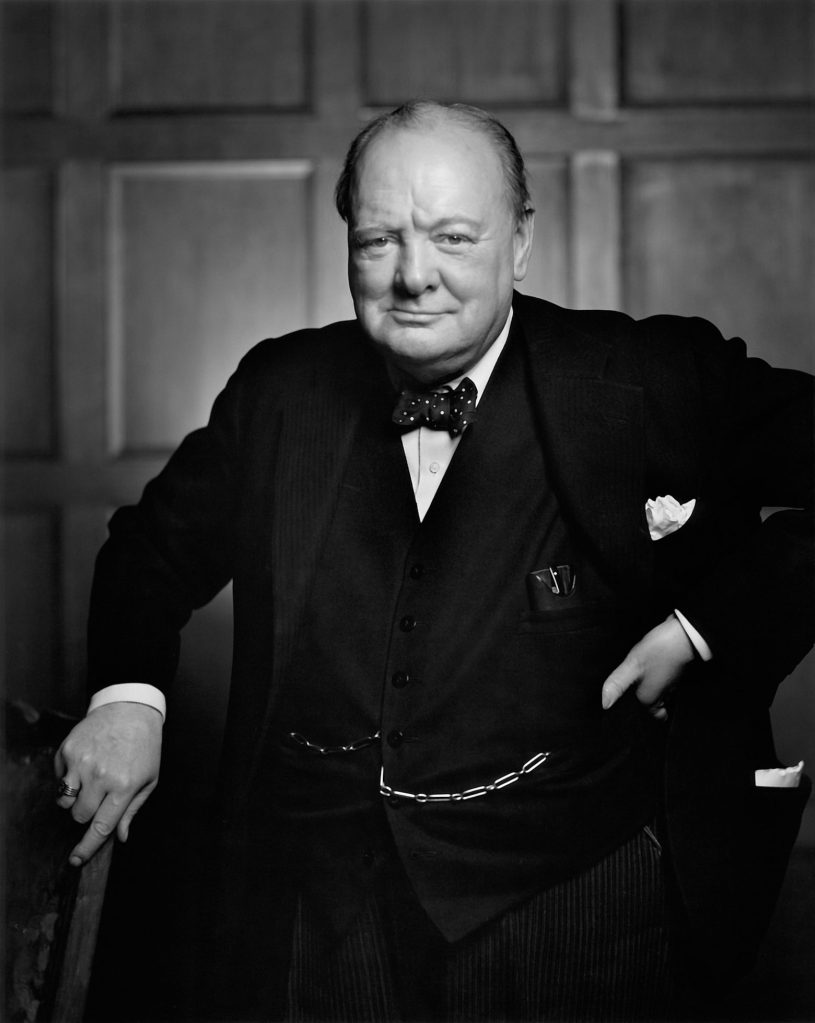
This was Winston Churchill looking back in 1931 to a time when he was 25.

Looking back.

Spent the holiday with the kids and grand kids.

And I thought about this speech and I thought about young people who are growing up today.

I can look back to a time when I thought Twenty to twenty-five! Those are the years!

But what the kids too young to look back.

Those kids who grew up in this day and age and feel that this day and age is the norm.

They have no clue to how it was before the darkness started.

I hope they have a future to look forward to because these days are not much worth being excited about.

I am reminded of this passage from the book, 1984, where George Orwell writes:

” … it occurred to him that the old man, who must be eighty at the least, had already been middle-aged when the Revolution happened.

He and a few others like him were the last links that now existed with the vanished world of capitalism.

In the Party itself there were not many people left whose ideas had been formed before the Revolution.

The older generation had mostly been wiped out in the great purges of the Fifties and Sixties, and the few who survived had long ago been terrified into complete intellectual surrender.

If there was anyone still alive who could give you a truthful account of conditions in the early part of the century, it could only be a prole.

Suddenly the passage from the history book that he had copied into his diary came back into Winston’s mind, and a lunatic impulse took hold of him.

He would go into the pub, he would scrape acquaintance with that old man and question him.

He would say to him:

“Tell me about your life when you were a boy.

What was it like in those days?

Were things better than they are now, or were they worse?”

“Tell me about your life when you were a boy. What was it like in those days? Were things better than they are now, or were they worse?”

Echoes deep into my toes.

7.7.2026 – its damnatio

its damnatio
memoriae in latin
rewriting the past

From Wikipedia, “Damnatio memoriae (Classical Latin pronunciation: [damˈnaːti.oː mɛˈmɔri.ae̯]) is a modern Latin phrase meaning “condemnation of memory” or “damnation of memory”, indicating that a person is to be excluded from official accounts, or remembered after death in a way contrary to what that person may have desired.

In ancient Rome, the practice of damnatio memoriae was the condemnation of emperors after their deaths. If the Senate or a later emperor did not like the acts of an emperor, they could have his property seized, his name erased and his statues reworked (normally defaced).

Compounding this difficulty is the fact that a completely successful damnatio memoriae results—by definition—in the full and total erasure of the subject from the historical record. In the case of figures such as emperors or consuls it is unlikely that complete success was possible, as even comprehensive obliteration of the person’s existence and actions in records and the like would continue to be historically visible without extensive reworking. The impracticality of such a cover-up could be vast—in the case of Emperor Geta, for example, coins bearing his effigy proved difficult to entirely remove from circulation for several years, even though the mere mention of his name was punishable by death.

The impossibility of actually erasing memory of an emperor has led scholars to conclude that this was not actually the goal of damnatio. Instead, they understand damnatio:

not so much as an attempt to obliterate memory entirely as to transform honorific commemoration into a form of visible denigration. That is: the power of an act of damnatio relies, at least in part, on the viewer of a monument being able to supplement the gaps in an inscription with their own knowledge of what those gaps had once contained, and the reasons why the text had been removed — Polly Low, "Remembering, Forgetting, and Rewriting the Past

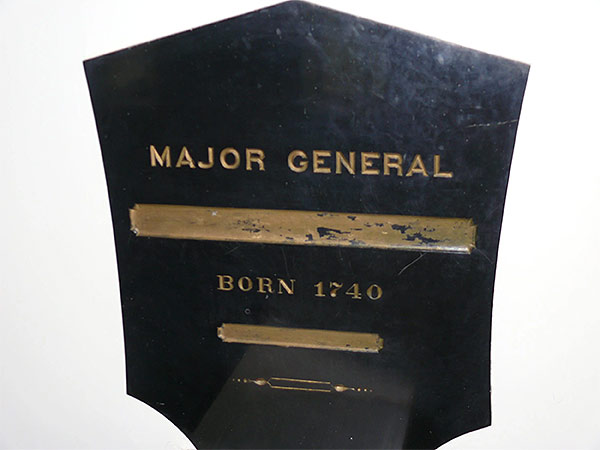
In the United States you can find an example of the concept of Damnatio memoriae in the Old Chapel at West Point.

Inside this chapel, George Washington and all his Generals havea plaque in their memory.

One plaque looks like this:

It is there in honor of this feller named Benedict Arnold.

This same feller has a monument on the Battlefield at Saratoga where this same feller led an attack on the Redcoats.

Notice again, no name.

The next generation in Washington going have a lot of Damnatio memoriae to do but I will volunteer to help if I can.