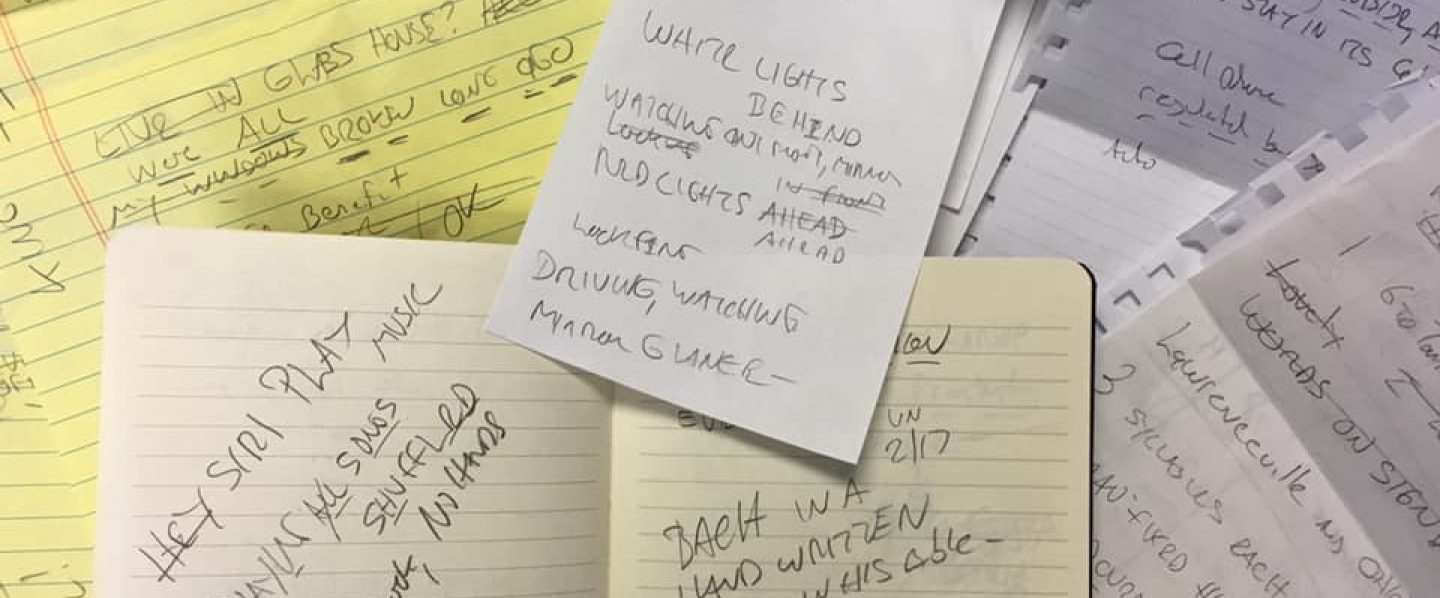
December 12 – Past year, how much good,

Past year, how much good,
I take credit? How much bad,
I think is my fault?

Can I answer that question?

Honestly?

Easy!

I doubt I really accomplished and did anything that might be considered good or good for people this last year.

The amount of bad things?

Things I consider to be ‘my fault’ are countless.

Beyond numbering.

I am smart enough to know that isn’t true.

I did do some good.

Not everything was my fault.

I am somewhat smart enough to know that thinking this way is wrong.

But.

There it is.

Maybe it just the easy way out.

Yup, it’s me, it’s all on me.

Pile it on.

Considered in the abstract, it’s kinda stupid to feel this way.

If I cannot take credit for anything good, then why do I line up at the ‘remorse, oh woe is me’ window at the feelings bank?

James Thurber wrote in his fable, The White Deer, about the Royal Astronomer and the King.

“There was a knock on the door and Paz, the Royal Astronomer, came into the room. He was a young pink-cheeked man in a pink robe and his pink eyes peered through pink lenses.
“A huge pink comet, Sire,” he said, “just barely missed the earth a little while ago. It made an awful hissing sound, like hot irons stuck in water.”
“They aim these things at me,” said [King] Clode, “Everything is aimed at me.”

Well, you know what.

The next time a meteor passes the earth.

The next time something goes wrong.

The next time somebody is looking for someone to blame.

I am going to say (or at least think) not my fault.

Of course, still get going to try fix the issue or help out (if possible).

But its not on me.

The next time.

September 18 – moment beyond words

moment beyond words
Grand daughter and James Thurber
being read to me

After saying it was a moment beyond words, I am going to try and put my feelings into words.

Very inadequate words.

I asked my Grand Daughter if she wanted a story before bedtime and I picked up my copy of Thurber Carnival and found the fable, The Moth and Star.

Azaria said she would like a story but she grabbed the book and read to me.

My first grade grand daughter, working her way through James Thurber, sounding out the words like ‘impressionable’ and ‘singed’. pausing to look up to me for the occasional definition, was such stuff as dreams are made from.

My hope for the today is that everyone, anyone should have such a moment in their life.

The Moth and the Star

A young and impressionable moth once set his heart on a certain star. He told his mother about this and she counseled him to set his heart on a bridge lamp instead. “Stars aren’t the thing to hang around,” she said; “lamps are the thing to hang around.” “You get somewhere that way,” said the moth’s father. “You don’t get anywhere chasing stars.” But the moth would not heed the words of either parent. Every evening at dusk when the star came out he would start flying toward it and every morning at dawn he would crawl back home worn out with his vain endeavor. One day his father said to him, “You haven’t burned a wing in months, boy, and it looks to me as if you were never going to. All your brothers have been badly burned flying around street lamps and all your sisters have been terribly singed flying around house lamps. Come on, now, get out of here and get yourself scorched! A big strapping moth like you without a mark on him!”

The moth left his father’s house, but he would not fly around street lamps and he would not fly around house lamps. He went right on trying to reach the star, which was four and one-third light years, or twenty-five trillion miles, away. The moth thought it was just caught up in the top branches of an elm. He never did reach the star, but he went right on trying, night after night, and when he was a very, very old moth he began to think that he really had reached the star and he went around saying so. This gave him a deep and lasting pleasure, and he lived to a great old age. His parents and his brothers and his sisters had all been burned to death when they were quite young.

Moral: Who flies afar from the sphere of our sorrow is here today and here tomorrow.

from Further fables for our time by James Thurber, New York : Simon and Schuster, 1956.

August 7 – Who made America?

Who made America?
Whose sweat, blood? Whose faith, pain? They . . .
make America dream!

Let America Be America Again (1935 … 1935? … 1935!)
Langston Hughes – 1902-1967

Let America be America again.
Let it be the dream it used to be.
Let it be the pioneer on the plain
Seeking a home where he himself is free.

(America never was America to me.)

Let America be the dream the dreamers dreamed—
Let it be that great strong land of love
Where never kings connive nor tyrants scheme
That any man be crushed by one above.

(It never was America to me.)

O, let my land be a land where Liberty
Is crowned with no false patriotic wreath,
But opportunity is real, and life is free,
Equality is in the air we breathe.

(There’s never been equality for me,
Nor freedom in this “homeland of the free.”)

Say, who are you that mumbles in the dark?
And who are you that draws your veil across the stars?

I am the poor white, fooled and pushed apart,
I am the Negro bearing slavery’s scars.
I am the red man driven from the land,
I am the immigrant clutching the hope I seek—
And finding only the same old stupid plan
Of dog eat dog, of mighty crush the weak.

I am the young man, full of strength and hope,
Tangled in that ancient endless chain
Of profit, power, gain, of grab the land!
Of grab the gold! Of grab the ways of satisfying need!
Of work the men! Of take the pay!
Of owning everything for one’s own greed!

I am the farmer, bondsman to the soil.
I am the worker sold to the machine.
I am the Negro, servant to you all.
I am the people, humble, hungry, mean—
Hungry yet today despite the dream.
Beaten yet today—O, Pioneers!
I am the man who never got ahead,
The poorest worker bartered through the years.

Yet I’m the one who dreamt our basic dream
In the Old World while still a serf of kings,
Who dreamt a dream so strong, so brave, so true,
That even yet its mighty daring sings
In every brick and stone, in every furrow turned
That’s made America the land it has become.
O, I’m the man who sailed those early seas
In search of what I meant to be my home—
For I’m the one who left dark Ireland’s shore,
And Poland’s plain, and England’s grassy lea,
And torn from Black Africa’s strand I came
To build a “homeland of the free.”

The free?

Who said the free? Not me?
Surely not me? The millions on relief today?
The millions shot down when we strike?
The millions who have nothing for our pay?
For all the dreams we’ve dreamed
And all the songs we’ve sung
And all the hopes we’ve held
And all the flags we’ve hung,
The millions who have nothing for our pay—
Except the dream that’s almost dead today.

O, let America be America again—
The land that never has been yet—
And yet must be—the land where every man is free.
The land that’s mine—the poor man’s, Indian’s, Negro’s, ME—
Who made America,
Whose sweat and blood, whose faith and pain,
Whose hand at the foundry, whose plow in the rain,
Must bring back our mighty dream again.

Sure, call me any ugly name you choose—
The steel of freedom does not stain.
From those who live like leeches on the people’s lives,
We must take back our land again,
America!

O, yes,
I say it plain,
America never was America to me,
And yet I swear this oath—
America will be!

Out of the rack and ruin of our gangster death,
The rape and rot of graft, and stealth, and lies,
We, the people, must redeem
The land, the mines, the plants, the rivers.
The mountains and the endless plain—
All, all the stretch of these great green states—
And make America again!

Hughes wrote this poem while riding a train from New York to his mother’s home in Ohio. He was in despair over recent reviews of his first Broadway play and his mother’s diagnosis of breast cancer. Despite being a pillar of the Harlem Renaissance in the 1920s, he was still struggling for acceptance as a poet, battling persistent racism, and just eking out a living. Selling a poem or a story every few months, he called himself a “literary sharecropper.” Fate, he said, “never intended for me to have a full pocket of anything but manuscripts.” from Wikipedia

July 17 – Once More, to the lake

Michigan, West Coast
The long blue edge of summer
Soul claps hands and sings

I told someone that you can the boy out of the lake but you cannot take the lake out of the boy.

I was able to spend a couple of days along Michigan’s West Coast, the East Coast of Lake Michigan.

The smells.

The sounds.

The feel of the water, the sand and the air.

I could have been 10 years old, 59 years old or any age in between.

The long blue edge of summer.

Back in the day, 1982 to be precise, my Mom bought a vacation guide to the shorelines of Michigan.

Since we lived on the shore of Lake Michigan, just south of Grand Haven, in the Summertime, I had to ask why she thought we need a guidebook.

That is where that line comes from in today’s Haiku.

“I don’t know,” said my Mom, “I just liked the title, The long blue edge of summer.”

The last line is from Sailing to Byzantium by William Butler Yeats

That is no country for old men. The young
In one another’s arms, birds in the trees,
—Those dying generations—at their song,
The salmon-falls, the mackerel-crowded seas,
Fish, flesh, or fowl, commend all summer long
Whatever is begotten, born, and dies.
Caught in that sensual music all neglect
Monuments of unageing intellect.

II

An aged man is but a paltry thing,
A tattered coat upon a stick, unless
Soul clap its hands and sing, and louder sing
For every tatter in its mortal dress,
Nor is there singing school but studying
Monuments of its own magnificence;
And therefore I have sailed the seas and come
To the holy city of Byzantium.

III

O sages standing in God’s holy fire
As in the gold mosaic of a wall,
Come from the holy fire, perne in a gyre,
And be the singing-masters of my soul.
Consume my heart away; sick with desire
And fastened to a dying animal
It knows not what it is; and gather me
Into the artifice of eternity.

IV

Once out of nature I shall never take
My bodily form from any natural thing,
But such a form as Grecian goldsmiths make
Of hammered gold and gold enamelling
To keep a drowsy Emperor awake;
Or set upon a golden bough to sing
To lords and ladies of Byzantium
Of what is past, or passing, or to come.

But then again, it is really not from Sailing to Byzantium.

Soul clap its hands and sing is a re-occurring theme throughout the writings of Jim Harrison which is where I first read it.

It shows up in several of Harrison’s writings along the lines of this passage from The Road Home.

The question, of course, is how you make your soul clap its hand and sing. My bones seemed to be built out of incomprehension.

All I can say is that I stood on the edge of Lake Michigan, along the long blue edge of summer, with my feet in the water and my soul clapped its hands and sang.

Usually the title of each day’s haiku is the first line.

But for the Landmark Bookstore Haiku Contest, the submissions needed a title so for this one I decided on, Once More to the Lake, which allows me to get in another EB White tribute.

W. B. Yeats, “Sailing to Byzantium” from The Poems of W. B. Yeats: A New Edition, edited by Richard J. Finneran. Copyright 1933 by Macmillan Publishing Company, renewed © 1961 by Georgie Yeats. Reprinted with the permission of A. P. Watt, Ltd. on behalf of Michael Yeats.
Source: The Collected Poems of W. B. Yeats (1989)

The road home by Jim Harrison -New York : Atlantic Monthly Press, ©1998. Fiction : English

June 27 – fine, fresh, good morning

fine, fresh, good morning
unicorn in the garden?
No, but I looked

The Unicorn in the Garden

Once upon a sunny morning a man who sat in a breakfast nook looked up from his
scrambled eggs to see a white unicorn with a golden horn quietly cropping the roses in
the garden.

The man went up to the bedroom where his wife was still asleep and woke her.

“There’s a unicorn in the garden,” he said. “Eating roses.”

She opened one unfriendly eye and looked at him.

“The unicorn is a mythical beast,” she said, and turned her back on him.

The man walked slowly downstairs and out into the garden.

The unicorn was still there; he was now browsing among the tulips.

“Here, unicorn,” said the man and pulled up a lily and gave it to him.

The unicorn ate it gravely.

With a high heart, because there was a unicorn in his garden, the man went upstairs and roused his wife again.

“The unicorn,” he said, “ate a lily.” His wife sat up in bed and looked at him, coldly.

“You are a booby,” she said, “and I am going to have you put in a booby-hatch.”

The man, who never liked the words “booby” and “booby-hatch,” and who liked them even less on a shining morning when there was a unicorn in the garden, thought for a moment.

“We’ll see about that,” he said.

He walked over to the door.

“He has a golden horn in the middle of his forehead, “he told her.

Then he went back to the garden to watch the unicorn; but the unicorn had gone away. The man sat among the roses and went to sleep.

And as soon as the husband had gone out of the house, the wife got up and dressed as fast as she could.

She was very excited and there was a gloat in her eye.

She telephoned the police and she telephoned the psychiatrist; she told them to hurry to her house and
bring a strait-jacket.

Then the police and the psychiatrist looked at her with great interest.

“My husband,” she said, “saw a unicorn this morning.”

The police looked at the psychiatrist and the psychiatrist looked at the police.

“He told me it ate a lily,” she said.

The psychiatrist looked at the police and the police looked at the psychiatrist.

“He told me it had a golden horn in the middle of its forehead,” she said.

At a solemn signal from the signal from the psychiatrist, the police leaped from their chairs and seized the wife.

They had a hard time subduing her, for she put up a terrific struggle, but they finally
subdued her.

Just as they got her into the strait-jacket, the husband came back into the house.

“Did you tell your wife you saw a unicorn?” asked the police.

“Of course not,” said the husband. “The unicorn is a mythical beast.”

“That’s all I wanted to know,” said the psychiatrist.

“Take her away. I’m sorry, sir, but your wife is as crazy as a jay bird.”

So they took her away, cursing and screaming, and shut her up in an institution.

The husband lived happily ever after.

Moral: Don’t count your boobies until they are hatched.

James Thurber in Fables for Our Time and Famous Poems Illustrated (Harper and Brothers, 1940).