May 24 – Kitchen table

kitchen table
set for breakfast, room smelled
of coffee, bacon

Admit it, you can smell the bacon.

You can smell the bacon and it made you smile.

Last week while visiting my sister Lisa, she made bacon and eggs from breakfast on cold dreary day and I can still smell that happy smell.

This is based on this excerpt from Charlotte’s Web.

When Mr. Arable returned to the house half an hour later, he carried a carton under his arm. Fern was upstairs changing her sneakers. The kitchen table was set for breakfast, and the room smelled of coffee, bacon, damp plaster, and wood smoke from the stove.

Yesterday’s quote from Charlotte’s Web got me to thinking about this great book.

Sure sure it’s all about teaching kids about life and death and everything.

But for me it was just a joy to read and have read to you.

I never saw the great, dark picture of life that others painted from the book. (This is a reoccurring theme in my life of missing the possible intended pathos for the romance.)

Much of what is written about Charlotte’s Web reminds me of when I was in college and one Professor assigned a book that was written by another Professor at Michigan that I had a good relationship with.

To answer the first Professor’s assigned questions about the book, I walked over to talk to the Professor who had authored it.

That Professor looked at me, tossed the paper with the questions on his desk and said, “That guy has been telling me things about my book I never knew since I got here.”

EB White himself read the book for a recording and you can listen to it hear from YouTube.

(If you want to download this as an MP3 and add to your phone to listen to later or while at pool, use https://www.onlinevideoconverter.com/.)

For me, the magic of hearing EB White reading his words in his New England accent with his own phrasing, pausing, infliction and emphasis is real and beyond words.

You can smell the bacon and wood smoke and can hear the geese and see the barn.

One last tidbit on the book, I read somewhere that when EB White submitted the manuscript to his publisher, it was ready to go to press without any EDITING.

On the one hand, what else would you expect?

On the other hand, it is still a fascinating comment on EB White.

May 23 – such a different day

Woke up to alarm
it’s such a different day
after a good sleep

Wake up refreshed.

Who thought such a goal would be so desired and so seldom realized.

I wake up some mornings and sincerely thank God for a beautiful, restorative rest.

And the impact it makes on the day to come cannot be under estimated.

Where is sleep and why is so hard to come by?

The night seemed long. Wilbur’s stomach was empty and his mind was full. And when your stomach is empty and your mind is full, it’s always hard to sleep.

From Charlotte’s Web by EB White

March 29 – Quo Vadis?

Augusta? Macon?
Chattanooga? Birmingham?
Bypass? Quo Vadis?

A Latin phrase meaning “Where are you marching?” It is also commonly translated as “Where are you going?” or, poetically, “Whither goest thou?” (Wikipedia)

Inspired by the road signs and directions at the I85 and I285 interchange in North Georgia AND the EB White story, Quo vadimus?, about two men who meet each other on the street. One asks the other Quo vadis? and after a bit of hesitation, tells him a very complex tale of where he is going, and what he is going to do. (New Yorker, May 24, 1930 Issue)

White writes, “Did it ever occur to you that there’s no limit to how complicated things can get, on account of one thing always leading to another?”

As a post script, a little known piece of family trivia is that son Ellington’s full name is Ellington Bernard Hoffman.

He is named after Duke Ellington, Bernard Berg (Grand Father) AND EB White.

March 7 – Hellbent

Express Lane Entrance
Beware sidetracks! Hellbent get
Where they are going

I see the signs on my commute every morning and afternoon. ‘Express Lane Entrance’ and I am reminded of the Screwtape Letters by CS Lewis:

It does not matter how small the sins are provided that their cumulative effect is to edge the man away from the Light and out into the Nothing. Murder is no better than cards if cards can do the trick. Indeed the safest road to Hell is the gradual one — the gentle slope, soft underfoot, without sudden turnings, without milestones, without signposts.

Screwtape Letters XII

As I see other drivers speed around me, in and out of the express lane, regardless of the law, I also think about this short story:

The Wolf Who Went Places

A wealthy young wolf, who was oblivious of everything except himself, was tossed out of college for cutting classes and corners, and he decided to see if he could travel around the world in eighty minutes.

“That isn’t possible,” his grandmother told him, but he only grinned at her.

“The impossible is the most fun,” he said.

She went with him to the door of the old Wolf place. “If you go that fast, you won’t live to regret it,” she warned him, but he grinned again, showing a tongue as long as a necktie.

“That’s an old wolves’ tale,” he said, and went on his reckless way.

He bought a 1959 Blitzen Bearcat, a combination motorcar and airplane, with sky-rocket getaway, cyclone speedrive, cannonball takeoff, blindall headlights, magical retractable monowings, and lightning pushbutton transformationizer. “How fast can this crate go without burning up?” he asked the Blitzen Bearcat salesman.

“I don’t know,” the salesman said, “but I have a feeling you’ll find out.”

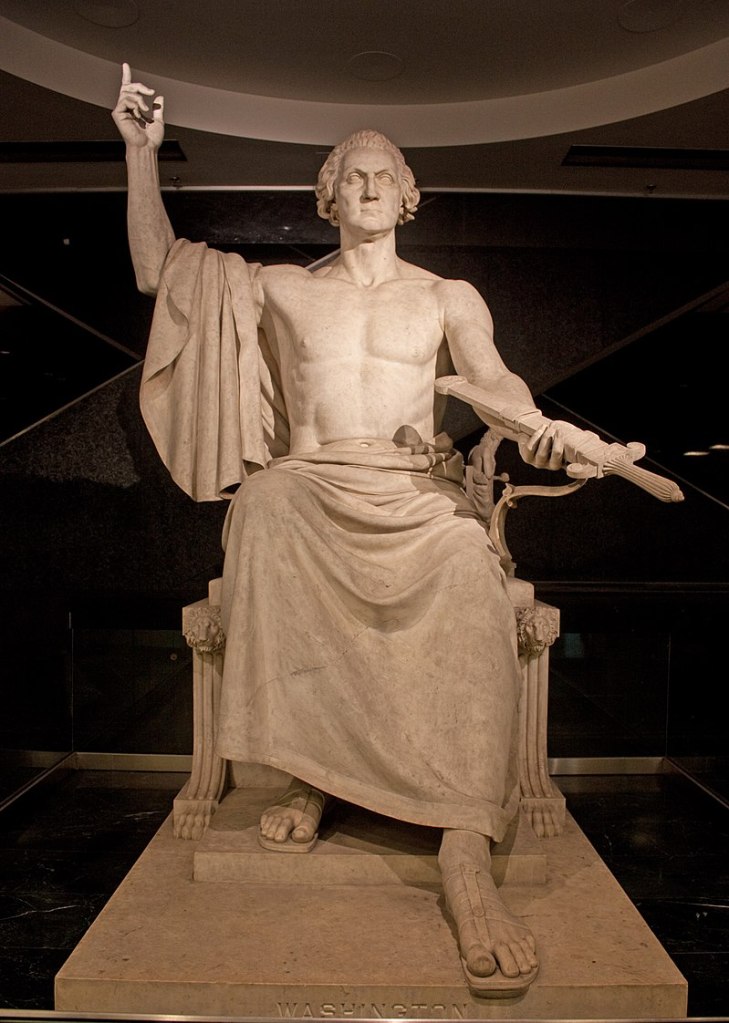
The wealthy young wolf smashed all the ground records and air records and a lot of other things in his trip around the world, which took him only 78.5 minutes from the time he knocked down the Washington Monument on his takeoff to the time he landed where it had stood. In the crowd that welcomed him home, consisting of about eleven creatures, for all the others were hiding under beds, there was a speed-crazy young wolfess, with built-in instantaneous pickup ability, and in no time at all the wolf and his new-found mate were setting new records for driving upside down, backward, blindfolded, handcuffed, and cockeyed, doubled and redoubled.

One day, they decided to see if they could turn in to Central Park from Fifth Avenue while traveling at a rate of 175 miles an hour, watching television, and holding hands. There was a tremendous shattering, crashing, splitting, roaring, blazing, cracking, and smashing, ending in a fiery display of wheels, stars, cornices, roofs, treetops, glass, steel, and people, and it seemed to those spectators who did not die of seizures as they watched that great red portals opened in the sky, swinging inward on mighty hinges, revealing an endless nowhere, and then closed behind the flying and flaming wolves with a clanking to end all clanking, as if those gates which we have been assured shall not prevail had, in fact, prevailed.

MORAL: Where most of us end up there is no knowing, but the hellbent get where they are going.

James Thurber

Further Fables for Our Time
Thurber, James Grover (1894-1961)
1956
Edition used as base for this ebook: London: Hamish Hamilton, 1956 [first U.K. edition]
Project Gutenberg Canada ebook #1055

The Screwtape Letters, by CS Lewis, was initially published, chapter/letter, by chapter, in The Guardian on May 2nd, 1941. Based on the public domain etext provided by Gutenberg Canada Ebooks. ( public domain under Canadian copyright law)