started machine, can’t stop it, someone else runs it yet I started it
Adapted from the play, The Cocktail Party (1950) by one Thomas Stearns Eliot, better known by his initials of T. S.
In the play, the character named Lavinia says:
I don’t know why. But it seems to me that yesterday I started some machine, that goes on working, And I cannot stop it; no, it’s not like a machine— Or if it’s a machine, someone else is running it. But who? Somebody is always interfering . . . I don’t feel free . . . and yet I started it . .
What is going on?
The pace of each week seems to pick up faster and faster and its Friday when last night was Friday night when we went out for dinner but it wasn’t last night, it was a week ago.
Somewhere someone said years fly, days crawl.
This machine is running and running faster and I started it.
But when did I start it?
I am reminded of a scene in a Jim Harrison book where the hero, now in his 70s finds his journals written in his 20’s.
Our hero reads them, saying to himself, “My God, what will the fool do next.”
are you sitting in the catbird seat? explain what the gibberish means
The one and only reason this haiku got written is because it makes me laugh.
Wellllll, maybe not the haiku itself, but the source.
Hopefully someone recognizes that it comes from a short story, Sitting in the Catbird Seat by James Thurber.
Not place dropping, but I was at Thurber’s house this past summer in Columbus, Ohio.
Due to Covid, the museum wasn’t open but Leslie let me run around the outside of the house taking pictures and two little girls came by selling flowers they had just picked from the next door garden so we sat on the front porch, sitting in the catbird seat, and had a nice little chat.
The phrase, sitting in the Catbird Seat, is a quote from Red Barber, the radio announcer of the Brooklyn Dodgers.
In the short story, Thurber writes:
She was constantly shouting these silly questions at him. “Are you lifting the oxcart out of the ditch? Are you tearing up the pea patch? Are you hollering down the rain barrel? Are you scraping around the bottom of the pickle barrel? Are you sitting in the catbird seat?”
It was Joey Hart, one of Mr. Martin’s two assistants, who had explained what the gibberish meant. “She must be a Dodger fan,” he had said. “Red Barber announces the Dodger games over the radio and he uses those expressions–picked ’em up down South.” Joey had gone on to explain one or two. “Tearing up the pea patch” meant going on a rampage; “sitting in the catbird seat” meant sitting pretty, like a batter with three balls and no strikes on him.“
The short story was one my mind, and I know what you are thinking, these stories are always on my mind, but that’s not true.
It’s the short story, “One is a Wanderer” that is always on my mind, but that is for another time or an earlier time as I know I must have commented on it a couple of times in this blog.
But why tonight?
When bored and wanting something to read that won’t land me in a war – as an aside I think the last 10 or so books, fiction and non fiction, that I picked up landed me in a war or a refuge crisis or somehow, I am still not sure, in a morgue – I check out what my Canadian Friends have added to the Faded Page.
You will remember that those wonderful people in Canada are finding older books whose authors or copyright holders have allowed the Canadian Copyright’s to expire which puts these books in the public domain.
They are careful to say that if the copyright is enforce in your country, Do Not Download These Books.
So please be aware of that and please don’t throw me in that briar patch.
When I checked tonight, Faded Page had added a half dozen Thurber Books including Thurber Carnival, My Life and Welcome To It and the far-to-little-read The Years with Ross.
These are all there, ready to download for any device or read online.
Like Mr. Martin, I will end with, “He went out and shut the door, and his step was light and quick in the hall. When he entered his department he had slowed down to his customary gait, and he walked quietly across the room to the W20 file, wearing a look of studious concentration.“
saudade, long lost irretrievable but the dream of it
” … there is a word in Portuguese called saudade that appeared to represent the farm and our lives, a homesickness or longing for something vital that had been irretrievably lost and only the dream of it could be recovered.”
From “The Road Home” by Jim Harrison.
The online dictionary defines saudade (saa·daydz) as a feeling of longing, melancholy, or nostalgia that is supposedly characteristic of the Portuguese or Brazilian temperament.
Wikipedia says, “Saudade is a deep emotional state of nostalgic or profound melancholic longing for something or someone that one cares for and/or loves. Moreover, it often carries a repressed knowledge that the object of longing might never be had again.”
Then Wikipedia adds this.
Saudade is a word in Portuguese and Galician that claims no direct translation in English.
However, a close translation in English would be “desiderium.”
Desiderium is defined as an ardent desire or longing, especially a feeling of loss or grief for something lost.
Desiderium.
Not a bad word.
Desiderium.
But it smacks of things other than the heart some how.
Desiderium.
No, I will take saudade.
I keep saudade in my head for those moments when there are no words.
Somewhere along the line of my life I came across the singing of Cesaria Evora.
Her song Sodade is a saudade put to music.
I am not sure what it is called when a feeling, an outlook, a word and a song all combine the same way.
Jenny Lawson writes in ‘Furiously Happy” that when there are no words, she has license to make one up.
For me then, when a feeling, an outlook, a word and a song all combine the same way I call in omniaonomatopoeia.
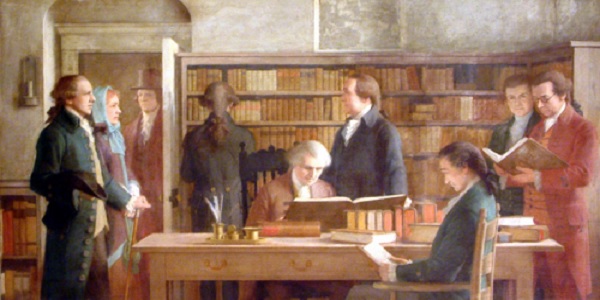
have each of us the advantage of using the books of all others
In the 1985 movie, Silverado, a western written, produced and directed by Lawrence Kasdan (just after he made The Big Chill, which I saw in special preview in Ann Arbor and which was my first glimpse of the Low Country – I just didn’t appreciate it at the time) there is a scene where Kevin Kline walks through the swinging doors into a saloon and stops, looks around and breathes deep with the satisfaction of someone who has arrived in their one perfect place.
Yesterday, after two years of Covid restrictions and 1 year of reduced operations for renovations, I went back to the Bluffton branch of the Beaufort County Library.
I walked through the double doors and into the lobby and I stopped and looked around and I breathed in deep with the satisfaction of someone who has arrived in their one perfect spot.
According to legend, and in this case by legend, I mean the classic Autobiography of Ben Franklin, which I was taught may have been the single most successful manufactured self-serving long-lasting piece of propaganda ever published but that is for another day (lets just say that Ben was in it for the long game with the possible goal of walking off with the state of Pennsylvania for himself), it was in 1731 that Dr. Franklin and his friends worked out how to share books.
Dr. Franklin writes, “, a proposition was made by me that, since our books were often referr’d to in our disquisitions upon the queries, it might be convenient to us to have them altogether where we met, that upon occasion they might be consulted; and by thus clubbing our books to a common library, we should, while we lik’d to keep them together, have each of us the advantage of using the books of all the other members, which would be nearly as beneficial as if each owned the whole. “
It didn’t work out as “yet some inconveniences occurring for want of due care of them” and this first effort was stopped but it led to the what we would call a subscription library and eventually that cornerstone of liberty and freedom, the public library.
Now closing in on 300 years after Ben’s Book Club, in an edge of electronic books and reading, the role of a public library has to be questioned as really necessary?
(Ever see the TV show, The Librarians? I don’t mean the American docu-drama, I mean the one from Australia?)
I will say the the tools have changed but the need, the job, the role of the public library is as important and necessary as at any time in history.
Big surprise there right?
What would anyone expect me to say?
I love the library.
I was happy that when we moved to the low country I saw that the county library system was investing in their buildings and that the local branch, the Bluffton Public Library would be getting almost a million dollar renovation.
And when I walked into the re-opened library building yesterday I just felt good.
Much like a walk on the beach, it was refreshing, good-for-the-soul just to be in there.
I thought of the Hemingway line of, “This is a clean and pleasant café. It is well lighted. The light is very good” and I thought of how in the Hemingway short story, the older waiter thinks, “Each night I am reluctant to close up because there may be some one who needs the café.”
The people I know and the people I worked with in the libraries were like that and were often reluctant to close up because there may be some one who needs the library.
I walked around and just enjoyed the books and the clean, well lit space.
I looked for new books, challenging myself to grab any fiction book at random off the 14 day loan shelf to searching out old favorites and to see how many Jim Harrison books were in the stacks (7!).
I went through the library sale books.
I sat in the new chairs.
I chatted with librarians and volunteers.
I checked my books out and left thinking that maybe, just maybe, the hordes would be held at bay for another 20 or 30 years.
In my life time anyway.
I thought about the other Ben Franklin library story.
When Benjamin Franklin passed away on April 17, 1790, he left Boston and Philadelphia $2,000 for libraries. He’d saved this money while he was Governor of Pennsylvania (1785 to 1788). The money was not to be distributed until 200 years after his death.
In 1990, the bequest was worth $6.5 million and Philadelphia’s portion of the trust was $2 million.
By all scientific examination of Ben’s kite flying in the thunderstorm stunt, Dr. Franklin should have been fried to a crisp.
at the violet hour eyes turn upward from the desk human engine waits
Part of the series of Haiku inspired by The Wasteland by T.S. Eliot and the article, ‘It takes your hand off the panic button’: TS Eliot’s The Waste Land 100 years on by Andrew Dickson.
Mr. Dickson asks, ‘Is it genuinely one of the greatest works in the language, or – as the poet once claimed – just “a piece of rhythmical grumbling“?’
Readers of this blog may remember that from time to time I struggle with the weight of effort of producing a daily Haiku and any thoughts I may have about the words and time that went in the Haiku that day.
This daily schedule of missing a day can bring on a personal mental paralysis wherein writing these entries becomes impossible.
I learned to deal with this by not dealing with it and let it go.
Then when I look at my register of entries and see blank days with no post, I will grab a topic or book or poem for a source and produce a series of Haiku to fill in those blank dates.
This is one of the great benefits of this effort being my blog and my blog, my rules.
It IS cricket because I say it is.
It is ‘according to Hoyle’ because I say it is.
Thus I have this series based on ‘The Wasteland.’
A thoroughly enjoyable connection of wordplay and source of endless discussion in the search for meaning.
For myself, I like that bit about a piece of rhythmical grumbling by Mr. Eliot so said Mr. Eliot.
I have remembered this story before in these posts, but it reminds me of a story told by the actor Rex Harrison.
Mr. Harrison recounted rehearsing a play by George Bernard-Shaw and that the company was having a difficult time with a certain scene when, wonder of wonder, Bernard-Shaw himself dropped by to watch rehearsal.
Mr. Harrison tells how great this was as they went to the play write and asked how did he see this scene – what was he striving for?
Bernard-Shaw asked for a script and read over the scene, read it over again and a third time, then looked up and said, “This is rather bad isn’t it.”