2.7.2022 – pieces of puzzles

pieces of puzzles
picked up over decades
can fall into place

I recently went to the theater to see the movie Casablanca on the big screen to celebrate the 80th of its release.

I always pay close attention when the German officers sit down in Rick’s Café Américain and order a bottle of Champagne and a tin of caviar.
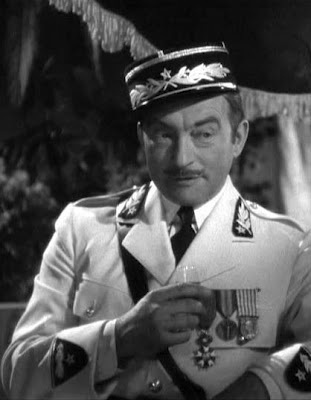
That is the place when Captain Louis Renault intercedes with the waiter and says “May I recommend Bev Tico ’26’ a good French wine?”

I cannot remember when I first saw the movie.

I cannot remember that I ever DID NOT know how it ended.

But there were other things about the movie I did not know.

And the brand of French Champagne was one of them.

Understand this goes back to that age before You Tube when almost any clip of any movie of TV show anywhere of anytime can be viewed over and over again.

I had to wait until the movie was on TV.

When I could watch it I would get close to the TV and listen very carefully to Claude Rains when he said the words, “May I recommend Bev Tico ’26’ a good French wine?”

Again and again, I was sure he said Bev Tico.

With the resources I had I tried to research French Champagne and Champagne brands.

Again there was no internet or world wide web and I had all the sophistication of the poor corrupt official so forgive me not being up on champagne.

I remember making a trip to a local wine store in Grand Rapids, Michigan, where I lived, that was famous for its outstanding list of foreign wines.

Russo’s, as it was called, had two aisles of Champagne and I think I went down the shelves and shelves, bottle by bottle looking for this Bev Tico.

The wine guy for the store, who I later became friends with, noticed my interest and came over to ask what I was looking for.

I thought about telling him what it was and why it was what it was that I was looking for but I got embarrassed and just said I was looking for something special.

At some point in time after that I had the radio on in the back room of the bookstore where I worked and it was set to NPR.

I heard the announcer say, “This broadcast of NPR is made available in part by a donation of VOO-EVV CLI-QUO – Producing fine Champagne since 1772.”

I think I tripped.

What had I just heard?

I wasn’t sure.

I checked the clock and it was just 11:00 a.m.

The next day I was in the back room at 10:55 a.m. with the radio on.

Some program came to a close and just before the top of the hour once again I heard the words “This broadcast of NPR is made available in part by a donation of VOO-EVV CLI-QUO – Producing fine Champagne since 1772.”

Vooo – evvv?

With a V not a B?

I went out into the store and found a World Wine Guide in the cooking section and opened it to Champagnes that started with the letter V and there it was.

Claude Rains doesn’t say BEV TICO.

Clause Rains says Veuve Clicquot.

I went out to Russo’s again and there in the Champagne aisle, down under the V’s, were the now to me familiar green bottles with the orange labels.

Now we go a few years further long and I am reading the novel, Lincoln, by Gore Vidal.

Throughout the novel, when the story line is at parties or bars or brothels, Mr. Vidal has his characters asking for and drinking glasses of ‘The Widow.’

At some point in the novel, it is revealed that when folks back then in 1862 asked for the ‘The Widow” they wanted Champagne.

I thought this was interesting but a little quirky.

In fact I thought Mr. Vidal made it up to add to the narrative but then so what.

Now we get to the present time.

Based on something I read recently I recently read a novel titled, “Cooking with Fernet Branca.”

In the course of the novel, the hero notices a bottle of Champagne in his neighbors house.

He was pleased to note that his neighbor was with it enough to drink ‘The Widow Cliquot.’

All at once my mind went back all those years to Mr. Vidal’s Lincoln and I said out loud, “That’s what they meant when they said The Widow.

A lady must have run the company after Mr. Veuve Clicquot died and they referred to Veuve Clicquot as ‘the widow.’

Of course they did.

It all clicked.

It all made sense.

Senseless that all those bits of unconnected memory are floating through my brain.

But it made sense.

Happy to announce that my wife is used to such things coming out from my brain and paid no attention to me at all.

She may have been curious as to who ‘they’ were.

She may have been curious as to who was ‘the widow.’

But she was much too experienced with me to want to sit through any explanation of why I said that and just kept quiet.

All those puzzle pieces through all those years coming together.

It was a satisfying moment.

It was with satisfaction that I sat down at my desk to write out the pieces and pathways of this puzzle.

I went into Wikipedia to get the correct spelling of Veuve Clicquot.

That is when I learned that the French word for widow is Veuve.

Sometimes I feel such a dunce.

2.6.2022 – all vowel effects

all vowel effects
all the consonant effects
variations sound

In an interview in 1963, Conrad Aiken said about training himself to be a poet, he replied:

 I compelled myself all through to write an exercise in verse, in a different form, every day of the year. I turned out my page every day, of some sort -I mean I didn’t give a damn about the meaning, I just wanted to master the form – all the way from free verse, Walt Whitman, to the most elaborate of villanelles and ballad forms. Very good training. I’ve always told everybody who has ever come to me that I thought that was the first thing to do. And to study all the vowel effects and all the consonant effects and the variation in vowel sounds.

Reading poetry for the sounds, the form.

Just the sounds of the words in the most elaborate of villanelles and ballad forms.

Mr. Aiken wrote in his “The sun goes down in a cold pale flare of light

Good night! good night! good night! we go our ways,
The rain runs over the pavement before our feet,
The cold rain falls, the rain sings.
We walk, we run, we ride. We turn our faces
To what the eternal evening brings.

Mr. Aiken is buried here in Savannah’s St. Bonaventure Cemetery and is celebrated as ‘Savannah’s Own’ much like Johnny Mercer if maybe in a less celebrated way.

It was interesting to read in that interview that Mr. Aiken was asked, “I see you listed occasionally as a Southern writer. Does this make any sense to you?

And he replied, “Not at all. I’m not in the least Southern; I’m entirely New England. Of course, the Savannah ambiente made a profound impression on me. It was a beautiful city and so wholly different from New England that going from South to North every year, as we did in the summers, provided an extraordinary counterpoint of experience, of sensuous adventure. The change was so violent, from Savannah to New Bedford or Savannah to Cambridge, that it was extraordinarily useful. But no, I never was connected with any of the Southern writers.

The next question was, “In what way was the change from Savannah to New England “useful” to you?”

Shock treatment, I suppose: the milieu so wholly different, and the social customs, and the mere transplantation; as well as having to change one’s accent twice a year—all this quite apart from the astonishing change of landscape. From swamps and Spanish moss to New England rocks.

Mr. Aiken left out snow.

2.5.2022 – red scary moment

red scary moment
all yesterdays lighted fools
way to dusty death

McCarthyism been on my mind of late.

Groundless accusations, unjust charges along with statements having no basis in truth.

Can’t imagine why I was thinking about that era.

A thought came to me that brought me up sharp.

One of those moments when you stop and look over the edge of the cliff.

I had said to myself, what if Joe McCarthy had social media.

What if the Red Scare had facebook.

It is bizarre for me to remember that the Congress of the United States authorized and created an investigative committee named HUAC.

If you don’t remember it stood for House Un-American Activities Committee.

It is even odder when I remember that it was formed in 1938, 12 years before Joe McCarthy came along.

House Un-American Activities Committee.

Un-American.

And this in the era when all the news was in Newspapers.

And when Tail-Gunner Joe came along in 1950 with his list of 300, 786, 938 or was it 1,100 names (Joe couldn’t keep track either) of ‘known communists in the State Department’, HUAC was all set and waiting for him.

Had twitter and facebook been around during the Red Scare maybe this country would have come to an end.

But cooler heads, in the end, prevailed.

I say that because I can get feeling that way now.

I say that because the feelings in play across the nation look to be in place for along time and I cannot imagine where the cooler heads will come from, let alone, prevail.

But I think of other things.

I remember that Mr. Hitler came to power in 1932 and proclaimed a new Germany that would last 1,000 years.

In his novel on the era, The Winds of War, Herman Wouk has his hero, Pug Henry, watching the German army in action and thinking that the 1,000 Reich looked like a good bet to make it.

Then I remember the 1936 Olympics.

The Berlin Olympics.

The Olympics that came up with the Olympic Torch and Olympic Flame.

I remember watching a documentary on the track star Jesse Owens, who won 4 gold medals at the Berlin Olympics.

Mr. Owens got his shot at the 4th medal as part of the 400 Meter Men’s Relay team because the USA Olympic team quietly removed another member who was Jewish but I digress.

There was some controversy that Mr. Hitler did not shake hands with Mr. Owens or congratulate him on his medals.

At the end of the documentary, Mr. Owens stood at the entrance of the Olympic Stadium that stands to this day in the suburbs of Berlin.

As I remember it, Mr. Owen’s talked about Mr. Hitler and said something along the lines of, well, I am here now and he is not.

That 1,000 years of Hitler’s country lasted about 13.

In no way do I mean to say that the current political climate is reminiscent of Hitler’s Germany.

In no way can the current political farce of masks and vaccines and garden parties compare in any way to Hitler’s Germany.

Hitler’s Germany did not last.

Cooler heads did prevail.

In the USA, people realized that the House Un-American Activities Committee was Un American.

Maybe they even realized that the term Un American was as dumb as it sounded.

Cooler heads did prevail.

I guess I don’t need to be too worried today.

Tomorrow?

Who said it better than Big Bill?

Tomorrow, and tomorrow, and tomorrow,

Creeps in this petty pace from day to day,

To the last syllable of recorded time;

And all our yesterdays have lighted fools

The way to dusty death.

(Macbeth, Act V, Scene V)

2.4.2022 – saw morning paper

saw morning paper
first page back page inside page
saw the world go by

From the poem, Moon Rider by Carl Sandburg published in Poetry – A Magazine of Verse in March of 1922.

Mr. Sandburg wrote these lines 100 years ago.

The man opened the morning paper: saw the first page,
The back page, the inside pages, the editorials;
Saw the world go by, eating, stealing, fighting;
Saw the headlines, date-lines, funnies, ads,
The marching movies of the workmen going to work, the workmen striking,

I start my day with the morning papers on online.

I see the front pages, the back page and the inside pages.

I see the world go by.

It is the first line of the poem that sticks with me.

WHAT have I saved out of a morning?
The earliest of the morning came with moon-mist
And the travel of a moon-spilt purple
:

All those pages.

All that reading.

And I can’t remember a dang thing of what I read.

2.3.2022 – got more yesterday

got more yesterday
than anybody we need some
kind of tomorrow

Toni Morrison writes in her book, Beloved, “Sethe,” he says, “‘me and you, we got more yesterday than anybody. We need some kind of tomorrow.”

He leans over and takes her hand. With the other he touches her face. “You your best thing, Sethe. You are.” His holding fingers are holding hers.

The very next passage in the book is:

There is a loneliness that can be rocked.

Arms crossed, knees drawn up; holding, holding on, this motion, unlike a ship’s, smooths and contains the rocker.

It’s an inside kind – wrapped tight like skin.

Then there is a loneliness that roams.

No rocking can hold it down.

It is alive, on its own.

A dry and spreading thing that makes the sound of one’s own feet going seem to come from a far-off place.

It is difficult to try and say anything based on the the book Beloved that does not from me, seem trivialize the writing of Ms. Morrison.

I mean to try and put myself in a place where anything I write should even be allowed on the same page as Ms. Morrison is a tremendous amount of cheek.

Mr. Hemingway writes something along the lines that if you can write about a something in a way that it becomes part of the consciousness of the reader, then you are, indeed, a writer.

By that standard, Ms. Morrison is indeed a writer, understanding that it is me applying Mr. Hemingway’s standard as I have no standing to make such a statement.

Using Mr. Hemingway’s standard, I put it out there that no one, NO ONE, could read Beloved and not be changed somehow.

I don’t know who could read this book and not have the scenes become part of their consciousness.

Seemingly a life changing book.

But the book was written back in 1988 and life goes on.

The discussion in Wikipedia states: To heal and humanize, one must constitute it in a language, reorganize the painful events, and retell the painful memories.

Who among us does not have their own yesterdays.

Yesterdays, when examined or remembered, are filled just as much with all the events and emotions and trials as Ms. Morrison chronicles in Beloved.

Wikipedia also states: Morrison may be emphasizing that heroism is defined not by supernatural powers or acts of unparalleled valor, but by the courageous intent to overcome the assertive preconceptions of society in order to ensure the greater good and positively influence on others in the process.

The courageous intent to overcome the assertive preconceptions of society in order to ensure the greater good.

We, all of us, are hero’s, as well deal with our own stories.

The next passage in the book is:

Everybody knew what she was called, but nobody anywhere knew her name.

Disremembered and unaccounted for, she cannot be lost because no one is looking for her, and even if they were, how can they call her if they don’t know her name?

Although she has claim, she is not claimed.

Who is she?

She is all of us.

As Ms. Morrison writes, maybe It was not a story to pass on.