It seems that a Mr. Scott Stallings felt something was off on his game and he decided he wanted to use some older golf clubs that he owned but that were back he lived.
Mr. Stallings called a friend back home and asked him to ship the clubs out which the friend did at a cost of $400 to over night the clubs.
I got no problem with any of this.
The headline.
The thought behind the headline.
The action taken by the friend.
The desire of Mr. Stalling’s to have his old clubs.
It really just all kind of sums up my thoughts on the subject in the first place.
In full, Mr. Stallings said:
“I think all golfers are certifiably insane to an extent because we know something is good, and there is always kind of the double-edged sword of always trying to get a little bit better. I tried this other set for about a year and went back to it last week and ended up third in approach to the green and I have no idea what I am this week. Feel like I’m doing something right,” said Stallings, who has shot 67-66-64. “Definitely have seen significant improvement in my iron play.
“I had some nice weeks, but just kind of inconsistent through the middle of the bag for me. Nothing is wrong with the way the club is made. It’s just as far as the way I deliver it in there. I think I match up a little bit better with the older ones.
laughter, singing rang again, all the sounds of the earth were like music
Adapted from James Thurber’s Further Fable, “The Bears and the Monkeys.”
I have used this fable of Mr. Thurber’s before.
I will most likely use again and if I don’t use it again, I will read it again and most likely often.
The fable is an analogy on the red scare of the McCarthy era when folks were afraid to think for themselves and wake up to find out they were accused of being a communist.
It was better to let someone else do the thinking for you than risk being labeled being part of the red threat or a pinko commie sympathiser.
So they thinking went according to the monkeys.
When I first read this probably 50 years ago when I was a kid, I think I was able to grasp the meaning that folks do not want anyone telling them what to.
Maybe I was thinking along the lines of Mr. Lincoln’s “as I would not be a slave, so I would not be a master.”
I thought the story noble in its’ irony.
I read it today not in with humor but with horror.
I read it today and feel that the irony now goes over most folks heads.
I read the line, “By sparing you the burden of electing your leaders, we save you from the dangers of choice. No more secret ballots, everything open and aboveboard.” and I hear folks yelling, “YESSIR, THAT’S IT!”.
As Mr. Twain wrote in Huckleberry Finn, “Hain’t we got all the fools in town on our side? And hain’t that a big enough majority in any town?”
BOY Howdy 😦
I still somehow have hope.
Maybe its more I want to refuse to be hope-less.
But I do hope that one day folks will break the chains of their new freedom and found their way back to the deep forest and begin playing leap-bear again and stealing honey and buns from the nearby cottages. And folk’s laughter and gaiety will ring through the forest, and birds that had ceased singing begin singing again, and all the sounds of the earth will be like music.
The Bears and the Monkeys.
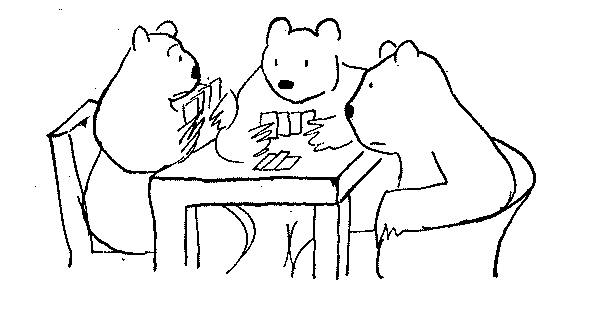
In a deep forest there lived many bears. They spent the winter sleeping, and the summer playing leap-bear and stealing honey and buns from nearby cottages. One day a fast-talking monkey named Glib showed up and told them that their way of life was bad for bears. “You are prisoners of pastime,” he said, “addicted to leap-bear, and slaves of honey and buns.”
The bears were impressed and frightened as Glib went on talking. “Your forebears have done this to you,” he said. Glib was so glib, glibber than the glibbest monkey they had ever seen before, that the bears believed he must know more than they knew, or than anybody else. But when he left, to tell other species what was the matter with them, the bears reverted to their fun and games and their theft of buns and honey.
Their decadence made them bright of eye, light of heart, and quick of paw, and they had a wonderful time, living as bears had always lived, until one day two of Glib’s successors appeared, named Monkey Say and Monkey Do. They were even glibber than Glib, and they brought many presents and smiled all the time. “We have come to liberate you from freedom,” they said. “This is the New Liberation, twice as good as the old, since there are two of us.”
So each bear was made to wear a collar, and the collars were linked together with chains, and Monkey Do put a ring in the lead bear’s nose, and a chain on the lead bear’s ring. “Now you are free to do what I tell you to do,” said Monkey Do.
“Now you are free to say what I want you to say,” said Monkey Say. “By sparing you the burden of electing your leaders, we save you from the dangers of choice. No more secret ballots, everything open and aboveboard.” For a long time the bears submitted to the New Liberation, and chanted the slogan the monkeys had taught them: “Why stand on your own two feet when you can stand on ours?”
Then one day they broke the chains of their new freedom and found their way back to the deep forest and began playing leap-bear again and stealing honey and buns from the nearby cottages. And their laughter and gaiety rang through the forest, and birds that had ceased singing began singing again, and all the sounds of the earth were like music.
MORAL: It is better to have the ring of freedom in your ears than in your nose.
It was a story about a trade in the NBA from a blog where the writer got rolling in the style of someone I know who uses the perpendicular pronoun, I.
This feller, Chris Thompson, produced this paragraph.
Do you see it? Do I have to map it out for you? The Utah Jazz, by trading away a guy who scored seven points per game last season, have left an unmistakable clue for those with their third eyes open that, ah, hmm. That a team with a new general manager and a new head coach and an unhappy vibe and a track record of playoff disappointment might be engaged in a little bit of an offseason makeover? Wow, yeah, actually I am having a hard time getting super worked-up over this, uh, revelation.
This was trying to explain the strange thing, the very strange thing that happended to poor Brian Windorst’s brain.
I am trying to figure out what strange thing, what very strange thing happens to most folks brains these days.
I am trying to figure out what strange thing, what very strange thing happens to my brain when I wake up.
I DO need someone to see it.
I DO need someone to map it out for me.
For other reasons, I feel like the Grand Vizier. who in the story, never left an audience with Sultan without touching his head to make sure it was still on his shoulders.
The most important decision a President makes concerns what he wants to do with the office, what range of issues he wants to recognize. The challenge is to create boundaries for the office, to select among possible goals. John Kennedy had set that agenda for his successor: tax reduction, the civil rights bill, federal aid to education, executive action to improve life in the cities, medical care for the aged, and plans for a poverty program. In the two years and ten months before November, 1963, Kennedy had denned for himself and for his Presidency a series of purposes, or what Richard Neustadt calls “irreversible commitments to denned courses of action.” The commitments implied the selection of a particular clientele and the shaping of an institutional core – a White House staff and a Cabinet – that understood the kind of Presidency John Kennedy wanted.
I could not help but updated the passage for today.
Trump had denned for himself and for his Presidency a series of purposes, or what Richard Neustadt calls “irreversible commitments to denned courses of action.” The commitments implied the selection of a particular clientele and the shaping of an institutional core – a White House staff and a Cabinet – that understood the kind of Presidency Donald Trump wanted.
Kind of frightening in a way.
Explains much.
Consider the list of commitments compiled for JFK.
tax reduction
the civil rights bill
federal aid to education
executive action to improve life in the cities
medical care for the aged
plans for a poverty program
hmmmmmmmmmmmm
To quote Francis Urquhart, “You might very well think that – I couldn’t possibly comment.”
like a low-hung cloud it rains so fast all at once falls and cannot last
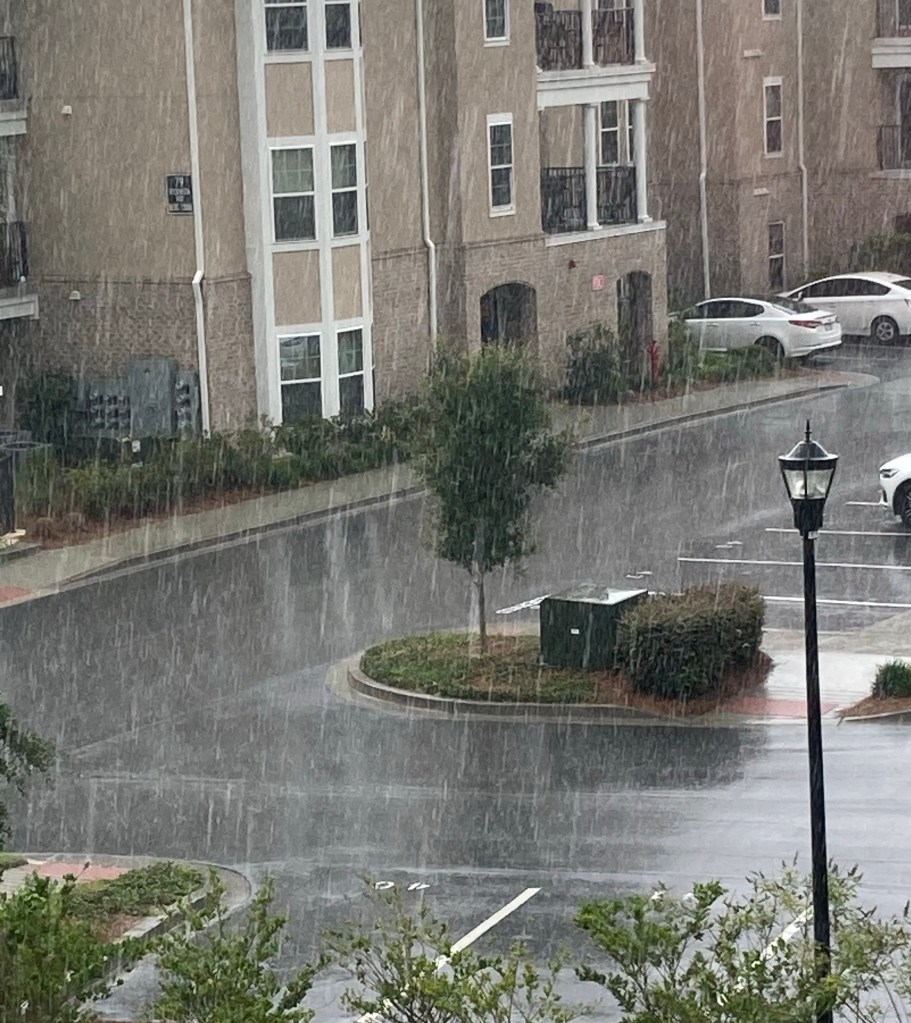
Adapted on a rainy morning in the low country from John Dryden’s Palamon and Arcite or The Knight’s Tale– Book Three where the poet writes:
But, like a low-hung cloud, it rains so fast, That all at once it falls, and cannot last. The face of things is changed, and Athens now, That laughed so late, becomes the scene of woe: