use of language
respects truth sincerity
largely abandoned
Lincoln was also the last president whose character and standards in the use of language avoided the distortions and other dishonest uses of language that have done so much to undermine the credibility of national leaders.
The ability and commitment to use language honestly and consistently have largely disappeared from our political discourse.
Some presidents have been more talented in its use than others.
Some, such as Franklin Roosevelt and John F. Kennedy, have had superior speechwriters.
But the challenge of a president himself struggling to find the conjunction between the right words and honest expression, a use of language that respects intellect, truth, and sincerity, has largely been abandoned.
From the preface to Lincoln: The Biography of a Writer by Fred Kaplan (Harper Perennial, 2010).
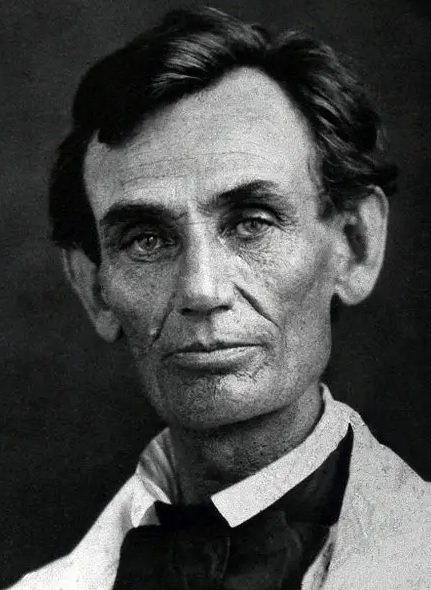
I cannot remember a time in my life when I was not aware of Abraham Lincoln.
Maybe growing up in a era of pocket change and when having pennies in your pocket meant seeing Mr. Lincoln’s face on a regular basis had something to do with it.
Looking though my books in my the library of my memory, when I turn to the shelf of books from before I was 10, titles on Mr. Lincoln were already showing up.
What I remember about those books too, is that while many were about Mr. Lincoln the President and written for young readers, they were a lot of them that also focused on the Young Lincoln and life in the times when Lincoln was young.
Maybe that had something to do with it.
I was not reading about Lincoln the President but Lincoln the kid.
The kid who liked to read.
Mr. Lincoln stored books in the chinks of the log cabin walls of the loft where he slept.
I stored books in the bottom of the upper bunk that was over my head in the bunkbed I shared with my brother.
At Christmas, my Mom would bring home jars of hard candies from the Sweetland Candy stores and I would eat all the Red Anise squares because I read in a book titled ‘Lincoln’s America’, in a section on the candy kids ate back then and it described the cool, sweet blocks of anise.
Young Mr. Lincoln had to read by a fire.
I tried to read by the fire until my Mom said I was going to set my book to flames.
Young Mr. Lincoln chopped up firewood.
I wasn’t allowed near an axe.
I remember a Professor I had in college in talking about the miracles that were George Washington and Abraham Lincoln.
The miracles were that the more they were investigated and researched and studied, the closer the real man and the myths came together.
There were more likely to be true than not. (not counting that cherry tree)
The midterm elections of 2022 finally came to end last night, tho I guess there are still some uncertified votes out in Arizona.
I watched a lot of coverage of the last election last night.
I listened a lot to the words and the descriptions of what happened and why it happened and what it meant.
I struggled to find the conjunction between the right words and honest expression, a use of language that respected intellect, truth, and sincerity.
Sadly, I have to say, it has largely been abandoned.