8.8.2024 – set of ideas

set of ideas
centered on human rights and
personal freedoms

Adapted from the opinion piece, The World That Awaits the Next President by Bret Stephens in The New York Times, August 6, 2024 where Mr. Stephens asks the next President, whoever it might be …

If necessary, are you willing to use force to prevent Iran from acquiring nuclear weapons or China from subjugating Taiwan — two events that may well take place on your watch? Will you use the threat of an arms embargo to compel Israel or Ukraine to agree to cease-fire deals they do not want? Are you prepared to increase military spending to Cold War levels to contend with great-power competitors and new asymmetric threats, such as from the Houthis?

Above all, do you believe that maintaining our global primacy is worth the price in effort, treasure and sometimes blood?

If the answer to that last question is “no” — an answer that has the virtues of honesty, modesty and frugality — then you can mostly ignore the previous questions. You can also comfort yourself with the fantasy that the world will leave us alone in exchange for us leaving it alone.

The world doesn’t work that way. Unlike, say, New Zealand, we are not a pleasant and remote country under the implicit protection of a benign ally: Nobody will protect us if we do not protect ourselves. We have globe-spanning territorial, maritime and commercial interests that require us to police the global commons against bad actors, from China in the South China Sea to Iran in the Strait of Hormuz to Russia in the cyber domain. We stand for a set of ideas, centered on human rights and personal liberties, that invariably attract the violent attention of despots and fanatics.

It is only an opinion piece but I guess it is an opinion that finds traction with me.

You can comfort yourself with the fantasy that the world will leave us alone in exchange for us leaving it alone.

The world doesn’t work that way.

Unlike, say, New Zealand, we are not a pleasant and remote country under the implicit protection of a benign ally: Nobody will protect us if we do not protect ourselves.

We have globe-spanning territorial, maritime and commercial interests that require us to police the global commons against bad actors, from China in the South China Sea to Iran in the Strait of Hormuz to Russia in the cyber domain.

We stand for a set of ideas, centered on human rights and personal liberties, that invariably attract the violent attention of despots and fanatics.

Once more, We stand for a set of ideas.

Back in January, of 1941, a year that would end with the attack on Pearl Harbor, President Franklin Roosevelt laid down what became known as the Four Freedoms saying that,  “we look forward to a world founded upon four essential human freedoms.”

And what were those four freedoms?

To quote FDR:

The first is freedom of speech and expression–everywhere in the world.

The second is freedom of every person to worship God in his own way–everywhere in the world.

The third is freedom from want–which, translated into world terms, means economic understandings which will secure to every nation a healthy peacetime life for its inhabitants-everywhere in the world.

The fourth is freedom from fear–which, translated into world terms, means a world-wide reduction of armaments to such a point and in such a thorough fashion that no nation will be in a position to commit an act of physical aggression against any neighbor–anywhere in the world.

And where do these freedoms apply?

Everywhere, anywhere in the world.

No wonder these ideas invariably attract the violent attention of despots and fanatics.
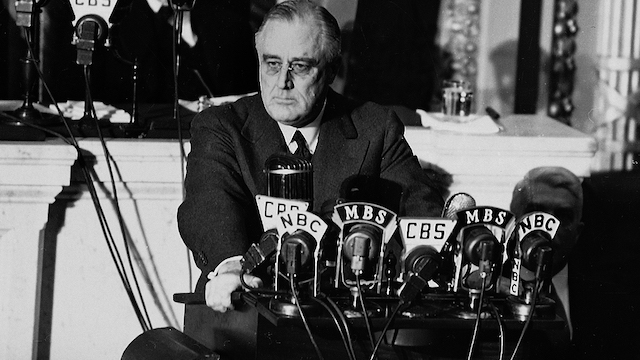
“I address you, the members of the 77th Congress, at a moment unprecedented in the history of the Union,” said President Franklin D. Roosevelt as he started his message to the joint session of Congress, Jan. 6, 1941. Also visible are Speaker Sam Rayburn, left, and Vice President John N. Garner. (AP Photo/George R. Skadding)

8.7.2024 – ask people to tell

ask people to tell
about one activity
not do for money

Based on the phrase, “When you ask people to tell you about the one activity they do not for money, not out of necessity, but to indulge their deepest passions and their wildest curiosities, well, you’re in for an intimate conversation“, quoting Amy Stewart in Fifty Shades of Trees, a review of her book, The Tree Collectors: Tales of Arboreal Obsession (Random House, 2024) in Scientific American, Jul/Aug 2024.

The reviewer writes:

Initially, trees struck Stewart as an odd thing to collect—trees being, for the most part, large and difficult to sell or tuck into a suitcase the way philatelists might their beloved stamps and brandophiles their cigar bands. Intrigued by this community of enthusiasts, she discovered educators, preservationists and visionaries, all hooked on a kind of curation, motivated by reasons as diverse as their projects. They plant trees in public and private spaces both modest and expansive, nurturing their collections to honor beloved dead, attract wildlife, preserve rare species, connect to history, invest in the future, grow food and create beauty. “When you ask people to tell you about the one activity they do not for money, not out of necessity, but to indulge their deepest passions and their wildest curiosities,” Stewart writes, “well, you’re in for an intimate conversation.”

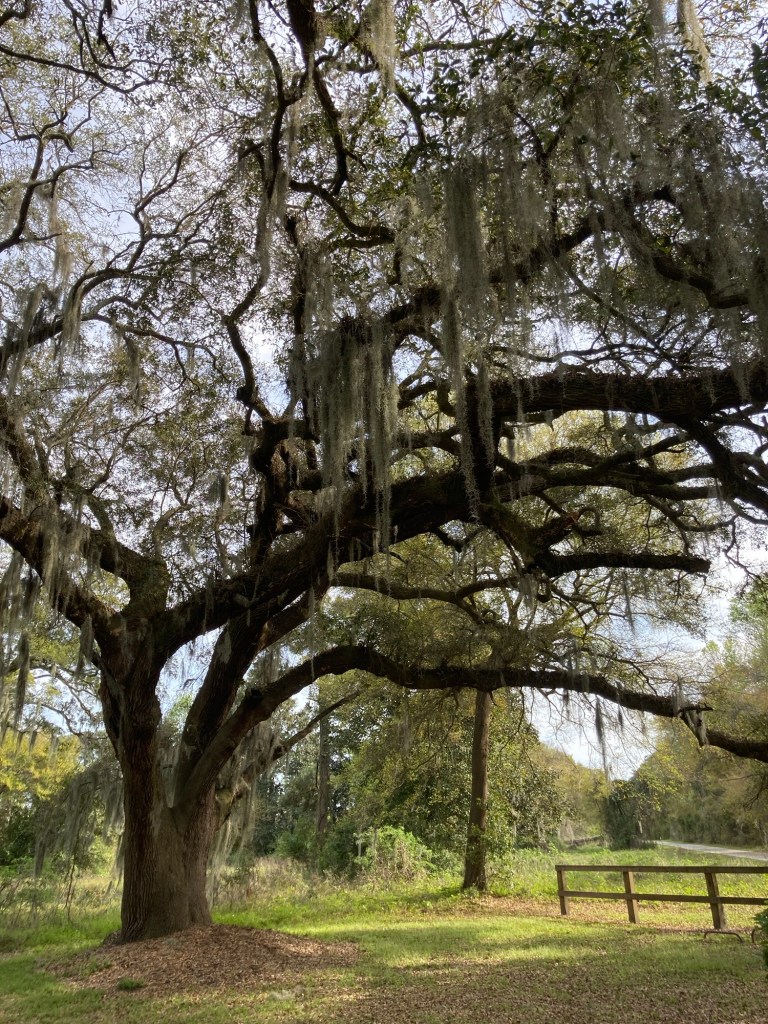
Like all collectors, her subjects express a zeal for aesthetics, preservation, curiosity and delight. But it seems they know something else, too, something echoed by the recent rise in popularity of shinrin-yoku, or forest bathing, the Japanese practice of spending time in the woods: being around trees simply feels good.

I am reminded of the old saying, “Blessed is he who plants trees under whose shade he will never sit.”

Why?

Because being around trees simply feels good.

For that saying about planting shade trees and who said it, the Quote Investigator is worth checking out.

8.6.2024 – public libraries

public libraries
open, free civic spaces where
everyone’s welcome

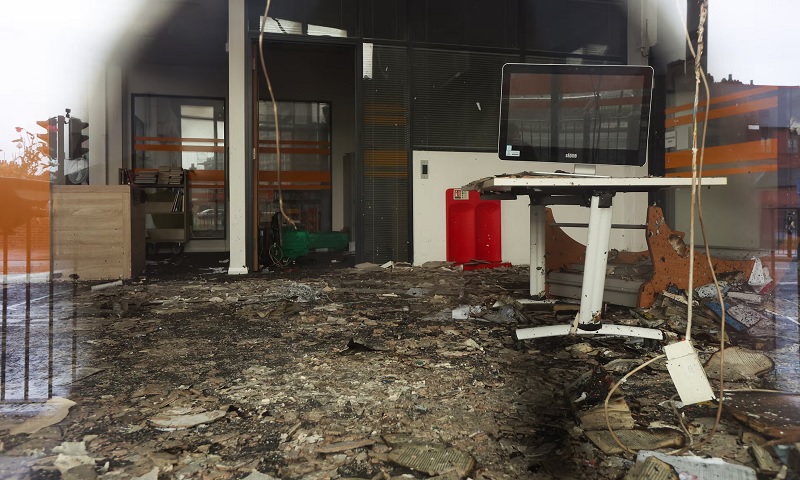
The destroyed interior of the Spellow Hub community library after a night of violent disorder in Liverpool. Photograph: EPA

“Public libraries are particularly vulnerable during this kind of disorder as they are often in prominent locations and are, rightly, easily accessible. Yet they are also symbolic of community safety and cohesion – open and free civic spaces where everyone is welcome.”

Ed Jewell, the president of Libraries Connected – which represents library services in England, Wales and Northern Ireland – as quoted in the article, Liverpool library torched by far-right rioters raises repair funds Ella Creamer in The Guardian.

Not much makes me feel worse inside than a paragraph like this one:

Police said when firefighters arrived at the library, the rioters attempted to stop them from getting to the fire to put it out. “They even threw a missile at the fire engine and broke the rear window of the cab”, said police in a statement. The library has suffered severe fire damage to its ground floor.

At least in the same article was the paragraphs that said:

A fundraising campaign has raised more than £120,000 to help repair a Liverpool library and community hub that suffered severe fire damage after being targeted by rioters on Saturday night.

The fundraising page had an initial target of £500 but has gone on to raise more than £120,000 in two days, from more than 6,000 donations.

“I never imagined that the fundraiser would spread and far and wide as it has,” said McCormick, who is now liaising with the council and library management. “I’m so overwhelmed with the response and the sense of community”.

The sense of community.

Say it again outloud.

The sense of community …

Pull down your buildings and your freeways and your public arenas and you will build them again.

Pull down your libraries, and grass will grow in city streets.

(Okay so William Jennings Bryan said that about farms but …)

8.5.2024 – day was rainy dark

day was rainy dark
rain fell on the barn roof and
dripped steadily

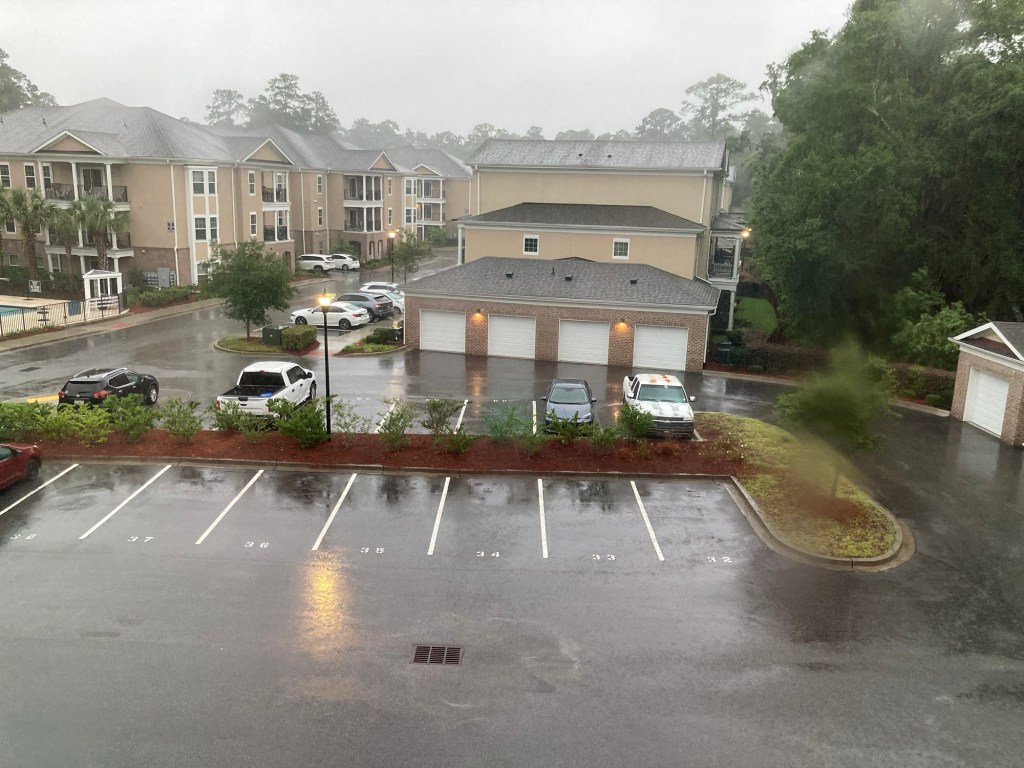
4 o’clock in the afternoon in the sunny south

The next day was rainy and dark.

Rain fell on the roof of the barn and dripped steadily from the eaves.

Rain fell in the barnyard and ran in crooked courses down into the lane where thistles and pigweed grew.

Rain spattered against Mrs. Zuckerman’s kitchen windows and came gushing out of the downspouts.

Rain fell on the backs of the sheep as they grazed in the meadow.

When the sheep tired of standing in the rain, they walked slowly up the lane and into the fold.

From Charlotte’s Web by EB White.

It has been raining all day here in the Low Country of South Carolina and it is supposed to rain for another 2 days.

I have been told to work from home tomorrow and we will see about Wednesday when Wednesday comes.

The rain falls on the roofs of the buildings here in the apartment complex and it drips off the eaves.

We wait for worse things.

Tidal surges.

Power outages.

Mandatory evacuations.

What fun.

We watch and we wait.

Do we have everything powered up if the power goes down?

What do we do without power?

Go to bed early I guess but I don’t want to find out.

For a bit of hope, the passage from Mr. White describes a big day for Wilbur the pig.

After a distressful day of rain and cold and boredom, Wilbur meets Charlotte.

Tomorrow and Tomorrow and Tomorrow.

It will be Thursday before we know it, I hope.

And the rain, rain will have gone away.

8.4.2024 – sailors expression

sailors expression
about weather: the weather
is a great bluffer

As long as there is one upright man, as long as there is one compassionate woman, the contagion may spread and the scene is not desolate. Hope is the thing that is left to us, in a bad time. I shall get up Sunday morning and wind the clock, as a contribution to order and steadfastness.

Sailors have an expression about the weather: they say, the weather is a great bluffer. I guess the same is true of our human society—things can look dark, then a break shows in the clouds, and all is changed, sometimes rather suddenly. It is quite obvious that the human race has made a queer mess of life on this planet. But as a people we probably harbor seeds of goodness that have lain for a long time, waiting to sprout when the conditions are right. Man’s curiosity, his relentlessness, his inventiveness, his ingenuity have led him into deep trouble. We can only hope that these same traits will enable him to claw his way out.

Hang on to your hat. Hang on to your hope. And wind the clock, for tomorrow is another day.

Letter to Mr. Nadeau, March 30, 1973. Letters of E. B. White, Revised Edition. Ed. Martha White. New York: HarperCollins, 2006.

For the first time this hurricane season, folks in the low country are been alerted to the possibility of water … lots of it.

We are are just miles from the Atlantic Ocean which is a lot of water to begin with.

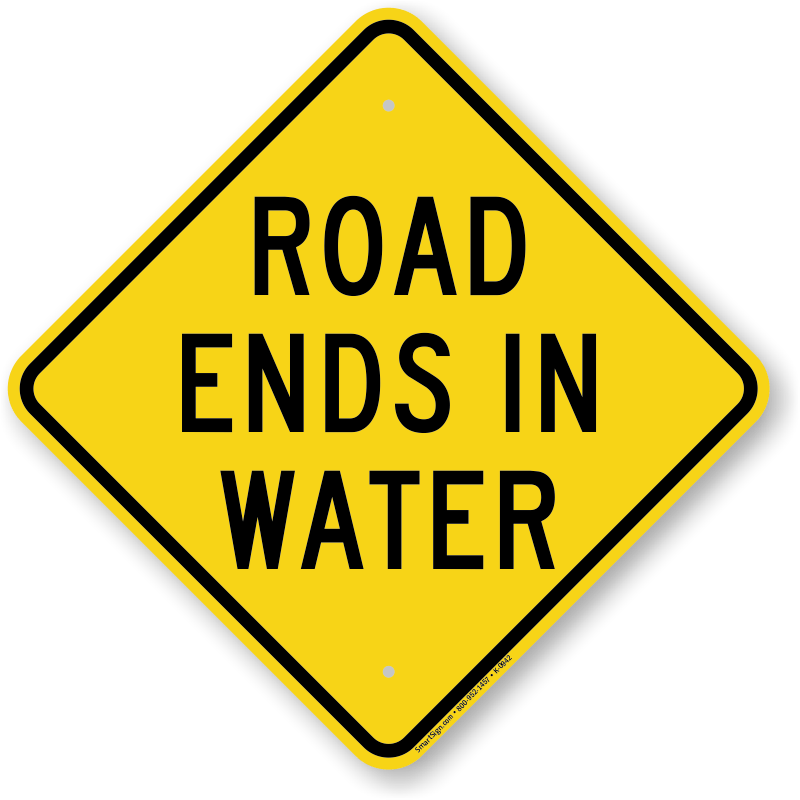
We have roads that with signs that say, “Road Ends in Water.”

I puzzled over these signs for a bit, wondering why they didn’t say, “ROAD ENDS – 500 FT” until I figured it out that in an area with an 8 foot vertical tide, just WHERE the road ends is a matter of time and tide, but for sure, the road ends at the water.

Then a storm, though whether or not its a hurricane or a tropical storm, the weather people or the storm itself hasn’t made up its mind, is coming.

Storms bring storm surges or push more of the Atlantic Ocean up into the low country which is low as the name implies.

I do not worry a lot about storm surge, as I live in Bluffton, which as the name implies, is up on a bluff over the Maye River, it would take a storm surge of some 25 feet or more to get to me.

A storm surge of 10 feet on top of a high tide, would surely strand me here on the bluff as most of the local roads would be covered.

Then there is the coming rain.

Lots of it.

Then there is the malicious nature of this coming storm.

Though the folks who know don’t know what kind of storm it will when the storm is coming they do agree on two things.

One is that it is FULL of rain from the warm waters of the Gulf of Mexico.

The other thing is that the storm will get here to the coast between Savannah and Charleston and … stop.

Not that the raining will stop but the storm will stop and for anywhere between the next 10 to 48 hours, rain of Old Testament Bible stories will fall on us from the heavens.

When you drive through the streets of old Charleston, intersections have depth gauges to show how deep the water can get.

Charleston is about 2 feet about sea level.

During high tide, you can hear water roaring through the storm drains just inches below the road beds.

Drop 6 inches of rain at high tide on Charleston and you can figure out why those depth gauges on intersections have a four foot scale.

On its website, the city of Savannah has posted a city map that show which intersections will be flooded.

Savannah is also on a bluff above the Savannah River but it also has a storm water sewage system that is about 100 years old.

Some schools are already closing for the day, Wednesday.

And all of this is speculation.

I have worked with enough weather people to know that nobody knows nothing when it comes to forecasting.

As Mr. White writes, the weather is a great bluffer.

But we all take warning.

And as Mr. White writes, I guess the same is true of our human society—things can look dark, then a break shows in the clouds, and all is changed, sometimes rather suddenly. It is quite obvious that the human race has made a queer mess of life on this planet.

I take heart both for the storm and the mess of life that the human race has made on this planet when I consider:

But as a people we probably harbor seeds of goodness that have lain for a long time, waiting to sprout when the conditions are right. Man’s curiosity, his relentlessness, his inventiveness, his ingenuity have led him into deep trouble. We can only hope that these same traits will enable him to claw his way out.