11.1.2022 – learn the ballistic

learn the ballistic
specifics that happen when
love meets opposite

I listened to the man who lost six (yes, six) members of his family in one instant and then saw people robbing their bodies within seconds.

They were profoundly ordinary people, all luminously eloquent in their pain and loss.

They were an unforgettable lesson in what it is to be human.

I hadn’t expected to report on a murder trial and learn almost everything there is to learn about love.

And perhaps to learn the ballistic specifics of what happens when love meets its opposite.

So writes Robert McLiam Wilson in the article, In a deserted courtroom, the grim details of the Nice atrocity go mostly unnoticed.

So writes Mr. Wilson with such a beautiful use of words in such an ugly story, that I have to stop and take notice of the writing.

I take notice of the writing and I realize I do not recall the event.

Sub headlined, Eighty-six people died in the 2016 tragedy, yet compassion and empathy have become exhausted, I have to admit the incident is there in the back of my mind but with so much in just this past year, let alone back in 2016, it seems that my compassion and empathy have become exhausted.

Not just my compassion and empathy but everything.

The article opens with this paragraph, In Paris, a trial is taking place concerning the 14 July 2016 attack in Nice when a man drove a truck into a crowd of families attending a firework display. The three-month trial, due to end in early December, is of eight associates of Mohamed Lahouaiej-Bouhlel accused of assisting him in the attack, when a 19-tonne cargo truck was deliberately driven into people celebrating Bastille Day on the Promenade des Anglais. A total of 86 people were killed, including 15 children. More than 450 were injured. You’d think it would be a big deal. You would be wrong.

So much, too much going on that Id think it would be a big deal.

That this event would stand out.

That I would remember.

And I am so wrong.
10.31.2022 – instead, approached with

instead, approached with
clarity, subjects project
their own poetry

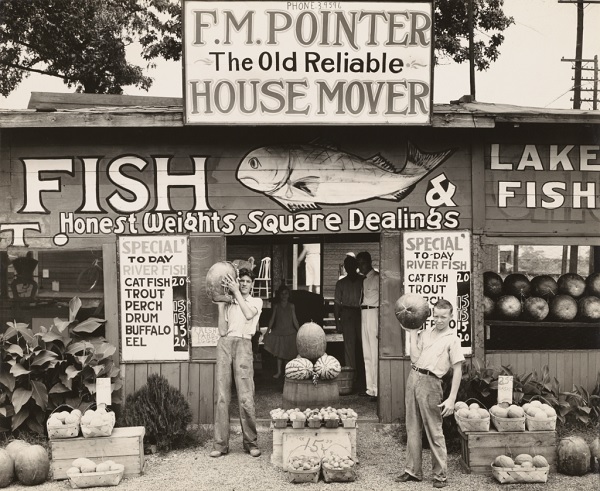
In an article titled, Let there be light: England’s Anglican cathedrals at dawn, about the late Magnum photographer Peter Marlow, Martin Barnes writes:

In 1971, on a trip to Boston during his first year at university as a student of psychology, Marlow visited the Museum of Fine Arts and saw an exhibition of photographs by Walker Evans (1903–1975), curated by John Szarkowski.

Alongside his famous portraits of the rural poor during the Great Depression, Evans’s characteristically precise and intelligent photographic sensibility was often applied to depicting the modern American vernacular: farmhouse interiors, factories, shop signs, roadside warehouses, housing and churches.

Evans avoided the overt stylistic gestures of authorship prevalent in fine-art photography of the time.

Instead, approached with steady and factual clarity, his subjects are allowed to project their own poetry.

Inspired by this encounter with Evans, Marlow purchased a Graflex Speed Graphic camera on his return home, and his career in photography began.

I am not sure, but still pretty sure, that, considering all the writing and interpretation of the photography of Walker Evans, Mr. Barnes summed up Evan’s life and work in one wonderful sentence.

See https://www.metmuseum.org/toah/hd/evan/hd_evan.htm

10.14.2022 – always expected

always expected
the worst, and it’s always worse
than I expected

I’ve always expected the worst, and it’s always worse than I expected.”, is attributed, by sources on the information highway, to the novelist Henry James.

While a great quote, I do like to find it’s context.

Stephen Fry talks about this need for attribution of quotes in his podcast, Fry’s English Delight, where Mr. Fry goes into the differing opinions on quotes.

Some think you should quote very little and always reference the original author.

Others felt the dubious practice of quoting however much you wanted, with no reference and even changing bits was okay.

It does bother me when I cannot find where a quote that the online world attributes to someone but cannot go any further than the quote itself.

So goes the thoughts on I’ve always expected the worst, and it’s always worse than I expected.

I ran across it yesterday in the New York Time.

Sadly, the writer attributed to Henry Adams.

Henry Adams.

Henry James.

Does it matter when no one reads either one anymore and all the name does is reawaken a slight echo that they might have been someone that at sometime was worth knowing something more about?

For Mr. James, I cannot say I know much about.

Wikipedia says that Henry James (15 April 1843 – 28 February 1916) was an American-born British author. He is regarded as a key transitional figure between literary realism and literary modernism, and is considered by many to be among the greatest novelists in the English language. He was the son of Henry James Sr. and the brother of philosopher and psychologist William James and diarist Alice James.

The highest thing I can say about Mr. James, with my limited knowledge, is that James Thurber once wrote how he gathered up his courage and wherewithall and called on an ex-wife so that he could re-claim his copies of the collected works of Henry James.

The worst thing I can say is to quote Mark Twain on Henry James and say, “Once you’ve put one of his books down … you simply can’t pick it up again.

I have to admit that quote has kept me, despite my respect for Thurber, from ever picking up The Bostonians and taking a mental whack at it.

Legend has it that Beethoven once said something along the line of, “I like Wagner. I do! I think someday I will set it to music.”

The importance of getting it right verus Vass you dere, Sharlie?

Regardless.

Regardless of who said it first.

I’ve always expected the worst, and it’s always worse than I expected.

And don’t forget.

Blessed are those who expect nothing.

They will never be disappointed.

To quote Ms. Parker, “What fresh hell IS this!”

10.11.2022 – You can’t talk about

You can’t talk about
economy without talk
about future stuff

According to Edward Helmore, in the article, US is headed for a recession, says head of JP Morgan Chase bank: ‘This is serious’:

The US and global economy is facing a “very, very serious” mix of headwinds that is likely to cause a recession by the middle of next year, warned Jamie Dimon, chief executive of JP Morgan Chase, the largest US investment bank, on Monday.

Dimon pointed to the effects of runaway inflation, sharp interest rate rises and Russia’s war in Ukraine, as factors that informed his thinking. But he added that the US was “actually still doing well” and consumers were likely to be in better shape compared with the global financial crisis in 2008.

“You can’t talk about the economy without talking about stuff in the future – and this is serious stuff,” Dimon told CNBC at a conference in London.

I have to get excited when I hear that Jamie Dimon, chief executive of JP Morgan Chase, uses those $20 economic terms like ‘stuff.’

According to Wikipedia, Mr. Dimon attended the Browning School, and majored in psychology and economics at Tufts University, where he graduated summa cum laude. At Tufts, Dimon wrote an essay on Shearson’s mergers; his mother sent the paper to Sandy Weill, who hired Dimon to work at Shearson during one summer break, doing budgets.

After graduating, he worked in management consulting at Boston Consulting Group for two years before enrolling at Harvard Business School, along with classmates Jeff Immelt, Steve Burke, Stephen Mandel, and Seth Klarman. During the summer at Harvard, he worked at Goldman Sachs. He graduated in 1982, earning an MBA as a Baker Scholar.

With all that resume I take my hat off to a feller who can boil down the current state of the economy into words I can understand and say: You can’t talk about the economy without talking about stuff in the future – and this is serious stuff.

10.10.2022 – its not my circus

its not my circus,
not my monkeys – hey waiter
ready for the check

Not my circus, not my monkeys is a calque Polish nie mój cyrk, nie moje małpy.

A calque is a borrowing by word-for-word translation or a loan translation.

For example, the English expression it goes without saying is a calque (a literal, word-for-word translation) of French ça va sans dire, and flea market is a calque of French marché aux puces (literally “market with fleas”).

Go down to beach and watch the waves.

As it is said in the Gullah, De wata bring we and de wata gwine tek we bak.