4.13.2024 – when it comes to it …

when it comes to it …
takes brave personality …
to take any chance

Adapted from the Saturday Guardian Feature, Blind Date, with the heading, ‘Did we kiss? In public? Heavens, no, we’re British! But we did have a warm goodbye hug’.

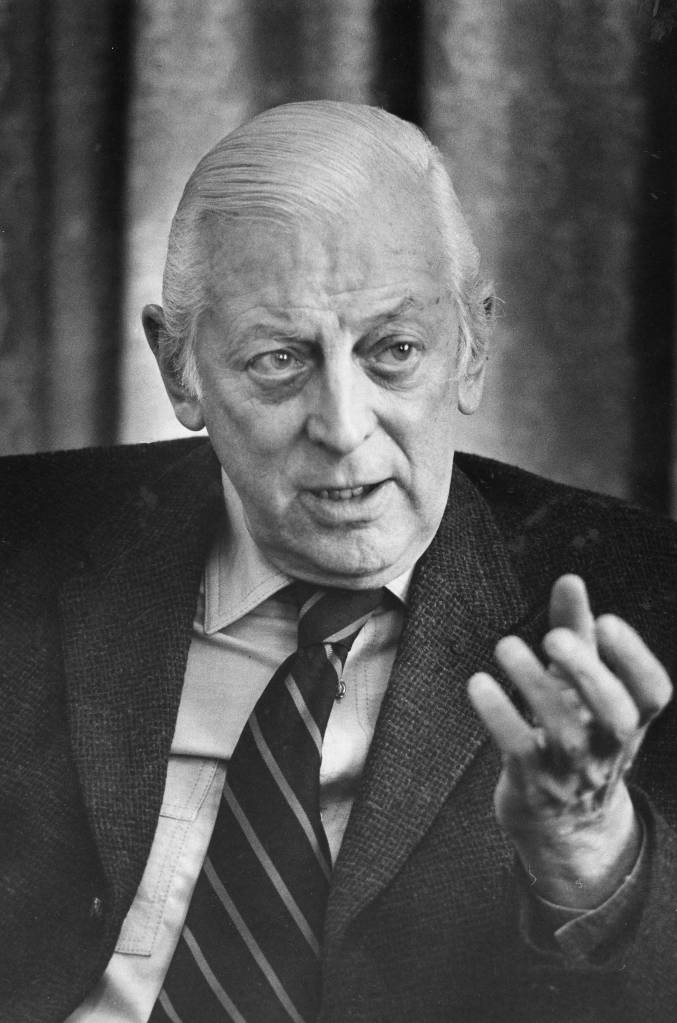
In response to the question, What were you hoping for?, the feller on this Blind Date responded, “At our age we have less confidence when it comes to dating, so it takes a brave personality to take a chance where the outcome will be published.”

I liked that response.

We all the know the story of when Ben Franklin edited Thomas Jefferson’s Declaration of Independence.

Dr. Franklin told Jefferson of the man who had the sign that said, “John Thompson, Hatter, makes and sells hats — for ready money,’ on a sign in the shape of the hat.

Dr. Franklin then edits out everything until all he has left is the sign in the shape of hat and the name, John Thompson.

“What else do you need?” asked Dr. Franklin.

Let’s apply this style of editing to the response the man made.

We start with: At our age we have less confidence when it comes to dating, so it takes a brave personality to take a chance where the outcome will be published.

Is age a factor?

We have less confidence when it comes to dating, so it takes a brave personality to take a chance where the outcome will be published.

Do we care if it gets published, I mean everything everywhere ends up on social media, right?

We have less confidence when it comes to dating, so it takes a brave personality to take a chance.

And just dating? Really? Just dating?

We have less confidence, so it takes a brave personality to take a chance.

Confidence?

I have confidence in the sun coming up and the tide sweeping the beach twice a day, all other bets are OFF.

It takes a brave personality to take a chance.

I think Dr. Franklin would agree that that about sums it up.
4.9.2024 – it did not strike

it did not strike
eye quite as quickly but a
certain grandeur, too

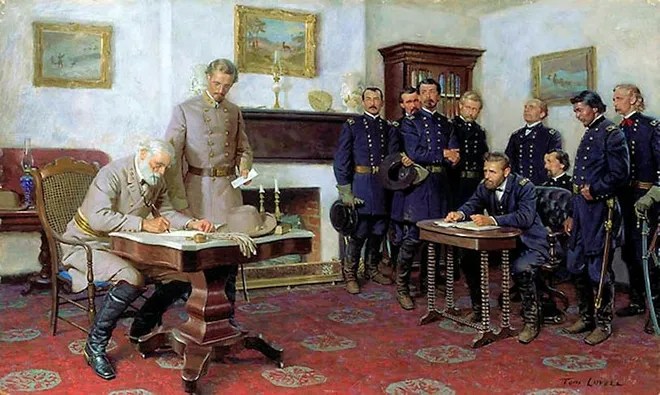
And he wrote into the terms of surrender one of the great sentences in American history. Officers and men were to sign paroles, and then they were to go home, “‘not to be disturbed by the United States authority so long as they observe their paroles and the laws in force where they reside.” ‘

Grant looked at the beaten army and he saw his own fellow Americans, who had made their fight and lost and now wanted to go back and rebuild. But the war had aroused much hatred and bitterness, especially among those who had done no fighting, and Grant knew very well that powerful men in Washington were talking angrily of treason and of traitors, and wanting to draw up proscription lists, so that leading Confederates could be jailed or hanged.

The sentence Grant had written would make that impossible. They could proceed against Robert E. Lee, for instance, only by violating the pledged word of U. S. Grant, who had both the will and the power to see his word kept inviolate. If they could not hang Lee they could hardly hang anybody. There would be no hangings. Grant had ruled them out.

It did not strike the eye quite as quickly, but U. S. Grant had a certain grandeur about him, too.

From U.S. Grant and the American Military Tradition by Bruce Catton, Little, Brown and Company, 1954.

4.4.2024 – suppose hundred years

suppose hundred years
hence we’re better off – nothing …
here to surprise us

Let us, for the sake of argument, suppose that a hundred years hence we are all of us, on the average, eight times better off in the economic sense than we are to-day. Assuredly there need be nothing here to surprise us.

Now it is true that the needs of human beings may seem to be insatiable. But they fall into two classes—those needs which are absolute in the sense that we feel them whatever the situation of our fellow human beings may be, and those which are relative in the sense that we feel them only if their satisfaction lifts us above, makes us feel superior to, our fellows. Needs of the second class, those which satisfy the desire for superiority, may indeed be insatiable; for the higher the general level, the higher still are they. But this is not so true of the absolute needs—a point may soon be reached, much sooner perhaps than we are all of us aware of, when these needs are satisfied in the sense that we prefer to devote our further energies to non-economic purposes.

Now for my conclusion, which you will find, I think, to become more and more startling to the imagination the longer you think about it.

I draw the conclusion that, assuming no important wars and no important increase in population, the economic problem may be solved, or be at least within sight of solution, within a hundred years. This means that the economic problem is not—if we look into the future—the permanent problem of the human race.

From the essay, Economic Possibilities for our Grandchildren (1930) in Essays in Persuasion by John Maynard Keynes, Macmillan and Co. LTD, London, 1931.

I guess there were a few important wars since 1932.

And the world population has doubled from 3.5 to 8 billion since 1931 (and you wonder why it is hard to find a spot at the beach).

So I guess Mr. Keynes is off the the hook that we would solve the economic problem.

Are we 8 times better off than we were in 1932?

Assuredly there need be nothing here to surprise us.

4.1.2024 – good deal too strange to

good deal too strange to
be believed, nothing is too
strange to have happened

Thomas Hardy was one of those writers who was able to produce and publish many long novels and over 900 poems but at the same time keep a commonplace book of random thoughts and ideas as they came to him.

Mr. Hardy left several volumes of his commonplace notebooks after his death and four of them were compiled and published as The personal notebooks of Thomas Hardy : with an appendix including the unpublished passages in the original typescripts of the Life of Thomas Hardy (New York : Columbia University Press. 1979).

In the introduction, the editor, a Richard H. Taylor states, “In these notebooks Hardy is not addressing himself to his public or his friends or posterity, but to his own immediate purposes. The notes they contain are varied and there is much to delight the reader responsive to the nuances of Hardy’s imagination.”

Now here is my point.

Mr. Hardy wrote in his notebook on Feb 12, 1871, “Though a good deal is too strange to be believed, nothing is too strange to have happened.

There is a footnote to this entry that states, “A principle very evident in Hardy’s prose fiction.”

And the footnote goes on to quote Mr. Hardy saying, “The real, if unavowed, purpose of fiction is to give pleasure by gratifying the love of the uncommon in human experience, mental or corporeal.

When Mr. Hardy wrote down Though a good deal is too strange to be believed, nothing is too strange to have happened, he apparently was thinking of its application to fiction and telling a good story.

I put it to you that when you read, Though a good deal is too strange to be believed, nothing is too strange to have happened, all you have to is consider the news today, OH BOY.

The British Army has just won the war!

Climate.

Politics.

My life.

TOO STRANGE!

Well that was Mr. Hardy thinking back in 1871.

Though a good deal is too strange to be believed, nothing is too strange to have happened.

After all this is the feller who when he died, was cremated and his ashes were buried in Westminster Abby.

But, his heart was removed and buried in Stinsford, West Dorset District, Dorset, England.

Well most of it.

According to one account, “His heart was buried at Stinsford churchyard in Dorset, and when his corpse was being prepared for this operation the doctor was called away urgently, just after he had removed the heart and left it in a dish beside the body. When he returned, he found his cat had eaten part of it. So the cat was killed, too, and buried alongside the remains of the heart in the ornate container prepared for it.”

Though a good deal is too strange to be believed, nothing is too strange to have happened.

3.30.2024 – from time to time a

time to time a twinge
unacknowledged wish to be
a better person

Once a year at least, we all enjoy Dickens’ happy absurdity of taking a tough, malicious, shrewd businessman and making him over, overnight, into a genial, gregarious, almost saintly old man.

No matter how much A Christmas Carol may be dismissed as a rollicking good story but a deeply sentimental one, I believe it has stayed alive for a hundred and sixty years because in even the most cynical, rational, irreligious human, there is from time to time a twinge, even an unacknowledged wish, to be a better person.

From Ringing the Changes 4 January, 2002 in Letter from America. Vol 2, by Cooke, Alistair, London, Penguin, 2007.

Mr. Cooke, for me, is something of a pair with Orson Welles, as someone always being there at the beginning of so much of the American past.

Just less well remembered.

Mr. Cooke died today back in 2004.

I would not have known that but that I had been searching out something about Thomas Hardy for another post in FINDAGAVE and on that website it announced that Mr. Cooke had died on this day in 2004.

It brought to mind what I knew of his burial.

If you know anything about Mr. Cooke and his television program America, or his hosting of Masterpiece Theater or his weekly audio Letter From America for the BBC, you might have picked up on the fact that for a good part of his life he lived in an apartment that overlooked Central Park.

Central Park was such a reoccurring theme in all of his writers and appearances that when he died, his children felt that it would be appropriate to have his ashes scattered in Central Park.

Then those ugly rules, regulations and permissions raised their ugly head.

Rather than fight this triumvirate, the family just went around them.

On the morning of the funeral, the children met at the apartment.

One of them stopped at Starbucks and grabbed a stack of large, okay, vente or grande, I still don’t know, cups.

The ashes of Mr. Cooke where then poured into the cups and the family strolled through the park , leaving the remains of Mr. Cooke behind.

Not a bad way for a man who wrote that in even the most cynical, rational, irreligious human, there is from time to time a twinge, even an unacknowledged wish, to be a better person.

I hope you rest in peace.