4.23.2024 – injustice is not

injustice is not
comparative – wrong is deep, clear
in each private fate

Injustice in this world is not something comparative; the wrong is deep, clear, and absolute in each private fate.

A bruised child wailing in the street, his small world for the moment utterly black and cruel before him, does not fetch his unhappiness from sophisticated comparisons or irrational envy; nor can any compensations and celestial harmonies supervening later ever expunge or justify that moment’s bitterness.

The pain may be whistled away and forgotten; the mind may be rendered by it only a little harder, a little coarser, a little more secretive and sullen and familiar with unrightable wrong.

But ignoring that pain will not prevent its having existed; it must remain for ever to trouble God’s omniscience and be a part of that hell which the creation too truly involves.

From The Life of Reason: The Phases of Human Progress, published in five volumes from 1905 to 1906, by Spanish-born American philosopher George Santayana.

According to Wikipedia, the work consists of Reason in Common Sense, Reason in Society, Reason in Religion, Reason in Art, and Reason in Science.

4.22.2024 – soul ever tuned

soul ever tuned
toward God, soul prays sometimes
not know that it prays

That soul that is accustomed to direct herself to God upon every occasion; that, as a flower at sun-rising, conceives a sense of God in every beam of his, and spreads and dilates itself towards him in a thankfulness, in every small blessing that he sheds upon her; that soul, that as a flower at the sun’s declining, contracts and gathers in and shuts up herself as though she had received a blow, whensoever she hears her Saviour wounded by an oath or blasphemy or execration; that soul, who, whatsoever string be strucken in her, base or treble, her high or her low estate, is ever tuned toward God — that soul prays sometimes when it does not know that it prays.

John Donne, Eighty Sermons

4.21.2024 – contemporary

contemporary
methodological and
theoretical

Such great words and use of multi syllable words!

I picked up a copy of ReFocus: The Films of Lawrence Kasdan by Brett Davis (Edinburgh University Press, Edinburgh, 2024).

The blurb on the book says that the ReFocus make up a series of contemporary methodological and theoretical approaches to the interdisciplinary analyses and interpretations of neglected American directors, from the once-famous to the ignored, in direct relationship to American culture — its myths, values, and historical precepts.

Read that out loud.

A series of contemporary methodological and theoretical approaches to the interdisciplinary analyses and interpretations of neglected American directors, from the once-famous to the ignored, in direct relationship to American culture — its myths, values, and historical precepts.

I read a sentence like that and I want to stand up and cheer.

So I did.

4.15.2024 – yet once, ages ago,

yet once, ages ago,
they had been everywhere and
had seen everything

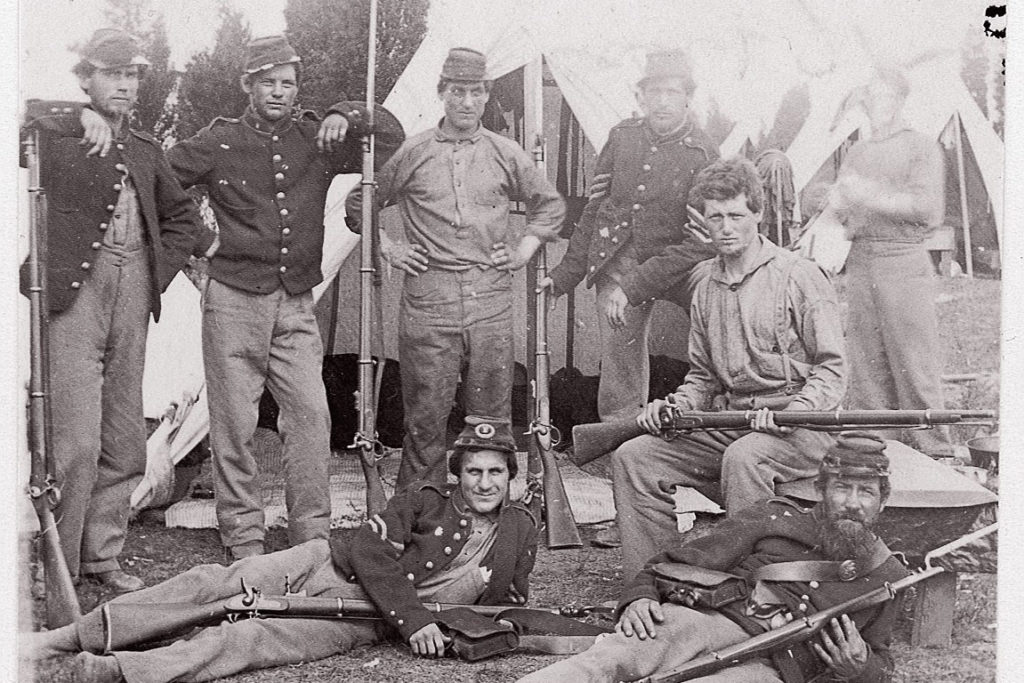
The books which make up this trilogy began, very simply, as an attempt to understand the men who fought in the Army of the Potomac. As a small boy I had known a number of these men in their old age; they were grave, dignified, and thoughtful, with long white beards and a general air of being pillars of the community. They lived in rural Michigan in the pre-automobile age, and for the most part they had never been fifty miles away from the farm or the dusty village streets; yet once, ages ago, they had been everywhere and had seen everything, and nothing that happened to them thereafter meant anything much. All that was real had taken place when they were young; everything after that had simply been a process of waiting for death, which did not frighten them much—they had seen it inflicted in the worst possible way on boys who had not bargained for it, and they had enough of the old-fashioned religion to believe without any question that when they passed over they would simply be rejoining men and ways of living which they had known long ago.

Yet, in an odd way, the old veterans did leave one correct impression: the notion that as young men they had been caught up by something ever so much larger than themselves and that the war in which they fought did settle something for us—or, incredibly, started something which we ourselves have got to finish. It was not only the biggest experience in their own lives; it was in a way the biggest experience in our life as a nation, and it deserves all of the study it is getting.

From the preface to Mr. Lincoln’s Army, Book One of the Army of Potomac Trilogy by Bruce Catton, (Doubleday, Garden City, NY, 1962).

They lived in rural Michigan in the pre-automobile age, and for the most part they had never been fifty miles away from the farm or the dusty village streets;

yet once, ages ago, they had been everywhere and had seen everything, and nothing that happened to them thereafter meant anything much.

All that was real had taken place when they were young;

everything after that had simply been a process of waiting for death, which did not frighten them much —

they had seen it inflicted in the worst possible way on boys who had not bargained for it,

It was not only the biggest experience in their own lives; it was in a way the biggest experience in our life as a nation.

I am reminded of what Big Bill wrote in his play, Henry V.

And gentlemen in England now a-bed
Shall think themselves accursed they were not here,
And hold their manhoods cheap whiles any speaks
That fought with us upon Saint Crispin’s day.

In remembrance of Mr. Abraham Lincoln who died on April 15th, 1865.

4.14.24 – I just hit the ball

I just hit the ball
in all the places I know
I shouldn’t hit it

“I didn’t have a very good warm-up session and I kept it going all day today,” Woods said.

I just hit the ball in all the places that I know I shouldn’t hit it. And I missed a lot of putts. Easy, makable putts. I missed a lot of them.

Tiger Woods on his play on the 3rd day at the 2024 Master’s Tournament as quoted in the article, Tiger Woods makes unwanted Masters history while Scheffler edges into lead by Ewan Murray at Augusta.

Back in the day, sportswriters gathered around athletes in locker rooms or anywhere after an event and hoped for a great quote, a quote, any quote, the sports writer could use to construct a story.

Sometimes the sports writer might score an exclusive by being the only reporter around.

Today, by agreement with the people who run sports, these poor athletes have to drag themselves to a room filled with sports writers, sit at table on a platform down front and answer the question, “What happened out there today?”

Yesterday Mr. Woods was obviously honest.

When asked what happened when he shot an 82 (a bad score I am told and if I remember correctly an 82 is what Roy McAvoy, played by Kevin Costner, shot in the movie, Tin Cup), Mr. Woods said, “I just hit the ball in all the places that I know I shouldn’t hit it. And I missed a lot of putts. Easy, makable putts. I missed a lot of them.”

That about sums it up.

I am reminded of a story Jim Bouton tells in his book, Ball Four, about Mickey Mantle being asked about a home run.

“He’d be interviewed by some announcer about a home run he hit, with the wind blowing from left to right and the ball had been curving into the wind and thus was saved from going foul. “That’s right,” Mickey said. “When I noticed the wind blowing like that—I always check, you know—I put the proper English on the ball, left or right, up or down, depending upon which way the wind is blowing.”

Mr. Bouton writes that the announcer who asked the question never even looked up, just wrote it all down in his notes.

What if we were faced with obvious questions about what happened to us or why we did something.

One summer when I was a kid, my Dad came home with a chain saw.

What did you get that thing for?” my Mom asked.

“To clean out the brush. As long as I use it properly, there is nothing to worry about.”

“You will be out in the woods and hurt yourself!”

“I got an electric one so I can’t be out in the woods as it needs an extension cord. As long as I use it properly, there is nothing to worry about.”

“You are a Dentist and you are going to cut your fingers off!

As long as I use it properly, there is nothing to worry about.”

A few hours later, I was sitting in the kitchen and my Dad came in.

His hand was wrapped in a towel that was turning red with blood.

Where’s Mother?” Dad asked as he looked around, trying to hide his bloody hand.

Dad, what happened out there?” I asked.

I wasn’t using it properly!

That about summed it up.