5.20.2024 – Miss Otis regrets …

Miss Otis regrets
she is … is unable to
lunch today, madam

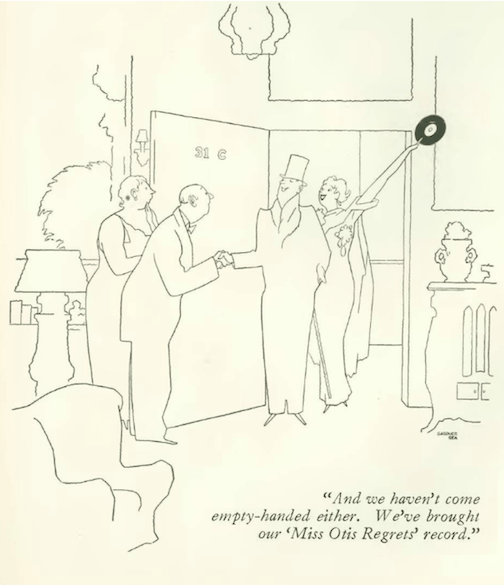
According to Wikipedia, Miss Otis Regrets is “a song about the lynching of a society woman after she murders her unfaithful lover, composed by Cole Porter in 1934.

The song began during a party at the New York apartment of Porter’s classmate from Yale, Leonard Hanna. Hearing a cowboy’s lament on the radio, Porter sat down at the piano and improvised a parody of the song. He retained the referential song’s minor-keyed blues melody and added his wry take on lyrical subject matter common in country music: the regret of abandonment after being deceitfully coerced into sexual submission. Instead of a country girl, however, Miss Otis is a polite society lady.

Garner Rea’s cartoon appeared in the Dec. 29, 1034 edition of the New Yorker. 

Just about everyone in the world recorded it as well but few captured the haunting theme as much as the covid era, #quarantunes (#live from home) version by Morgan James.

According to legend, Cole Porter wrote the song “Miss Otis Regrets” Ada Beatrice Queen Victoria Louise Virginia Smith, better known as Bricktop, for her to perform.

Bricktop Smith was an American dancer, jazz singer, vaudevillian, and self-described saloon-keeper who owned the famous nightclub “Chez Bricktop” in Paris from 1924 to 1961.

If you can find a recording of Bricktop’s version, please let me know.

If anyone has a good cowboy lament for 2024, also please let me know.

I am thinking of reworking the words to Miss Otis …

Here are the lyrics:

Miss Otis regrets she’s unable to lunch today,
Madam,
Miss Otis regrets she’s unable to lunch today.
She is sorry to be delayed,
But last evening down in lover’s lane she strayed,
Madam,
Miss Otis regrets she’s unable to lunch today.
When she woke up and found
That her dream of love was gone,
Madam,
She ran to the man
Who had led her so far astray,
And from under her velvet gown
She drew a gun and shot her lover down,
Madam,
Miss Otis regrets she’s unable to lunch today.
When the mob came and got her
And dragged her from the jail,
Madam,
They strung her upon
The old willow across the way,
And the moment before she died
She lifted up her lovely head and cried,
Madam,
“Miss Otis regrets she’s unable to lunch today.”

5.18.2024 – many delight in

many delight in
musty, badly arranged and
ill-lighted, bookshops

Many buyers delight in the musty, ill-lighted, badly arranged bookshops with their monastic atmosphere. Their fascination is unquestioned, they have added much to cultivation of readers

From the article, Intelligent and Aggressive Bookselling by Cedric R. Crowell, General Manager, Doubleday, Doran Books Shops, Inc. in Publishers Weekly, New York, November 26, 1932.

Growing up in Grand Rapids, Michigan, there were not a lot of bookstores.

The City Directory of Grand Rapids for 1960 lists just 15 bookstores.

Of those 15, Bakers, DeSales Catholic Books, Kregals, Northtown Bible and Books, Glad Tidings Book and Bible, Langerhost Bible, Pell’s Bible, Reformed Church Bookstore and Zondervan’s were all religious books stores.

Then there was Allen’s Bookstore, a big, old fashioned bookstore down on Division near where the Majestic Theater offices are today.

It was next to a Coffee and Nut shop called the Coffee Ranch and the smell of freshly roasted coffee often filled the bookstore even before the days of Starbuck’s in a Barnes and Noble.

Those smells sound good but the coffee roaster often malfunctioned at the Coffee Ranch and filled all the stores in the building with the smell of burned coffee beans.

Through my Dad, my family was familiar with the Coffee Ranch.

It had wooden floors, a big coffee mill, sacks of beans, bins of coffee, redskin peanuts the size of your thumb and cashews the size of your big toe.

It had all the atmosphere for real that today’s gift shops try to recreate.

At one time the Coffee Ranch supplied all the major restaurants in Grand Rapids with their own blends and then sold those coffee blends in their store under the name of the restuarant.

The walls of the Coffee Ranch were lined with these wooden bins with the names of the restaurants on a card on the front of the bin.

It was cool for us because there was one bin labeled with a card that said PANTLIND’S BEST.

The Pantlind was the biggest hotel in town at the time and has since been taken over by Amway.

The cool thing was that PAINTED on the bin, behind the card, was the label, HOFFMAN’S BEST.

I asked the owner about it and he said that back in the day, the Hoffman House had it’s start in Grand Rapids before moving to Wisconsin where it became a family run business success until being bought out in 1976 by some chain.

I was never able to prove this connection but you can guess what coffee blend I would buy.

Allen’s Bookstore, next door, was as close to a main stream bookstore as Grand Rapids had.

My Dad would take me there from time to time and my Dad would chat with Mr. Allen about what was new and good.

My Dad knew everyone and could talk with anybody.

I would walk around and day dream that Mr. Allen would look over and say, ‘Hey kid! You are the 100,000th customer this year and you win $100 in free books.’

That never happened but I had my $100 worth of books picked out just in case.

Besides Allen’s, the only bookstore in town, was Grant’s.

Grant’s Used Books at 449 Bridge St.

Well, Grant’s Used Everything.

It is now Bridge Street Lofts on that location but before it was torn down, Grant’s was one of those small building’s built into an existing house.

The shop was Mr. Grant’s hobby and he sold anything he could think of.

Those blue coin collecting books.

Odd auto and boat motor parts.

And books.

And books and books and more books.

My hunch is that Grant’s specialized in Grand Rapid’s Public School textbooks that he bought and sold to families in the area but he also stocked the most amazing collection of books I had ever seen.

The store could not have had a more musty, ill-lighted, badly arranged bookshop with a monastic atmosphere had Grant tried.

The main floor was high ceiling with book cases and books wedged in everywhere.

My Dad would take me over there from time and my Dad would talk to Grant.

My Dad knew everyone and could talk with anybody.

I remember one time he got into an argument with Grant over how the book, Anthony Adverse, ended.

To make a point, Grant had to find a copy which meant going down to the basement.

He led us to a back stairs that had a large sign with an arrow that said ‘Down.’

He moved some books stacked by the stairs around until he found a switch and turned on the lights and took us down a shaky, narrow staircase.

The basement made the upstairs look roomy.

The basement was a maze of cement floor to exposed ceiling beams bookcases, lit by bare light bulbs with aisles barely wide enough for me to get through and barely above my head.

There were 1,000s if not millions of books down there.

“All Fiction,” Grant said as he started looking for Anthony Adverse.

All fiction and somewhat arranged in alphabetical order by author.

Maybe suggestion if not by rule.

Books were wedged in maybe three deep and then sideways on top.

Books were stacked on the floor.

Books were everywhere.

I was in awe.

My Dad made no effort to leave the stairs and enter the maze.

He was just a little too big to fit in between the book cases.

Grant found the book and we returned to the main floor.

As Grant read the last page he said, ‘I remember now, public opinion made the author re-write the ending.’

I don’t remember who had what side of the argument.

I do remember Grant look at me once and asking, ‘What do you read?’

And I answered … CS Forester, Hornblower books.

My Dad smiled and Grant reeled off the list of Hornblower titles and which ones were his favorites.

Then he mentioned that Forester had other books including, Rifleman Dodd and The Gun.

For years I searched for a book called Rifleman Dodd and The Gun until I got to college and in the college library I found out that it was, as Grant said, two books, Rifleman Dodd and The Gun.

Odd twist to this story, when I finally got around to owning a copy of these books which I ordered from Amazon, it was a single edition that had both books, Rifleman Dodd and The Gun, in one volume that I still have to this day.

At some point, I started going to Grant’s Bookstore on my own.

I would ride my bike over to the west side of Grand Rapids which was like being in another world.

Grand Rapids had a North End, a South End and a West Side and you knew where you belonged and I would leave the North End on my bike, cross the river and ride across the foreign West Side to Grant’s.

Grant would hear the bell on the door and look up and see me and say, “The Hornblower Kid” and let me wander around.

If he heard the light switch to the basement click, he would yell, “Don’t go in the basement !

Then he would look and say, “Oh it’s you”

Don’t touch anything but the books.” he would say and down the stairs I would go, into another planet or maybe another dimension as time would stop when I was down there.

The rest of world continued on I am sure. but I felt like I had been transported to another place altogether.

All those books.

All those thoughts.

All those words.

It was a magical place.

Fascinating.

Another thing about Grant’s was the price.

I think all books were a quarter and he never charged tax.

I would get a $5.00 from my Grandma on my birthday and at Christmas and it translated to 20 new books in my mind.

20 new blocks of magic.

Fascinating.

Grant’s Used Bookstore came to mind when I read the lines:

Many buyers delight in the musty, ill-lighted, badly arranged bookshops with their monastic atmosphere.

Their fascination is unquestioned, they have added much to cultivation of readers.

Musty, ill-lighted, badly arranged bookshops.

Their fascination is unquestioned.

5.15.2024 – though we achieved a

though we achieved a
first-rate tragedy, tragedy
was not our business …

It was all those eggs you see?

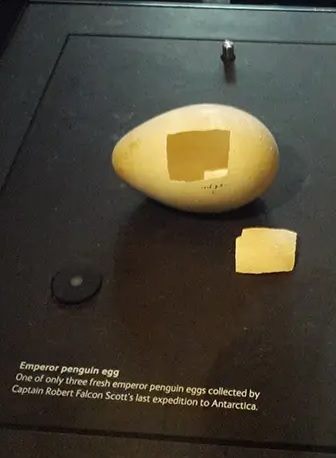
According to Wikipedia, It was thought at the time that the flightless penguin might shed light on an evolutionary link between reptiles and birds through its embryo. As the bird nests during the Antarctic winter, it was necessary to mount a special expedition in July 1911, from the expedition’s base at Cape Evans, to the penguins’ rookery at Cape Crozier. Wilson chose Apsley Cherry-Garrard to accompany him and Henry R. Bowers across the Ross Ice Shelf under conditions of complete darkness and temperatures of −40 °C (−40 °F) and below. All three men, barely alive, returned from Cape Crozier with their egg specimens, which were stored.

It was this winter journey, not the later expedition to the South Pole, that Cherry-Garrard described as the “worst journey in the world”

When Mr. Cherry- Gerrard came to write about this trip to get penguin eggs, the book was in fact titled, The Worst Journey in the World.

In the opening preface, Mr. Cherry-Gerrard writes, “Polar exploration is at once the cleanest and most isolated way of having a bad time which has been devised.”

It is an incredible read and no less incredible when it is realized it is all true and written in the first person by someone who had been there.

While the story itself would captivate, the writing of Mr. Cherry-Gerrard is a wonder to enjoy.

Mr. Cherry-Gerrard was not in condition after this side trip to take part in the Captain Scott’s push to be first at the South Pole.

You may remember that while Scott reached the pole, what he found was a note from Swedish explorer Roald Amundsen that he had already been there.

Scott and his part all died on the trip back to camp.

Mr. Cherry-Gerrard led the team that discovered the bodies.

Between the egg adventure and writing the book, World War One took place.

Mr. Cherry-Gerrard closes his book with these passages:

This post-war business is inartistic, for it is seldom that any one does anything well for the sake of doing it well; and it is un-Christian, if you value Christianity, for men are out to hurt and not to help — can you wonder, when the Ten Commandments were hurled straight from the pulpit through good stained glass.

It is all very interesting and uncomfortable, and it has been a great relief to wander back in one’s thoughts and correspondence and personal dealings to an age in geological time, so many hundred years ago, when we were artistic Christians, doing our jobs as well as we were able just because we wished to do them well, helping one another with all our strength, and (I speak with personal humility) living a life of co-operation, in the face of hardships and dangers, which has seldom been surpassed.

I shall inevitably be asked for a word of mature judgment of the expedition of a kind that was impossible when we were all close up to it, and when I was a subaltern of 24, not incapable of judging my elders, but too young to have found out whether my judgment was worth anything.

I now see very plainly that though we achieved a first-rate tragedy, which will never be forgotten just because it was a tragedy, tragedy was not our business.

5.14.2024 – perhaps question is

perhaps question is
where are you in your moral
decision making

In the New York Times Opinion Piece (Part of the Conversation Series), NYT Opinion columnist Bret Stephens asks readers to ‘Ponder the meaning of the word “hineni.”’

The word hineni is linked to this definition/explanation of the word.

On several occasions, God asks Adam, Abraham and Moses, “Where are you?” Understood literally, it’s a nonsensical question. If God is all knowing, doesn’t God know where they are?

Perhaps the question isn’t about geographical location. Perhaps instead, God is asking: Where are you in your moral decision making?

The answer “hineni” means: “Here I am ready and waiting to do Your will. Here I am, a partner with You in the eternal covenant between You and our people. How can I fulfill my role more fully?”

Yet the word conveys so much more. To say “hineni” expresses a yearning for a spiritual awakening, a moment, however fleeting, in which we feel close to the heart of the Universe.

It signals the moment when the details of my own life story become one with the story of our people — a legacy I stand ready to pass down to those who follow.

Perhaps instead, God is asking: Where are you in your moral decision making?

What legacy do you stand ready to pass down to those who follow?

Hineni sounds like a dangerous word.

A word not to be taken lightly.

Especially if you accept who is asking the question.

Take us out of today’s legal news cycle.

Take us out of today’s political news cycle.

Take us out of today’s world news cycle.

And put the major players of those news cycles and picture them, not in courtroom, not in a legislative meeting room, not in a war room but in a room where a question is posed to these major players by God.

And God asks, Where are you in your moral decision making?

Okay, so forgot the major players.

How about me?

I am going off to ponder the meaning of the word hineni.

5.10.2024 – they both look down on

they both look down on
those that don’t read but merely
who go out and live

The Three Tigers

As to Tiger Number One, what he likes best is prowling and hunting. He snuffs at all the interesting and exciting smells there are on the breeze; that dark breeze that tells him the secrets the jungle has hid: every nerve in his body is alert, every hair in his whiskers; his eyes gleam; he’s ready for anything. He and Life are at grips.

Number Two is a higher-browed tiger, in a nice cozy cave. He has spectacles; he sits in a rocking-chair reading a book. And the book describes all the exciting smells there are on the breeze, and tells him what happens in the jungle, where nerves are alert; where adventure, death, hunting and passion are found every night. He spends his life reading about them, in a nice cozy cave.

It’s a curious practice. You’d think if he were interested in jungle life he’d go out and live it. There it is, waiting for him, and that’s what he really is here for. But he makes a cave and shuts himself off from it—and then reads about it!

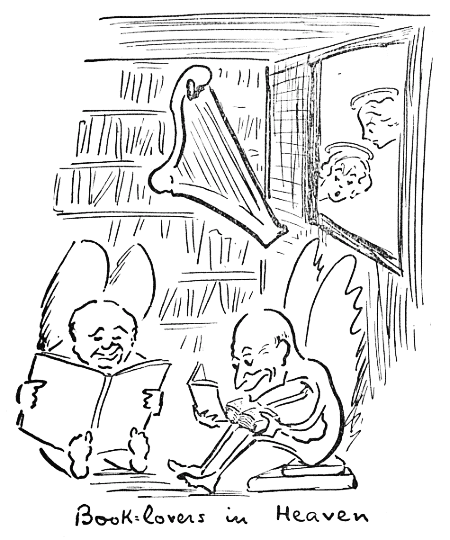
Once upon a time some victims of the book-habit got into heaven; and what do you think, they behaved there exactly as here. That was to be expected, however: habits get so ingrained. They never took the trouble to explore their new celestial surroundings; they sat in the harp store-room all eternity, and read about heaven.

They said they could really learn more about heaven, that way.

And in fact, so they could. They could get more information, and faster. But information’s pretty thin stuff, unless mixed with experience.

But that’s not the worst. It is Tiger Number Three who’s the worst. He not only reads all the time, but he wants what he reads sweetened up. He objects to any sad or uncomfortable account of outdoors; he says it’s sad enough in his cave; he wants something uplifting So authors obediently prepare uplifting accounts of the jungle, or they try to make the jungle look pretty, or funny, or something; and Number Three reads every such tale with great satisfaction. And since he’s indoors all the time[5] and never sees the real jungle, he soon gets to think that these nice books he reads may be true; and if new books describe the jungle the way it is, he says they’re unhealthy. “There are aspects of life in the jungle,” he says, getting hot, “that no decent tiger should ever be aware of, or notice.”

Tiger Number Two speaks with contempt of these feelings of Three’s. Tigers should have more courage. They should bravely read about the real jungle.

The realist and the romantic tiger are agreed upon one point, however. They both look down on tigers that don’t read but merely go out and live.

As published in The Crow’s Nest by Clarence Day, Jr., New York, Alfred Knopf, 1921.