10.22.2023 – booksellers about

booksellers about
as uncommercial breed of
people possible

In a world gone crazy, when I am grasping at anything that points the compass in a positive direction, I found the recent article in the New York Times, Barnes & Noble Sets Itself Free By Maureen O’Connor to be something of a word of hope.

To quote Big Bill or better to quote Portia in the Merchant of Venice, So shines a good deed in a naughty world.

Or maybe best to quote Willy Wonka and say, “So shines a good deed in a weary world.”

At least, for a moment, this story about how Barnes and Noble  is pushing the chain to act more like the indie stores it was once notorious for displacing under the direction of a new CEO, James Daunt.

“The curious trick has been that if you actually let the local book-selling teams do what they think is best, you suddenly get much better bookstores,” Mr. Daunt said. Then he quickly added a caveat: “About a quarter of them become dramatically better, and a quarter become dramatically worse — but it is much easier to focus on that quarter and improve them.”

The change goes along with his strategy of embracing the mind-set of his typical employee. “Booksellers are about as uncommercial a breed of people as it’s possible to come across,” Mr. Daunt said. “The irony is that the less concerned we are with the commercial, the better it works commercially.

“You need to love books, and you need to know how our customers shop for books,” says a long term Barnes and Noble employee.

I read and I believe it, but only because I want to believe it.

I spent 12 years working for a chain bookstore.

For many employee’s it was a job.

For me and many employee’s and many of my good good friends that I worked with, it was a calling.

And it was a fight against those who went into it as business and tried to make it business while we tried to keep the faith.

So to read, “The curious trick has been that if you actually let the local book-selling teams do what they think is best, you suddenly get much better bookstores.” almost makes me want to cry.

I worked for Waldenbooks.

But I lived in Michigan.

If you loved books and you lived in the State of Michigan, at some point in your life you ended up at Border’s Book Store, a stand alone, independent love-affair with books in Ann Arbor, Michigan.

If you went down that path, you also at some point ended up at John King Used Books in Detroit but that’s another story.

Among booksellers in the State of Michigan, Border’s was the gold standard.

It had sofa’s and chairs and probably some sort of cafe before Starbucks.

They had a service desk set up and staffed by three people, in the pre computer era, who did nothing but researched hard to find titles so a customer could order the book.

They had floor upon floor of books.

The had an art print / map section and I still have prints on my office wall that I purchased there, using my grocery money instead of using my grocery money for groceries.

When I started with at my bookstore in a mall, I saw how it could embrace some of what Border’s was.

I fought for chairs in the store.

I fought for more and more copies of different books rather than 100 copies of the same bestseller.

We worked to create displays of content that meant something.

I started as a bookseller then assistant Manager and finally, Manager.

Though I used label tape and put the title, GUY IN CHARGE on my name tag.

One of the many, many things I did that got me trouble.

My battles can be kind of summed up when I made a display of books for Valentine’s Day.

Regardless of the topic or author, I took over a wall and made a display of every red book we had in the store.

My District Manager came in, took one look at Car Repair manuals next to Novels next to books on Knitting but ALL WITH RED COVERS surrounded by cardboard hearts and he ran back out to his car to get his camera.

That’s the type of thinking we want to see Mike!,” he told me.

I banged a big red American Heritage dictionary against my head.

This is Walden’s, Mike”, he would say, “Not Border’s.

The really funny part of this story is that after I was asked to leave the employ of company, another long story, Walden’s relocated it’s headquarters from Stamford, CT to ANN ARBOR and then bought out Border’s and in an effort to change the brand, changed the name of the Company TO Border’s Books!

In the end I guess I won.

To read Booksellers are about as uncommercial a breed of people as it’s possible to come across is a tonic to my soul.

Some where I have a book, I think it’s an autographed copy of Lake Wobegone by Garrison Keillor.

It was picked up for me by a Waldenbooks Regional Vice President.

Her office was in Ann Arbor and I got to know her when I worked at the Walden’s in Ann Arbor when I was in College.

I was allowed to switch back and forth between Grand Rapids, where I lived and Ann Arbor.

I would have long talks with this VP on bookselling as a calling and she would explain bookselling as a business.

She knew I liked Keillor and arranged to get an autographed copy when he made an appearance at some other Walden’s.

Inscribed above the author’s autograph was this sentiment.

To the most un-corporate person I know.”

And she signed it.

When James Thurber’s dog Mugg’s (The Dog that Bit People) died, he writes, “Mother wanted to bury him in the family lot under a marble stone with some such inscription as “Flights of angels sing thee to thy rest” but we persuaded her it was against the law. In the end we just put up a smooth board above his grave along a lonely road. On the board I wrote with an indelible pencil “Cave Canem.” Mother was quite pleased with the simple classic dignity of the old Latin epitaph.

To the most un-corporate person I know.

Should I have a tombstone someday, I would be quite pleased with the simple classic dignity of that sentiment.

,

10.11.2023 – computers often

computers often
in reality too dumb to
avoid hurting us

Inspired by the guest Opinion Essay, “Autonomous Vehicles Are Driving Blind” by Julia Angwin a contributing Opinion writer to the New York Times and an investigative journalist and the passage, “There’s an irony here: So many headlines have focused on fears that computers will get too smart and take control of the world from humans, but in our reality, computers are often too dumb to avoid hurting us.”

Ms. Angwin writes, “For all the ballyhoo over the possibility of artificial intelligence threatening humanity someday, there’s remarkably little discussion of the ways it is threatening humanity right now. When it comes to self-driving cars, we are driving blind.”

Ms. Angwin explains, “The National Highway Traffic Safety Administration regulates the hardware (such as windshield wipers, airbags and mirrors) of cars sold in the United States. And the states are in charge of licensing human drivers. To earn the right to drive a car, most of us at some point have to pass a vision test, a written test and a driving test. The A.I. undergoes no such government scrutiny before commanding the wheel.”

I am reminded of The Glass in the Field by James Thurber from Fables for Our Time and Famous Poems Illustrated: as in appeared in The Thurber Carnival.

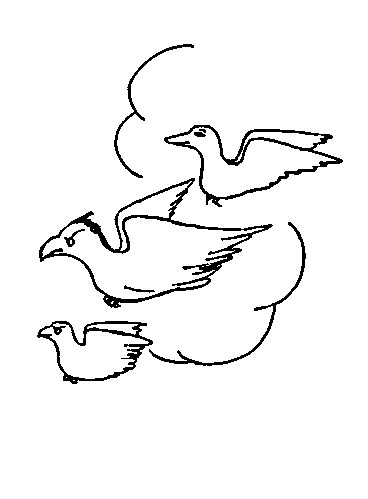
A short time ago some builders, working on a studio in Connecticut, left a huge square of plate glass standing upright in a field one day. A goldfinch flying swiftly across the field struck the glass and was knocked cold. When he came to he hastened to his club, where an attendant bandaged his head and gave him a stiff drink. “What the hell happened?” asked a sea gull. “I was flying across a meadow when all of a sudden the air crystallized on me,” said the goldfinch. The sea gull and a hawk and an eagle all laughed heartily. A swallow listened gravely. “For fifteen years, fledgling and bird, I’ve flown this country,” said the eagle, “and I assure you there is no such thing as air crystallizing. Water, yes; air, no.” “You were probably struck by a hailstone,” the hawk told the goldfinch. “Or he may have had a stroke,” said the sea gull. “What do you think, swallow?” “Why, I–I think maybe the air crystallized on him,” said the swallow. The large birds laughed so loudly that the goldfinch became annoyed and bet them each a dozen worms that they couldn’t follow the course he had flown across the field without encountering the hardened atmosphere. They all took his bet; the swallow went along to watch. The sea gull, the eagle, and the hawk decided to fly together over the route the goldfinch indicated. “You come, too,” they said to the swallow. “I–I–well, no,” said the swallow. “I don’t think I will.” So the three large birds took off together and they hit the glass together and they were all knocked cold.

Moral: He who hesitates is sometimes saved.

9.12.2023 – its own nodule

its own nodule
of permanent rage at the
root of consciousness

The death of his sister at nineteen in an auto crash with his father was still unacceptable fifty years later.

It had created its own nodule of permanent rage at the roots of his consciousness. It was ultimately the cause of his becoming a writer.

If this can happen to those you love you may as well follow your heart’s wishes in your time on earth.

So writes Jim Harrison in short story The Ancient Minstrel published in the book by the same name, The Ancient Minstrel, Grove Press: (2017).

created its own nodule of permanent rage at the roots of his consciousness may be one of the most honest lines of words in the English language.

So many of us have a nodule of permanent rage at the roots of our consciousness.

But how many of us can pin the source of the rage down.

Mr. Thoreau described it as a life of quiet desperation.

But Mr. Thurber pointed out that most of us live lives of noisy desperation as well.

Enraged, infuriated, beside himself, seeing red and thinking black, creating its own nodule of permanent rage at the roots of his consciousness.

The Grizzly and the Gadgets

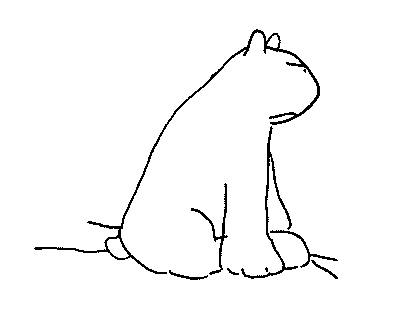
A grizzly bear who had been on a bender for several weeks following a Christmas party in his home at which his brother-in-law had set the Christmas tree on fire, his children had driven the family car through the front door and out the back, and all the attractive female bears had gone into hibernation before sunset returned home prepared to forgive, and live and let live. He found, to his mild annoyance, that the doorbell had been replaced by an ornamental knocker. When he lifted the knocker, he was startled to hear it play two bars of “Silent Night.”

When nobody answered his knock, he turned the doorknob, which said “Happy New Year” in a metallic voice, and a two-tone gong rang “Hello” somewhere deep within the house.

He called to his mate, who was always the first to lay the old aside, as well as the first by whom the new was tried, and got no answer. This was because the walls of his house had been soundproofed by a soundproofer who had soundproofed them so well nobody could hear anybody say anything six feet away. Inside the living room the grizzly bear turned on the light switch, and the lights went on all right, but the turning of the switch had also released an odor of pine cones, which this particular bear had always found offensive. The head of the house, now becoming almost as angry as he had been on Christmas Day, sank into an easy chair and began bouncing up and down and up and down, for it was a brand-new contraption called “Sitpretty” which made you bounce up and down and up and down when you sat on it. Now thoroughly exasperated, the bear jumped up from the chair and began searching for a cigarette. He found a cigarette box, a new-fangled cigarette box he had never seen before, which was made of metal and plastic in the shape of a castle, complete with portal and drawbridge and tower. The trouble was that the bear couldn’t get the thing open. Then he made out, in tiny raised letters on the portal, a legend in rhyme: “You can have a cigarette on me If you can find the castle key.” The bear could not find the castle key, and he threw the trick cigarette box through a windowpane out into the front yard, letting in a blast of cold air, and he howled when it hit the back of his neck. He was a little mollified when he found that he had a cigar in his pocket, but no matches, and so he began looking around the living room for a matchbox. At last he saw one on a shelf. There were matches in it, all right, but no scratching surface on which to scratch them. On the bottom of the box, however, there was a neat legend explaining this lack. The message on the box read: “Safety safety matches are doubly safe because there is no dangerous dangerous sandpaper surface to scratch them on. Strike them on a windowpane or on the seat of your pants.”

Enraged, infuriated, beside himself, seeing red and thinking black, the grizzly bear began taking the living room apart. He pounded the matchbox into splinters, knocked over lamps, pulled pictures off the wall, threw rugs out of the broken window, swept vases and a clock off the mantelpiece, and overturned chairs and tables, growling and howling and roaring, shouting and bawling and cursing, until his wife was aroused from a deep dream of marrying a panda, neighbors appeared from blocks around, and the attractive female bears who had gone into hibernation began coming out of it to see what was going on.

The bear, deaf to the pleas of his mate, heedless of his neighbors’ advice, and unafraid of the police, kicked over whatever was still standing in the house, and went roaring away for good, taking the most attractive of the attractive female bears, one named Honey, with him.

MORAL: Nowadays most men lead lives of noisy desperation.

From Further Fables for Our Time by James Thurber (Illustrated by the Author) First published in Great Britain 1956, by Hamish Hamilton Ltd, 90 Great Russell Street London W.C.1.

7.10.2023 – a word to the wise

a word to the wise
is not sufficient if, IF
it doesn’t make sense

The Weaver and the Worm

A weaver watched in wide-eyed wonder a silkworm spinning its cocoon in a white mulberry tree.

“Where do you get that stuff?” asked the admiring weaver.

“Do you want to make something out of it?” inquired the silkworm, eagerly.

Then the weaver and the silkworm went their separate ways, for each thought the other had insulted him. We live, man and worm, in a time when almost everything can mean almost anything, for this is the age of gobbledygook, doubletalk, and gudda.

MORAL: A word to the wise is not sufficient if it doesn’t make any sense.

From Further Fables for Our Time by James Thurber, Hamish Hamilton, 1956.

6.28.2023 – ate some burnt hoss flesh

ate some burnt hoss flesh
ate some burnt hoss flesh, something
more elevating

What is the man in the picture doing?

What is the man in the picture, wearing a Michigan T Shirt in Downtown Columbus, Ohio doing?

Well.

I will tell you.

Some years, James Thurber wrote a short story titled, More Alarms at Night.

Mr. Thurber wrote:

Father was usually in bed by nine-thirty and up again by ten-thirty to protest bitterly against a Victrola record we three boys were in the habit of playing over and over, namely, “No News, or What Killed the Dog,” a recitation by Nat Wills.

The record had been played so many times that its grooves were deeply cut and the needle often kept revolving in the same groove, repeating over and over the same words.

Thus: “ate some burnt hoss flesh, ate some burnt hoss flesh, ate some burnt hoss flesh.” It was this reiteration that generally got father out of bed.

SOOOOO I was able to find a copy of this No News, or What Killed the Dog on You Tube and downloaded it.

I took the audio file and cropped it and pasted it to create an audio file that played ate some burnt hoss flesh, ate some burnt hoss flesh, ate some burnt hoss flesh over and over again.

I had this audio file on my phone.

In the photo, I am standing next to a Victrola.

I am standing in the front living of the house where the short story, More Alarms at Night, took place.

SO the sound of ate some burnt hoss flesh, ate some burnt hoss flesh, ate some burnt hoss flesh was heard once inside the walls of James Thurber’s Columbus, Ohio house.

Is that NOT THE COOLEST!!!

I thought it was great.

Since my son moved to Columbus some years ago, I have been planning this and it was worth the effort and I enjoyed the moment.

I had to explain what I did to the docent on duty.

She was excited as you folks.

ANYWAY, here is the story for us all to enjoy again.

Then, as Thurber’s mother said, We’ll go on to something more elevating.

More Alarms at Night

One of the incidents that I always think of first when I cast back over my youth is what happened the night that my father “threatened to get Buck.” This, as you will see, is not precisely a fair or accurate description of what actually occurred, but it is the way in which I and the other members of my family invariably allude to the occasion. We were living at the time in an old house at 77 Lexington Avenue, in Columbus, Ohio. In the early years of the nineteenth century, Columbus won out, as state capital, by only one vote over Lancaster, and ever since then has had the hallucination that it is being followed, a curious municipal state of mind which affects, in some way or other, all those who live there. Columbus is a town in which almost anything is likely to happen and in which almost everything has.

My father was sleeping in the front room on the second floor next to that of my brother Roy, who was then about sixteen. Father was usually in bed by nine-thirty and up again by ten-thirty to protest bitterly against a Victrola record we three boys were in the habit of playing over and over, namely, “No News, or What Killed the Dog,” a recitation by Nat Wills. The record had been played so many times that its grooves were deeply cut and the needle often kept revolving in the same groove, repeating over and over the same words. Thus: “ate some burnt hoss flesh, ate some burnt hoss flesh, ate some burnt hoss flesh.” It was this reiteration that generally got father out of bed.

On the night in question, however, we had all gone to bed at about the same time, without much fuss. Roy, as a matter of fact, had been in bed all day with a kind of mild fever. It wasn’t severe enough to cause delirium and my brother was the last person in the world to give way to delirium. Nevertheless, he had warned father when father went to bed, that he might become delirious.

About three o’clock in the morning, Roy, who was wakeful, decided to pretend that delirium was on him, in order to have, as he later explained it, some “fun.” He got out of bed and, going to my father’s room, shook him and said, “Buck, your time has come!” My father’s name was not Buck but Charles, nor had he ever been called Buck. He was a tall, mildly nervous, peaceable gentleman, given to quiet pleasures, and eager that everything should run smoothly. “Hmm?” he said, with drowsy bewilderment. “Get up, Buck,” said my brother, coldly, but with a certain gleam in his eyes. My father leaped out of bed, on the side away from his son, rushed from the room, locked the door behind him, and shouted us all up.

We were naturally reluctant to believe that Roy, who was quiet and self-contained, had threatened his father with any such abracadabra as father said he had. My older brother, Herman, went back to bed without any comment. “You’ve had a bad dream,” my mother said. This vexed my father. “I tell you he called me Buck and told me my time had come.” he said. We went to the door of his room, unlocked it, and tiptoed through it to Roy’s room. He lay in his bed, breathing easily, as if he were fast asleep. It was apparent at a glance that he did not have a high fever. My mother gave my father a look. “I tell you he did,” whispered father.

Our presence in the room finally seemed to awaken Roy and he was (or rather, as we found out long afterward, pretended to be) astonished and bewildered. “What’s the matter?” he asked. “Nothing,” said my mother. “Just your father had a nightmare.” “I did not have a nightmare,” said father, slowly and firmly. He wore an old-fashioned, “side-slit” nightgown which looked rather odd on his tall, spare figure. The situation, before we let it drop and everybody went back to bed again, became, as such situations in our family usually did, rather more complicated than ironed out. Roy demanded to know what had happened, and my mother told him, in considerably garbled fashion, what father had told her. At this a light dawned in Roy’s eyes. “Dad’s got it backward,” he said. He then explained that he had heard father get out of bed and had called to him. “I’ll handle this,” his father had answered. “Buck is downstairs.” “Who is this Buck?” my mother demanded of father. “I don’t know any Buck and I never said that,” father contended, irritably. None of us (except Roy, of course) believed him. “You had a dream,” said mother. “People have these dreams.” “I did not have a dream,” father said. He was pretty well nettled by this time, and he stood in front of a bureau mirror, brushing his hair with a pair of military brushes; it always seemed to calm father to brush his hair. My mother declared that it was “a sin and a shame” for a grown man to wake up a sick boy simply because he (the grown man: father) had got on his back and had a bad dream. My father, as a matter of fact, had been known to have nightmares, usually about Lillian Russell and President Cleveland, who chased him.

We argued the thing for perhaps another half-hour, after which mother made father sleep in her room. “You’re all safe now, boys,” she said, firmly, as she shut her door. I could hear father grumbling for a long time, with an occasional monosyllable of doubt from mother.

It was some six months after this that father went through a similar experience with me. He was at that time sleeping in the room next to mine. I had been trying all afternoon, in vain, to think of the name Perth Amboy. It seems now like a very simple name to recall and yet on the day in question I thought of every other town in the country, as well as such words and names and phrases as terra cotta, Walla-Walla, bill of lading, vice versa, hoity-toity, Pall Mall, Bodley Head, Schumann-Heink, etc., without even coming close to Perth Amboy. I suppose terra cotta was the closest I came, although it was not very close.

Long after I had gone to bed, I was struggling with the problem. I began to indulge in the wildest fancies as I lay there in the dark, such as that there was no such town, and even that there was no such state as New Jersey. I fell to repeating the word “Jersey” over and over again, until it became idiotic and meaningless. If you have ever lain awake at night and repeated one word over and over, thousands and millions and hundreds of thousands of millions of times, you know the disturbing mental state you can get into. I got to thinking that there was nobody else in the world but me, and various other wild imaginings of that nature. Eventually, lying there thinking these outlandish thoughts, I grew slightly alarmed. I began to suspect that one might lose one’s mind over some such trivial mental tic as a futile search for terra firma Piggly Wiggly Gorgonzola Prester John Arc de Triomphe Holy Moses Lares and Penates. I began to feel the imperative necessity of human contact. This silly and alarming tangle of thought and fancy had gone far enough. I might get into some kind of mental aberrancy unless I found out the name of that Jersey town and could go to sleep. Therefore, I got out of bed, walked into the room where father was sleeping, and shook him. “Um!” he mumbled. I shook him more fiercely and he finally woke up, with a glaze of dream and apprehension in his eyes. “What’s matter?” he asked, thickly. I must, indeed, have been rather wild of eye, and my hair, which is unruly, becomes monstrously tousled and snarled at night. “Wha’s it?” said my father, sitting up, in readiness to spring out of bed on the far side. The thought must have been going through his mind that all his sons were crazy, or on the verge of going crazy. I see that now, but I didn’t then, for I had forgotten the Buck incident and did not realize how similar my appearance must have been to Roy’s the night he called father Buck and told him his time had come. “Listen,” I said. “Name some towns in New Jersey quick!” It must have been around three in the morning. Father got up, keeping the bed between him and me, and started to pull his trousers on. “Don’t bother about dressing,” I said. “Just name some towns in New Jersey.” While he hastily pulled on his clothes–I remember he left his socks off and put his shoes on his bare feet–father began to name, in a shaky voice various New Jersey cities. I can still see him reaching for his coat without taking his eyes off me. “Newark,” he said, “Jersey City, Atlantic City, Elizabeth, Paterson, Passaic, Trenton, Jersey City, Trenton, Paterson–” “It has two names,” I snapped. “Elizabeth and Paterson,” he said. “No, no!” I told him, irritably. “This is one town with one name, but there are two words in it, like helter-skelter.” “Helter-skelter,” said my father, moving slowly toward the bedroom door and smiling in a faint, strained way which I understand now–but didn’t then–was meant to humor me. When he was within a few paces of the door, he fairly leaped for it and ran out into the hall, his coat-tails and shoelaces flying. The exit stunned me. I had no notion that he thought I had gone out of my senses; I could only believe that he had gone out of his or that, only partially awake, he was engaged in some form of running in his sleep. I ran after him and I caught him at the door of mother’s room and grabbed him, in order to reason with him. I shook him a little, thinking to wake him completely. “Mary! Roy! Herman!” he shouted. I, too, began to shout for my brothers and my mother. My mother opened her door instantly, and there we were at 3:30 in the morning grappling and shouting, father party dressed, but without socks or shirt, and I in pajamas.

“Now, what?” demanded my mother, grimly, pulling us apart. She was capable, fortunately, of handling any two of us and she never in her life was alarmed by the words or actions of any one of us.

“Look out for Jamie!” said father. (He always called me Jamie when excited.) My mother looked at me.

“What’s the matter with your father?” she demanded. I said I didn’t know; I said he had got up suddenly and dressed and ran out of the room.

“Where did you think you were going?” mother asked him, coolly. He looked at me. We looked at each other, breathing hard, but somewhat calmer.

“He was babbling about New Jersey at this infernal hour of the night,” said father. “He came to my room and asked me to name towns in New Jersey.” Mother looked at me.

“I just asked him,” I said. “I was trying to think of one and couldn’t sleep.”

“You see?” said father, triumphantly. Mother didn’t look at him.

“Get to bed, both of you,” she said. “I don’t want to hear any more out of you tonight. Dressing and tearing up and down the hall at this hour in the morning!” She went back into the room and shut her door. Father and I went back to bed. “Are you all right?” he called to me. “Are you?” I asked. “Well, good night,” he said. “Good night,” I said.

Mother would not let the rest of us discuss the affair next morning at breakfast. Herman asked what the hell had been the matter. “We’ll go on to something more elevating,” said mother.