2.29.2020 – Reading Anxiety

Reading Anxiety
excessive interest
Bound box of Moonlight

I suffer from reading anxiety.

Abibliophobia.

Maybe it is a made up but it fits.

The fear of being stuck, somewhere, some place, with nothing to read.

When I was a kid I had this green metal case about the size of a small typewriter case.

When we went on family trips I would stare at my piles of books and carefully assemble a travel library.

This was harder than it sounds as I also had to predict what book I MIGHT want to read.

I did this whether it was a day trip to Sleeping Bear Dunes or a 10 day odyssey to Washington DC.

I never went anywhere without something to read.

The invention of the Kindle, the iPhone and the iPad would seem to be the answer.

Instead my anxity has new manifestations.

Now almost any and every book is just a few clicks away.

What I am missing?

What MIGHT I BE missing.

Maybe someone has a phrase or description or combination of words that, well, will not change my life, but my life might be somewhat less if I never read it.

Hemingway’s description of setting up camp in Michigan’s Upper Pinnesula in the short story, “Big Two Hearted River.”

I love those paragraphs.

Maybe it is the memory of where or how I read and re-read those paragraphs.

I remember reading some of The Nick Adams stories to my son’s Frank and Luke as bedtime tales.

After the scene with the camp, Frank says to me, “Dad, Nick needs a camper.”

I have what might be called excessive interestingness.

I stole those words from a review of the acting of Sam Rockwell for his role in Ridley Scott’s Matchstick Men (2003).

Excessive interest.

Interested in everything.

My dear wife has to pay the price as she never knows when I will set down my book, kindle, iPad or Iphone and say, “I can’t believe it. I was taught that FDR first said ‘Unconditional Surrender’ at the spur of moment at Casablance in 1943 and this book shows that he was thinking of it in early 1942.”

Mr. Thurber writes in “Back Home Again” about making table conversation out of odd facts, “I don’t know what my table companion could reply to this, beyond a polite ‘Indeed’ or an impolite ‘So what?’”

But my wife listens.

I go on and on.

I can’t help myself.

Books and books and more books.

Each one a mystery.

Each one filled with new things and never emptied.

Bound boxes of moonlight.

I feel better knowing I have one nearby.

Books, of course.

And my wife.
1.9.2020 – swinging on a star

swinging on a star
take moon beams home in a jar
moonlit morning hopes

The Google says that the Moon today is in a Waxing Gibbous phase. This phase is when the moon is more than 50% illuminated but not yet a Full Moon. The phase lasts round 7 days with the moon becoming more illuminated each day until the Full Moon.

It was cold and clear last night when my wife and I went for walk.

Cold for Georgia anyway.

Clear and lit by the Waxing Gibbous Moon.

Moonlight was strong enough that we cast shadows and the old song about catching moonbeams in a jar stuck in my brain.

Innocent and sweet thoughts to end the day.

When I left for work this morning that Waxing Gibbous Moon was still shining.

It was low enough in the trees that I could have, like the Court Jester in Thurber’s Many Moons, climbed up in a tree and grabbed the moon for the Princess to wear on a chain around her neck.

(When the Moon shows up the next night, the King worries that his daughter will notice. The Court Jester suggests asking the Princess how that happened when she has the Moon on a chain around her neck. The Princess replies “That is easy, silly,” she said. “When I lose a tooth, a new one grows in its place, doesn’t it?”)

Mr. Debussy’s prélude, La fille aux cheveux de lin (otherwise known as The Girl With The Flaxen Hair) was playing on the radio.

Where does this music come from?

A bad mood and crummy attitude that has been percolating inside me this week didn’t have a chance.

Like the Court Jester, I winked at the moon, “for it seemed to the Court Jester that the moon had winked at him.”

The moment may not last long.

I am, after all, on my way to work.

For now.

For a few minutes.

For a wink of an eye.

I am swinging on a star.

December 12 – Past year, how much good,

Past year, how much good,
I take credit? How much bad,
I think is my fault?

Can I answer that question?

Honestly?

Easy!

I doubt I really accomplished and did anything that might be considered good or good for people this last year.

The amount of bad things?

Things I consider to be ‘my fault’ are countless.

Beyond numbering.

I am smart enough to know that isn’t true.

I did do some good.

Not everything was my fault.

I am somewhat smart enough to know that thinking this way is wrong.

But.

There it is.

Maybe it just the easy way out.

Yup, it’s me, it’s all on me.

Pile it on.

Considered in the abstract, it’s kinda stupid to feel this way.

If I cannot take credit for anything good, then why do I line up at the ‘remorse, oh woe is me’ window at the feelings bank?

James Thurber wrote in his fable, The White Deer, about the Royal Astronomer and the King.

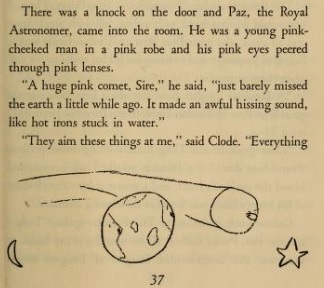
“There was a knock on the door and Paz, the Royal Astronomer, came into the room. He was a young pink-cheeked man in a pink robe and his pink eyes peered through pink lenses.
“A huge pink comet, Sire,” he said, “just barely missed the earth a little while ago. It made an awful hissing sound, like hot irons stuck in water.”
“They aim these things at me,” said [King] Clode, “Everything is aimed at me.”

Well, you know what.

The next time a meteor passes the earth.

The next time something goes wrong.

The next time somebody is looking for someone to blame.

I am going to say (or at least think) not my fault.

Of course, still get going to try fix the issue or help out (if possible).

But its not on me.

The next time.

September 18 – moment beyond words

moment beyond words
Grand daughter and James Thurber
being read to me

After saying it was a moment beyond words, I am going to try and put my feelings into words.

Very inadequate words.

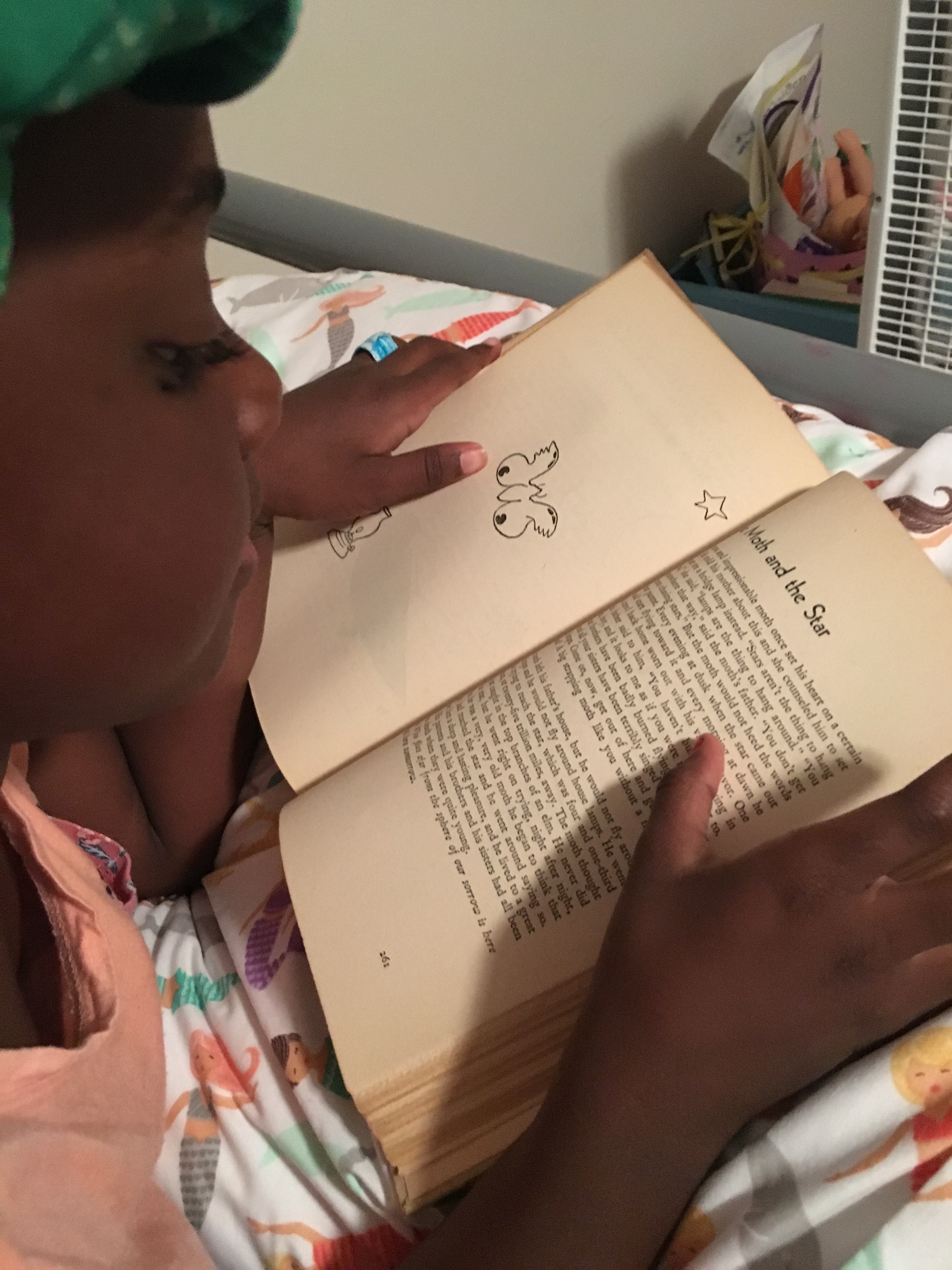
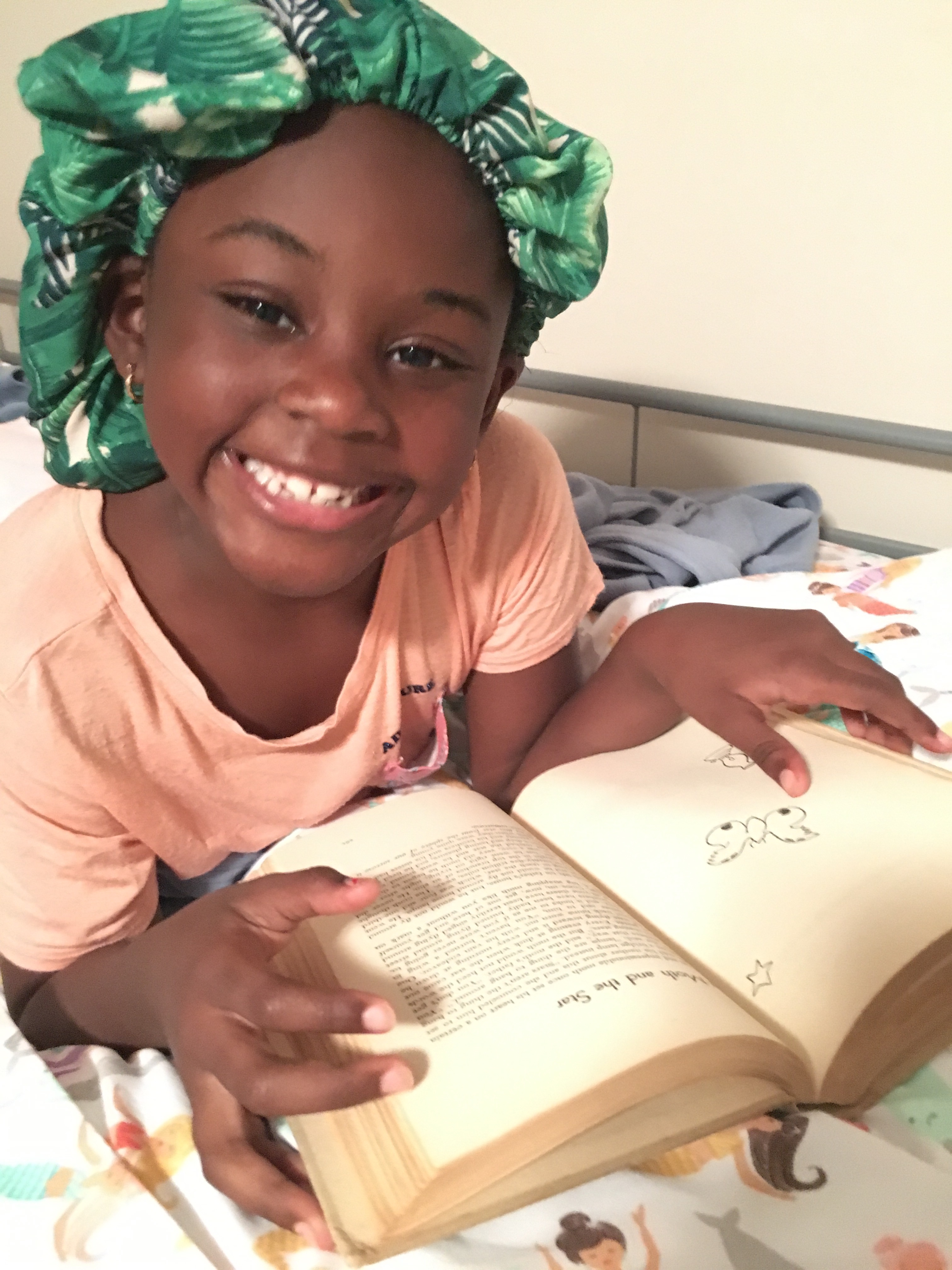
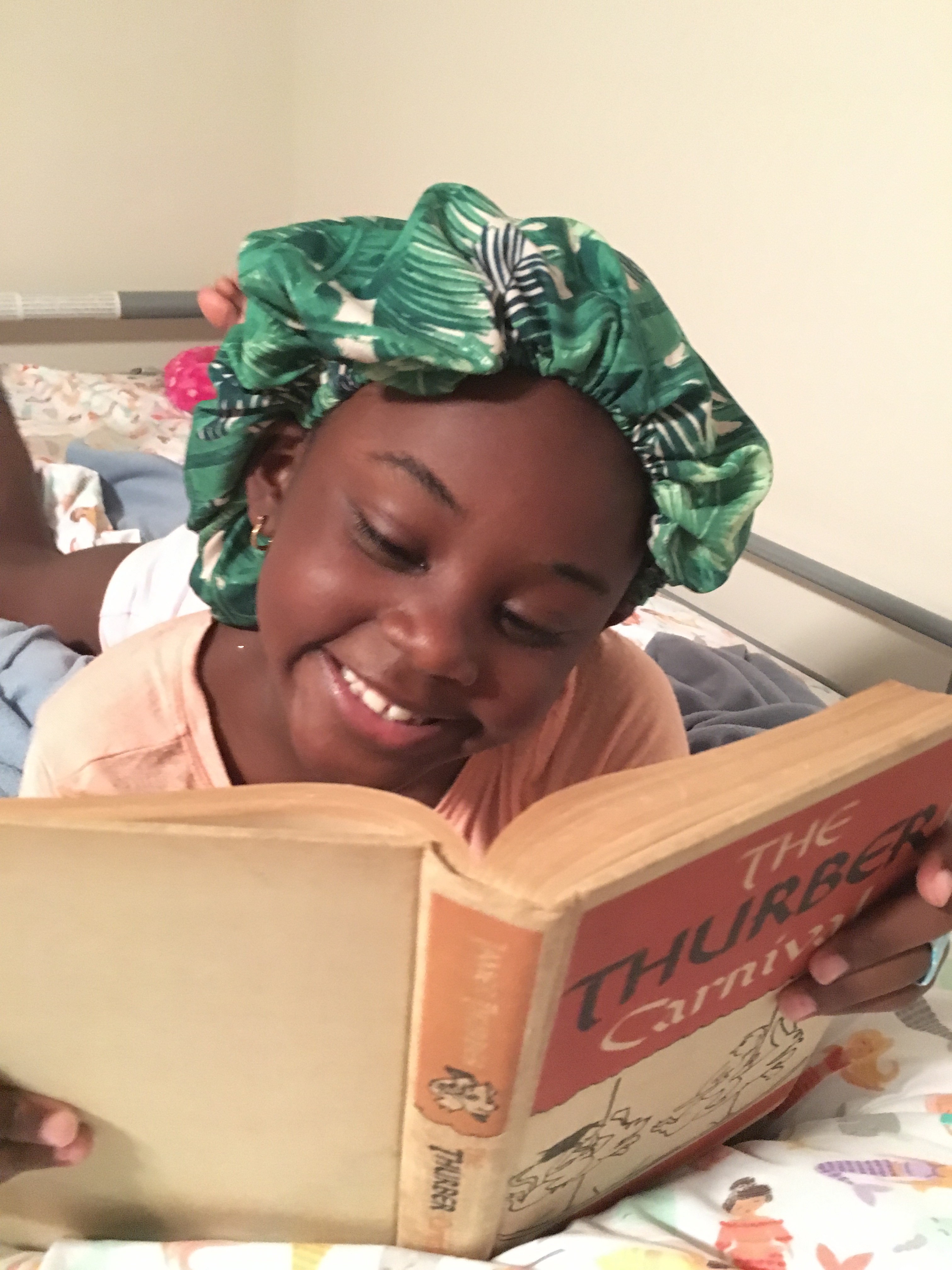
I asked my Grand Daughter if she wanted a story before bedtime and I picked up my copy of Thurber Carnival and found the fable, The Moth and Star.

Azaria said she would like a story but she grabbed the book and read to me.

My first grade grand daughter, working her way through James Thurber, sounding out the words like ‘impressionable’ and ‘singed’. pausing to look up to me for the occasional definition, was such stuff as dreams are made from.

My hope for the today is that everyone, anyone should have such a moment in their life.

The Moth and the Star

A young and impressionable moth once set his heart on a certain star. He told his mother about this and she counseled him to set his heart on a bridge lamp instead. “Stars aren’t the thing to hang around,” she said; “lamps are the thing to hang around.” “You get somewhere that way,” said the moth’s father. “You don’t get anywhere chasing stars.” But the moth would not heed the words of either parent. Every evening at dusk when the star came out he would start flying toward it and every morning at dawn he would crawl back home worn out with his vain endeavor. One day his father said to him, “You haven’t burned a wing in months, boy, and it looks to me as if you were never going to. All your brothers have been badly burned flying around street lamps and all your sisters have been terribly singed flying around house lamps. Come on, now, get out of here and get yourself scorched! A big strapping moth like you without a mark on him!”

The moth left his father’s house, but he would not fly around street lamps and he would not fly around house lamps. He went right on trying to reach the star, which was four and one-third light years, or twenty-five trillion miles, away. The moth thought it was just caught up in the top branches of an elm. He never did reach the star, but he went right on trying, night after night, and when he was a very, very old moth he began to think that he really had reached the star and he went around saying so. This gave him a deep and lasting pleasure, and he lived to a great old age. His parents and his brothers and his sisters had all been burned to death when they were quite young.

Moral: Who flies afar from the sphere of our sorrow is here today and here tomorrow.

from Further fables for our time by James Thurber, New York : Simon and Schuster, 1956.

June 27 – fine, fresh, good morning

fine, fresh, good morning
unicorn in the garden?
No, but I looked

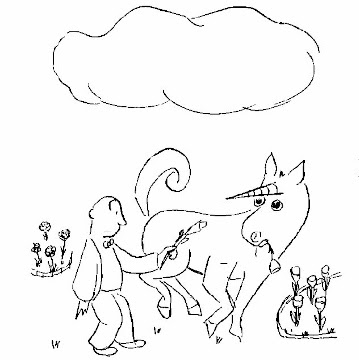
The Unicorn in the Garden

Once upon a sunny morning a man who sat in a breakfast nook looked up from his
scrambled eggs to see a white unicorn with a golden horn quietly cropping the roses in
the garden.

The man went up to the bedroom where his wife was still asleep and woke her.

“There’s a unicorn in the garden,” he said. “Eating roses.”

She opened one unfriendly eye and looked at him.

“The unicorn is a mythical beast,” she said, and turned her back on him.

The man walked slowly downstairs and out into the garden.

The unicorn was still there; he was now browsing among the tulips.

“Here, unicorn,” said the man and pulled up a lily and gave it to him.

The unicorn ate it gravely.

With a high heart, because there was a unicorn in his garden, the man went upstairs and roused his wife again.

“The unicorn,” he said, “ate a lily.” His wife sat up in bed and looked at him, coldly.

“You are a booby,” she said, “and I am going to have you put in a booby-hatch.”

The man, who never liked the words “booby” and “booby-hatch,” and who liked them even less on a shining morning when there was a unicorn in the garden, thought for a moment.

“We’ll see about that,” he said.

He walked over to the door.

“He has a golden horn in the middle of his forehead, “he told her.

Then he went back to the garden to watch the unicorn; but the unicorn had gone away. The man sat among the roses and went to sleep.

And as soon as the husband had gone out of the house, the wife got up and dressed as fast as she could.

She was very excited and there was a gloat in her eye.

She telephoned the police and she telephoned the psychiatrist; she told them to hurry to her house and
bring a strait-jacket.

Then the police and the psychiatrist looked at her with great interest.

“My husband,” she said, “saw a unicorn this morning.”

The police looked at the psychiatrist and the psychiatrist looked at the police.

“He told me it ate a lily,” she said.

The psychiatrist looked at the police and the police looked at the psychiatrist.

“He told me it had a golden horn in the middle of its forehead,” she said.

At a solemn signal from the signal from the psychiatrist, the police leaped from their chairs and seized the wife.

They had a hard time subduing her, for she put up a terrific struggle, but they finally
subdued her.

Just as they got her into the strait-jacket, the husband came back into the house.

“Did you tell your wife you saw a unicorn?” asked the police.

“Of course not,” said the husband. “The unicorn is a mythical beast.”

“That’s all I wanted to know,” said the psychiatrist.

“Take her away. I’m sorry, sir, but your wife is as crazy as a jay bird.”

So they took her away, cursing and screaming, and shut her up in an institution.

The husband lived happily ever after.

Moral: Don’t count your boobies until they are hatched.

James Thurber in Fables for Our Time and Famous Poems Illustrated (Harper and Brothers, 1940).