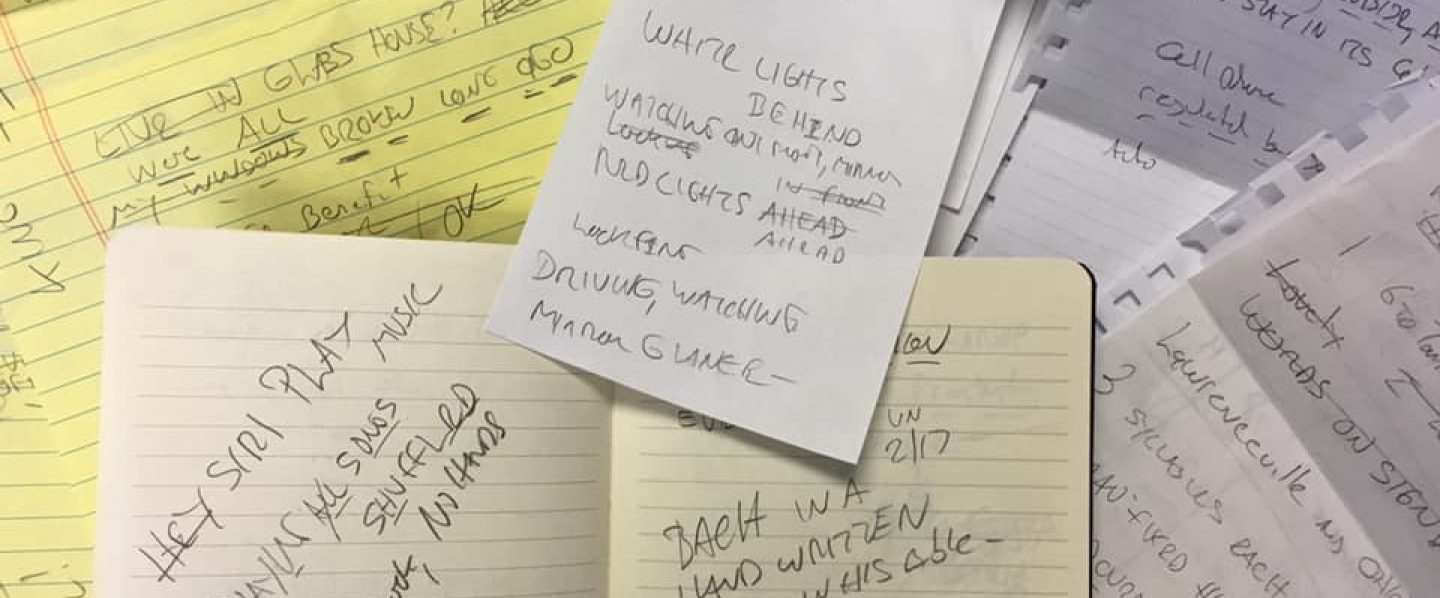
phone home ask for self fortunately discover relief you are out
When in need of a reality check, I call myself and it a relief to learn I am busy.
Or that my phone is busy.
Or that I am too busy to answer the phone.
Or that I am not there to answer my call at all.
It is a trick I learned from James Thurber.
In the preface to My Life and Welcome to It, Mr. Thurber writes, “I have known writers at this dangerous and tricky age to phone their homes from their offices, or their offices from their homes, ask for themselves in a low tone, and then, having fortunately discovered that they were “out”, to collapse in hard-breathing relief.“‘
THe columnist Alistair Cooke wrote about being out with Groucho Marx.
Waiting to be seated in a restaurant, a lady stopped Mr. Marx and said, “Might you be Groucho Marx?”
“Waddya mean, would I be Groucho Marx? I am Groucho Marx. Who would you be if you weren’t yourself? Marilyn Monroe, no doubt.
Sadly they cannot attribute either statement to Mr. Twain.
So I have to now say, “… as Mark Twain is reported to have said …”
Spelling has been on my mind of late.
Over the weekend last (Sept 25th) a member of the Ohio State football team quit the team in the middle of the game and took to Twitter to give vent to his feelings.
The story I saw reported that the player, K’Vaughan Pope, “tweeted ‘… Ohio State’ (expletive deleted AND misspelled).” [sic]
I had to laugh.
I mean it has long been known in the online world that I live in that any story about Ohio State football gets twice as many page views as any other any sports story.
The Ohio State fan who clicks on the story.
And the person who reads it to them.
That an Ohio State football player couldn’t spell a deleted expletive … was really funny.
Most expletives that get deleted are four letter words.
Just four letters.
I admit I had to puzzle out what Mr. Pope might have tweeted and it wasn’t until the next day that I came across a screen grab that showed that he tweeted ‘fucc Ohio State.’
Picking on athletes for their intellect is as old as any game.
James Thurber writes in the short story “University Days‘ of the entire class body, Professor included, working with a star football to name a form of transportation.
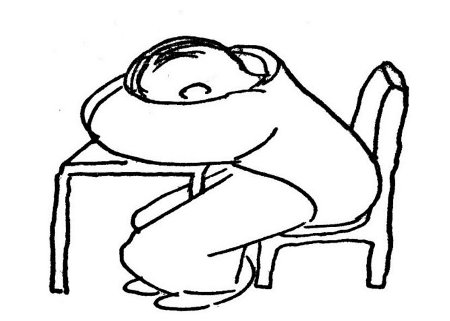
The scene is captured in Thurber’s sketch of Bolenciecwz trying to think.
Another course that I didn’t like, but somehow managed to pass, was economics. I went to that class straight from the botany class, which didn’t help me any in understanding either subject. I used to get them mixed up. But not as mixed up as another student in my economics class who came there direct from a physics laboratory. He was a tackle on the football team, named Bolenciecwcz. At that time Ohio State University had one of the best football teams in the country, and Bolenciecwcz was one of its outstanding stars. In order to be eligible to play it was necessary for him to keep up in his studies, a very difficult matter, for while he was not dumber than an ox he was not any smarter. Most of his professors were lenient and helped him along. None gave him more hints, in answering questions, or asked him simpler ones than the economics professor, a thin, timid man named Bassum. One day when we were on the subject of transportation and distribution, it came Bolenciecwcz’s turn to answer a question. “Name one means of transportation,” the professor said to him. No light came into the big tackle’s eyes. “Just any means of transportation,” said the professor. Bolenciecwcz sat staring at him. “That is,” pursued the professor, “any medium, agency, or method of going from one place to another.” Bolenciecwcz had the look of a man who is being led into a trap. “You may choose among steam, horse-drawn, or electrically propelled vehicles,” said the instructor. “I might suggest the one which we commonly take in making long journeys across land.” There was a profound silence in which everybody stirred uneasily, including Bolenciecwcz and Mr. Bassum. Mr. Bassum abruptly broke this silence in an amazing manner. “Choo-choo-choo,” he said, in a low voice, and turned instantly scarlet. He glanced appealingly around the room. All of us, of course, shared Mr. Bassum’s desire that Bolenciecwcz should stay abreast of the class in economics, for the Illinois game, one of the hardest and most important of the season, was only a week off. “Toot, toot, too-tooooooot!” some student with a deep voice moaned, and we all looked encouragingly at Bolenciecwcz. Somebody else gave a fine imitation of a locomotive letting off steam. Mr. Bassum himself rounded off the little show. “Ding, dong, ding, dong,” he said, hopefully. Bolenciecwcz was staring at the floor now, trying to think, his great brow furrowed, his huge hands rubbing together, his face red.
“How did you come to college this year, Mr. Bolenciecwcz?” asked the professor. “Chuffa chuffa, chuffa chuffa.”
“M’father sent me,” said the football player.
“What on?” asked Bassum.
“I git an ‘lowance,” said the tackle, in a low, husky voice, obviously embarrassed.
“No, no,” said Bassum. “Name a means of transportation. What did you ride here on?”
“Train,” said Bolenciecwcz.
“Quite right,” said the professor. “Now, Mr. Nugent, will you tell us–“
Bolenciecwz trying to think.
Shoeless Joe Jackson of Field of Dreams fame was famously uneducated.
One story has a fan yelling, “Hey Joe, can you spell CAT?”
And Joe yells back, “Hey Buddy, can you spell S H * T?”
Patrick Ewing of the New York Knicks (and maybe more famous for his years at Georgetown) was reportedly unable to spell ESPN unless you gave him two letters.
Never the less, today, in the age of twitter I find it a bit disingenuous on the part of the world at large and the sports world in particular to take on anyone over spelling.
Take me, for one.
I couldn’t spell my way out of a paper bag.
If my life were to be graded on spelling I wouldn’t make the list let alone the bottom of the list.
AND … don’t forget, Mr. Pope was so upset he had to TWEET before he could anything else!
The extent to which I can rely on my opposable thumbs to hit the right letters while texting or tweeting is not something I would ever want to be graded on.
Spelling in the age of social media may be having the legs of its seat at table of required talents being sawn off as we speak.
On the one hand, of course we want to be pretty specific with the written word.
On other other, don’t we all know what was meant to said?
In his book, Undaunted Courage: Meriwether Lewis, Thomas Jefferson, and the Opening of the American West, the somewhat discredited and so I question my need to quote him but, Stephen Ambrose, writes about Lewis and Clark on the spelling of the word, mosquito, that, “His [Lewis] usual spelling, repeated at least twenty-five times, was “musquetoe.” Clark was more inventive: he had at least twenty variations, ranging from “mesquetors” through “misqutr” to “musquetors.”
The word Mr. Ambrose uses to describe the spelling of Lewis and Clark is ‘imaginative.’
Which circles back to Mr. Twain.
Anyone who can only think of one way to spell a word obviously lacks imagination.
Whether or not Mr. Twain said this and if he didn’t say I would bet he would have wanted to say it.
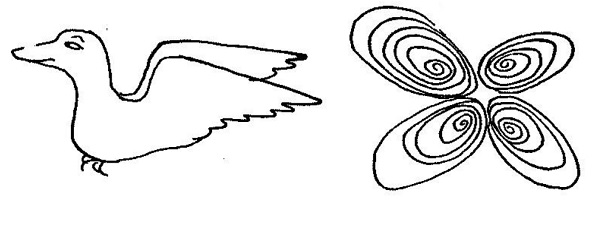
there he came upon an oyster lying in its shell upon the sand
My brother Pete says that what is unsaid in a haiku is as important or more important that what IS said.
A digression but why unsaid but not issaid?
I adapted today’s haiku from James Thurber’s The Philosopher and the Oyster in his collection, Further Fables for Our Time.
This Further Fable reads thusly:
By the sea on a lovely morning strolled a philosopher—one who seeks a magnificent explanation for his insignificance—and there he came upon an oyster lying in its shell upon the sand.
“It has no mind to be burdened by doubt,” mused the philosopher, “no fingers to work to the bone. It can never say, ‘My feet are killing me.’ It hears no evil, sees no television, speaks no folly. It has no buttons to come off, no zipper to get caught, no hair or teeth to fall out.” The philosopher sighed a deep sigh of envy. “It produces a highly lustrous concretion, of great price or priceless,” he said, “when a morbid condition obtains in its anatomy, if you could call such an antic, anomalous amorphousness anatomy.” The philosopher sighed again and said, “Would that I could wake from delirium with a circlet of diamonds upon my fevered brow. Would, moreover, that my house were my sanctuary, as sound and secure as a safe-deposit vault.”
Just then a screaming sea gull swooped out of the sky, picked up the oyster in its claws, carried it high in the air, and let it drop upon a great wet rock, shattering the shell and splattering its occupant. There was no lustrous concretion, of any price whatever, among the debris, for the late oyster had been a very healthy oyster, and, anyway, no oyster ever profited from its pearl.
MORALS: Count your own blessings, and let your neighbor count his.
Where there is no television, the people also perish.
you are free to do, free to say and free to choose what I tell you to …
Adapted from James Thurber’s Further Fable, “The Bears and the Monkeys.”
Not sure why (oh sure) but it came to mind this morning.
Maybe it was the line, “By sparing you the burden of electing your leaders, we save you from the dangers of choice. No more secret ballots, everything open and aboveboard.”
The Bears and the Monkeys.
In a deep forest there lived many bears. They spent the winter sleeping, and the summer playing leap-bear and stealing honey and buns from nearby cottages. One day a fast-talking monkey named Glib showed up and told them that their way of life was bad for bears. “You are prisoners of pastime,” he said, “addicted to leap-bear, and slaves of honey and buns.”
The bears were impressed and frightened as Glib went on talking. “Your forebears have done this to you,” he said. Glib was so glib, glibber than the glibbest monkey they had ever seen before, that the bears believed he must know more than they knew, or than anybody else. But when he left, to tell other species what was the matter with them, the bears reverted to their fun and games and their theft of buns and honey.
Their decadence made them bright of eye, light of heart, and quick of paw, and they had a wonderful time, living as bears had always lived, until one day two of Glib’s successors appeared, named Monkey Say and Monkey Do. They were even glibber than Glib, and they brought many presents and smiled all the time. “We have come to liberate you from freedom,” they said. “This is the New Liberation, twice as good as the old, since there are two of us.”
So each bear was made to wear a collar, and the collars were linked together with chains, and Monkey Do put a ring in the lead bear’s nose, and a chain on the lead bear’s ring. “Now you are free to do what I tell you to do,” said Monkey Do.
“Now you are free to say what I want you to say,” said Monkey Say. “By sparing you the burden of electing your leaders, we save you from the dangers of choice. No more secret ballots, everything open and aboveboard.” For a long time the bears submitted to the New Liberation, and chanted the slogan the monkeys had taught them: “Why stand on your own two feet when you can stand on ours?”
Then one day they broke the chains of their new freedom and found their way back to the deep forest and began playing leap-bear again and stealing honey and buns from the nearby cottages. And their laughter and gaiety rang through the forest, and birds that had ceased singing began singing again, and all the sounds of the earth were like music.
MORAL: It is better to have the ring of freedom in your ears than in your nose.
Fables for Our Time and Famous Poems Illustrated by James Thurber, New York, Harpers, 1940.