9.29.2021 – thinking one way to

thinking one way to
spell words obviously lacks
imagination

“Anyone who can only think of one way to spell a word obviously lacks imagination.”

So the WWW says Mark Twain said.

I also love to quote Mr. Twain as saying, “It is a poor sort of person who can only spell a word in one way.”

I dislike to use the WWW as a source if the source is nothing more than page of quotes and I am not alone.

The website, https://quoteinvestigator.com/, is available and these folks work to verify who said what when.

Sadly they cannot attribute either statement to Mr. Twain.

So I have to now say, “… as Mark Twain is reported to have said …”

Spelling has been on my mind of late.

Over the weekend last (Sept 25th) a member of the Ohio State football team quit the team in the middle of the game and took to Twitter to give vent to his feelings.

The story I saw reported that the player, K’Vaughan Pope, “tweeted ‘… Ohio State’ (expletive deleted AND misspelled).” [sic]

I had to laugh.

I mean it has long been known in the online world that I live in that any story about Ohio State football gets twice as many page views as any other any sports story.

The Ohio State fan who clicks on the story.

And the person who reads it to them.

That an Ohio State football player couldn’t spell a deleted expletive … was really funny.

Most expletives that get deleted are four letter words.

Just four letters.

I admit I had to puzzle out what Mr. Pope might have tweeted and it wasn’t until the next day that I came across a screen grab that showed that he tweeted ‘fucc Ohio State.’

Picking on athletes for their intellect is as old as any game.

James Thurber writes in the short story “University Days‘ of the entire class body, Professor included, working with a star football to name a form of transportation.

The scene is captured in Thurber’s sketch of Bolenciecwz trying to think.

Another course that I didn’t like, but somehow managed to pass, was economics. I went to that class straight from the botany class, which didn’t help me any in understanding either subject. I used to get them mixed up. But not as mixed up as another student in my economics class who came there direct from a physics laboratory. He was a tackle on the football team, named Bolenciecwcz. At that time Ohio State University had one of the best football teams in the country, and Bolenciecwcz was one of its outstanding stars. In order to be eligible to play it was necessary for him to keep up in his studies, a very difficult matter, for while he was not dumber than an ox he was not any smarter. Most of his professors were lenient and helped him along. None gave him more hints, in answering questions, or asked him simpler ones than the economics professor, a thin, timid man named Bassum. One day when we were on the subject of transportation and distribution, it came Bolenciecwcz’s turn to answer a question. “Name one means of transportation,” the professor said to him. No light came into the big tackle’s eyes. “Just any means of transportation,” said the professor. Bolenciecwcz sat staring at him. “That is,” pursued the professor, “any medium, agency, or method of going from one place to another.” Bolenciecwcz had the look of a man who is being led into a trap. “You may choose among steam, horse-drawn, or electrically propelled vehicles,” said the instructor. “I might suggest the one which we commonly take in making long journeys across land.” There was a profound silence in which everybody stirred uneasily, including Bolenciecwcz and Mr. Bassum. Mr. Bassum abruptly broke this silence in an amazing manner. “Choo-choo-choo,” he said, in a low voice, and turned instantly scarlet. He glanced appealingly around the room. All of us, of course, shared Mr. Bassum’s desire that Bolenciecwcz should stay abreast of the class in economics, for the Illinois game, one of the hardest and most important of the season, was only a week off. “Toot, toot, too-tooooooot!” some student with a deep voice moaned, and we all looked encouragingly at Bolenciecwcz. Somebody else gave a fine imitation of a locomotive letting off steam. Mr. Bassum himself rounded off the little show. “Ding, dong, ding, dong,” he said, hopefully. Bolenciecwcz was staring at the floor now, trying to think, his great brow furrowed, his huge hands rubbing together, his face red.

“How did you come to college this year, Mr. Bolenciecwcz?” asked the professor. “Chuffa chuffa, chuffa chuffa.”

“M’father sent me,” said the football player.

“What on?” asked Bassum.

“I git an ‘lowance,” said the tackle, in a low, husky voice, obviously embarrassed.

“No, no,” said Bassum. “Name a means of transportation. What did you ride here on?”

“Train,” said Bolenciecwcz.

Quite right,” said the professor. “Now, Mr. Nugent, will you tell us–“

Bolenciecwz trying to think.

Shoeless Joe Jackson of Field of Dreams fame was famously uneducated.

One story has a fan yelling, “Hey Joe, can you spell CAT?”

And Joe yells back, “Hey Buddy, can you spell S H * T?”

Patrick Ewing of the New York Knicks (and maybe more famous for his years at Georgetown) was reportedly unable to spell ESPN unless you gave him two letters.

Never the less, today, in the age of twitter I find it a bit disingenuous on the part of the world at large and the sports world in particular to take on anyone over spelling.

Take me, for one.

I couldn’t spell my way out of a paper bag.

If my life were to be graded on spelling I wouldn’t make the list let alone the bottom of the list.

AND … don’t forget, Mr. Pope was so upset he had to TWEET before he could anything else!

The extent to which I can rely on my opposable thumbs to hit the right letters while texting or tweeting is not something I would ever want to be graded on.

Spelling in the age of social media may be having the legs of its seat at table of required talents being sawn off as we speak.

On the one hand, of course we want to be pretty specific with the written word.

On other other, don’t we all know what was meant to said?

In his book, Undaunted Courage: Meriwether Lewis, Thomas Jefferson, and the Opening of the American West, the somewhat discredited and so I question my need to quote him but, Stephen Ambrose, writes about Lewis and Clark on the spelling of the word, mosquito, that, “His [Lewis] usual spelling, repeated at least twenty-five times, was “musquetoe.” Clark was more inventive: he had at least twenty variations, ranging from “mesquetors” through “misqutr” to “musquetors.”

The word Mr. Ambrose uses to describe the spelling of Lewis and Clark is ‘imaginative.’

Which circles back to Mr. Twain.

Anyone who can only think of one way to spell a word obviously lacks imagination.

Whether or not Mr. Twain said this and if he didn’t say I would bet he would have wanted to say it.

I will embrace imagination.

I will embrace less rigid spelling.

And I will paraphrase Mr. Twain.

When angry count to three.

When very angry, tweet.

9.28.2021 – well, life, according

well, life, according
to Marcus Aurelius,
is an opinion

Adapted from the book, Noah’s Compass (2009, Alfred A. Knopf) by Anne Tyler, and the passage:

Sometimes he thought that she’d been born with a mental checklist of milestones that she’d sworn to get out of the way as soon as possible. Grow up, finish school, marry the first boy she dated, start a family … She had been in such a hurry, and for what? Here she sat, an intelligent young woman, with no more on her mind than organizing her church’s next bake sale. Ah, well. Life was a matter of opinion, according to Marcus Aurelius.

Part of the series of Haiku inspired by from Noah’s Compass (2009, Alfred A. Knopf) by Anne Tyler. Anne Tyler is an American novelist, short story writer, and literary critic. She has published twenty-three novels, including Dinner at the Homesick Restaurant (1982), The Accidental Tourist (1985), and Breathing Lessons (1988). I came across Noah’s Compass as an audio book when living in Atlanta I commuted 1 hour each way. As the book had to deal with memories and memory loss and it involved someone my age, I was taken with the book. I have enjoyed reading most of Ms. Tyler’s work. Accidental Tourist maybe better known for the movie which I also recommend.

9.27.2021 – see beach with kids eyes

see beach with kids eyes
wider, wetter, sandier
flatter than I see

For me much of the fun of being at the beach is watching little kids.

Little kids who can see nothing but the openness, the WIDE openness of the beach and the ocean.

What would you do?

I can tell you what they do.

They act like kids.

Careless kids.

Not kids being careless.

But kids who could care less.

Kids who are without a care.

What a way to be.

For the eyes of kids.

Part of a series based on an afternoon spent at the beach on Hilton Head Island.

I wanted to see if I would be ‘inspired’ by what I saw, by what I heard, by what I smelled, by what I tasted, what I felt emotionally and what I felt tactilely.

Some turned out okay.

Some were too forced.

Some were just bad.

Some did involve some or all of those feelings.

As far as it goes, I guess I was inspired by by what I saw, by what I heard, by what I smelled, by what I tasted, what I felt emotionally and what I felt tactilely.

Click here for more Haiku in the BEACH category —

9.23.2021 – something that held out

something that held out
great promise to all people
to all time to come

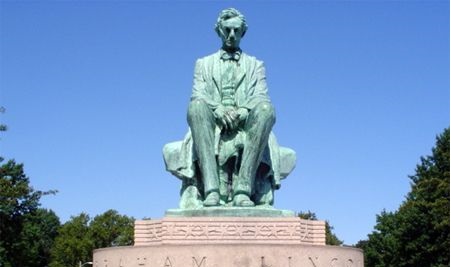
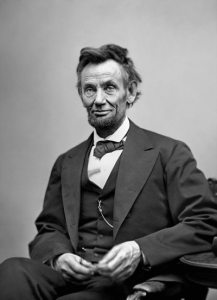
Quoting Mr. Lincoln here.

What he said was, “. . . there must have been something more than common that those men struggled for; that something even more than National Independence; that something that held out a great promise to all the people of the world to all time to come.

Mr. Lincoln was on his way to Washington DC to be sworn in as President of what was left of the United States of America.

To get from his home in Springfield, Illinois (A home I have visited several times. The last time We took all seven kids on a spring break trip. Once inside, my then 7 year old daughter, D’asia, stuck her foot through the railings that held back the visitors and set her foot on the floor of the Lincoln’s parlor. This caused the Park Ranger to yell at her, “WE DON’T PUT FEET ON THE CARPET IN THE LINCOLN HOUSE.” Which got me upset and I wanted to say ‘hey, you are yelling at a little black kid in Lincoln’s house. Think about it!’ But I didn’t. I got even when that Park Ranger, reading from notes in his smokey bear hat described Mr. Lincoln sitting at the desk writing his famous speeches. ‘Like the Gettysburg Address (4 score and 7) and 2nd Inaugural (With malice toward none; with charity for all)? I asked – and the Ranger starts nodding his head – and I say THAT HE WROTE IN WASHINGTON??) to Washington DC by train through as many of the major Northern cities as could be lined up so that Mr. Lincoln could make public speeches.

By some accounts Mr. Lincoln made 93 stops and 93 speeches, addresses and remarks.

It was at a stop in Trenton, NJ on February 21, 1861 that these he made these remarks he made to New Jersey State Senate that today’s Haiku is drawn from.

something that held out a great promise to all the people of the world to all time to come.

Something held out a great promise.

To all the people of the world.

To all time to come.

Anyone want to come along and help?

I going to Texas to spray paint this on a border wall.

If Lincoln were alive today I am afraid he wouldn’t stop crying or throwing up or both.

Here is the full text of what Mr. Lincoln said.

Mr. President and Gentlemen of the Senate of the State of New-Jersey: I am very grateful to you for the honorable reception of which I have been the object.

I cannot but remember the place that New-Jersey holds in our early history. In the early Revolutionary struggle, few of the States among the old Thirteen had more of the battle-fields of the country within their limits than old New-Jersey. May I be pardoned if, upon this occasion, I mention that away back in my childhood, the earliest days of my being able to read, I got hold of a small book, such a one as few of the younger members have ever seen, “Weem’s Life of Washington.” I remember all the accounts there given of the battle fields and struggles for the liberties of the country, and none fixed themselves upon my imagination so deeply as the struggle here at Trenton, New-Jersey. The crossing of the river; the contest with the Hessians; the great hardships endured at that time, all fixed themselves on my memory more than any single revolutionary event; and you all know, for you have all been boys, how these early impressions last longer than any others.

I recollect thinking then, boy even though I was, that there must have been something more than common that those men struggled for; that something even more than National Independence; that something that held out a great promise to all the people of the world to all time to come; I am exceedingly anxious that this Union, the Constitution, and the liberties of the people shall be perpetuated in accordance with the original idea for which that struggle was made, and I shall be most happy indeed if I shall be an humble instrument in the hands of the Almighty, and of this, his almost chosen people, for perpetuating the object of that great struggle. You give me this reception, as I understand, without distinction of party.

I learn that this body is composed of a majority of gentlemen who, in the exercise of their best judgment in the choice of a Chief Magistrate, did not think I was the man. I understand, nevertheless, that they came forward here to greet me as the constitutional President of the United States — as citizens of the United States, to meet the man who, for the time being, is the representative man of the nation, united by a purpose to perpetuate the Union and liberties of the people. As such, I accept this reception more gratefully than I could do did I believe it was tendered to me as an individual.

9.22.2021 – lyricism as

lyricism as
vague as it was beguiling
find words to express

Adapted from this phrase in the book, A Week at the Airport: A Heathrow Diary by Alain de Botton.

It seemed astonishing and touching that in our distracted age, literature could have retained sufficient prestige to inspire a multinational enterprise, otherwise focused on the management of landing fees and efluents, to underwrite a venture invested with such elevated artistic ambitions. Nevertheless, as the man from the airport company put it to me over the telephone, with a lyricism as vague as it was beguiling, there were still many aspects of the world that perhaps only writers could be counted on to find the right words to express. A glossy marketing brochure, while in certain contexts a supremely effective instrument of communication, might not always convey the authenticity achievable by a single authorial voice – or, as my friend suggested with greater concision, could more easily be dismissed as ‘bullshit’.

Part of the series of Haiku inspired by from A Week at the Airport: A Heathrow Diary by Alain de Botton. I discovered this book entirely by accident. When searching for books online, I will use the term ‘collections’ and see what turns up. I figure that someone who has taken the time to gather together the etexts of any one author to create a collected works folder is enough for me to see what this author might be all about.

In this case I came across the writing of Alain de Botton. I enjoyed his use of language very much. Much of the words he strings together lend themselves to what I do.

As for his book, I recommend it very much though written in 2009, it misses the added layer of travel under covid but still the picture of the modern airport is worth the read.