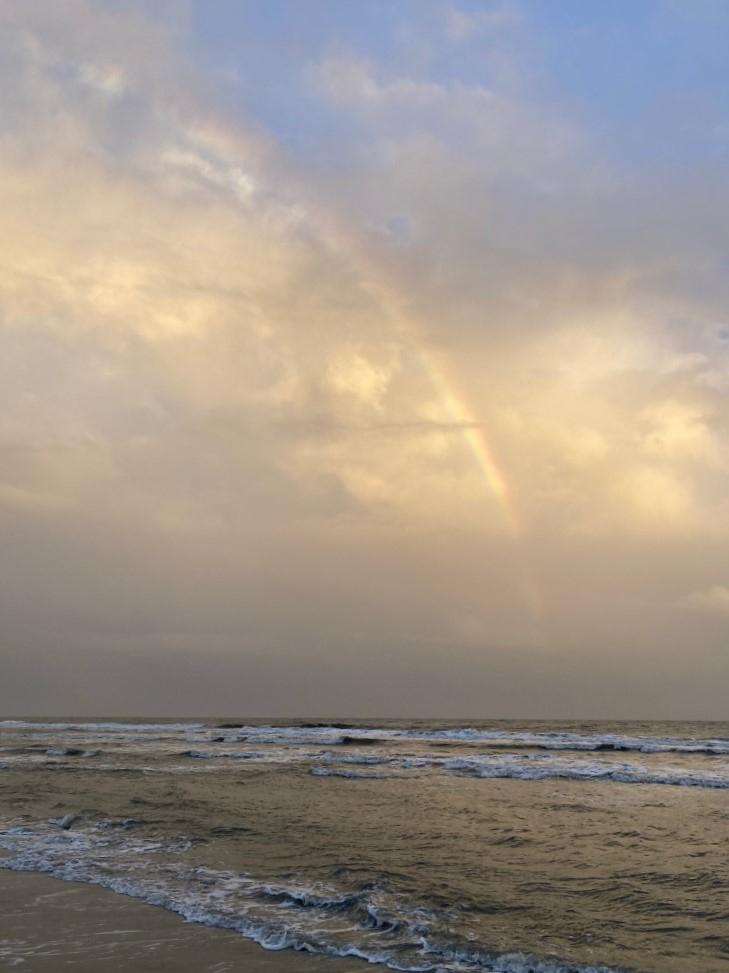
wrote her name upon the strand, but came the waves and washed it away
Adapted from the sonnet, Amoretti LXXV, by Edmund Spenser.
This is one of several haiku I got from this sonnet.
Edmund Spenser (1553-1559), according to wikipedia, was an English poet best known for The Faerie Queene, an epic poem and fantastical allegory celebrating the Tudor dynasty and Elizabeth I. He is recognized as one of the premier craftsmen of nascent Modern English verse and is often considered one of the greatest poets in the English language.
In 1595, Spenser published Amoretti and Epithalamion. This volume contains eighty-eight sonnets commemorating his courtship of Elizabeth Boyle. In Amoretti, Spenser uses subtle humour and parody while praising his beloved, reworking Petrarchism in his treatment of longing for a woman.
Spenser used a distinctive verse form, called the Spenserian stanza. The stanza’s main meter is iambic pentameter with a final line in iambic hexameter (having six feet or stresses, known as an Alexandrine), and the rhyme scheme is ababbcbcc. He also used his own rhyme scheme for the sonnet. In a Spenserian sonnet, the last line of every quatrain is linked with the first line of the next one, yielding the rhyme scheme ababbcbccdcdee.
But you knew that.
Here is the full sonnet.
One day I wrote her name upon the strand, But came the waves and washed it away: Again I wrote it with a second hand, But came the tide, and made my pains his prey. ‘Vain man,’ said she, ‘that dost in vain assay, A mortal thing so to immortalize; For I myself shall like to this decay, And eke my name be wiped out likewise.’ ‘Not so,’ (quod I); ‘let baser things devise To die in dust, but you shall live by fame: My verse your vertues rare shall eternize, And in the heavens write your glorious name: Where whenas death shall all the world subdue, Our love shall live, and later life renew.
stopped before I said I was Charlotte Bronte in previous life
Readers of this ‘blog’ should be aware the on Saturday I enjoy a silly feature of the Guardian Newspaper titled, ‘Blind Date.’
Two unknowns agree to meet for a free meal at a London restaurant then they have to fill out a questionnaire on the date.
It is simple harmless fun for the most part.
I enjoyed this one very much.
The question asked was: What do you think he made of you?
Her response was: “He may think I’m not right in the head. I should’ve stopped before I said I was Charlotte Brontë in a previous life. In fact, I should’ve stopped after two drinks.“
For his part, to the question, ‘Describe Laurine in three words‘, he responded, ‘Kind, introspective and hilarious.‘
While he did answer, ‘Childhood memories; the best film adaptation of Emma (Clueless); her belief that she’s the reincarnation of Charlotte Brontë; how she once laid a rose on Keats’s grave and shed a tear (sorry, Laurine, it was just too good)‘ to “What did you talk about?“
To his credit, when asked, ‘Would you meet again?‘ he said, “Who wouldn’t? She’s a delight.“
and yet nothing is done blindly, hastily, or indifferently
I am getting into the history of the low country where I now find myself living.
The low country is the southern point of the State of South Carolina where the elevation above sea level is 20 feet or less, hence the name, low country.
You don’t have to be here very long to learn that the greatest natural disaster to hit the area was the Sea Islands Hurricane of 1893.
I had never heard about.
Not too many people outside of the area have heard about it.
That was also one of the major problems that the surviving residents of the hurricane experienced.
No one knew about it.
Few people outside of the area were aware of the impact of the storm in this part of the country.
Savannah was the point of landfall and Savannah had some damage but Savannah is somewhat inland.
The barrier or Sea Islands were almost wiped off the map.
Modern interpretation of data shows that the storm surge along the South Carolina-Georgia Coast may have been as high as 30 feet.
And there was little in the way of communication with the area to get the word out.
Most of what historical information there is are estimates.
There were an estimated 30,000 people living on the Sea Islands.
After the Civil War, this area was also over 90% black and former slaves.
Over 2,000 people may have died, most by drowning.
That makes the Sea Islands Hurricane the 4th most deadly hurricane in recorded US history.
For the most part, the surviving 28,000 people were left homeless.
That is 100% folks.
On top of no shelter there was no food, no supplies and all fresh water sources of inland lakes, ponds and springs had been filled with salt water.
And few people knew.
There were no cell phones, no CNN, no power boats, no bridges, no national guard, no communication of any kind.
Word did not get for days.
Relief did not reach the area for weeks
Real relief did not reach the area for months.
Took time to get the word out.
When national relief came it came from the 10 year old American Red Cross.
The American Red Cross was set up in 1881 by Clarissa Harlowe Barton.
Better known just Clara Barton, she worked to establish the Red Cross as a non-profit humanitarian organization that provided emergency assistance, disaster relief, and disaster preparedness education in the United States. (wikipedia)
Ms. Barton first entered the national stage during the Civil War where she was active in providing clothing, food, and supplies for the sick and wounded soldiers.
Now she was boss of the Red Cross and she took her new organization down to the low country.
How in the world did this happen?
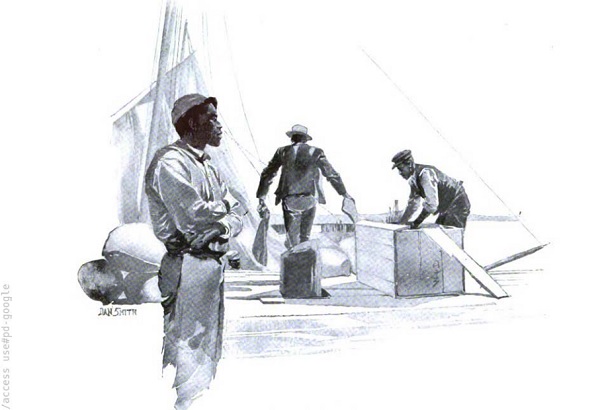
Turns out the during the Civil War years, Ms. Barton had stationed herself on Hilton Head for a while.
Her brother David had alerted her to the fact that the Union Army was building up forces on Hilton Head of an attack on the Charleston, SC area.
Some of those efforts are portrayed in the movie, Glory.
David Barton himself was stationed here.
From April, 1863 to January, 1864, Ms. Barton was here.
Ms. Barton was involved with sick and wounded solders as well as educating and working with the black islanders who lived here.
Something about this area gets into your blood.
When Ms. Barton heard of the devastation, she moved her office to Beaufort, SC and set up to provide relief in the way of food and medicine the best they could.
The Red Cross stayed here and handed out food and other supplies to survivors.
Folks had heard about this new American Red Cross and weren’t quite sure what is was or what it could do.
The Atlanta Newspapers sent reporters to cover the story.
Back then, Newspaper folks knew that the story was more than names, dates and facts and that the story might require something more than just a reporter.
So Joel Chandler Harris was sent down to write the story.
This is not the place to get into a Joel Chandler Harris discussion but suffice to say, the feller could write.
His efforts were published in two parts in Scribner’s Magazine.
Scribner’s Magazine in the 1890’s was Time, Newsweek, Life and the New Yorker all rolled into one.
The stories were “The Devastation” published in February, 1894 (5 months after the storm) and “The Relief.” published in March, 1894.
At the end of the first story, ‘The Devastation’, Mr. Harris wrote:
I went to the Sea Islands with no prejudice against the Red Cross Society, but certainly with no prepossession in its favor. I had pictured it in my mind as a sort of fussy and contentious affair, running about with a tremendous amount of chatter and flourishing a great deal of red tape — a sort of circumlocution office, situated in the air between individual officiousness and newspaper notoriety.
As a matter of fact, the Red Cross Society as I saw it at Beaufort is something entirely different from any other relief organization that has come under my observation.
Its strongest and most admirable feature is its extreme simplicity. The perfection of its machinery is shown by the apparent absence of all machinery. There are no exhibitions of self-importance. There is no display – no torturous cross examination of applicants – no needless delay. And yet nothing is done blindly, or hastily, or indifferently.
This poor little tribute to Miss Clara Barton I want to pay in heartily seconding her appeal to the benevolence of the whole country carrying out her work on the Sea Islands
Such aid will be more important in the last days of her mission than it was when the sympathies of the public had been touched by the awful story of the disaster that went tingling over the wires on the last days of August.
I guess when and what I have been reading the last year about the bill to save America, the bill to rebuild America and the bill to save our climate the words “here are no exhibitions of self-importance. There is no display – no torturous cross examination of applicants – no needless delay. And yet nothing is done blindly, or hastily, or indifferently” just gets under my skin and make me want to scream.
The fussy and contentious affair, running about with a tremendous amount of chatter and flourishing a great deal of red tape that is Congress makes me want to grab Congress by the throat and bash its head against the wall.
If pro is the opposite of con, what is the opposite of progress?
God help us all.
Here are the two articles from Scribner’s Magazine – 1894.
visited the sea mermaids in the basement came to look at me
Emily spent the day at the beach.
Emily Dickenson that is.
Emily Dickenson spent the day at the beach and wrote her poem, “I started Early – Took my Dog.”
One poetry website states that in this poem, through these words, Ms Dickenson:
“ . . . reveals a lot about the author and her fear of being close to people.
The author was afraid of being known, and she was afraid of knowing others.
Although she had intense desires to know and be known, her fear trumped those desires, and though she was able to express her desires through this poem, her readers may never know whether she was able to fulfill these desires in reality.”
Okay.
Maybe.
That is one opinion.
I think maybe she went to the beach with her dog early to get a parking spot and the mermaids in the basement came out to look at her.
Things happen like that here on the beach.
Some see all that that the commenter saw in Ms. Dickenson’s words.
Some see the mermaid.
As Alain de Botton wrote about chair backs in his book, The Architecture of Happiness (2009, Vintage Books);
Consider the struts on the backs of two chairs.
Both seem to express a mood.
The curved struts speak of ease and playfulness, the straight ones of seriousness and logic. And yet neither set approximates a human shape.
Rather, the struts abstractly represent two different temperaments.
A straight piece of wood behaves in its own medium as a stable, unimaginative person will act in his or her life, while the meanders of a curved piece correspond, however obliquely, with the casual elegance of an unruffled and dandyish soul.
The beach is a place of meanders and curves.
Here is the poem.
I started Early – Took my Dog – And visited the Sea – The Mermaids in the Basement Came out to look at me –
And Frigates – in the Upper Floor Extended Hempen Hands – Presuming Me to be a Mouse – Aground – opon the Sands –
But no Man moved Me – till the Tide Went past my simple Shoe – And past my Apron – and my Belt And past my Boddice – too –
And made as He would eat me up – As wholly as a Dew Opon a Dandelion’s Sleeve – And then – I started – too –
And He – He followed – close behind – I felt His Silver Heel Opon my Ancle – Then My Shoes Would overflow with Pearl –
Until We met the Solid Town – No One He seemed to know – And bowing – with a Mighty look – At me – The Sea withdrew
With much cheek, I include this haiku in the series based on afternoons spent at the beach on Hilton Head Island.
To include anything inspired by Miss Dickenson with my 17 syllable efforts is perhaps a worlds record for reach.
AND I hate to think what some grad student would write about me if these efforts were ever dissected for myself behind the words.
I wanted to see if I would be ‘inspired’ by what I saw, by what I heard, by what I smelled, by what I tasted, what I felt emotionally and what I felt tactilely.
Some turned out okay.
Some were too forced.
Some were just bad.
Some did involve some or all of those feelings.
As far as it goes, I guess I was inspired by by what I saw, by what I heard, by what I smelled, by what I tasted, what I felt emotionally and what I felt tactilely.
despair of being able to convey my own idea of this place
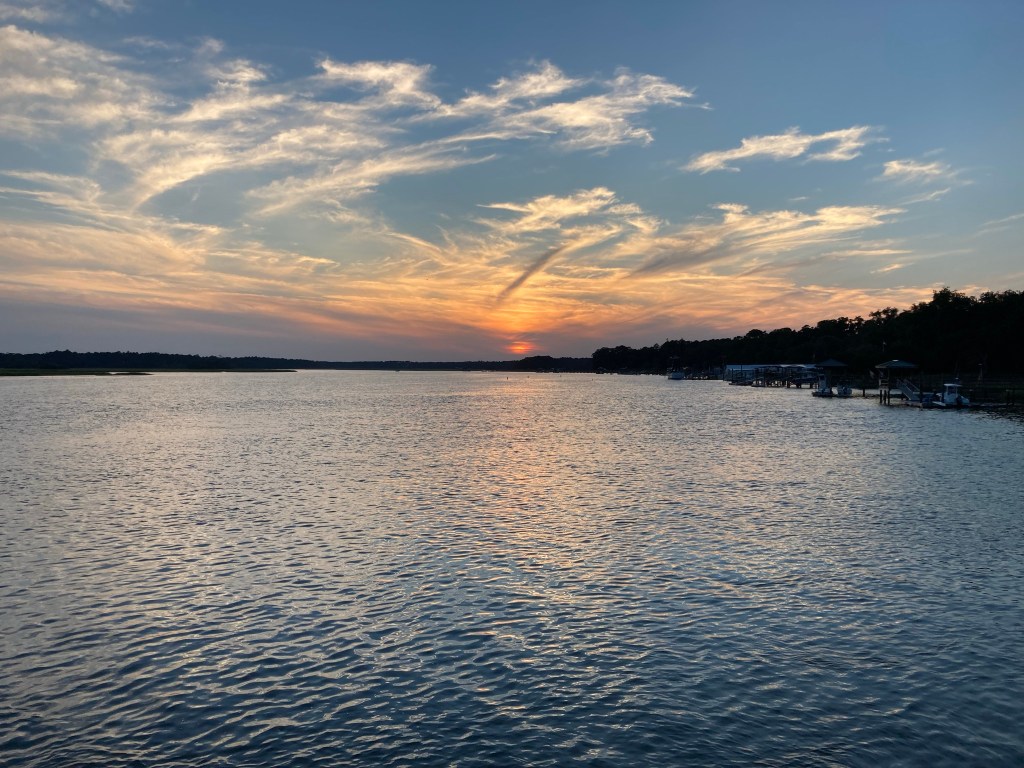
Sunset over the May River
My wife tells me to stop writing about how beautiful this place is.
Keep it up, she says, and everyone will come here.
I know what SHE means.
Still …
I do think I should stop writing about being here in the low country of South Carolina in general and more specifically the beaches of Hilton Head Island the bluff overlooking the May River in Bluffton.
Not because I worry about visitors.
But because I only have words to use.
Anthony Trollope, the English novelist, once wrote about Sydney Australia, “I despair of being able to convey to any reader my own idea of the beauty of Sydney Harbour.”
I know what HE means.
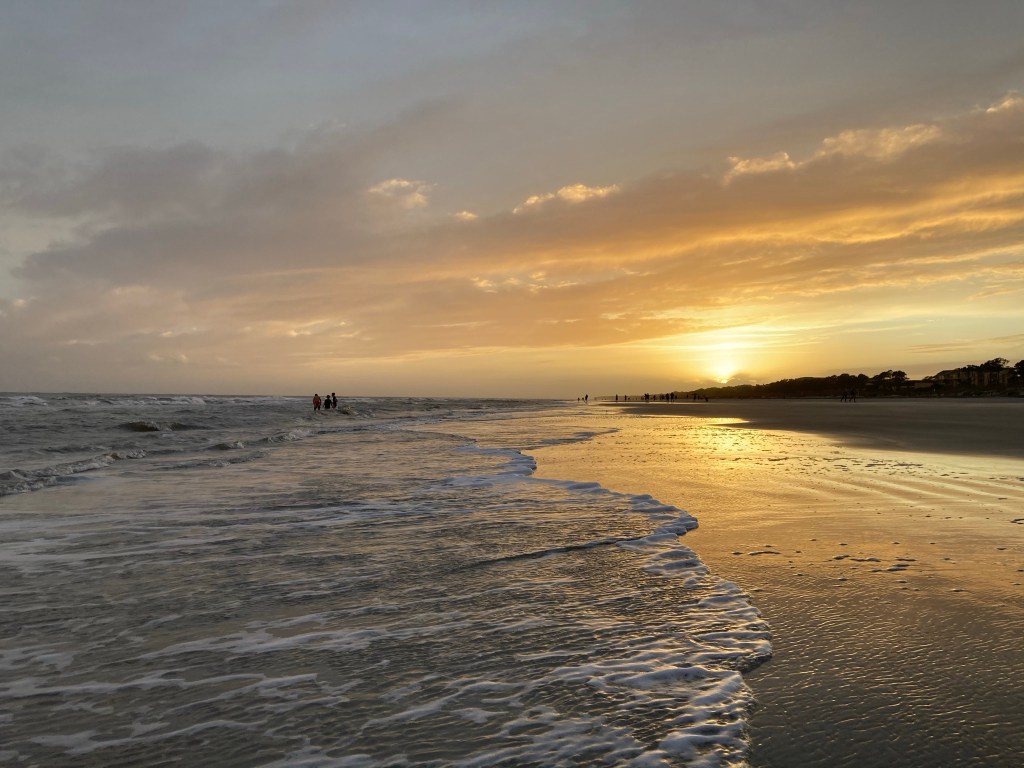
Sunset on Hilton Head
I grew up in West Michigan and they were lots of places that would also bring me to despair if I tried to describe.
But there is something beyond here.
Maybe its that the landscape doesn’t turn white 6 months of the year.
Maybe I am older.
Maybe after a dozen years in Atlanta.
Maybe it is just me and other people have other places.
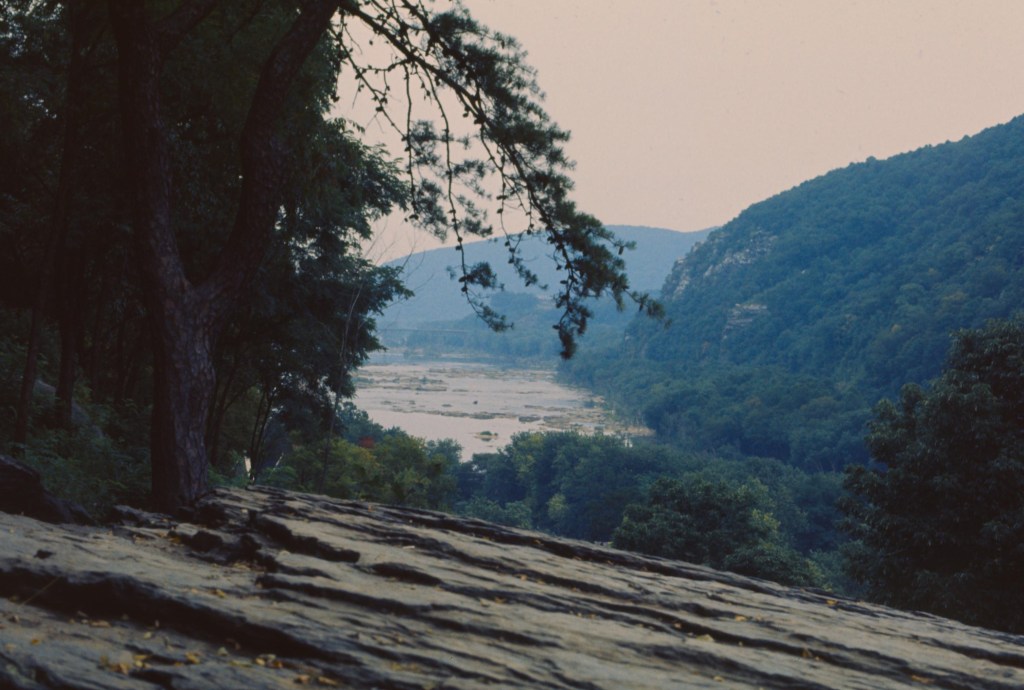
Thomas Jefferson described the view of Harper’s Ferry, where the the Potomac and Shenandoah rivers come together, from what is known as ‘Jefferson’s Rock’ with the words, “This scene is worth a voyage across the Atlantic.”
View from Jefferson’s Rock
I have been to Harper’s Ferry a couple of times.
I have stood on Jefferson’s Rock.
As I was about 12 years old, the view didn’t move me to despair at being able to convey my idea of the place.
It was cool.
That was all the words I needed.
Me and my brother Steve, about 1972?
I mention that you are no longer allowed to stand on the rock itself and it is cordoned off today.
I have to say, in the spirt of transparency, I have never made a voyage across the Atlantic.
When Mr. Jefferson wrote, “This scene is worth a voyage across the Atlantic,” it was quite the tribute as a voyage across the Atlantic was no picnic.
As Mr. Johnson* more of less said, “All the fun of jail with the chance of drowning thrown in.”
But then comparing the spot to the experience of the voyage, maybe the bar was set low by Mr. Jefferson.
Again from something close to what Mr. Johnson said, “Worth seeing, but not worth going to see.”
Maybe, just maybe, here where I am now, IS quite a spot.
Worth seeing.
Worth going to see.
Worth a voyage across the Atlantic.
I can say that for sure.
But I despair over the lack of words to convey my idea on how to convey the beauty of this area.
Just typing those words I despair at how limited the word ‘beauty‘ is.
In spite of my despair, I am quite content.
Content to sit on the beach and watch.
Content to sit on the bluff and look.
Content to be still.
It says in the Book of Psalms, “Be still, and know that I am God.”
It says in the Book of Psalms, “I will be exalted in the earth.”
I guess that is they key to understanding this type of places.
God will be exalted in the earth.
These places are God just showing off.
These places cannot be conveyed in words.
I am going try.
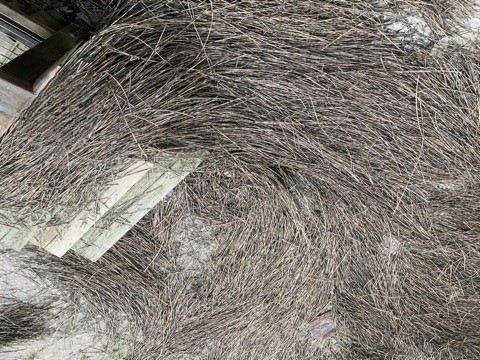
Marsh grass tangled after ‘king’ tide
Often called Dr. Johnson (1709-1784), was an English writer who made lasting contributions … according to Wikipedia, but known mostly for today for those two quotes.