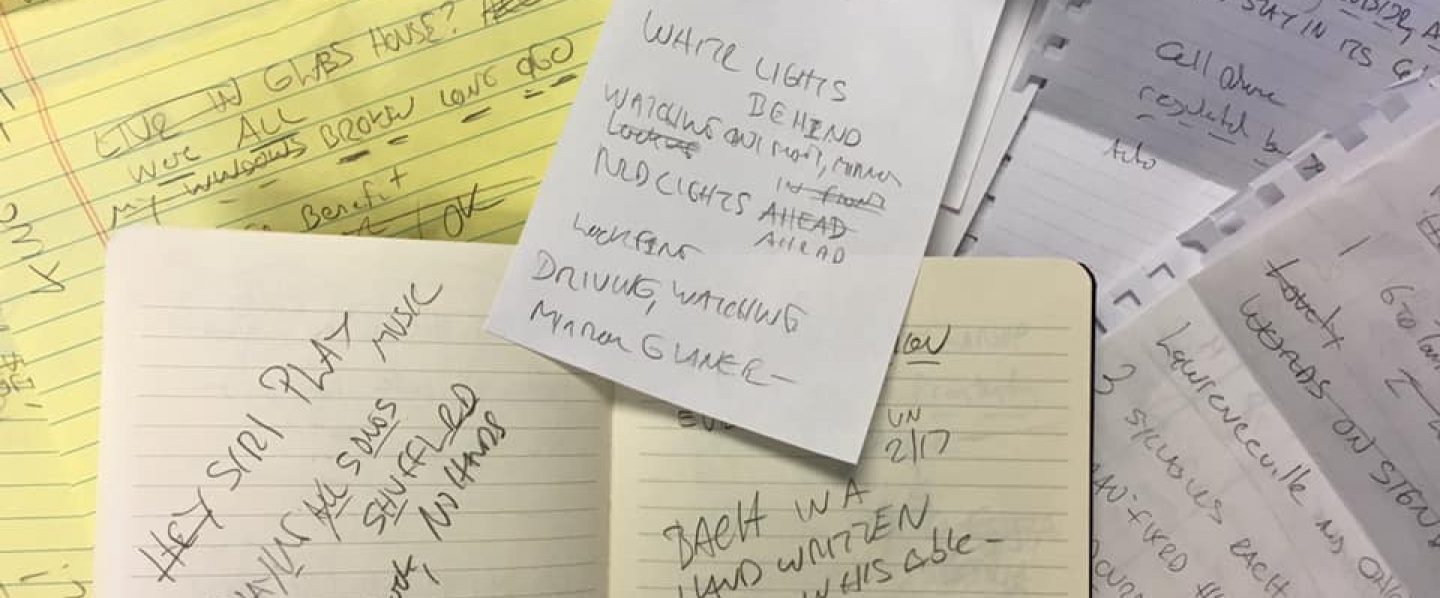
Some of these beach haiku were written by random trips to beach.
Most of these are part of a series based on afternoons spent at the beach on Hilton Head Island with my pad out ( a real paper note pad), hoping for words with my iPhone camera handy to add illustration to my thoughts.
I wanted to see if I would be ‘inspired’ by what I saw, by what I heard, by what I smelled, by what I tasted, what I felt emotionally and what I felt tactilely.
Some turned out okay.
Some were too forced.
Some were just bad.
Some did involve some or all of those feelings.
As far as it goes, I guess I was inspired by by what I saw, by what I heard, by what I smelled, by what I tasted, what I felt emotionally and what I felt tactilely.
Please aware that most of these haiku were NOT WRITTEN on the date in the title – for an explanation of this please see The Series link in the navigation table.
windrow formations long floating objects shaped by winds and currents
Start with low tide.
Add a 20 knot breeze off the ocean that sends the sand flying over the still damp tidal beach and you get windrows.
According to the online Merriam-Webster, a Windrow is a noun meaning a row heaped up by or as if by the wind or long formations of floating objects shaped by winds and currents – are well known to sailors and oceanographers and are common in both oceans and lakes.
Windrows.
Long formations of floating objects shaped by winds and currents.
life is difficult found it hard to make my own complete and rounded
Adapted from the short story, The Happy Man as published in Here And There: Short Stories by W. Somerset Maugham (William Heinemann Ltd.: Toronto, 1948).
The Happy Man
IT is a dangerous thing to order the lives of others and I have often wondered at the self-confidence of politicians, reformers and such like who are prepared to force upon their fellows measures that must alter their manners, habits and points of view. I have always hesitated to give advice, for how can one advise another how to act unless one knows that other as well as one knows oneself? Heaven knows, I know little enough of myself: I know nothing of others. We can only guess at the thoughts and emotions of our neighbours. Each one of us is a prisoner in a solitary tower and he communicates with the other prisoners, who form mankind, by conventional signs that have not quite the same meaning for them as for himself. And life, unfortunately, is something that you can lead but once; mistakes are often irreparable, and who am I that I should tell this one and that how he should lead it? Life is a difficult business and I have found it hard enough to make my own a complete and rounded thing; I have not been tempted to teach my neighbour what he should do with his. But there are men who flounder at the journey’s start, the way before them is confused and hazardous, and on occasion, however unwillingly, I have been forced to point the finger of fate. Sometimes men have said to me, what shall I do with my life? and I have seen myself for a moment wrapped in the dark cloak of Destiny.
Once I know that I advised well.
I was a young man and I lived in a modest apartment in London near Victoria Station. Late one afternoon, when I was beginning to think that I had worked enough for that day, I heard a ring at the bell. I opened the door to a total stranger. He asked me my name; I told him. He asked if he might come in.
“Certainly.”
I led him into my sitting-room and begged him to sit down. He seemed a trifle embarrassed. I offered him a cigarette and he had some difficulty in lighting it without letting go of his hat. When he had satisfactorily achieved this feat I asked him if I should not put it on a chair for him. He quickly did this and while doing it dropped his umbrella.
“I hope you don’t mind my coming to see you like this,” he said. “My name is Stephens and I am a doctor. You’re in the medical, I believe?”
“Yes, but I don’t practise.”
“No, I know. I’ve read a book of yours about Spain and I wanted to ask you about it.”
“It’s not a very good book, I’m afraid.”
“The fact remains that you know something about Spain and there’s no one else I know who does. And I thought perhaps you wouldn’t mind giving me some information.”
“I shall be very glad.”
He was silent for a moment. He reached out for his hat and holding it in one hand absent-mindedly stroked it with the other. I surmised that it gave him confidence.
“I hope you won’t think it very odd for a perfect stranger to talk to you like this.” He gave an apologetic laugh. “I’m not going to tell you the story of my life.”
When people say this to me I always know that it is precisely what they are going to do. I do not mind. In fact I rather like it.
“I was brought up by two old aunts. I’ve never been anywhere. I’ve never done anything. I’ve been married for six years. I have no children. I’m medical officer at the Camberwell Infirmary. I can’t stick it any more.”
There was something very striking in the short, sharp sentences he used. They had a forcible ring. I had not given him more than a cursory glance, but now I looked at him with curiosity. He was a little man, thick-set and stout, of thirty perhaps, with a round red face from which shone small, dark and very bright eyes. His black hair was cropped close to a bullet-shaped head. He was dressed in a blue suit a good deal the worse for wear. It was baggy at the knees and the pockets bulged untidily.
“You know what the duties are of a medical officer in an infirmary. One day is pretty much like another. And that’s all I’ve got to look forward to for the rest of my life. Do you think it’s worth it?”
“It’s a means of livelihood,” I answered.
“Yes, I know. The money’s pretty good.”
“I don’t exactly know why you’ve come to me.”
“Well, I wanted to know whether you thought there would be any chance for an English doctor in Spain?”
“Why Spain?”
“I don’t know, I just have a fancy for it.”
“It’s not like Carmen, you know,” I smiled.
“But there’s sunshine there, and there’s good wine, and there’s colour, and there’s air you can breathe. Let me say what I have to say straight out. I heard by accident that there was no English doctor in Seville. Do you think I could earn a living there? Is it madness to give up a good safe job for an uncertainty?”
“What does your wife think about it?”
“She’s willing.”
“It’s a great risk.”
“I know. But if you say take it, I will: if you say stay where you are, I’ll stay.”
He was looking at me intently with those bright dark eyes of his and I knew that he meant what he said. I reflected for a moment.
“Your whole future is concerned: you must decide for yourself. But this I can tell you: if you don’t want money but are content to earn just enough to keep body and soul together, then go. For you will lead a wonderful life.”
He left me, I thought about him for a day or two, and then forgot. The episode passed completely from my memory.
Many years later, fifteen at least, I happened to be in Seville and having some trifling indisposition asked the hotel porter whether there was an English doctor in the town. He said there was and gave me the address. I took a cab and as I drove up to the house a little fat man came out of it. He hesitated when he caught sight of me.
“Have you come to see me?” he said. “I’m the English doctor.”
I explained my errand and he asked me to come in. He lived in an ordinary Spanish house, with a patio, and his consulting-room which led out of it was littered with papers, books, medical appliances, and lumber. The sight of it would have startled a squeamish patient. We did our business and then I asked the doctor what his fee was. He shook his head and smiled.
“There’s no fee.”
“Why on earth not?”
“Don’t you remember me? Why, I’m here because of something you said to me. You changed my whole life for me. I’m Stephens.”
I had not the least notion what he was talking about. He reminded me of our interview, he repeated to me what we had said, and gradually, out of the night, a dim recollection of the incident came back to me.
“I was wondering if I’d ever see you again,” he said, “I was wondering if ever I’d have a chance of thanking you for all you’ve done for me.”
“It’s been a success then?”
I looked at him. He was very fat now and bald, but his eyes twinkled gaily and his fleshy, red face bore an expression of perfect good-humour. The clothes he wore, terribly shabby they were, had been made obviously by a Spanish tailor and his hat was the wide-brimmed sombrero of the Spaniard. He looked to me as though he knew a good bottle of wine when he saw it. He had a dissipated, though entirely sympathetic, appearance. You might have hesitated to let him remove your appendix, but you could not have imagined a more delightful creature to drink a glass of wine with.
“Surely you were married?” I said.
“Yes. My wife didn’t like Spain, she went back to Camberwell, she was more at home there.”
“Oh, I’m sorry for that.”
His black eyes flashed a bacchanalian smile. He really had somewhat the look of a young Silenus.
“Life is full of compensations,” he murmured.
The words were hardly out of his mouth when a Spanish woman, no longer in her first youth, but still boldly and voluptuously beautiful, appeared at the door. She spoke to him in Spanish, and I could not fail to perceive that she was the mistress of the house.
As he stood at the door to let me out he said to me:
“You told me when last I saw you that if I came here I should earn just enough money to keep body and soul together, but that I should lead a wonderful life. Well, I want to tell you that you were right. Poor I have been and poor I shall always be, but by heaven I’ve enjoyed myself. I wouldn’t exchange the life I’ve had with that of any king in the world.”
Life is full of compensations.
You told me when last I saw you that if I came here I should earn just enough money to keep body and soul together, but that I should lead a wonderful life.
Well, I want to tell you that you were right.
Poor I have been and poor I shall always be, but by heaven I’ve enjoyed myself. I wouldn’t exchange the life I’ve had with that of any king in the world.”
cloud to tumbling cloud minute by minute they change shadow on the stream
Adapted from the poem, Easter 1916 By William Butler Yeats as published in The Norton anthology of poetry by Alexander W. Allison (Norton: New York, 1983).
Easter, 1916
I have met them at close of day Coming with vivid faces From counter or desk among grey Eighteenth-century houses. I have passed with a nod of the head Or polite meaningless words, Or have lingered awhile and said Polite meaningless words, And thought before I had done Of a mocking tale or a gibe To please a companion Around the fire at the club, Being certain that they and I But lived where motley is worn: All changed, changed utterly: A terrible beauty is born.
That woman’s days were spent In ignorant good-will, Her nights in argument Until her voice grew shrill. What voice more sweet than hers When, young and beautiful, She rode to harriers? This man had kept a school And rode our wingèd horse; This other his helper and friend Was coming into his force; He might have won fame in the end, So sensitive his nature seemed, So daring and sweet his thought. This other man I had dreamed A drunken, vainglorious lout. He had done most bitter wrong To some who are near my heart, Yet I number him in the song; He, too, has resigned his part In the casual comedy; He, too, has been changed in his turn, Transformed utterly: A terrible beauty is born.
Hearts with one purpose alone Through summer and winter seem Enchanted to a stone To trouble the living stream. The horse that comes from the road, The rider, the birds that range From cloud to tumbling cloud, Minute by minute they change; A shadow of cloud on the stream Changes minute by minute; A horse-hoof slides on the brim, And a horse plashes within it; The long-legged moor-hens dive, And hens to moor-cocks call; Minute by minute they live: The stone’s in the midst of all.
Too long a sacrifice Can make a stone of the heart. O when may it suffice? That is Heaven’s part, our part To murmur name upon name, As a mother names her child When sleep at last has come On limbs that had run wild. What is it but nightfall? No, no, not night but death; Was it needless death after all? For England may keep faith For all that is done and said. We know their dream; enough To know they dreamed and are dead; And what if excess of love Bewildered them till they died? I write it out in a verse— MacDonagh and MacBride And Connolly and Pearse Now and in time to be, Wherever green is worn, Are changed, changed utterly: A terrible beauty is born.