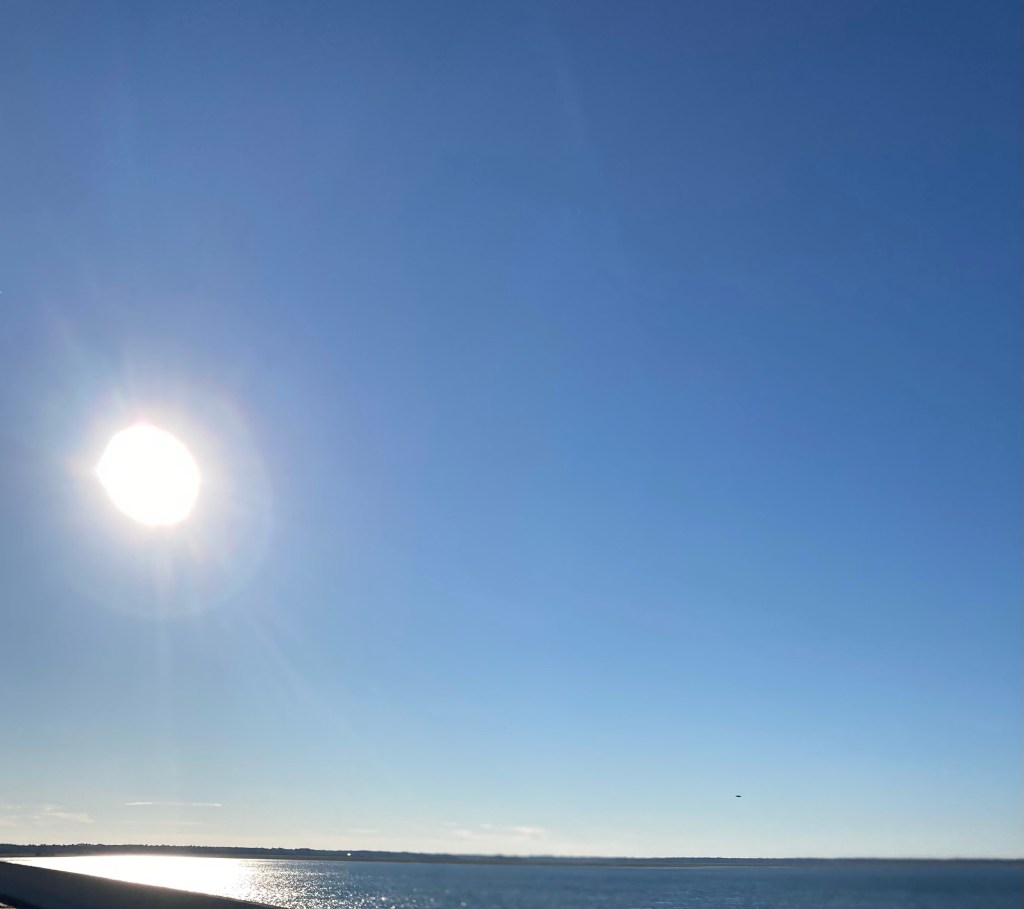
10.7.2023 – inward and outward

inward and outward
to northward and southward the
beach-lines linger, curl

Inward and outward to northward and southward the beach-lines linger and curl

Adapted from the lines:

Bending your beauty aside, with a step I stand
On the firm-packed sand,
Free
By a world of marsh that borders a world of sea.
Sinuous southward and sinuous northward the shimmering band
Of the sand-beach fastens the fringe of the marsh to the folds of the land.
Inward and outward to northward and southward the beach-lines linger and curl
As a silver-wrought garment that clings to and follows
the firm sweet limbs of a girl.
Vanishing, swerving, evermore curving again into sight,
Softly the sand-beach wavers away to a dim gray looping of light.

From the poem, The Marshes of Glynn by Sidney Clopton Lanier.

According to Wikipedia, Mr. Lanier was known as the poet of the Confederacy so I really shouldn’t quote him but then the poem in question wasn’t published until 1875 after Mr. Lanier visited Glynn County in Georgia.

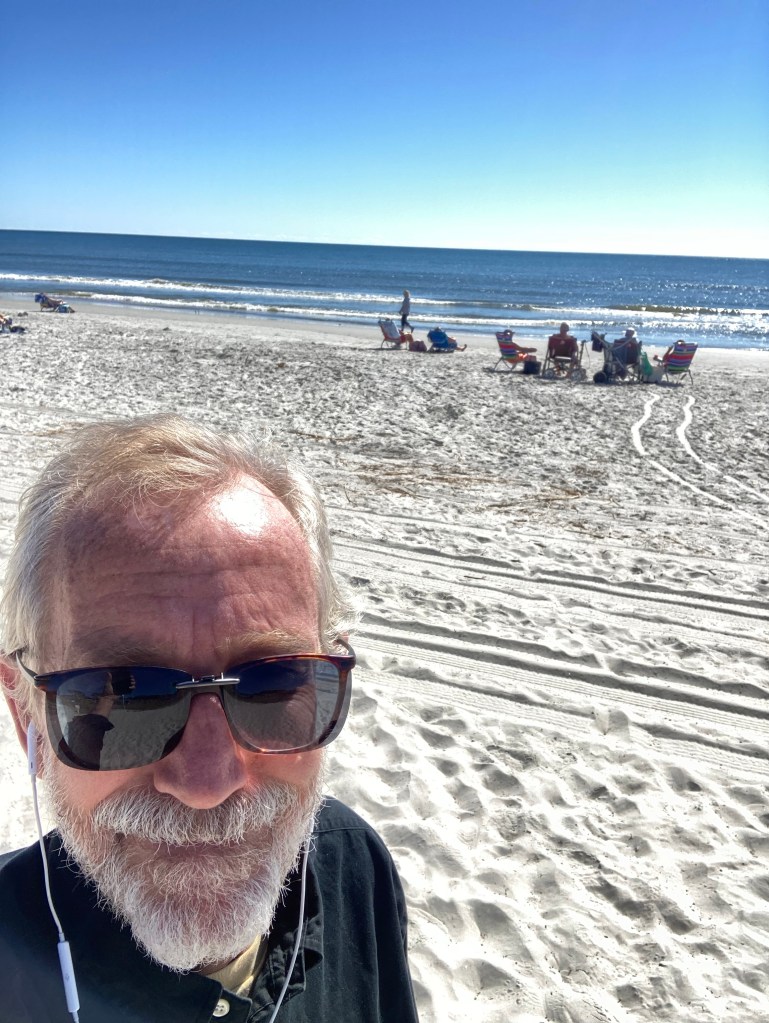
The image is of the beach on Jekyll Island in the self same Glynn Country.

I was there yesterday.

Of the sand-beach fastens the fringe of the marsh to the folds of the land.

9.28.2023 – will never increase

will never increase
danger zone by giving way
… very logical

Deep down, my unspoked but dreamed day-dream is to earn a Commercial Pilot’s license and someday work for a Dolphin Tour Boat company and spend my time out on the water with someone else supplying the boat and the fuel.

To that end, I picked up a copy of the famous Chapmen Piloting book of Seamanship and Boat Handling.

(for $1 at the Friends of the Library Book Sale)

I am enjoying it a lot.

I am intrigued as well as there is a lot of basic commonsense that seems to be assumed to be present in the mind of anyone who is thinking about being out on the water.

Notice this short section on piloting in the “Danger Zone.”

A power-driven vessel of any size has a so called “danger zone” from dead ahead to 22.5° abaft its starboard beam. It must give way to any crossing vessel that approaches within this zone.

The “danger zone” is a concept implicit in the Navigation Rules and should be firmly understood by every boater.

Note that the danger zone of the give-way vessel has the same arc of visibility as its green sidelight. Thus the stand-on vessel sees a “go” light from the other vessel. Conversely, the give-way vessel sees the red (“stop”) light of the stand-on vessel — a very logical situation!

You have to love the lovely choice of language!

a concept implicit in the Navigation Rules

should be firmly understood by every boater

— a very logical situation!

The Danger Zone Section of the bok is a small quarter page with a red background to make it stand out.

Know the rules!

Know your boat!

It’s a very logical situation that should be should be firmly understood as the concept is implicit in the rules.

Why does this expectation sound so wonderful in A WORLD GONE CRAZY!

So simple and yet so flat out, hey this is the way it is and if you don’t get it, get your butt off the water dumhead!

A simple expectation that you and other people will be using some smart out there in the world.

Yet, the folks who wrote the Chapman Piloting book also live in the REAL WORLD.

In italics at the bottom of the red block information on the Danger Zone is this caveat.

(Remember how in the book Gone With the Wind, Rhett told Scarlett to name her store the CAVEAT EMPTORIAM and Scarlett had the sign all set to go and then Ashely told her what it meant … but I digress)

As I was saying, at the bottom of the section is this little but of advice.

After saying the concept of the Danger Zone was implicit …

After saying the concept of the Danger Zone was fully understood …

After saying the concept of the Danger Zone was very logical …

The authors then state:

There may be situations in which a boat does not have right of way (such as river-crossing and overtaking), but assuming that you have the freedom to maneuver safely, you will never increase the danger of collision by giving way to a boat in this zone.

Even with all that being said, know that person in the other boat may not be logical or fully understand the danger zone.

Remember, no one ever increased the danger of a collision …

BY GETTING OUT OF THE WAY.

Rare advice that can be applied in too many places today.

As John Ronald Reuel Tolkien once wrote, “It does not do to leave a live dragon out of your calculations, if you live near him.”

Dragons, other dumb boaters and, well, just plain folks.

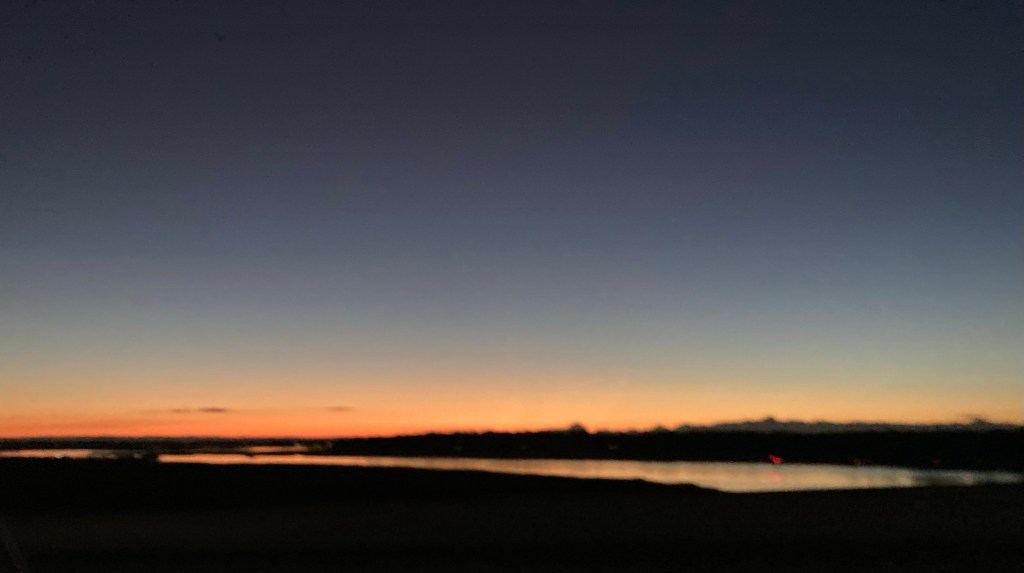
9.18.2023 – on the lonely shore

on the lonely shore
where none intrudes, by the sea
music in its roar

There is a pleasure in the pathless woods,
There is a rapture on the lonely shore,
There is society, where none intrudes,
By the deep sea, and music in its roar:
I love not man the less, but nature more.

Childe Harold’s Pilgrimage (1812–18) canto 4, st. 178  by George Gordon Byron, 6th Baron Byron FRS (22 January 1788 – 19 April 1824

8.1.2023 – trying to unweave

trying to unweave
unwind piece together
past and the future

Trying to unweave, unwind, unravel
And piece together the past and the future,
Between midnight and dawn, when the past is all deception,
The future futureless, before the morning watch
When time stops and time is never ending;
And the ground swell, that is and was from the beginning,

From The Dry Salvages in Four Quartets by T.S. Eliot (New York, Harcourt, Brace and Co., 1943

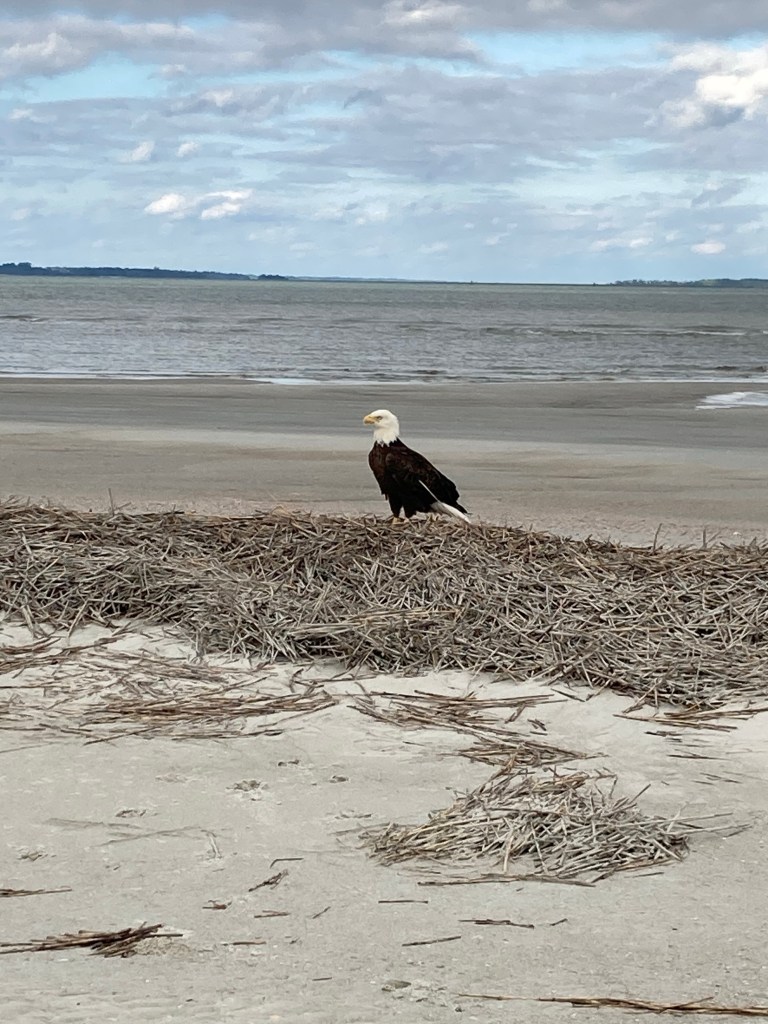
7.31.2023 – sand is a substance

sand is a substance
beautiful mysterious
each grain on a beach

the materials of the beach are themselves steeped in antiquity. Sand is a substance that is beautiful, mysterious, and infinitely variable; each grain on a beach is the result of processes that go back into the shadowy beginnings of life, or of the earth itself.

The bulk of seashore sand is derived from the weathering and decay of rocks, transported from their place of origin to the sea by the rains and the rivers. In the unhurried processes of erosion, in the freighting seaward, in the interruptions and resumptions of that journey, the minerals have suffered various fates—some have been dropped, some have worn out and vanished. In the mountains the slow decay and disintegration of the rocks proceed, and the stream of sediments grows—suddenly and dramatically by rockslides—slowly, inexorably, by the wearing of rock by water. All begin their passage toward the sea. Some disappear through the solvent action of water or by grinding attrition in the rapids of a river’s bed. Some are dropped on the riverbank by flood waters, there to lie for a hundred, a thousand years, to become locked in the sediments of the plain and wait another million years or so, during which, perhaps, the sea comes in and then returns to its basin. Then at last they are released by the persistent work of erosion’s tools—wind, rain, and frost—to resume the journey to the sea. Once brought to salt water, a fresh rearranging, sorting, and transport begin. Light minerals, like flakes of mica, are carried away almost at once; heavy ones like the black sands of ilmenite and rutile are picked up by the violence of storm waves and thrown on the upper beach.

No individual sand grain remains long in any one place. The smaller it is, the more it is subject to long transport—the larger grains by water, the smaller by wind. An average grain of sand is only two and one half times the weight of an equal volume of water, but more than two thousand times as heavy as air, so only the smaller grains are available for transport by wind. But despite the constant working over of the sands by wind and water, a beach shows little visible change from day to day, for as one grain is carried away, another is usually brought to take its place

From The Rim of Sand in the book, The Edge of the Sea by Rachel Carson (Boston, Houghton, Mifflin, 1955).

Ms. Carson may be better known for the book, Silent Spring, but I like the Edge of the Sea better.

Maybe because that it is where I work.

I can leave my office at lunch time and in 5 minutes stand with my feet in the water and Mr. Thoreau said of Cape Code, “A man may stand there and put all America behind him.