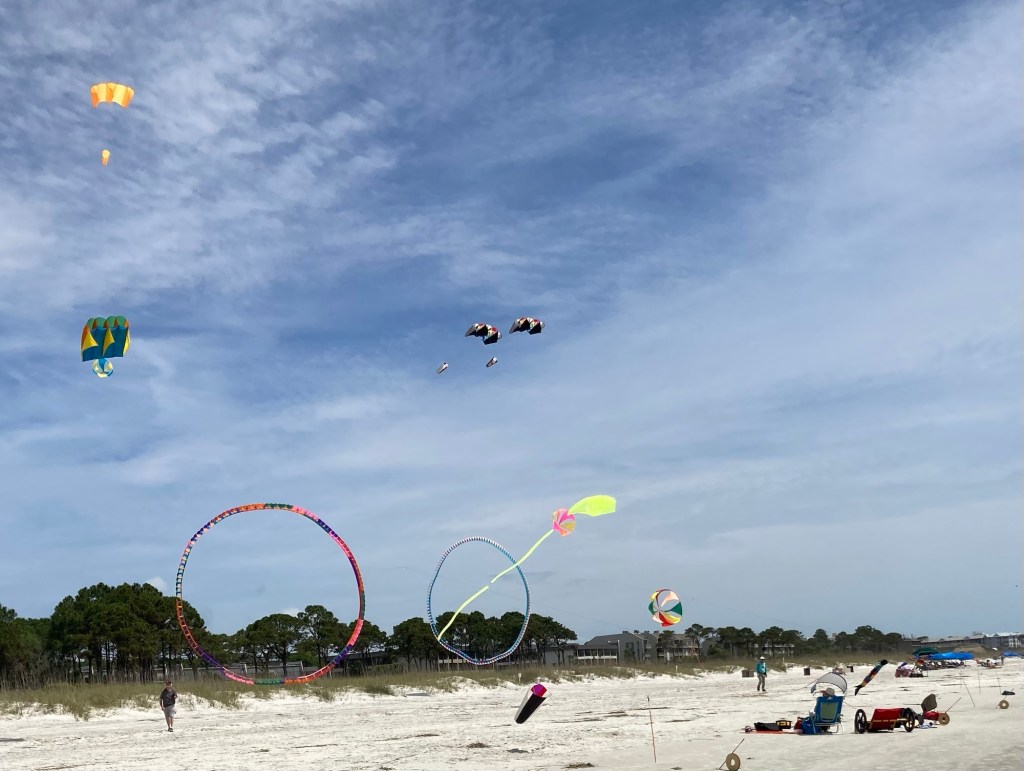
Some of these beach haiku were written by random trips to beach.
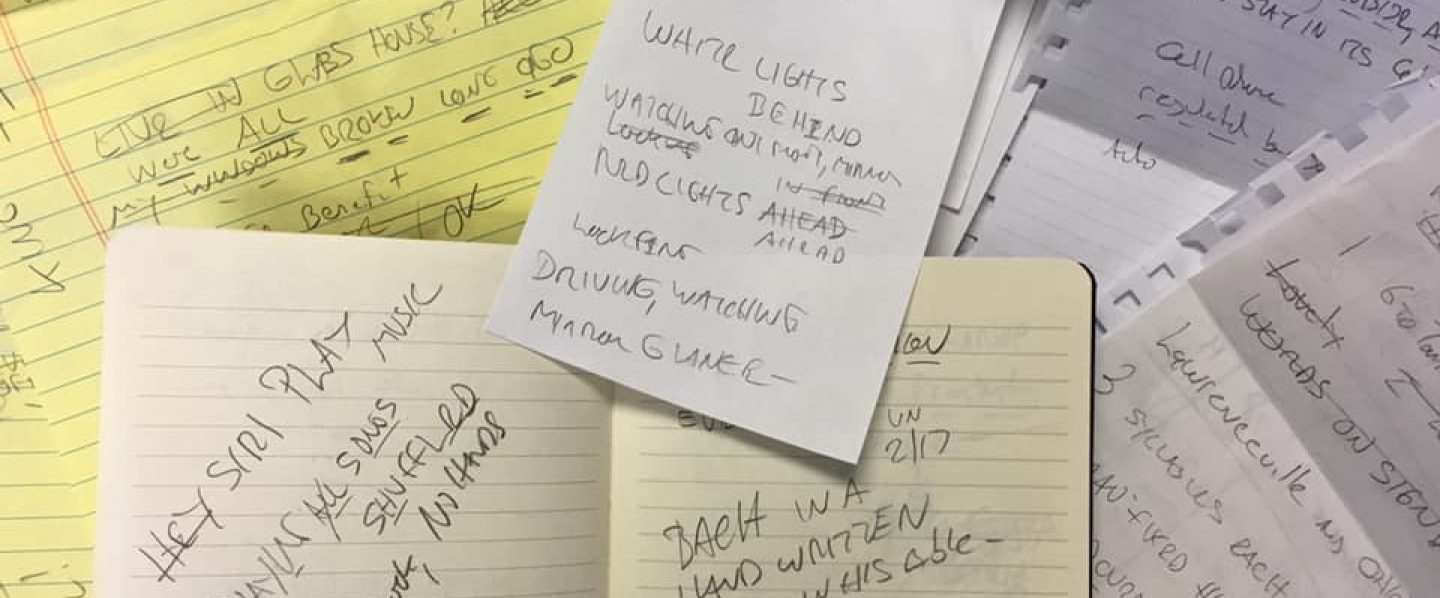
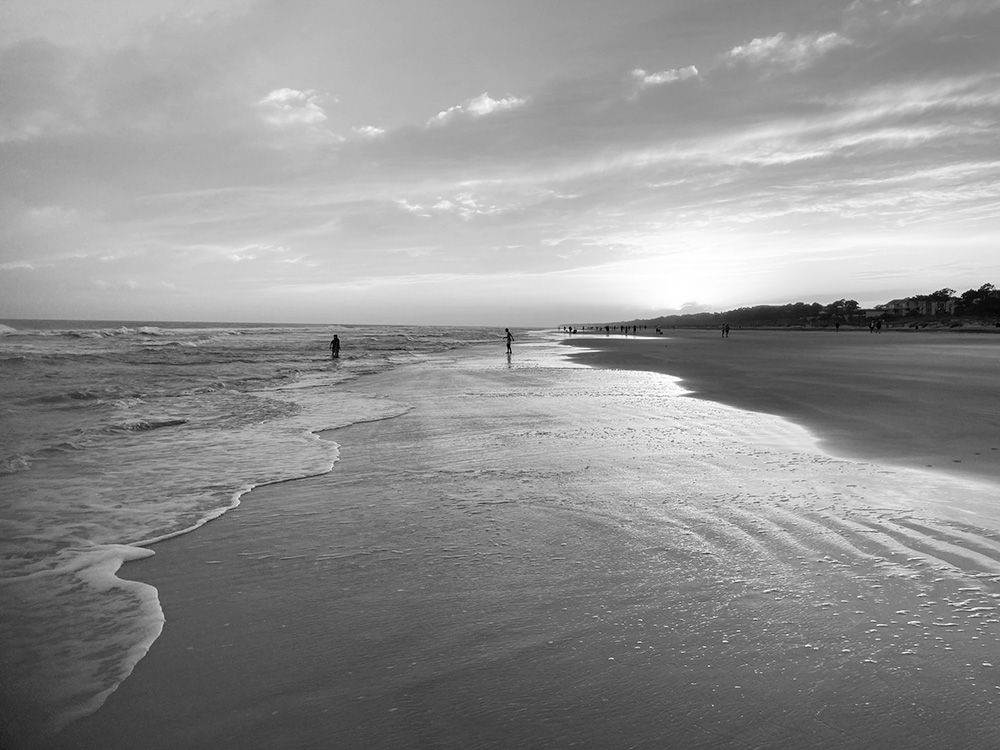
Most of these are part of a series based on afternoons spent at the beach on Hilton Head Island with my pad out ( a real paper note pad), hoping for words with my iPhone camera handy to add illustration to my thoughts.
I wanted to see if I would be ‘inspired’ by what I saw, by what I heard, by what I smelled, by what I tasted, what I felt emotionally and what I felt tactilely.
Some turned out okay.
Some were too forced.
Some were just bad.
Some did involve some or all of those feelings.
As far as it goes, I guess I was inspired by by what I saw, by what I heard, by what I smelled, by what I tasted, what I felt emotionally and what I felt tactilely.
Please aware that most of these haiku were NOT WRITTEN on the date in the title – for an explanation of this please see The Series link in the navigation table.
in any language word enough for pleasure that fills you as sun warms
Adapted from The Sun by Mary Oliver …
Have you ever seen anything in your life more wonderful
than the way the sun, every evening, relaxed and easy, floats toward the horizon
and into the clouds or the hills, or the rumpled sea, and is gone– and how it slides again
out of the blackness, every morning, on the other side of the world, like a red flower
streaming upward on its heavenly oils, say, on a morning in early summer, at its perfect imperial distance– and have you ever felt for anything such wild love– do you think there is anywhere, in any language, a word billowing enough for the pleasure
that fills you, as the sun reaches out, as it warms you
as you stand there, empty-handed– or have you too turned from this world–
that imaginative quality is expected from any form of art
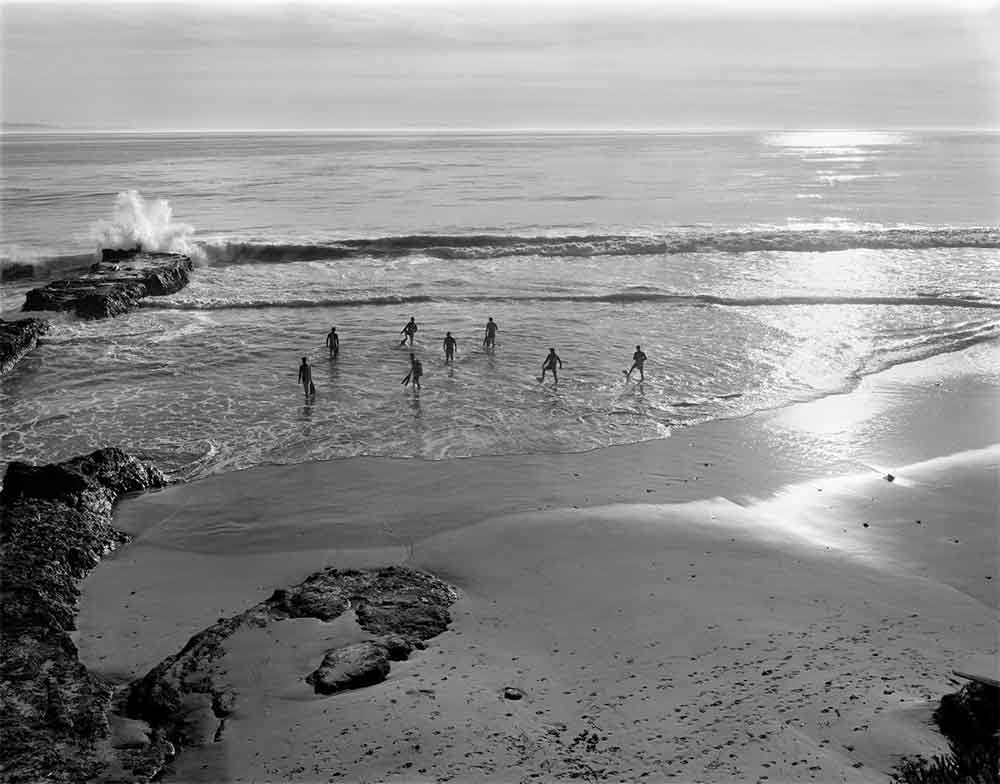
SCUBA Class, University of California, Santa Barbara, by Ansel Adams, 1966
For me, a photograph begins as the visualization of the image which represents the excitement and the perception of that moment and situation.
The print represents excitement, perception, and expression (performance).
Meaning is found in the final print and only in terms of the print itself.
For me, this meaning may vary a little over time and circumstance.
For the viewer, the meaning of the print is his meaning.
If I try to impose mine by intruding descriptive titles, I insult the viewer, the print, and myself.
From The Autobiography of Ansel Adams by Ansel Adams, Little, Brown and Company, New York, 1985.
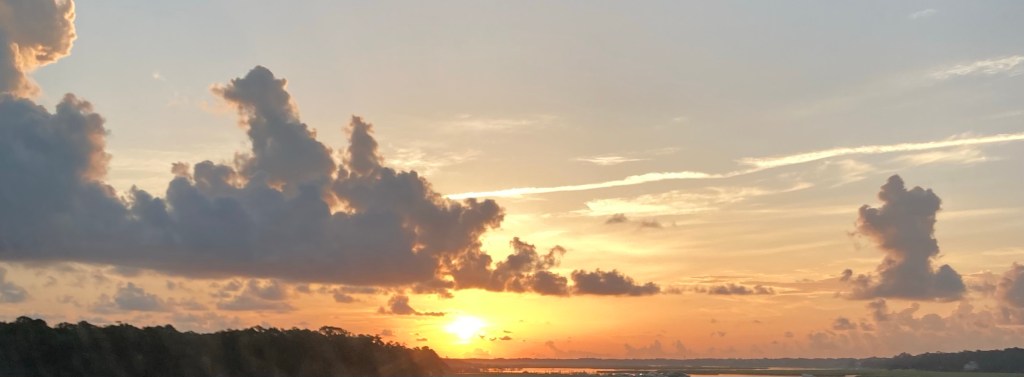
Sunset on Hilton Head, Mike Hoffman, 2023
As I understand it, from the writings of Ansel Adams, Mr. Adams could visualize the print he could make from a photograph of something in front of him.
The process was to capture the scene on a negative and then create the image in his mind through the print.
And once Mr. Adams got into the darkroom, he began to paint with light or so says one of his assistants.
He said something along the line of that the negative was the score and the print was the music.
While I miss my darkroom days, I am not sure I miss it so much CT with what can be done today … and I would enjoy seeing what Mr. Adams could do with his images.
It is still the person who begins the visualization of an image in much the same way you might say it is the cook, not the kitchen.
When Artificial Intelligence can begin as the visualization of the image which represents the excitement and the perception of that moment and situation, call me
sunrise ever on this stage is acted God’s calm, annual drama
Ever upon this stage, Is acted God’s calm, annual drama, Gorgeous processions, songs of birds, Sunrise, that fullest feeds and freshens most the soul, The heaving sea, the waves upon the shore, the musical, strong waves, The woods, the stalwart trees, the slender, tapering trees, The flowers, the grass, the lilliput, countless armies of the grass, The heat, the showers, the measureless pasturages, The scenery of the snows, the winds’ free orchestra, The stretching, light-hung roof of clouds—the clear cerulean, and the bulging, silvery fringes, The high dilating stars, the placid, beckoning stars, The moving flocks and herds, the plains and emerald meadows, The shows of all the varied lands, and all the growths and products.
From A Carol of Harvest for 1867 by Walt Whitman as published in The Galaxy, an American monthly magazine founded by William Conant Church and his brother Francis P. Church in 1866, according to Wikipedia.
Also according to Wikipedia, Whitman’s position as a Galaxy author was important to his personal fortunes and his literary reputation. The Galaxy was respectable, it was popular, and it paid generously. It also provided a venue where Whitman could join with other writers in exploring the meaning of literary nationalism and cultural democracy for the new era.
Paid generously may be the most important two words in the lives of too many poets, artists and writers through all of history.
As Jim Harrison said once, “Just like all the writers’ schools have created less variety—there’s a sameness. I said once that the lowa Writers School on a yearly basis outproduces the English romantic movement. It’s all a delusion. What are you going to do with four thousand M.F.A.’s? It’s ludicrous.”
But the sunrise’s everyday in the God’s annual drama
Gorgeous processions, songs of birds.
Sunrise, that fullest feeds and freshens most the soul.