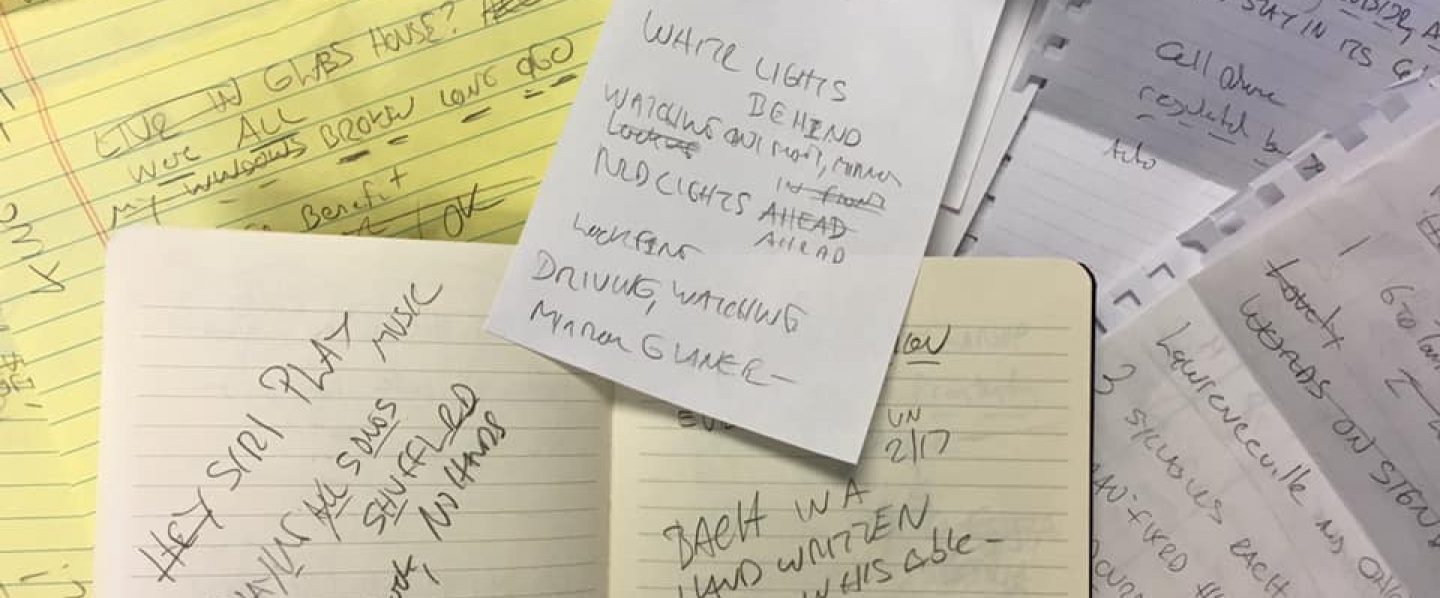

in fine, free way, with
more grace than is his wont, said
his half dozen words
Always worth reading on this the 163rd anniversary of President Abraham Lincoln’s remarks at the dedication of the National Cemetery at Gettysburg, Pennsylvania about which, Garry Wills wrote:
Lincoln’s voice was high to the point of shrillness, and his Kentucky accent offended some Eastern sensibilities. But Lincoln derived an advantage from his high tenor voice—carrying power. If there is agreement on any one aspect of Lincoln’s delivery, at Gettysburg and elsewhere, it is his audibility. Modern impersonators of Lincoln, like Walter Huston, Raymond Massey, Henry Fonda, and the various actors who give voice to Disneyland animations of the President, bring him before us as a baritone, which is considered a more manly or heroic voice — though both the Roosevelt presidents of our century were tenors.
What should not be forgotten is that Lincoln was himself an actor, an expert raconteur and mimic, and one who spent hours reading speeches out of Shakespeare to any willing (and some unwilling) audiences. He knew a good deal about rhythmic delivery and meaningful inflections.
John Hay, who had submitted to many of those Shakespeare readings, gave high marks to his boss’s performance at Gettysburg. He put in his diary at the time that “the President, in a fine, free way, with more grace than is his wont, said his half dozen words of consecration” Lincoln’s text was polished, his delivery emphatic, he was interrupted by applause five times. Read in a slow, clear way to the farthest listeners, the speech would take about three minutes.
It is quite true that the audience did not take in all that happened in that short time — we are still trying to weigh the consequences of that amazing performance.
But the myth that Lincoln was disappointed in the result—that he told the unreliable Lamon that his speech, like a bad plow, ‘won’t scour’ — has no basis.
He had done what he wanted to do, and Hay shared the pride his superior took in an important occasion put to good use.
From Lincoln at Gettysburg: The words that remade America by Garry Wills (Simon and Schuster: New York, 1992).
Mr. Lincoln said:
Four score and seven years ago our fathers brought forth on this continent, a new nation, conceived in Liberty, and dedicated to the proposition that all men are created equal.
Now we are engaged in a great civil war, testing whether that nation, or any nation so conceived and so dedicated, can long endure. We are met on a great battle-field of that war. We have come to dedicate a portion of that field, as a final resting place for those who here gave their lives that nation might live. It is altogether fitting and proper that we should do this.
But, in a larger sense, we can not dedicate—we can not consecrate— we can not hallow—this ground. The brave men, living and dead, who struggled here, have consecrated it, far above our poor power to add or detract. The world will little note, nor long remember what we say here, but it can never forget what they did here. It is for us the living, rather, to be dedicated here to the unfinished work which they who fought here have thus far so nobly advanced. It is rather for us to be here dedicated to the great task remaining before us—that from these honored dead we take increased devotion to that cause for which they gave the last full measure of devotion—that we here highly resolve that these dead shall not have died in vain—that this nation, under God, shall have a new birth of freedom—and that government of the people, by the people, for the people, shall not perish from the earth.
Read in a slow, clear way to the farthest listeners, the speech takes about three minutes.
In those three minutes, Mr. Lincoln had done what he wanted to do.
Said what he wanted to say.
We are still trying to weigh the consequences of that amazing performance.
That we here highly resolve that these dead shall not have died in vain—
That this nation, under God, shall have a new birth of freedom—
And that government of the people, by the people, for the people, shall not perish from the earth.
It is rather for us to be here dedicated to the great task remaining before us.

Discover more from No Haiku For You
Subscribe to get the latest posts sent to your email.