8.5.2022 – only humor and

only humor and
humility allow you to
endure senior life

Only humor and humility allow you to endure life as a senior with its clear view of a mile-high, neon-lit exit sign. I offer suggestions in the spirit of one building a rickety bridge across a deep ditch full of venomous snakes. At dawn tomorrow drop your cell phone in the toilet during your morning pee. In 1944 people averaged forty phone calls a year and now they’re over five thousand. Your cell phone time can be spent growing vegetables and learning to cook. Keep your lights turned off. All these electric lights are heating up innocent nature. Look out the window on a night flight and so much is ablaze for no valid reason. The world is running out of potable water, or so we are told. When you pour a glass of water finish it even if you have to add whiskey to manage. Fire a large-caliber bullet into your television screen. Avoid newspapers and magazines and movies, all of which have been unworthy of our attention. I will allow fifteen minutes a day of public radio news so you won’t lose track of the human community. I want to say to give your excess money to the poor but other than being generous to my larger family and friends I can’t seem to manage this, so ingrained is my greed. Naturally we all fail. Just last night I watched a few minutes of a BBC program about how women as young as fifteen in England are having plastic surgery to make their vaginas more attractive. Seriously. I kept hoping that the cast of Monty Python would pop out of the woodwork but no such luck. What chance does a fiction writer have in such a world?

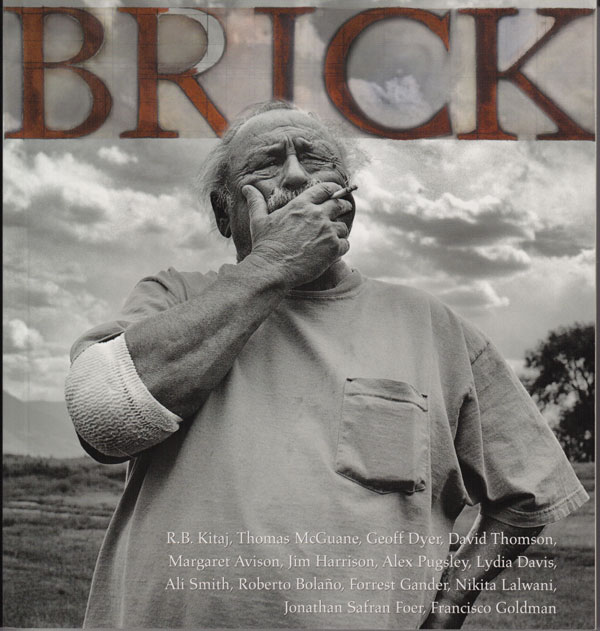
This passage was written in 2011 in an essay titled, Caregiver, in the Toronto literary publication, Brick, written by the late Jim Harrison.

Many of Mr. Harrison’s essays like this were pulled together in a posthumously published in the book, A Really Big Lunch.

The front piece states: The pieces collected in this volume have originally appeared in Smoke Signals, the Kermit Lynch Wine Merchant newsletter, Brick, New Yorker, Martha Stewart Living, Playboy, Edible Baja Arizona, Big Sky Cooking by Meredith Brokaw and Ellen Wright, The Montana Writers’ Cookbook by the Montana Center for the Book and the Montana Committee for the Humanities, and Molto Italiano by Mario Batali.

How did I get this old?

My wife is quick to recognize any form of ageism while I resist the idea that I am marginalized by the fact of the year I was born.

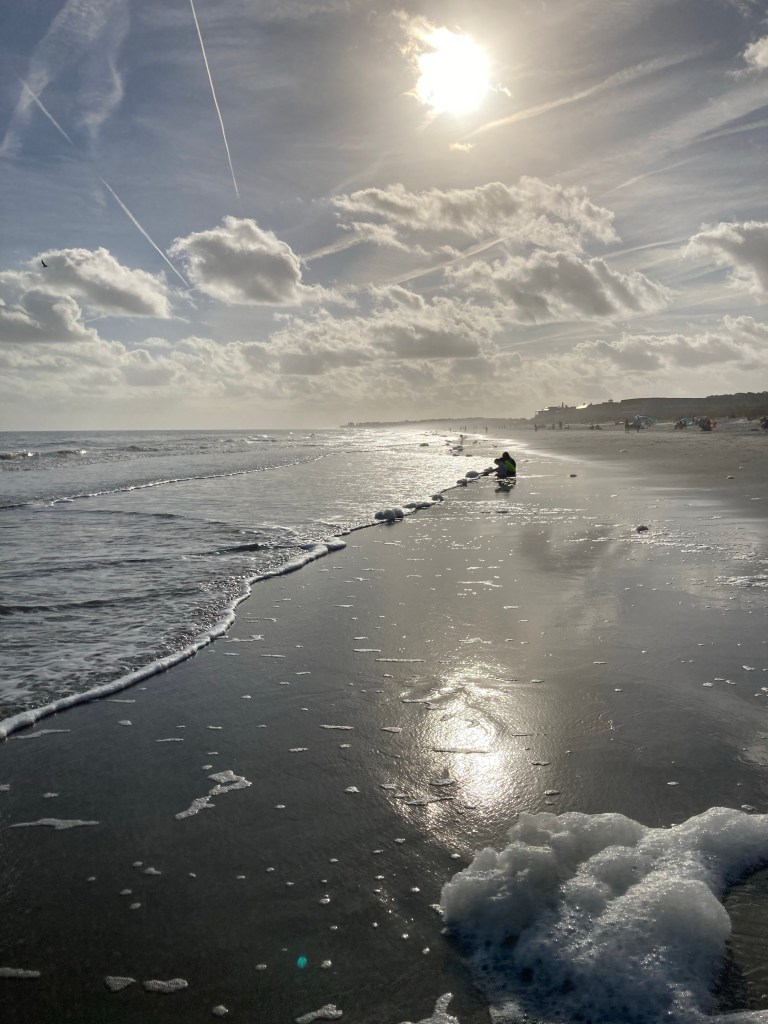
Yet yesterday at the beach, sitting by a young couple who had established their place on the beach with towels, blankets and hampers in the face of an incoming tide, I could not help but acknowledge that when we tried to engage them in conversation as they moved further back up the beach, that the last thing on the minds of these two people were:

1)There were ‘older’ people on the beach. Didn’t know that was allowed.

2) Older people on the beach in SWIM SUITS (ewwwwwwwwwwwwwwwwwwwwwwwwwwwww!)

3) These older people were attempting to talk them as if there was anything they could say would any bearing on their world. Oh COME ON!

I don’t think the young man could have been more surprised had the sound of airport boarding announcements calling his name suddenly boomed across the beach.

He didn’t stop but slowed for a moment and acknowledged that he had heard our voices then mumbled something about tide … beach … wet … heh heh heh until he was gratefully out of our sightlines.

My wife and I had to look at each and laugh.

We imagined these young folks having dinner later and saying, ‘could you believe those old people on the beach. They were alive. They tried to talk to us! Ewwwwwwwwwwwwwwwwwwwwwwwwwwwww.

Okay we are older.

It isn’t catching.

Maybe we do have a clear view of a mile-high, neon-lit exit sign to life.

That doesn’t mean you do.

But I find it hard to say much.

I was the same way.

Those silly old folks are so silly.

Ah well youth is SO wasted on young people.

Boy howdy am I feeling old.

And I do like this list of suggestions from Mr. Harrison.

IE:

At dawn tomorrow drop your cell phone in the toilet during your morning pee. In 1944 people averaged forty phone calls a year and now they’re over five thousand. Your cell phone time can be spent growing vegetables and learning to cook.

Keep your lights turned off. All these electric lights are heating up innocent nature. Look out the window on a night flight and so much is ablaze for no valid reason.

The world is running out of potable water, or so we are told. When you pour a glass of water finish it even if you have to add whiskey to manage. Fire a large-caliber bullet into your television screen.

Avoid newspapers and magazines and movies, all of which have been unworthy of our attention. I will allow fifteen minutes a day of public radio news so you won’t lose track of the human community.

I want to say to give your excess money to the poor but other than being generous to my larger family and friends I can’t seem to manage this, so ingrained is my greed.

Sadly, I have to agree that while my spirit is willing, I am weak.

Naturally we all fail.

But it is fun to think, to imagine that I might do these things.

That exit sign is coming up.
8.4.2022 – how beautiful to

how beautiful to
sight those beams of morning play
up from eastern sea

Adapted from Horace’s ode Diffugere nives (XVI) by A. E. Housman published in More Poems, Alfred A. Knopf. 1936.

How clear, how lovely bright
How beautiful to sight
Those beams of morning play;
How heaven laughs out with glee
Where, like a bird set free,
Up from the eastern sea
Soars the delightful day

To-day I shall be strong,
No more shall yield to wrong,
Shall squander life no more;
Days lost, I know not how,
I shall retrieve them now;
Now I shall keep the vow
I never kept before.

Thought about this as I was driving to work.

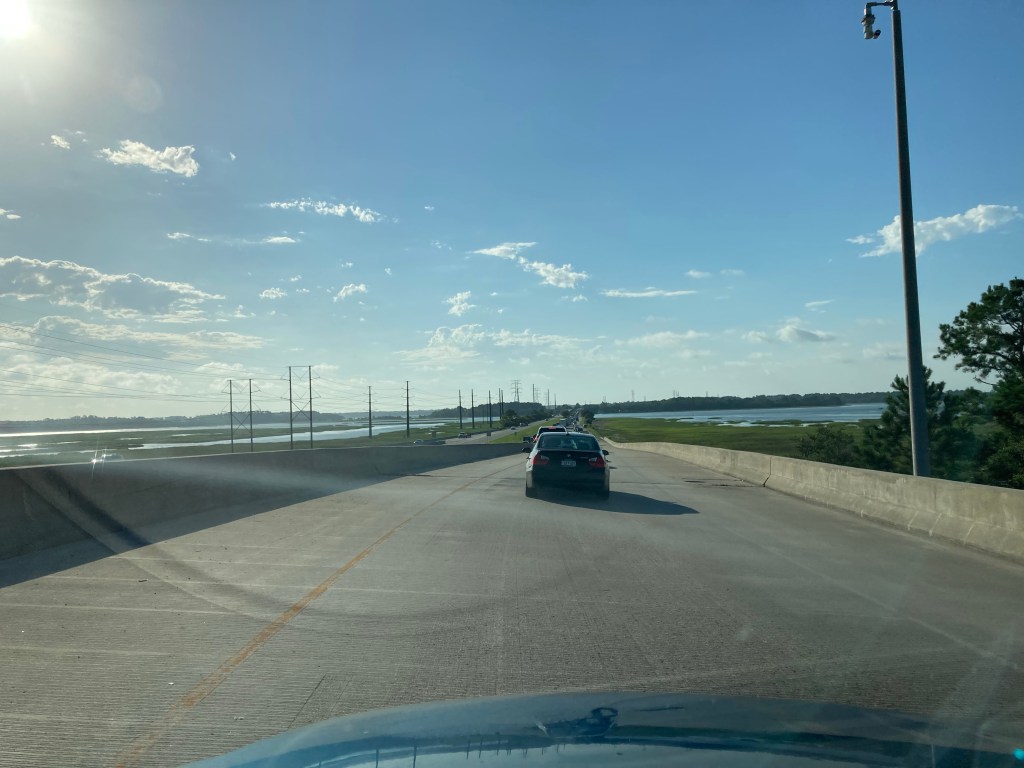
And, as always, I was thinking, there sure could be worse morning drives (and I have made some of them.)

8.3.2022 – not surprised nor leap

not surprised nor leap
in imagination from
sunlight to shadow

Then welcome death and be by death benignly welcomed.

Or so says Conrad Aiken in his poem, When You Are Not Surprised.

I am surprised by an election where my home town lined up with the former president.

The voters in my home town tossed out this one feller who did everything right except to say the former president should have followed almost 250 years of American Democratic precedence and quietly left office.

And I am surprised.

Guess I am not ready to welcome death.

Mr. Aiken, a one time Poet Laurate of the United States is buried near here in Savanah.

His grave is marked by a marble bench.

Carved in the bench is perhaps a fitting epitaph for this country.

It says:

Cosmic Adventurer – Destination Unknown.

Here is the complete poem, When You Are Not Surprised.

When you are not surprised, not surprised,
nor leap in imagination from sunlight into shadow
or from shadow into sunlight
suiting the color of fright or delight
to the bewildering circumstance
when you are no longer surprised
by the quiet or fury of daybreak
the stormy uprush of the sun’s rage
over the edges of torn trees
torrents of living and dying flung
upward and outward inward and downward to space
or else
peace peace peace peace
the wood-thrush speaking his holy holy
far hidden in the forest of the mind
while slowly
the limbs of light unwind
and the world’s surface dreams again of night
as the center dreams of light
when you are not surprised
by breath and breath and breath
the first unconscious morning breath
the tap of the bird’s beak on the pane
and do not cry out come again
blest blest that you are come again
o light o sound o voice of bird o light
and memory too o memory blest
and curst with the debts of yesterday
that would not stay, or stay

when you are not surprised
by death and death and death
death of the bee in the daffodil
death of color in the child’s cheek
on the young mother’s breast
death of sense of touch of sight
death of delight
and the inward death the inward turning night
when the heart hardens itself with hate and indifference
for hated self and beloved not-self
when you are not surprised
by wheel’s turn or turn of season
the winged and orbed chariot tilt of time
the halcyon pause, the blue caesura of spring
and solar rhyme
woven into the divinely remembered nest
by the dark-eyed love in the oriole’s breast
and the tides of space that ring the heart
while still, while still, the wave of the invisible world
breaks into consciousness in the mind of god
then welcome death and be by death benignly welcomed
and join again in the ceaseless know-nothing
from which you awoke to the first surprise.

Conrad Aiken, “When You Are Not Surprised” from Collected Poems. Copyright © 1953 by Conrad Aiken. Reprinted with the permission of Brandt & Hochman Literary Agents, Inc.
Source: Collected Poems (Random House Inc., 1970)

8.2.2022 – stars when drop and die

stars when drop and die
no star is lost – rains in sea
still the sea is salt

Adapted from Horace’s ode Diffugere nives (VII) by A. E. Housman published in More Poems, Alfred A. Knopf. 1936.

Stars, I have seen them fall,
    But when they drop and die
No star is lost at all
    From all the star-sown sky.
The toil of all that be
    Helps not the primal fault;
It rains into the sea
    And still the sea is salt.

And what does Diffugere nives mean?

One online source states: “one of Horace’s many reflections on the passage of time, the brevity of human life.”

Another states: “an involuntary interpersonal state that involves an acute longing for emotional reciprocation, obsessive-compulsive thoughts, feelings, and behaviors, and emotional dependence on another person.”

But I paste it into the GOOGLE translate from Latin to English, I get, Run away from the snow.

Ah well, still the sea is salt.

8.1.2022 – ask yourselves, have we

ask yourselves, have we
each of us, done all we could?
have we done enough?

Such was the question asked by President Lyndon Johnson in a an address at Johns Hopkins University, titled “Peace Without Conquest” on April 07, 1965.

It, sad to say, was a speech in defense of the ongoing war in Vietnam.

LBJ laid out his reasons for being in a war in South East Asia and he laid out his post war plans for the region.

When he closed, LBJ said this:

Every night before I turn out the lights to sleep I ask myself this question: Have I done everything that I can do to unite this country? Have I done everything I can to help unite the world, to try to bring peace and hope to all the peoples of the world? Have I done enough?

Ask yourselves that question in your homes–and in this hall tonight. Have we, each of us, all done all we could? Have we done enough?

Many consider the Vietnam War and Vietnam Era as one of the most divisive times in the history of the United States.

The end of the United States as we knew it, was coming.

On the one hand, the United States did NOT come to end.

On the other hand, the Untied States, as we knew it at that time, did.

Maybe the country came out of that era better.

At the funeral for Rosa Parks, Former President Bill Clinton said that Ms. Parks made America better.

Later in the funeral eulogies, Louis Farrakhan challenged this, saying that while Ms. Parks DID make America better, she did not make America good. And at that, GOOD AMERICA was a long way from GREAT AMERICA.

What can a person do?

Since she is on my mind, consider Rosa Parks.

She sat down so others could stand up.

What am I doing?

Can I, like LBJ, every night before I turn out the lights to sleep, ask myself this question: Have I done everything that I can do to unite this country?

Not what have I done to further a political thought or agenda.

Not what have I done to further a specific point of view or action.

But, what have I done to unite this country.

The very next thing after asking ‘have we done enough?’, LBJ delivered this warning.

We may well be living in the time foretold many years ago when it was said: “I call heaven and earth to record this day against you, that I have set before you life and death, blessing and cursing: therefore choose life, that both thou and thy seed may live.”

This generation of the world must choose: destroy or build, kill or aid, hate or understand.