6.6.2023 – dramatically

dramatically
flickering repeatable
afterimages

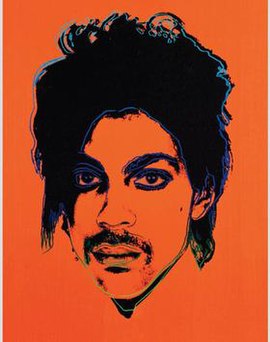
Warhol neither rips off nor transcends his sources.

He retains them as flickering, repeatable afterimages while dramatically changing their pictorial appearance and effect.

That’s what turns “something not his into something all his own.”

Warhol’s slightly off kilter, Day-Glo brilliant pictures change the way we look at celebrity and consumer culture.

His work, at its best, transforms us.

From The Supreme Court Is Wrong About Andy Warhol, a Guest Essay in the New York Times on June 5, 2023. by Richard Meyer.

Mr. Meyer is a professor of art history at Stanford University and the author, most recently, of “Master of the Two Left Feet: Morris Hirshfield Rediscovered.

Mr. Meyer writes that, “As an art historian and Warhol scholar, I was asked to write an amicus brief on behalf of the Foundation.

Mr. Meyer also said, “There is much about Warhol and the question of originality, however, that I left out of my brief.

I am reminded of the story of a friend of Ansel Adams who had come into possession of some original photographic prints by, I think, Paul Stand.

The friend gave the prints to a an Art Museum and took a huge tax credit for his gift.

The IRS questioned the claim and asked for some provenance on who this Paul Strand was and why this prints could be valued so highly.

The friend asked Ansel Adams to write a reply.

Based what Mr. Adams wrote, the claim was allowed and word was passed along from the IRS to thank Mr. Adams for his 10 page document explaining the life and work and value of Paul Strand.

6.5.2023 – crazy — you’d have build

crazy — you’d have build
these gas stations all over
and pave these long roads

From the passage:

“Don’t you suppose someone must have argued to Henry Ford: ‘But that’s crazy — you’d have to build these gas station places all over the country and pave these incredibly long roads.’”

Great imaginations are almost always unreasonable, but they almost always triumph in the end.

As it appears in The imaginations of unreasonable men : inspiration, vision, and purpose in the quest to end malaria by William H, Shore, 2010, New York

6.4.2023 – value boundary

value boundary
epiphenomenal could
move underneath them

Adapted from the passage: As when he compared mathematicians and physicists in Internal Constitution of the Stars, Eddington’s presentation of disciplinary boundaries was epiphenomenal to the values that could move underneath them.

In the book, Practical mystic : religion, science, and A.S. Eddington by Stanley, Matthew, 2007, University of Chicago Press

6.3.2023 – the stupidities

the stupidities
of my world dominate that world —
then there is heaven

Education a Failure by Williams Carolos Williams

The minor stupidities
of my world
dominate that world —
as when

with two bridges across
the river and one
closed for repairs
the other also

will be closed by
the authorities
for painting! But then
there is heaven

and the ideal state
closed also
before the aspiring soul.
I had rather

watch a cat threading
a hedge with
another sitting by
while the bird

screams overhead
a thrash
in the cover of the
low branches.

the stupidities
of my world dominate that world —
then there is heaven

6.2.2023 – could sing all the songs

could sing all the songs
were ever invented? Should
then be contented?

The Savage by the Sea by Frances Cornford

If I could hang all the foam of the sea in my hair,
If I could sing all the songs that were ever invented,
If I could kiss all the pebbles that ever there were,
If I could hang all the foam of the sea in my hair,
If I could drink all the waves as they break over there,
     Should I then be contented?
If I could hang all the foam of the sea in my hair?
     If I could sing all the songs that were ever invented?


Frances Cornford, née Darwin, (1886-1960) was a British poet and translator. She was the granddaughter of Charles Darwin. She was educated at home in Cambridge where she remained for most of her life. She married Francis Cornford a classical scholar in 1909. They had five children, the eldest John Cornford a poet was killed in the Spanish Civil War. She published her first volume of poems in 1910 and she followed this with eight more volumes over the next 50 years. Two of her poetry volumes were illustrated in woodcuts by Gwen Raverat who was a cousin. Her last volume, On a Calm Shore (1960), was illustrated by her son. Her poetry style is short and unpretentious, some elegiac and others humorous. Her triolet ‘To a Fat Lady Seen From a Train’ is often quoted. Her Collected Poems (1954) was the official choice of the Poetry Book Society and she won the Queen’s Medal for Poetry in 1959. (The Oxford Guide to British Women Writers)