a living standard so sparse, removed, be consigned to history books
“Destitute” is a term that conjures up the Victorian era – a living standard so sparse, so removed from modern civilisation, that by all rights it should be consigned to the history books. You only have to read through the aching interviews in the JRF study to see what destitution in modern Britain looks like: children wearing their parents’ clothes because that’s all there is in the wardrobe; eating a banana as a single daytime meal; taking the one permitted toilet roll a week from the local church donation. Gone are the workhouses. Nowadays, we send the poor to sift through charity bins.
As the two men said to Mr. Scrooge, “… it is more than usually desirable that we should make some slight provision for the poor and destitute, who suffer greatly at the present time. Many thousands are in want of common necessaries; hundreds of thousands are in want of common comforts …”
A Christmas Carol was written in December, 1845.
So much progress has been made in the last 180 years.
Then one day you read a statistic that somehow feels both shocking and wearily unsurprising: about 3.8 million people experienced destitution in the UK last year. That’s the equivalent of almost half the population of London being unable to meet their most basic needs to stay warm, dry, clean and fed.
Congress? You expect baseline dysfunction but this is something special …
The joke used to be that if PRO is the opposite of CON, what is the opposite of progress?
Now Congress is the joke.
I have tried and I have wanted to keep politics out of these essays as it wasn’t what I wanted to do but the words in the Opinion Piece, The People Who Broke the House by Michelle Cottle, a domestic correspondent for Opinion and a host of “Matter of Opinion” were to good to pass up.
Ms. Cottle wrote: When it comes to Congress, Americans have come to expect a certain baseline of dysfunction. But I think most of us can agree that the current House Republican majority is something special.
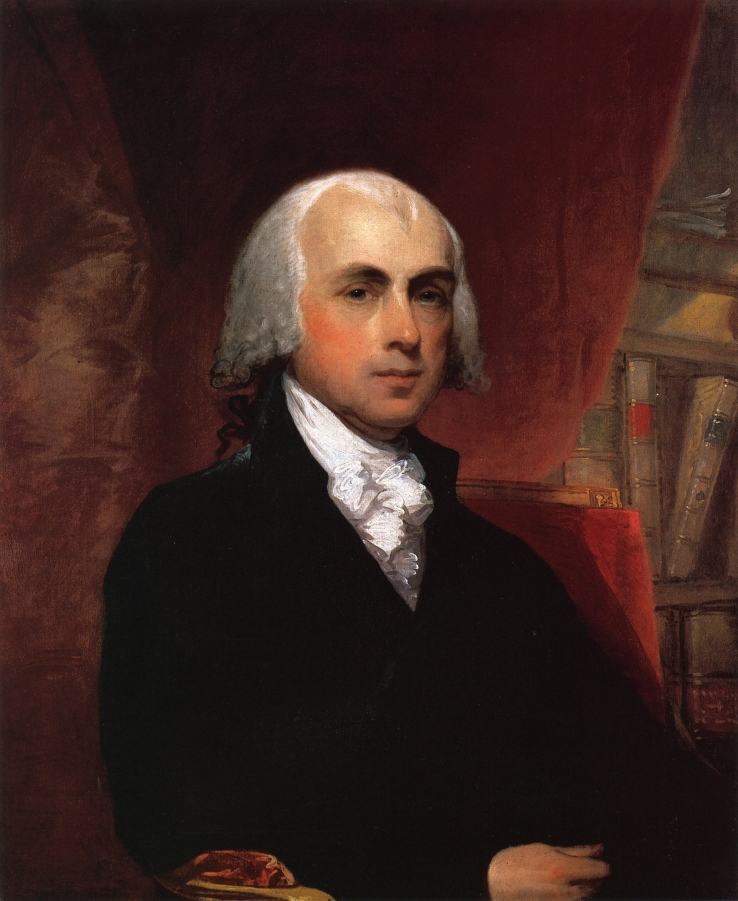
If alive today, I can hear the authors of the Federalist Papers talking back and forth and Alexander Hamilton saying to John Jay and James Madison saying, “What do you think of the House of Representatives?”
Mr. Madison would answer, “I think it’s a good idea. We should get one!“
On the other hand, if they wanted a Government that was representative of the Country, they did a great job setting the current one up.
booksellers about as uncommercial breed of people possible
In a world gone crazy, when I am grasping at anything that points the compass in a positive direction, I found the recent article in the New York Times, Barnes & Noble Sets Itself Free ByMaureen O’Connor to be something of a word of hope.
To quote Big Bill or better to quote Portia in the Merchant of Venice, So shines a good deed in a naughty world.
Or maybe best to quote Willy Wonka and say, “So shines a good deed in a weary world.”
At least, for a moment, this story about how Barnes and Noble is pushing the chain to act more like the indie stores it was once notorious for displacing under the direction of a new CEO, James Daunt.
“The curious trick has been that if you actually let the local book-selling teams do what they think is best, you suddenly get much better bookstores,” Mr. Daunt said. Then he quickly added a caveat: “About a quarter of them become dramatically better, and a quarter become dramatically worse — but it is much easier to focus on that quarter and improve them.”
The change goes along with his strategy of embracing the mind-set of his typical employee. “Booksellers are about as uncommercial a breed of people as it’s possible to come across,” Mr. Daunt said. “The irony is that the less concerned we are with the commercial, the better it works commercially.
“You need to love books, and you need to know how our customers shop for books,” says a long term Barnes and Noble employee.
I read and I believe it, but only because I want to believe it.
I spent 12 years working for a chain bookstore.
For many employee’s it was a job.
For me and many employee’s and many of my good good friends that I worked with, it was a calling.
And it was a fight against those who went into it as business and tried to make it business while we tried to keep the faith.
So to read, “The curious trick has been that if you actually let the local book-selling teams do what they think is best, you suddenly get much better bookstores.” almost makes me want to cry.
I worked for Waldenbooks.
But I lived in Michigan.
If you loved books and you lived in the State of Michigan, at some point in your life you ended up at Border’s Book Store, a stand alone, independent love-affair with books in Ann Arbor, Michigan.
If you went down that path, you also at some point ended up at John King Used Books in Detroit but that’s another story.
Among booksellers in the State of Michigan, Border’s was the gold standard.
It had sofa’s and chairs and probably some sort of cafe before Starbucks.
They had a service desk set up and staffed by three people, in the pre computer era, who did nothing but researched hard to find titles so a customer could order the book.
They had floor upon floor of books.
The had an art print / map section and I still have prints on my office wall that I purchased there, using my grocery money instead of using my grocery money for groceries.
When I started with at my bookstore in a mall, I saw how it could embrace some of what Border’s was.
I fought for chairs in the store.
I fought for more and more copies of different books rather than 100 copies of the same bestseller.
We worked to create displays of content that meant something.
I started as a bookseller then assistant Manager and finally, Manager.
Though I used label tape and put the title, GUY IN CHARGE on my name tag.
One of the many, many things I did that got me trouble.
My battles can be kind of summed up when I made a display of books for Valentine’s Day.
Regardless of the topic or author, I took over a wall and made a display of every red book we had in the store.
My District Manager came in, took one look at Car Repair manuals next to Novels next to books on Knitting but ALL WITH RED COVERS surrounded by cardboard hearts and he ran back out to his car to get his camera.
“That’s the type of thinking we want to see Mike!,” he told me.
I banged a big red American Heritage dictionary against my head.
“This is Walden’s, Mike”, he would say, “Not Border’s.“
The really funny part of this story is that after I was asked to leave the employ of company, another long story, Walden’s relocated it’s headquarters from Stamford, CT to ANN ARBOR and then bought out Border’s and in an effort to change the brand, changed the name of the Company TO Border’s Books!
In the end I guess I won.
To read Booksellers are about as uncommercial a breed of people as it’s possible to come across is a tonic to my soul.
Some where I have a book, I think it’s an autographed copy of Lake Wobegone by Garrison Keillor.
It was picked up for me by a Waldenbooks Regional Vice President.
Her office was in Ann Arbor and I got to know her when I worked at the Walden’s in Ann Arbor when I was in College.
I was allowed to switch back and forth between Grand Rapids, where I lived and Ann Arbor.
I would have long talks with this VP on bookselling as a calling and she would explain bookselling as a business.
She knew I liked Keillor and arranged to get an autographed copy when he made an appearance at some other Walden’s.
Inscribed above the author’s autograph was this sentiment.
“To the most un-corporate person I know.”
And she signed it.
When James Thurber’s dog Mugg’s (The Dog that Bit People) died, he writes, “Mother wanted to bury him in the family lot under a marble stone with some such inscription as “Flights of angels sing thee to thy rest” but we persuaded her it was against the law. In the end we just put up a smooth board above his grave along a lonely road. On the board I wrote with an indelible pencil “Cave Canem.” Mother was quite pleased with the simple classic dignity of the old Latin epitaph.“
To the most un-corporate person I know.
Should I have a tombstone someday, I would be quite pleased with the simple classic dignity of that sentiment.
reviewed interval with its tale of eventless monotonous days
Adapted from the passage:
He reviewed the short interval with its tale of eventless and monotonous days as he sat smoking a thoughtful pipe in the shady coco-nut grove that encompassed the hamlet, letting his thoughts travel back anon to a more distant and eventful past, and all the while keeping an attentive eye on a shabby-looking brigantine that was creeping up from the south. It was not, perhaps, a very thrilling spectacle, but yet Osmond watched the approaching vessel with lively interest. For though, on that deserted coast, ships may be seen to pass up and down on the rim of the horizon, two or three, perhaps, in a month, this was the first vessel that had headed for the land since the day on which he had become the owner of the factory and the sole representative of European civilization in Adaffia. It was natural, then, that he should watch her with interest and curiosity, not only as a visitor from the world which he had left, but as one with which he was personally concerned; for if her people had business ashore, that business was pretty certainly with him.
From A Certain Dr. Thorndyke by Richard Austin Freeman, Made and Printed in Great Britain for Hodder and Stoughton Limited, London, by Hasell, Watson & Viney, Ltd., London and Aylesbury, 1927
a tale of two games a mirror … offers two choices reflect … or correct
This essay is about the Michigan – Michigan State football game but the Michigan – Michigan State football game is incidental to what this essay on the Michigan – Michigan State football game is really all about.
I grew up into being a newspaper junkie.
In 6th grade, my teacher at Grand Rapids Crestview Elementary School, Mr. Vanderwheel, had us watch a movie on HOW TO READ A NEWSPAPER.
One of those odd movies where the feller OFF SCREEN NARRATES and ASKS QUESTIONS to the feller in the movie.
The feller broke the 4th plane and admitted to audience he didn’t know nuthin about an upcoming election and the narrator convinced him to buy a local paper and then walked him through reading the paper.
Buy the end of this short movie, the feller in question was reading TWO newspapers everyday to look for confirmation of facts or new or conflicting information.
From that day, I have refused to accept almost any information without two sources and let me tell you has that caused me a life time of grief.
Always asking, has anyone confirmed that?
Always asking, has any other source been found for that?
Just look at the Sally Hemmings history, where all the sources are citing each other.
Oh GEE WHIZ.
ANYWAY, it became my habit, before the world wide web, to go downtown in Grand Rapids, Michigan, where I lived, to Elliott’s Newsstand down by the Bus Depot and buy out of town newspapers.
At home my Dad already subscribed to HOME delivery of the Detroit Free Press and the Grand Rapids Press.
And at Elliott’s, I would look over papers from all across the world.
I would often grab a Chicago Tribune or some exotic paper like the Los Angeles Times or the London Financial Times (it was pink) or the Atlanta Journal Constitution (because I loved that name) and almost always, a copy of the New York Times.
The paper that considered itself the paper of record of the United States.
In other words, if it was in the NYT, there was no need to question anything about it.
Well kinda sorta kinda.
But I did think that the NYT was the big time.
To make it into the pages of the New York Times was about all you could ask.
It was really a charming picture of what I had grown up with here in the State of Michigan.
Ms. Wilkerson wrote: There are other great rivalries and perhaps equally rabid fans, but there is no match for the crowds the Big Ten draws. More people come to see University of Michigan football than go to see that of any other school in the country, and, with a turnout of 106,141 on Saturday, this year’s Michigan-Michigan State pairing drew more people than any other college football game so far this decade, officials said.
In the end, the Spartans would fall to the Wolverines, 27 to 6, but, as fans on either side would say, the game is, in many ways, secondary.
From Dawn Till Night People pull into campus just after dawn for a game that begins at 2:30 P.M. They set up the grills and potato salad for daylong tailgate parties, bicker over whose marching band is superior, and linger well into the night, drinking and playing touch football until they can no longer see the ball.
For 11 all-too-brief Saturdays, Big Ten football is a welcome distraction for people from small Middle Western towns and is an eagerly anticipated excuse for otherwise sane adults to act 12 years old again.
I loved the article and I loved the scene and the setting and the way it was portrayed and the story behind.
It’s much more than football, it’s the food, the partying, the people. It’s like a cult.
It made us, both sides of the coin, so cool!
Just goofy … goofy innocent, know what I mean?
And it was in the New York Times so it wasn’t a fabrication or a fairy tale, it was all true.
(For transparency’s sake I have to mention that the NYT has always had something of a love affair with Michigan but the paper comes by it somewhat honestly. New York city has the highest concentration of Michigan Alumni outside of the State of Michigan in the world. See … back in the day, the Ivy League schools had a quota, a limit on the number of Jewish students that could be admitted and the accepted place to go after those Ivy leaguers closed their doors, was in Ann Arbor … ).
I loved that story and I cut if out of the NYT and for years it was taped to my wall.
Fast forward almost 40 years and I still read the New York Times and a butt load of other newspapers on a daily basis.
For a newspaper junkie, the World Wide Web is both the best and worst of all worlds.
I swiped my way through the pages of the NYT and once again, there was a story about the Michigan – Michigan State game.
Austin Meek writes in this article, “The Michigan-Michigan State rivalry fits a familiar archetype in college football: the massive research institution on the hill and former land-grant agricultural college down the road. The schools have played each other since 1898 and have been conference rivals since 1949, despite Michigan’s backroom maneuvering to keep Michigan State out of the Big Ten.
“I think Michigan State fans look at Michigan as arrogant and pompous and unjustifiably elite,” said Greg Dooley, a lecturer at Michigan who grew up rooting for Michigan State and teaches a course on the history of college athletics. “I know Michigan fans look down a little bit at State. State prides themselves from a football perspective on toughness, being a little more blue-collar, and deserving of being on the same playing field with Michigan.”
The rivalry has always been intense, but it’s grown more hostile in recent years. In 2007, Michigan running back Mike Hart, now the school’s running backs coach, famously referred to Michigan State as “little brother.” Mark Dantonio, Michigan State’s new head coach, fired back that “pride comes before the fall,” signaling a new era of hostilities between the programs.
The last game ended up in brawl that ended up in hospitals and court rooms.
What happened to this game?
What happened to this weekend.
Where did all this hate come from?
Not rivalry hate but gouge your eyes out hate.
Like I said, this essay is about the Michigan – Michigan State football game but the Michigan – Michigan State football game is incidental to what this essay on the Michigan – Michigan State football game is really all about.
These two stories, and I invite you to read them, are stories from the same place from the same event and are so different.
A mirror of our times.
So much hate.
How did this happen?
Why did this happen?
Mr. Meek quotes CBS announcer (and Penn State Grad) Todd Blackledge saying, “The game’s too good. The rivalry is too important. It’s too special to have it marred by something that’s unnecessary.”
Beyond the game, I want to say, I hope I can say, this country is too special to have it marred by something that’s unnecessary.”
The game, these stories are a mirror.
As the Rev. Al would say, you can use a mirror to reflect yourself …