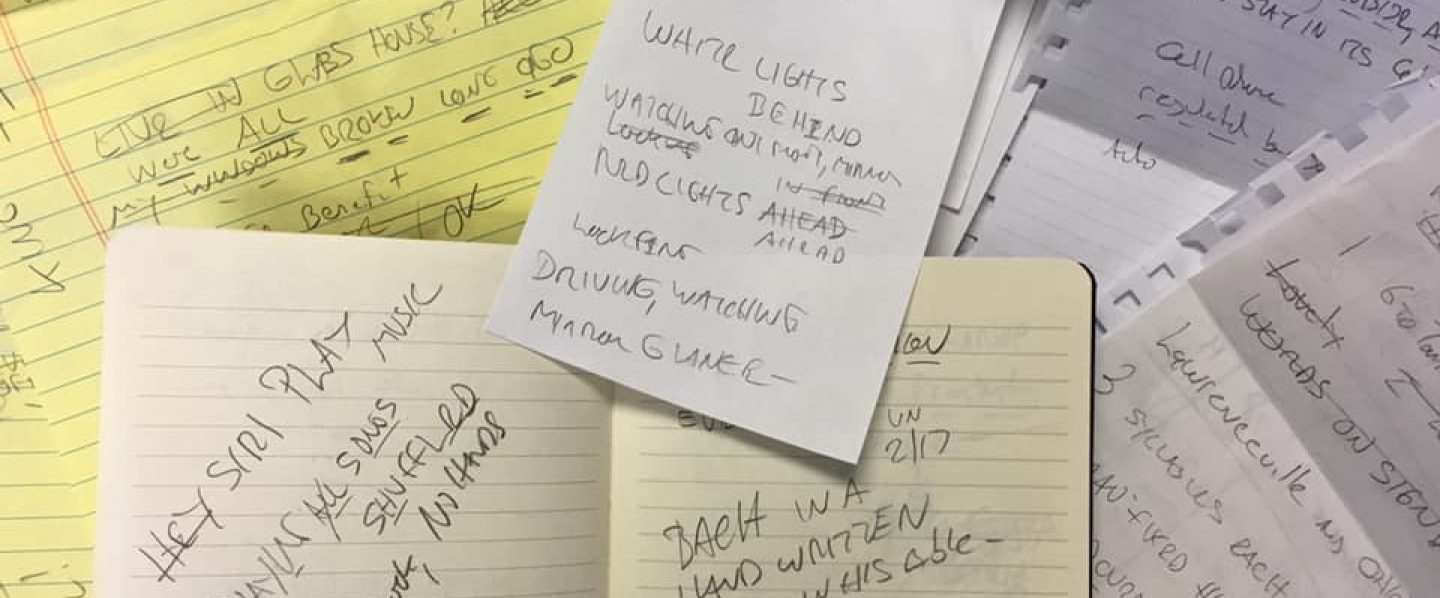
11.13.2023 – demand I make of

demand I make of
readers devote entire life
to reading my works
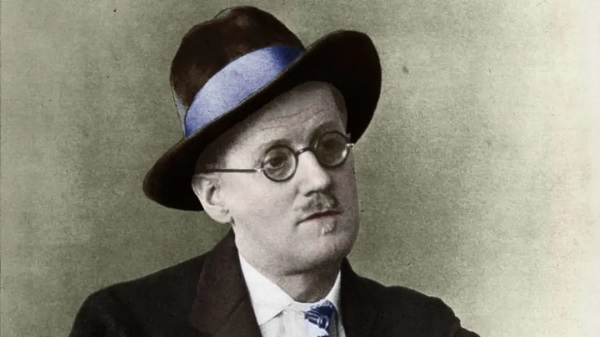
Joyce himself would probably be pleased to hear of these endeavors: he once described the perfect reader of Finnegans Wake as “suffering from an ideal insomnia”, and said: “The demand I make of my reader is that he should devote his entire life to reading my works.”

From the article, It never ends’: the book club that spent 28 years reading Finnegans Wake‘ by Lois  Beckett, a senior reporter for the Guardian who covers Los Angeles, with a focus on life, culture and communities. 

I take my hat off to anyone who takes James Joyce seriously.

Jazz great Roy Eldridge once said about the jazz great, Ornette Coleman that, “I listened to him high and I listened to him cold sober. I even played with him. I think he’s jiving baby.

I guess that’s me on Mr. Joyce.

But who am I?

Mr. Joyce has made a name for himself and somehow survives.

So I applaud the efforts of the the California reading group that spent longer reading Finnegans Wake than Joyce spent writing it.

And I resolved to give it another try.

I had a good friend who confided in me that every summer for years he resolved to read Joyce’s Ulysses and who get set up with a comfy seat outside with a bottle of whisky and never managed to get through the book before the whisky took him out of the game.

I opened up Finnegan’s Wake on my ereader and it took me all of 10 seconds to say OH GOOD GRIEF.

What am I missing?

Then I decided to have some fun with our modern tools.

First I copied this paragraph.

Bygmester Finnegan, of the Stuttering Hand, freemen’s maurer, lived in the broadest way immarginable in his rushlit toofarback for messuages before joshuan judges had given us numbers or Helviticus committed deuteronomy (one yeastyday he sternely struxk his tete in a tub for to watsch the future of his fates but ere he swiftly stook it out again, by the might of moses, the very water was eviparated and all the guenneses had met their exodus so that ought to show you what a pentschanjeuchy chap he was!) and during mighty odd years this man of hod, cement and edifices in Toper’s Thorp piled buildung supra buildung pon the banks for the livers by the Soangso. He addle liddle phifie Annie ugged the little craythur. Wither hayre in honds tuck up your part inher. Oftwhile balbulous, mithre ahead, with goodly trowel in grasp and ivoroiled overalls which he habitacularly fondseed, like Haroun Childeric Eggeberth he would caligulate by multiplicables the alltitude and malltitude until he seesaw by neatlight of the liquor wheretwin ’twas born, his roundhead staple of other days to rise in undress maisonry upstanded (joygrantit!), a waalworth of a skyerscape of most eyeful hoyth entowerly, erigenating from

Then I pasted it into Microsoft Word and graded it.

Let me report that Word DID NOT throw up or crash.

It found that the passage has 198 words and according to word, 47 are misspelled.

It got a reading scale of 32 with 100 being the easiest to understand.

All things considered, I felt 32 was a pretty high score.

It graded out at 19.7 or that you should be in the 19th grade to have this text as assigned reading.

Again, I thought that was pretty good.

Then I got really mean.

I pasted the text into an AI generator and asked it to REPHRASE the text and I got:

Bygmester Finnegan, a maurer from the Stuttering Hand, lived in a very broad way in his rushlit toofarback before the Joshua judges gave us numbers or Helviticus wrote Deuteronomy. One day, he stuck his head in a tub to observe his fate, but before he could take it out again, the water had evaporated and all the guenneses had left. This illustrates just how extraordinary a chap he was! Over many odd years, he piled buildung supra buildung on the banks of the Soangso in Toper’s Thorp for the local people. He also had a little craythur named Annie. With a trowel in hand, and overalls which he liked to wear, he would calculate the altitude and magnitude until he could see the liquor where it was born, and his roundhead staple of other days rose in undress maisonry upstanded, an awe-inspiring view of the skyline.

Then I asked AI to expand the text:

Bygmester Finnegan, of the Stuttering Hand, freemen’s maurer, lived in the broadest way immarginable in his rushlit toofarback for messuages before joshuan judges had given us numbers or Helviticus committed deuteronomy (one yeastyday he sternely struxk his tete in a tub for to watsch the future of his fates but ere he swiftly stook it out again, by the might of moses, the very water was eviparated and all the guenneses had met their exodus so that ought to show you what a pentschanjeuchy chap he was!) and during mighty odd years this man of hod, cement and edifices in Toper’s Thorp piled buildung supra buildung pon the banks for the livers by the Soangso. He addle liddle phifie Annie ugged the little craythur. Wither hayre in honds tuck up your part inher. Oftwhile balbulous, mithre ahead, with goodly trowel in grasp and ivoroiled overalls which he habitacularly fondseed, like Haroun Childeric Eggeberth he would caligulate by multiplicables the alltitude and malltitude until he seesaw by neatlight of the liquor wheretwin ’twas born, his roundhead staple of other days to rise in undress maisonry upstanded (joygrantit!), a waalworth of a skyerscape of most eyeful hoyth entowerly, erigenating from

Then I asked AI to summerize the text and I got:

Bygmester Finnegan was a freemen’s maurer who built many buildings in Toper’s Thorp. He was an intelligent man who could calculate the altitude and magnitude. He was also fond of his overalls, and was able to build a magnificent skyerscape of buildings.

Then I decided that for the feller who said, The demand I make of my reader is that he should devote his entire life to reading my works, I had given enough time of my morning.

More or less Mr. Duchamp’s R Mutt for literature.

But I have to think of the utter arrogance of the man.

Someone once worked out the math and said to me that if you read a book a week from age 10 to age 70 … you will read 3,120 books.

Those folks took 28 years of their reading on this one book.

Not saying of course that that was all that these folks read during this time.

I just think, well, that is just nutz.

Boy Howdy! buts that just wrong.

Wikipedia points (Oh the irony .. .quoting Wikipedia on James Joyce) out, “Due to its linguistic experiments, stream of consciousness writing style, literary allusions, free dream associations, and abandonment of narrative conventions, Finnegans Wake has been agreed to be a work largely unread by the general public”

But in the back of my head there is a little voice and I seem to remember that it is the voice of William Shirer, the CBS radio man and World War 2 witness, who said that he could never understand or bother with Finnegans Wake BUT he once attended a reading in Dublin and heard Joyce read it … and with his diction, phrasing and accents, it all became clear and wonderful.

Wish I could track down that thought and cite it.

I also wish I could have experienced it.

Listen to a recording of Charlotte’s Web read by EB White and you will understand.

As for Mr. Joyce, more power to him but I read him high and I read him cold sober.

I even collaborated with with him using AI.

I think he’s jiving baby.

11.12.2023 – universally

universally
not venerated or liked

nothing new in this

Adapted from the line, “This is not the way that Napoleon is seen in France. For most French people, whether they like it or not, Napoleon is a component part of their past and who they are now. This is not to say that he is universally venerated. There is nothing new in this.”, in the review, “Obsession, jealousies and Joséphine: has Ridley Scott’s new film captured the real Napoleon?” by Andrew Hussy in the Guardian.

Mr. Hussey takes in the vast catalogue of films made about Napoleon saying, “Napoleon Bonaparte is probably the most famous Frenchman of all time and is, according to academic sources, second only to Jesus as the most filmed figure in cinema history.” 

Mr. Hussey writes, “

 There are other difficulties in portraying Napoleon for an English-speaking audience. Most notably, in the English-speaking world, the prevailing view of Napoleon has been as a villainous caricature; he is either a jumped-up foreign baddie bent on invading Britain, or more sinisterly, a murderous war-mongering tyrant, a prototype for Adolf Hitler.

This is not the way that Napoleon is seen in France. For most French people, whether they like it or not, Napoleon is a component part of their past and who they are now. This is not to say that he is universally venerated. There is nothing new in this.”

And the review pivots from a review on Ridley Scott to the overall image and perception of Mr. Bonaparte today.

If anyone wants to draw historical allusions to anyone in the current news cycle, that is not for me.

Mr. Hussey does write, “… the true conflict lies in 21st century France – between those who still believe in the universal values of the Republic and those who argue that they are out of date and no longer suitable for a modern, multicultural country.”

While the French Revolution authored Liberté, égalité, fraternité, or ‘liberty, equality, fraternity’.

It was Mr. Bonaparte who adapted it to  liberté, ordre public or Liberty and .. Public Order.

But I digress.

I want to focus on the headline.

Has Ridley Scott’s new film captured the real Napoleon?

Hmmmmmmmmmmmmmmmmmmmmmmmm.

Already from just the previews I know that Mr. Scott had taken artist license with some of the scenes (see the battle on the ice.)

But who is there to answer the question?

Has Ridley Scott’s new film captured the real Napoleon?

I am reminded of the movie, “Sunrise at Campobello”.

A movie from the play of the same name that told the story of Franklin Roosevelt and the onset of polio that changed his life.

The movie came out when a lot of people, FDR’s wife, Eleanor Roosevelt was still alive.

Mrs. Roosevelt was portrayed by Greer Garson.

Mrs. Roosevelt was asked for her impressions of the movie.

As I remember it and that’s good enough for me, she said that she found the movie interesting and enjoyed the characters in the movie.

She did wonder who they were though as they, “Certainly weren’t the Roosevelt’s.”

111.11.2023 – life is nothing much

life is nothing much
to lose – young men think it is …
and we, we were young

Here dead we lie
Because we did not choose
To live and shame the land
From which we sprung.

Life, to be sure,
Is nothing much to lose,
But young men think it is,
And we were young.

Here dead we lie by AE Housman

French Cemetery at la Targette – World War One Battlefields

According to Wikipedia, “British poetry especially was transformed by the trauma of trench warfare and indiscriminate massacre.

The ‘War Poets’ constitute an imperative presence in modern British literature with significant writers such as Wilfred Owen, Robert Graves, Siegfried Sassoon, David Jones, Ivor Gurney, Rupert Brooke, Edward Thomas, and Isaac Rosenberg.

Their work, which combined stark realism and bitter irony with a sense of tragic futility, altered the history of English literature.

These scarred survivors reshaped the sensibility of modern verse.”

11.10.2023 – change the world and have

change the world and have
hell of a good time – planning
my day’s difficult

I took this image of the sunrise on Thursday as I drove over the Cross Island Parkway Bridge on Thursday.

I have to point out that had I waited another one or two seconds I would have reached the top of the bridge and the sun was the much more spectacular above the flat line of the Atlantic Ocean.

As I quote Alice Walker so often from her book the Color Purple, “I think it pisses God off if you walk by the color purple in a field somewhere and don’t notice it. People think pleasing God is all God cares about. But any fool living in the world can see it always trying to please us back.”

I have to append that to read, “I think it pisses God off if you walk by a sunrise somewhere and don’t notice it. People think pleasing God is all God cares about. But any fool living in the world can see it always trying to please us back.”

After taking the photo, I needed a quote on sunrise or getting up in the morning and I found this online, “I get up every morning determined to both change the world and have one hell of a good time. Sometimes this makes planning my day difficult.”

It was attributed to E. B. White.

That made me think, hmmmmmmmmmmmmmmmm.

It sounded familiar but I checked the wording and I had never used it before.

I checked online for the source and I checked and I checked and I checked until my checker was sore.

And then I found that Andy White never said “I get up every morning determined to both change the world and have one hell of a good time. Sometimes this makes planning my day difficult.”

But he did say:

If the world were merely seductive, that would be easy.

If it were merely challenging, that would be no problem.

But I arise in the morning torn between a desire to improve (or save) the world and a desire to enjoy (or savor) the world.

This makes it hard to plan the day.

I cited E. B. White: Notes and Comment, interview with Israel Shenker, July 11, 1969; New York Times; quoted in E. B. White: A Biography, by Scott Elledge, p. 3

And I did use that quote back in May.

And I used it one another haiku about sunrise viewed on a drive to work.

In May, I said:

rise in morning torn
desire improve, enjoy world
makes day hard to plan

Versus

change the world and have
hell of a good time – planning
my day’s difficult

I sure can imagine Mr. White having and saying he was having a hell of good time.

And I know of one scholar who says getting a quote kind of close but not word for word shows that maybe you didn’t memorize but that the thought certainly stuck in your head was more important.

Change the world and have one hell of a good time.

I might as well try.

11.9.2023 – lead a private life

lead a private life
mostly because nobody
is interested

Up until two years ago when he had met Shelley he had led a totally private life, mostly because, he now supposed, nobody was interested. There was a specific sorrow and yearning to find a truly remote deer cabin, and trade the off-season rent of it for some maintenance.

From the Brown Dog Novellas by Jim Harrison.

In all those dystopian worlds, taking the definition of the word from the online dictionary which is, relating to or denoting an imagined state or society where there is great suffering or injustice, one of the underlying themes is that the state or for lack of better term, Big Brother, is watching you.

In 1984, the hero has to get up and perform calisthenics in front of a ‘view-screen’ that can never be turned off.

Every once in awhile the on screen group leader will yell at the hero to get his butt in gear.

I could never get my arms around that part of dystopia.

If you have cameras watching everybody, you need someone to watch the cameras.

As Henry Kissinger said of Richard Nixon’s White House tapes, 10,000 hours of tapes will take 10,000 hours to listen to.

Why, how, could or would any one single person be worth tracking if you have a Government that is totally in control of everything.

Today someone can steal my identity.

Someone can steal my list of books that I have read.

Someone can get an image of the house where I live and sometimes that image has my car in the diveway.

Well, who wants to know?

Anyone who goes to the trouble of stealing my identity will have to deal with my credit history and my credit score along with the fact that they most likely will start getting letters from the University of Michigan Alumni Association asking for money.

Good luck dealing with all that.

Reminds me of a TV cop show where some kid walked off with someone’s stainless steel silverware and the cop told him that if brought that to a pawn shop, he would have to pay the pawnbroker to take it off his hands.

Back when I was going to Riverside Junior High School in Grand Rapids, Michigan where I grew up, I volunteered to work in the school library.

One day, sitting at the desk, I started opening drawers and found a stapled together bunch of papers.

Written on top were the words, “MASTER LIST – ALL STUDENTS.”

What it was was a mimeographed list of all the students at Riverside with their name, address, phone number as well as parents names.

I looked at for a minute and said to myself, “this is cool,” and I slipped the pages into a notebook and took it with me when I left that day.

Boy of boy, I felt like I had power.

I had everyone’s name.

I had everyone’s parent’s names.

I had their phone numbers and addresses.

And there was nothing I could do with it.

If I showed to anyone I knew it would get out that I had it.

Aside from looking at the information on some friends about who I already knew all that information.

It started to gnaw at me that I had the pages and I started thinking someone might notice they were gone from the library.

Then the pages started beating like the tell tale heart in the Poe short story.

I finally said to myself, ‘SO NOW WHAT? WHAT MIGHT YOU DO WITH ALL THIS INFORMATION?”

And the next shift I had in the library, I put it back.

SO much information.

I guess I depend on there being so much information out there that my life can remain private.

Not so much that it isn’t out there, but, gee whiz, who would be interested in me?