it is silly stuff that has some relevance with nothing happening
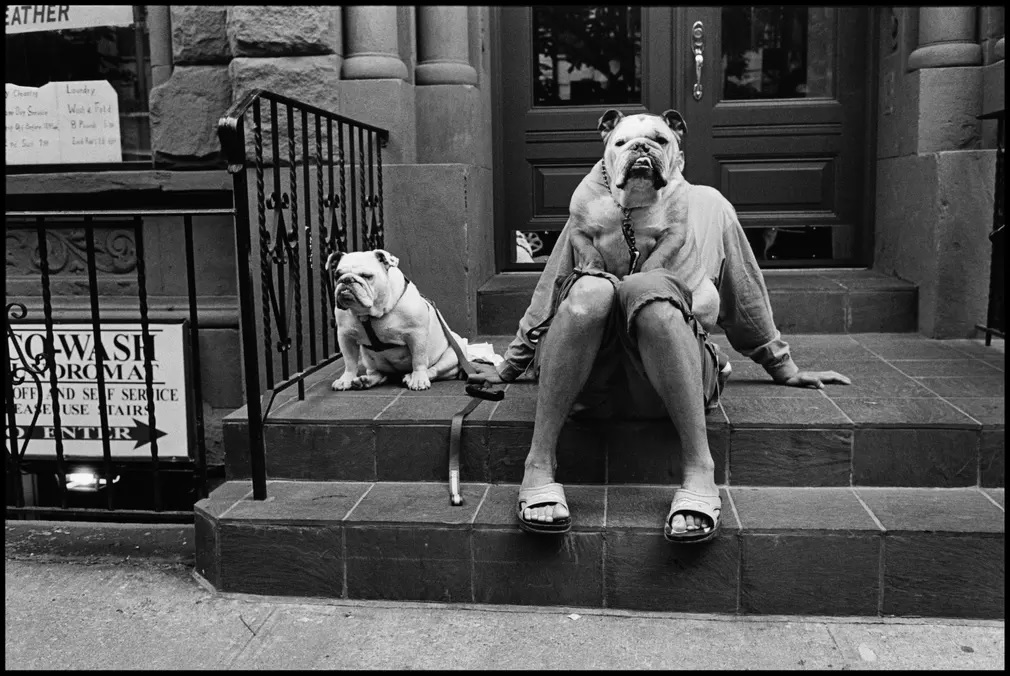
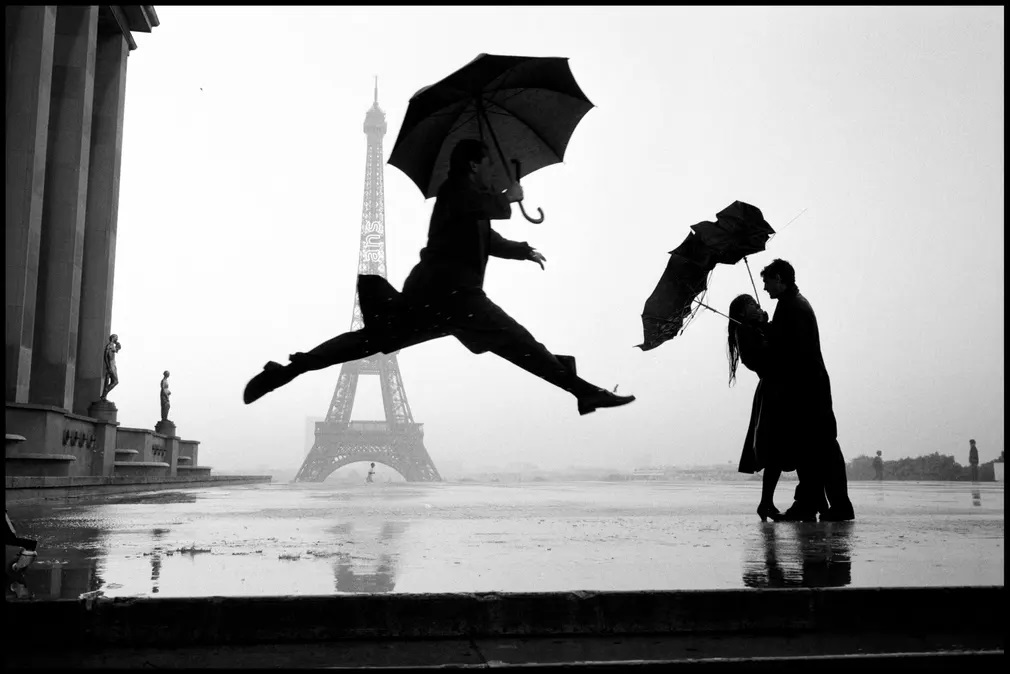
Erwitt downplayed his role as a photographer, often shrugging off pretension or chalking it up to happenstance: “It is silly stuff that I think has some relevance with nothing really important happening, but somehow being able to communicate some kind of fun,” he once said. There’s a lightness of touch that characterises even his most serious images, and he was a master of ironic juxtapositions and comic charm.
Erwitt worked into his 90s, and was ever practical about his art. “Photography is pretty simple stuff. You just react to what you see, and take many, many pictures,” he told the Guardian in 2020
there is no hero more important than the goat triumph and defeat
Adapted from the paragraph:
Yet the heart of the gig is straightforward. “It’s storytelling,” Esocoff says. “My job is to make the audio and the video match as closely as I can.” He clings to pillars of classic narrative: cause and effect, triumph and defeat. “If the QB hits the receiver for 75 yards up the seam, it’s probably because he had plenty of time to throw. So we’re going to find a shot that shows you the pass protection. You want to show both sides of an event. I always say, the hero on a play is no more important than the goat.
The most spectacular show is Sunday Night Football for those too young to remember Monday Night Football or the College game of the week when only ONE game was on.
But the rule stays the same.
For every winner, there is a loser.
Despite the little league participation trophy, some one goes home unhappy.
Sometimes I think this might be a better place if this was held to a little more often of late.
Sure sure Bobby Thompson hit the home run that led to the famous radio call, ‘the GIANTS WIN THE PENNANT – THE GIANTS WIN THE PENNANT.’
But it was Ralph Branca who through the pitch that led to the home run and took the Brooklyn Dodgers out of the World Series.
I am reminded of a story that I cannot find, that Bill Veeck always wanted to have an old timers game and arrange for Bobby Thompson to face Ralph Branca one more time.
Veeck said he wanted to do it just to see if Branca would bean Thompson.
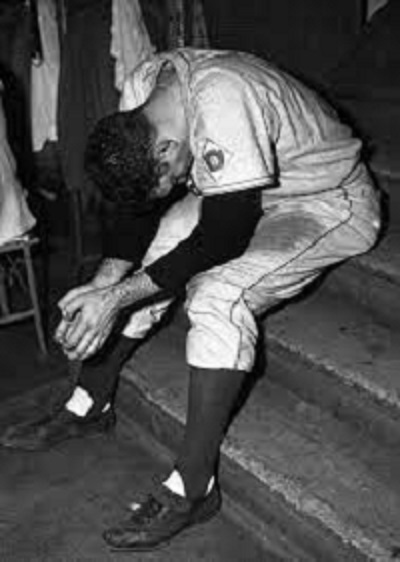
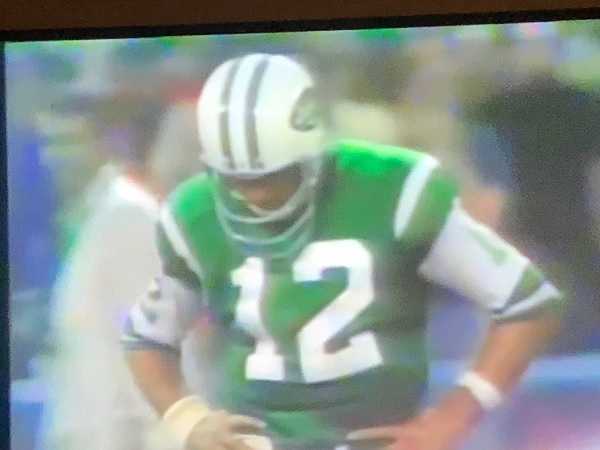
the bummage is a more dramatic picture than the celebration
From the paragraph:
Yet the heart of the gig is straightforward. “It’s storytelling,” Esocoff says. “My job is to make the audio and the video match as closely as I can.” He clings to pillars of classic narrative: cause and effect, triumph and defeat. “If the QB hits the receiver for 75 yards up the seam, it’s probably because he had plenty of time to throw. So we’re going to find a shot that shows you the pass protection. You want to show both sides of an event. I always say, the hero on a play is no more important than the goat. So right away I’ll be in the ear of my cameramen: ‘56 blue is the goat.’ A word I use a lot is ‘bummage.’ I want to see the bummage. Because a lot of times the bummage is a more dramatic picture than the celebration.”
From the article, Behind the Scenes of the Most Spectacular Show On TV by Jody Rosen, in the New York Times on Dec. 2. 2023.
I loved this article and as anyone who remembers the glory days of Monday Night Football, it sounds very familiar, especially the line, I want to see the bummage. Because a lot of times the bummage is a more dramatic picture than the celebration.
This thought was made famous by the famous camera shot of Joe Namath showing exteme bummage.
According to legend, the shot was called by the man who invented Monday Night Football, Roone Arledge, who happened into the control truck at the moment and called for the camera … Maybe it happened that way.
Maybe it didn’t.
But I’ll hold with it.
And as I life long Detroit Lions fan, I know bummage when I see it.
more down-to-earth terms … composed for music-lovers refresh their spirits
I am not sure when I first heard the music known as the ‘Goldberg Variations’ by J.S. Bach.
Much like the ending in Casablanca, I don’t remember when I didn’t know how the movie ended and I don’t remember not knowing the Goldberg Variations.
I envy my wife because, one, she didn’t know the ending to Casablanca and was shocked to see Rick not get on the plane and two, she can’t remember how it ends, so she is consistently re-surprised by the ending.
I wish I could remember what it was like to see that for the first time.
And I wish I could remember what it was like to hear the Goldberg Variations for the first time.
I realized I would never be able to play the piano after I took piano lessons when I was the 3rd grade.
Me taking piano lessons had not be planned but happened by accident.
My sister Lisa had been signed up for lessons as my other two sisters, Mary and Janet had both had lessons from ‘Ol Lady Schonfeld.
Then Lisa started to play the violin and she told Mom that, much as she loved the piano, she felt she did not have time for two instruments.
Well, those lessons had been paid for so I was called in and told that from now on, no more carefree Wednesday afternoons, I would be going to see ‘Ol Lady Schonfeld.
Her real name was Miss Schonfield and I have no idea how old she was but all I ever thought of her was as ‘Ol Lady Schonfeld.
‘Ol Lady Schonfeld was the scariest person I have ever met in my life and as proof, talking about her with Lisa, who is a really good person, admitted, she too was scared to death of her.
But I went along with the idea without complaint and goodness knows I was good at complaining in those days.
In the back of my mind it seems I had the idea that soon I would be sitting down at the piano and effortlessly calling the notes of the Goldberg Variations out the keys much to amazement of everyone in my family, so I figured why not.
With genuine enthusiasm I got out of the car and ran up the steps to ‘Ol Lady Schonfeld ‘s house and knocked on the door.
The door opened like something out of Dracula movie and I swear she said, “Von’t you Come innnnnnnnn,” just like Bela Lugosi, and I entered a room where time had been stopped for many years.
I swear I could hear timid little voices calling from the walls, run … run now.. get out of here, but I shook them off and sat at the piano bench ready to learn.
That was my first mistake.
Lesson’s didn’t start at the piano.
They started at her dining room table where she taught me to drop my hand straight down and collapse my fingers into the proper, relaxed position to have my hands on the keyboard.
You did not drop your hand from your wrist, but from your elbow.
I positioned my hand and dropped it down on the table with what I thought, a graceful lilt.
‘Ol Lady Schonfeld tightened her lips and demonstrated the drop once more and then told me to do it again.
She kind of squinted as she crossed her arms and glared at me as I practiced.
“Again”, she would say then shake her head and say, “again!”
And I would do it again and again, and again and again, I would do it wrong.
That hand dropping took up the first lesson.
It lasted one hour and I saw my Mom’s station wagon out front and ‘Ol Lady Schonfeld was as grateful as I was that the hour was over as I felt I had aged a year.
My Mom asked how it went.
I replied, “I learned to drop my hand.”
Mom said you had to start somewhere.
And I thought about it and decided Mom was right and was ready for another go.
The next Wednesday came and I ran up the steps of ‘Ol Lady Schonfeld’s house and once inside, again sat at the piano.
She kinda glared a minute then crossed her arms and set, ‘Let me see you drop your hands.’
And I held out my right hand and let it fall on the piano keys and collapse on my fingers.
Which made a pretty loud and satisfying bang
I turned and looked at ‘Ol Lady Schonfeld with a big smile and she turned red and her eyes got big and with her arms crossed, she squeezed her upper arms until the muscles bulged (she must have weighed about 57 pounds).
Then she uncrossed her arms and raised a bony finger and pointed at me and said, “You didn’t practice!”
I remember looking around the room like people were going to jump out and yell surprise!
This had to be a joke, right?
But it wasn’t.
The only things in that room were me, that piano and one very mad ‘Ol Lady Schonfeld.
Things went down hill from there.
I think something clicked in my mind that day about the value of upper education.
But we slogged on together side by side on the piano bench.
Me trying so hard, not to play right but to play in such a way that she wouldn’t touch my hands with those bony fingers that could turn a glass of water into ice.
I do remember that I learned a little tune at some point but I never was able to grasp the barest rudiments of playing a piano.
I also found that sitting on the piano bench, I would be so nervous that my legs would start swinging like a pendulum and the arc would get bigger and bigger until I kicked the piano with the loud bang that set ‘Ol Lady Schonfeld into a tizzy for about 5 minutes.
It wasn’t long until I realized the more often I kicked the piano, the less often she was trying to teach me.
After a couple of months, we both realized that this wasn’t going to work.
Me, I more or less quit even pretending to have practiced.
And ‘Ol Lady Schonfeld?
Well, sorry to say, she had a stroke.
Sometimes these things work out.
I understand that she made a good recovery but on Doctors orders she had to give up teaching the piano.
Sometimes these things really work out.
I never made another serious attempt at learning a musical instrument.
And it was years later that it was discovered that I had no natural sense of rhythm.
I can’t even clap in time to the Michigan Fight Song.
All those times of gym teachers being mad at me for being out of step or unable to bang my rhythm blocks with the rest of class were all real, not me going for a laugh.
How does Mr. Ólafsson explain the effect of Bach’s music?
He quotes Mr. Bach and the words Bach wrote on the score.
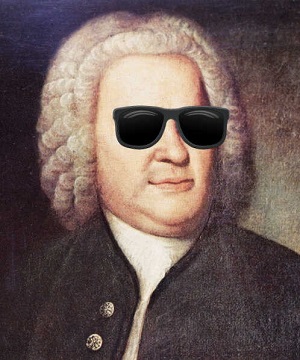
Mr. Ólafsson writes, “Or, in the rather more down-to-earth terms that Bach himself used to describe his variations on the title page of the original 1741 edition, they truly are a work “composed for music-lovers to refresh their spirits”.
Mr. Ólafsson writes, “The one thing that rivals Bach’s complete intellectual mastery of his craft is his inspired, creative playfulness. When we play and listen to the Goldberg Variations, we are also in the company of Bach the cheerful, at times ecstatic, master improviser, the greatest keyboard virtuoso of his time.“
When I was younger the recording of the Goldberg Variations you just HAD to listen to was the recording by Glenn Gould.
Mr. Gould was a gifted musician but with the reputation of someone wrapped so tight he just might burst.
I don’t know.
Maybe he had ‘Ol Lady Schonfeld as a teacher.
Maybe he had ‘Ol Lady Schonfeld as a teacher and LIKED IT.
For me, listening to the Gould recording, you can hear the anguish, the tense nature.
Maybe I am listening with a suspect animus but that’s what I hear, tho I love the recording.
I don’t know but I’ll tell you this.
I remember reading about Duke Ellington and John Coltrane collaborated on an album.
They would finish a take and Duke would sit back and say that’s a wrap.
Mr. Coltrane would shake his head and say, one more time.
The story went that by they 30th take, Duke would almost be in tears and Mr. Coltrane would still be searching for ‘that’ sound.
these are tawny days bashful mornings hurl gray mist on stripes of sunrise
These are the tawny days your face comes back The grapes take on purple the sunsets redden early on the trellis. The bashful mornings hurl gray mist on the stripes of sunrise. Creep, silver on the field, the frost is welcome Run on, yellow halls on the hills, and you tawny pumpkin flowers, chasing your lines of orange Tawny days and your face again
Tawny by Carl Sandburg in his book, Smoke and Steel, New York: Harcourt, Brace and Co., (1920).
The website, https://www.vocabulary.com/, defines tawny as an adjective meaning of a light brown to brownish orange color; the color of tanned leather.
The online Merriam-Webster says that tawny is from the Middle English, from Anglo-French tané, tauné, literally, tanned, from past participle of tanner to tan and that the first recorded use of the word is from the 14th century.
The book of Genesis, Chapter 1, verses 2-5 state:
And God said, “Let there be light,” and there was light. God saw that the light was good, and he separated the light from the darkness. God called the light “day,” and the darkness he called “night.” And there was evening, and there was morning—the first day.
For myself, when the Bible reports he separated the light from the darkness, I think that God set up what we know as the planet earth and when he separated the light from the darkness, God gave the planet a push that started it in motion so that on the planet, day was separated from night by the rotation of the planet.
From that moment all laws of what we now know as physics came into play.
Neither here nor there, that means, for me anyway, that God had a timer running as the earth revolved on its axis and when the Bible reports “… the first day”, God knew just what he meant, but I digress.
Anyway, at the end of that first day, the light sank below the horizon and on the morning of the 2nd day the light came up.
I am betting that when that light came, it was a tawny day and anyone who might be there to see it would see thatthe bashful mornings hurl gray mist on the stripes of sunrise.
My wife is not fond of these sunrise pictures I take with my iPhone because she knows that to take them, I am driving one handed, with my other hand holding my iPhone as I cross the Cross Island Bridge on Hilton Head Island.
I know it’s goofy but what can one do?
We live in the low country and it is flat.
There are few views to be had anywhere.
The Cross Island Bridge is one of few places you can see anything of the area.
And, as Augustus McCrae said the book Lonesome Dove, “, and “…if he missed sunrise, he would have to wait out a long stretch of heat and dust before he got to see anything so pretty.”