12.4.2022 – obsession fueled flames

obsession fueled flames
a terrible idea
social media

From the article, The Age of Social Media Is Ending It never should have begun. By Ian Bogost (The Atlantic = Novemnber, 10, 2022) where Mr. Bogost writes:

Rounding up friends or business contacts into a pen in your online profile for possible future use was never a healthy way to understand social relationships. It was just as common to obsess over having 500-plus connections on LinkedIn in 2003 as it is to covet Instagram followers today. But when social networking evolved into social media, user expectations escalated. Driven by venture capitalists’ expectations and then Wall Street’s demands, the tech companies – Google and Facebook and all the rest – became addicted to massive scale. And the values associated with scale – reaching a lot of people easily and cheaply, and reaping the benefits – became appealing to everyone: a journalist earning reputational capital on Twitter; a 20-something seeking sponsorship on Instagram; a dissident spreading word of their cause on YouTube; an insurrectionist sowing rebellion on Facebook; an autopornographer selling sex, or its image, on OnlyFans; a self-styled guru hawking advice on LinkedIn. Social media showed that everyone has the potential to reach a massive audience at low cost and high gain – and that potential gave many people the impression that they deserve such an audience.

The flip side of that coin also shines. On social media, everyone believes that anyone to whom they have access owes them an audience: a writer who posted a take, a celebrity who announced a project, a pretty girl just trying to live her life, that anon who said something afflictive. When network connections become activated for any reason or no reason, then every connection seems worthy of traversing.

That was a terrible idea. As I’ve written before on this subject, people just aren’t meant to talk to one another this much. They shouldn’t have that much to say, they shouldn’t expect to receive such a large audience for that expression, and they shouldn’t suppose a right to comment or rejoinder for every thought or notion either. From being asked to review every product you buy to believing that every tweet or Instagram image warrants likes or comments or follows, social media produced a positively unhinged, sociopathic rendition of human sociality. That’s no surprise, I guess, given that the model was forged in the fires of Big Tech companies such as Facebook, where sociopathy is a design philosophy.

To revisit some of the key phrasing here:

Social media showed that everyone has the potential to reach a massive audience at low cost and high gain – and that potential gave many people the impression that they deserve such an audience.

On social media, everyone believes that anyone to whom they have access owes them an audience.

… media produced a positively unhinged, sociopathic rendition of human sociality.

… the model was forged in the fires of Big Tech companies such as Facebook, where sociopathy is a design philosophy.

People just aren’t meant to talk to one another this much.

They shouldn’t have that much to say.

That was a terrible idea.

Or so says this feller writing this blog.

11.30.2022 – feel joy suddenly

feel joy suddenly
unexpectedly do not
hesitate give in

Based on the words and thoughts expressed in the abstract poem, Don’t Hesitate by Mary Oliver.

If you suddenly and unexpectedly feel joy,
don’t hesitate. Give in to it. There are plenty
of lives and whole towns destroyed or about
to be. We are not wise, and not very often
kind. And much can never be redeemed.
Still, life has some possibility left. Perhaps this
is its way of fighting back, that sometimes
something happens better than all the riches
or power in the world. It could be anything,
but very likely you notice it in the instant
when love begins. Anyway, that’s often the case.
Anyway, whatever it is, don’t be afraid
of its plenty. Joy is not made to be a crumb.

With apologies, I want to repeat the last lines, in what my sister, Lisa, calls ‘my short sentence style.’

It could be anything, but very likely you notice it in the instant
when love begins.

Anyway, that’s often the case.

Anyway, whatever it is, don’t be afraid of its plenty.

Joy is not made to be a crumb.

As for my ‘style’ I am reminded of the story of Winston Churchill getting a hair cut.

The barber asked, ‘What style?’

Too which Mr. Churchill replied with something like, “A man of my limited resources cannot be called upon to have a style. Just get on with it.’

As for my sister Lisa.

She is the one who told me about Mary Oliver.

11.29.2022 – of virtuosic

of virtuosic
reticence, a silk of sound
inward and wistful

Music critics get to use the best words.

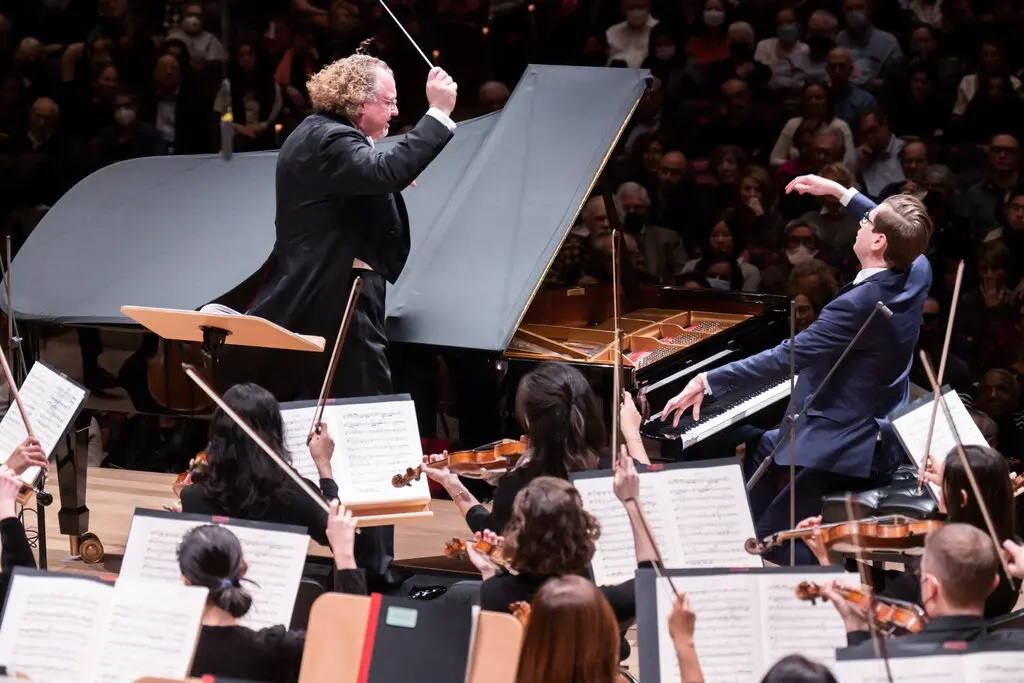
In a recent review of the New York Philharmonic titled, At the Philharmonic: a Taste of Holiday Bounty: Stéphane Denève leads a program of extravagantly colorful French works, with the pianist Víkingur Ólafsson as the soloist in a Ravel concerto, Zachary Wolfe GOT TO WRITE:

It’s not that his touch is diffuse; it’s as clean as marble. And it’s not that the tempos he and Denève chose for the framing movements were slower than normal. But the effect Ólafsson got throughout, of a kind of virtuosic reticence, could be described in the same words I used for his performance in February: a “silk of sound, inward-looking and wistful in both major and minor keys, in both andante and allegro.

1st to have a job where you are paid to go to concerts in New York City.

Then to have job where you are paid to go to concerts in New York City and then be allowed, no, expected, to write about these concerts using some of the best words and the best USE of words that you can imagine.

Thanksgiving came a day early at the New York Philharmonic this year: the calories, the juicy fat, the whipped cream, the fun, the sense of endless bounty

Some pianists lean on the factory-machine regularity, the bright lucidity, of those parts

… opened the concert with an extravagance that offers proof of the survival of the orchestrational panache of the French tradition: its lurid lushness and sly squiggles, brassy explosions and sensual strings

The Philharmonic played well throughout, riding the many waves and swerves of intensity and pigment, from dewy dawns to mellow dusks

IT IS JUST NOT FAIR.

But I have this blog and I can write about the words.

And I can applaud the use of the words and thoughts.

And I can fell a little smug.

Mr. Wolfe notes that the soloist, Víkingur Ólafsson, played a tender Rameau encore.

I bet I know what he played.

I bet I know because in a post back in April, I recommended that you listen to playing Rameau.

I made another bet in that post.

I bet that if you listened to the piece through the link I had on the page, I bet that  you would instantly become happier.

I hold with that statement today.

11.21.2022 – show redirected

show redirected
and rehabilitated
reconfigured life

It’s sad, more than anything.

So starts the article, Pete Rose hasn’t given Rob Manfred any reason to change his mind by Ken Rosenthal.

Mr. Rosenthal writes, “The average person who has not followed along closely might sympathize with Pete Rose, believing he has suffered long enough. That at 81, it’s time for baseball to forgive and forget. Reinstate him. Make him eligible for the Hall of Fame.”

Except with Rose, it’s never that simple.

Mr. Rose was banned from baseball for life or until he could show a redirected, reconfigured, rehabilitated life.

Those words come from the pen of then Commissioner Bart Giamatti.

He is the feller who wrote a book about baseball titled, Take Time for Paradise.

I have long been a fan of Commissioner Giamatti and I have to admire the alliteration he achieved with the that sentence.

A redirected, reconfigured, rehabilitated life.

Redirected.

Reconfigured.

Rehabilitated life.

BANG – BANG – BANG!

It should almost be a standard when a jail sentence is read out in court.

The reason for a life time ban?

Mr. Rose was betting on baseball games.

Apparently games he was playing in or taking part as the team Manager.

Even today that might not be acceptable.

Back in 1989, it was far far beyond the pale.

Because of his lifetime ban, Mr. Rose in not eligible for the National Baseball Hall of Fame.

Mr. Rose has often said how are going to keep 4,256 hits out of the hall?

Then Mr. Rose goes how to show you how, or at least, the why.

And Mr. Rosenthal chronicles all those ways so I don’t have too.

I have commented on this before.

I think I have a solution to the problem, how do you keep 4,256 hits out of the Hall of Fame.

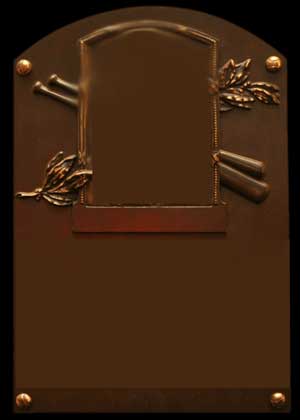
Give Pete a plaque.

A blank one.

There is a precedent.

There is a building at the United States West Point Military Academy known as the ‘Old Chapel’.

Inside the chapel are 14 marble plaques.

One for George Washington and each of his Generals in the Revolutionary War.

There is one blank plaque.

That plaque would have been for General Benedict Arnold.

Arnold achieved his own measure of fame in that just the mention of his name pretty much sums up why his plaque is blank.

And if we ever forget, the blank plaque and explanation is there to remind us.

So give Pete Rose a plaque in the Hall of Fame.

A blank one.

So when kids see it and point and ask why its blank.

We can say that would have been for Pete Rose.

For Pete Rose … had he not …

It’s sad, more than anything.

11.19.2022 – in a certain sense

in a certain sense
it’s inconsequential, but
still consequential

Of course what inspired this haiku was the all important discussion facing the world today of where, EXACTLY, did Abraham Lincoln stand when he gave the speech known as the Gettysburg Address.

Four score and 79 years ago this Saturday, Abraham Lincoln stood up in the newly dedicated cemetery for Union soldiers who fell at Gettysburg and delivered one of the most famous speeches in American history.

So begins the article, A Lingering Gettysburg Battle: Where Did Lincoln Stand? by By Jennifer Schuessler.

Ms. Schuessler reports on the work of Christopher Oakley, a former Disney animator turned Civil War sleuth, who has combined intense analysis of 19th-century photographs with 21st-century 3-D modeling software to argue were Lincoln was standing in 1863.

The article states that. “Christopher Gwinn, the supervisory ranger for interpretation and education at Gettysburg National Military Park, said that where Lincoln stood was “the No. 1 question” visitors to the cemetery asked.

“In a certain sense, it’s inconsequential, but on the other hand it’s incredibly consequential,” he said. “When visitors come, they want to stand in the spot where Lincoln stood. It takes him from being that marble god at the memorial in Washington, D.C., and makes him flesh and blood.”

I liked that.

In a certain sense, it’s inconsequential, but on the other hand it’s incredibly consequential.

There are fans.

There are enthusiasts.

There are fanatics.

And then there are those folks who are just plain nutz on a given subject.

Where and what happened in the Civil War is one of those subjects.

I remember watching a show where some feller passionately and vehemently took apart the statements of one Civil War officer’s memoirs of actions on Little Round Top at this self same Battle of Gettyburg.

This feller produced reports, letters, vintage photographs and other EYEWITNESS ACCOUNTS to prove beyond any doubt that what the officer said in his memoirs was not just false but impossible to have happened as the officer described.

I can still picture in my mind the satisfaction on the fellers face when he said something like, ‘… as I have proven, and the evidence backs me up, this officer had to, HAD TO have been at least 200 feet further back on the side of Little Round Top than where he claimed to be.’

200 feet.

I am NOT making this up nor am I going to search out the video on YouTube for you.

In a certain sense, it’s inconsequential, but on the other hand it’s incredibly consequential.

Mr. Oakley has come up with six … SIX … accepted photographs of Lincoln making the Gettysburg Address .. or just about to.

I marvel at this as I remember the story that the since the President spoke for under 3 minutes, non of the photographers were able to get a picture of the moment.

And that is still true, no photograph exists of the moment but there are now 6 photographs of the setting and the gathering at the Gettysburg Cemetary.

A diagram by Oakley, showing where the photographers who took four of the six known photographs of the cemetery dedication were standing. The indicate the positions for Peter Weaver (1 and 2), Alexander Gardner (3) and David Bachrach (4). Oakley’s placement of the platform is visible in the center. (NYTIMES)

Mr. Oakley has done his best to place the cameras and then cross tri angulate the locations to pinpoint where the speakers platform was located.

It is fascinating stuff to stand where Lincoln stood.

My family experience of standing where Mr. Lincoln stood includes a trip with the Wife and Kids to Springfield, Illinois and the Lincoln house.

On the tour, my five year daughter D’asia hung from the railing that kept people in line while touring the house and her feet went through the rails onto the carpet on the other side of the railing.

The Park Ranger stopped his little speech to yell out ‘WE DON’T STAND ON THE RUGS IN THE LINCOLN HOUSE!’

To which I wanted to reply, ‘Look … you are yelling at a little black kid in Lincoln’s house … think about it.’

But I didn’t.

In a certain sense, it’s inconsequential, but on the other hand it’s incredibly consequential.

At least Mr. Oakley is working with photographs.

What I mean is, staying with what was reported in the Civil War consider this.

This is from an action report for the famous 3rd Michigan Volunteer Infantry.

The report by Lt. Col. Edwin S. Pierce states:

On the morning of the 3rd, we moved forward to the first position occupied on the 2d, and we formed the same, where we remained until about 3 p.m. Thence we were moved off by the right flank at double-quick to where the enemy was trying to pierce our center. The regiment was here detached, and sent to support the 2nd division, Second Corps, where we assisted in repulsing the enemy who had succeeded in breaking through a portion of their line.

The regiment occupied the front line until the morning of the 5th, when we rejoined our brigade.

Those few words are an eyewitness account of what would later become known as Pickett’s Charge on July 3rd, 1863 at the Battle of Gettysburg, less than a mile away from where Mr. Lincoln spoke.

To get back to WHERE Mr. Lincoln spoke.

In a certain sense, it’s inconsequential, but on the other hand it’s incredibly consequential.

And I like to say and I do often, how right Mr. Lincoln was about so many things.

But in this speech, this Gettysburg Address, Mr. Lincoln was so wrong on one thing.

That one thing being when he said, “The world will little note, nor long remember what we say here.”

And I truly hope he isn’t wrong when he said, “ it can never forget what they did here.”

It is rather for us, the living, that we here be dedicated to making sure no one does forget.

It’s incredibly consequential.