nuances spoken delicate change – cloud and blue and flimmering sun
On a tip, the wife and I visited Sands Beach at Port Royal, South Carolina.
As the crow flies, its 13 miles from where we live.
To drive there, around the swamps and marches of the low country of South Carolina, its a 40 minute, 27 mile drive.
It is located at the southern tip of Port Royal Island where Battery Creek breaks off from the Beaufort River a few miles above Port Royal Sound.
The beach has a walkway along Battery Creek and a 4 story observation tower.
The view from the top of this tower helps you understand the meaning of ‘the low country.’
The day we were there, the water was still and blue and the surface reflected the sky and clouds in a way that defeated use of any words in the my dictionary.
I was reminded of the writing of Jenny Lawson who in her book, Furiously Happy, used the word, Concoctulary, which she footnoted, saying ” … a word that I just made up for words that you have to invent because they didn’t yet exist.”
Ms. Lawson doesn’t just invent words that you have to invent because they didn’t yet exist, she made a word for the words that you have to invent because they didn’t yet exist.
Concoctulary.
As Ms. Lawson writes, “… It’s a portmanteau of “concocted” and “vocabulary.” I was going to call it an “imaginary” (as a portmanteau of “imagined” and “dictionary”) but turns out that the word “imaginary” was already concoctularied, which is actually fine because “concoctulary” sounds sort of unintentionally dirty and is also great fun to say. Try it for yourself. Con-COC-chew-lary. It sings.”
So I needed a word for the way the clouds reflected in the blue still water of Batter Creek off of Sands Beach in Port Royal and I found flimmering.
Try it for yourself.
It sings.
No surprise to say that I didn’t invent it though.
Carl Sandburg did.
In his poem, Dream Girl, in the section Other Days of the book, Chicago Poems as reprinted in the Complete Poems of Carl Sandburg, Mr. Sandburg wrote:
You will come one day in a waver of love, Tender as dew, impetuous as rain, The tan of the sun will be on your skin, The purr of the breeze in your murmuring speech, You will pose with a hill-flower grace.
You will come, with your slim, expressive arms, A poise of the head no sculptor has caught And nuances spoken with shoulder and neck, Your face in pass-and-repass of moods As many as skies in delicate change Of cloud and blue and flimmering sun.
Yet, You may not come, O girl of a dream, We may but pass as the world goes by And take from a look of eyes into eyes, A film of hope and a memoried day.
Flimmering.
As many as skies in delicate change Of cloud and blue and flimmering sun.
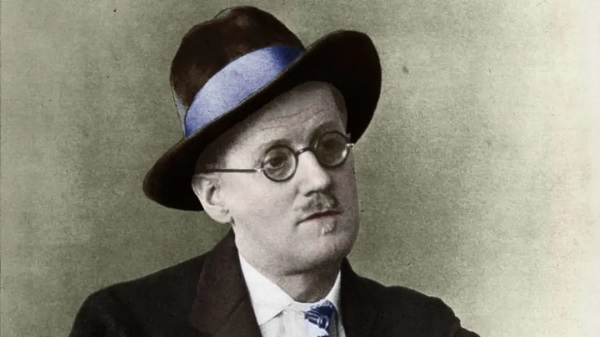
demand I make of readers devote entire life to reading my works
Joyce himself would probably be pleased to hear of these endeavors: he once described the perfect reader of Finnegans Wake as “suffering from an ideal insomnia”, and said: “The demand I make of my reader is that he should devote his entire life to reading my works.”
I take my hat off to anyone who takes James Joyce seriously.
Jazz great Roy Eldridge once said about the jazz great, Ornette Coleman that, “I listened to him high and I listened to him cold sober. I even played with him. I think he’s jiving baby.“
I guess that’s me on Mr. Joyce.
But who am I?
Mr. Joyce has made a name for himself and somehow survives.
So I applaud the efforts of the the California reading group that spent longer reading Finnegans Wake than Joyce spent writing it.
And I resolved to give it another try.
I had a good friend who confided in me that every summer for years he resolved to read Joyce’s Ulysses and who get set up with a comfy seat outside with a bottle of whisky and never managed to get through the book before the whisky took him out of the game.
I opened up Finnegan’s Wake on my ereader and it took me all of 10 seconds to say OH GOOD GRIEF.
What am I missing?
Then I decided to have some fun with our modern tools.
First I copied this paragraph.
Bygmester Finnegan, of the Stuttering Hand, freemen’s maurer, lived in the broadest way immarginable in his rushlit toofarback for messuages before joshuan judges had given us numbers or Helviticus committed deuteronomy (one yeastyday he sternely struxk his tete in a tub for to watsch the future of his fates but ere he swiftly stook it out again, by the might of moses, the very water was eviparated and all the guenneses had met their exodus so that ought to show you what a pentschanjeuchy chap he was!) and during mighty odd years this man of hod, cement and edifices in Toper’s Thorp piled buildung supra buildung pon the banks for the livers by the Soangso. He addle liddle phifie Annie ugged the little craythur. Wither hayre in honds tuck up your part inher. Oftwhile balbulous, mithre ahead, with goodly trowel in grasp and ivoroiled overalls which he habitacularly fondseed, like Haroun Childeric Eggeberth he would caligulate by multiplicables the alltitude and malltitude until he seesaw by neatlight of the liquor wheretwin ’twas born, his roundhead staple of other days to rise in undress maisonry upstanded (joygrantit!), a waalworth of a skyerscape of most eyeful hoyth entowerly, erigenating from
Then I pasted it into Microsoft Word and graded it.
Let me report that Word DID NOT throw up or crash.
It found that the passage has 198 words and according to word, 47 are misspelled.
It got a reading scale of 32 with 100 being the easiest to understand.
All things considered, I felt 32 was a pretty high score.
It graded out at 19.7 or that you should be in the 19th grade to have this text as assigned reading.
Again, I thought that was pretty good.
Then I got really mean.
I pasted the text into an AI generator and asked it to REPHRASE the text and I got:
Bygmester Finnegan, a maurer from the Stuttering Hand, lived in a very broad way in his rushlit toofarback before the Joshua judges gave us numbers or Helviticus wrote Deuteronomy. One day, he stuck his head in a tub to observe his fate, but before he could take it out again, the water had evaporated and all the guenneses had left. This illustrates just how extraordinary a chap he was! Over many odd years, he piled buildung supra buildung on the banks of the Soangso in Toper’s Thorp for the local people. He also had a little craythur named Annie. With a trowel in hand, and overalls which he liked to wear, he would calculate the altitude and magnitude until he could see the liquor where it was born, and his roundhead staple of other days rose in undress maisonry upstanded, an awe-inspiring view of the skyline.
Then I asked AI to expand the text:
Bygmester Finnegan, of the Stuttering Hand, freemen’s maurer, lived in the broadest way immarginable in his rushlit toofarback for messuages before joshuan judges had given us numbers or Helviticus committed deuteronomy (one yeastyday he sternely struxk his tete in a tub for to watsch the future of his fates but ere he swiftly stook it out again, by the might of moses, the very water was eviparated and all the guenneses had met their exodus so that ought to show you what a pentschanjeuchy chap he was!) and during mighty odd years this man of hod, cement and edifices in Toper’s Thorp piled buildung supra buildung pon the banks for the livers by the Soangso. He addle liddle phifie Annie ugged the little craythur. Wither hayre in honds tuck up your part inher. Oftwhile balbulous, mithre ahead, with goodly trowel in grasp and ivoroiled overalls which he habitacularly fondseed, like Haroun Childeric Eggeberth he would caligulate by multiplicables the alltitude and malltitude until he seesaw by neatlight of the liquor wheretwin ’twas born, his roundhead staple of other days to rise in undress maisonry upstanded (joygrantit!), a waalworth of a skyerscape of most eyeful hoyth entowerly, erigenating from
Then I asked AI to summerize the text and I got:
Bygmester Finnegan was a freemen’s maurer who built many buildings in Toper’s Thorp. He was an intelligent man who could calculate the altitude and magnitude. He was also fond of his overalls, and was able to build a magnificent skyerscape of buildings.
Then I decided that for the feller who said, The demand I make of my reader is that he should devote his entire life to reading my works, I had given enough time of my morning.
More or less Mr. Duchamp’s R Mutt for literature.
But I have to think of the utter arrogance of the man.
Someone once worked out the math and said to me that if you read a book a week from age 10 to age 70 … you will read 3,120 books.
Those folks took 28 years of their reading on this one book.
Not saying of course that that was all that these folks read during this time.
I just think, well, that is just nutz.
Boy Howdy! buts that just wrong.
Wikipedia points (Oh the irony .. .quoting Wikipedia on James Joyce) out, “Due to its linguistic experiments, stream of consciousness writing style, literary allusions, free dream associations, and abandonment of narrative conventions, Finnegans Wake has been agreed to be a work largely unread by the general public”
But in the back of my head there is a little voice and I seem to remember that it is the voice of William Shirer, the CBS radio man and World War 2 witness, who said that he could never understand or bother with Finnegans Wake BUT he once attended a reading in Dublin and heard Joyce read it … and with his diction, phrasing and accents, it all became clear and wonderful.
Wish I could track down that thought and cite it.
I also wish I could have experienced it.
Listen to a recording of Charlotte’s Web read by EB White and you will understand.
As for Mr. Joyce, more power to him but I read him high and I read him cold sober.
life is nothing much to lose – young men think it is … and we, we were young
Here dead we lie Because we did not choose To live and shame the land From which we sprung.
Life, to be sure, Is nothing much to lose, But young men think it is, And we were young.
Here dead we lie by AE Housman
French Cemetery at la Targette – World War One Battlefields
According to Wikipedia, “British poetry especially was transformed by the trauma of trench warfare and indiscriminate massacre.
The ‘War Poets’ constitute an imperative presence in modern British literature with significant writers such as Wilfred Owen, Robert Graves, Siegfried Sassoon, David Jones, Ivor Gurney, Rupert Brooke, Edward Thomas, and Isaac Rosenberg.
Their work, which combined stark realism and bitter irony with a sense of tragic futility, altered the history of English literature.
These scarred survivors reshaped the sensibility of modern verse.”
fantasies drawn more real says a lot about what going on in his head
I allowed myself to get excited when I saw that there was an upcoming article to be published in the New Yorker titled, Life after Calvin.
It was reported to be look at the life of Bill Watterson in one of the few interviews the artist/writer/creator has granted since he stopped creating the Calvin and Hobbs comic strip.
I love Calvin and Hobbs or at least I really enjoy.
Much of it, for me, can be seen as biography.
Much of what Calvin thought, says and does sounds very familiar to me.
With much interest, I have been waiting for this article.
So it is here.
And I have read it.
And …
I am not sure what I wanted it to say.
But it sure didn’t say much.
I think the writer got one or two quotes and fleshed out a New Yorker profile.
I am reminded of something Jim Harrison said about giving interviews.
Mr. Harrison remarked that he could get through any interview by repeating any question back as a statement.
He didn’t have to think much.
And the writer was able to prove all their preconceived notions.
The was one take away thought, but it seems to have been said in some other interview.
The writer, one Rivka Galchen, writes, “Watterson has said, of the illustrations in “Calvin and Hobbes,” “One of the jokes I really like is that the fantasies are drawn more realistically than reality, since that says a lot about what’s going on in Calvin’s head.” Only one reality in “Calvin and Hobbes” is drawn with a level of detail comparable to the scenes of Calvin’s imagination: the natural world. The woods, the streams, the snowy hills the friends career off—the natural world is a space as enchanted and real as Hobbes himself.“
… the fantasies are drawn more realistically than reality, since that says a lot about what’s going on in Calvin’s head.
I like that.
I like that as I think I live that way to this day.
So I can find affirmation of my lifestyle.
As for Mr. Watterson?
In this article, I think there are more quotes from Calvin or Hobbs than from Mr. Watterson.
Maybe the title should have been, Life after Bill.
booksellers about as uncommercial breed of people possible
In a world gone crazy, when I am grasping at anything that points the compass in a positive direction, I found the recent article in the New York Times, Barnes & Noble Sets Itself Free ByMaureen O’Connor to be something of a word of hope.
To quote Big Bill or better to quote Portia in the Merchant of Venice, So shines a good deed in a naughty world.
Or maybe best to quote Willy Wonka and say, “So shines a good deed in a weary world.”
At least, for a moment, this story about how Barnes and Noble is pushing the chain to act more like the indie stores it was once notorious for displacing under the direction of a new CEO, James Daunt.
“The curious trick has been that if you actually let the local book-selling teams do what they think is best, you suddenly get much better bookstores,” Mr. Daunt said. Then he quickly added a caveat: “About a quarter of them become dramatically better, and a quarter become dramatically worse — but it is much easier to focus on that quarter and improve them.”
The change goes along with his strategy of embracing the mind-set of his typical employee. “Booksellers are about as uncommercial a breed of people as it’s possible to come across,” Mr. Daunt said. “The irony is that the less concerned we are with the commercial, the better it works commercially.
“You need to love books, and you need to know how our customers shop for books,” says a long term Barnes and Noble employee.
I read and I believe it, but only because I want to believe it.
I spent 12 years working for a chain bookstore.
For many employee’s it was a job.
For me and many employee’s and many of my good good friends that I worked with, it was a calling.
And it was a fight against those who went into it as business and tried to make it business while we tried to keep the faith.
So to read, “The curious trick has been that if you actually let the local book-selling teams do what they think is best, you suddenly get much better bookstores.” almost makes me want to cry.
I worked for Waldenbooks.
But I lived in Michigan.
If you loved books and you lived in the State of Michigan, at some point in your life you ended up at Border’s Book Store, a stand alone, independent love-affair with books in Ann Arbor, Michigan.
If you went down that path, you also at some point ended up at John King Used Books in Detroit but that’s another story.
Among booksellers in the State of Michigan, Border’s was the gold standard.
It had sofa’s and chairs and probably some sort of cafe before Starbucks.
They had a service desk set up and staffed by three people, in the pre computer era, who did nothing but researched hard to find titles so a customer could order the book.
They had floor upon floor of books.
The had an art print / map section and I still have prints on my office wall that I purchased there, using my grocery money instead of using my grocery money for groceries.
When I started with at my bookstore in a mall, I saw how it could embrace some of what Border’s was.
I fought for chairs in the store.
I fought for more and more copies of different books rather than 100 copies of the same bestseller.
We worked to create displays of content that meant something.
I started as a bookseller then assistant Manager and finally, Manager.
Though I used label tape and put the title, GUY IN CHARGE on my name tag.
One of the many, many things I did that got me trouble.
My battles can be kind of summed up when I made a display of books for Valentine’s Day.
Regardless of the topic or author, I took over a wall and made a display of every red book we had in the store.
My District Manager came in, took one look at Car Repair manuals next to Novels next to books on Knitting but ALL WITH RED COVERS surrounded by cardboard hearts and he ran back out to his car to get his camera.
“That’s the type of thinking we want to see Mike!,” he told me.
I banged a big red American Heritage dictionary against my head.
“This is Walden’s, Mike”, he would say, “Not Border’s.“
The really funny part of this story is that after I was asked to leave the employ of company, another long story, Walden’s relocated it’s headquarters from Stamford, CT to ANN ARBOR and then bought out Border’s and in an effort to change the brand, changed the name of the Company TO Border’s Books!
In the end I guess I won.
To read Booksellers are about as uncommercial a breed of people as it’s possible to come across is a tonic to my soul.
Some where I have a book, I think it’s an autographed copy of Lake Wobegone by Garrison Keillor.
It was picked up for me by a Waldenbooks Regional Vice President.
Her office was in Ann Arbor and I got to know her when I worked at the Walden’s in Ann Arbor when I was in College.
I was allowed to switch back and forth between Grand Rapids, where I lived and Ann Arbor.
I would have long talks with this VP on bookselling as a calling and she would explain bookselling as a business.
She knew I liked Keillor and arranged to get an autographed copy when he made an appearance at some other Walden’s.
Inscribed above the author’s autograph was this sentiment.
“To the most un-corporate person I know.”
And she signed it.
When James Thurber’s dog Mugg’s (The Dog that Bit People) died, he writes, “Mother wanted to bury him in the family lot under a marble stone with some such inscription as “Flights of angels sing thee to thy rest” but we persuaded her it was against the law. In the end we just put up a smooth board above his grave along a lonely road. On the board I wrote with an indelible pencil “Cave Canem.” Mother was quite pleased with the simple classic dignity of the old Latin epitaph.“
To the most un-corporate person I know.
Should I have a tombstone someday, I would be quite pleased with the simple classic dignity of that sentiment.