4.9.2026 – officer and man

officer and man
allowed return to their homes
not to be disturbed

APPOMATTOX C. H., VA.,

Ap 9th, 1865.

GEN. R. E. LEE,
Comd’g C. S. A.

GEN: In accordance with the substance of my letter to you of the 8th inst., I propose to receive the surrender of the Army of N. Va. on the following terms, to wit: Rolls of all the officers and men to be made in duplicate.

One copy to be given to an officer designated by me, the other to be retained by such officer or officers as you may designate.

The officers to give their individual paroles not to take up arms against the Government of the United States until properly exchanged, and each company or regimental commander sign a like parole for the men of their commands.

The arms, artillery and public property to be parked and stacked, and turned over to the officer appointed by me to receive them.

This will not embrace the side-arms of the officers, nor their private horses or baggage.

This done, each officer and man will be allowed to return to their homes, not to be disturbed by United States authority so long as they observe their paroles and the laws in force where they may reside.

Very respectfully,

U. S. GRANT,
Lt. Gen.

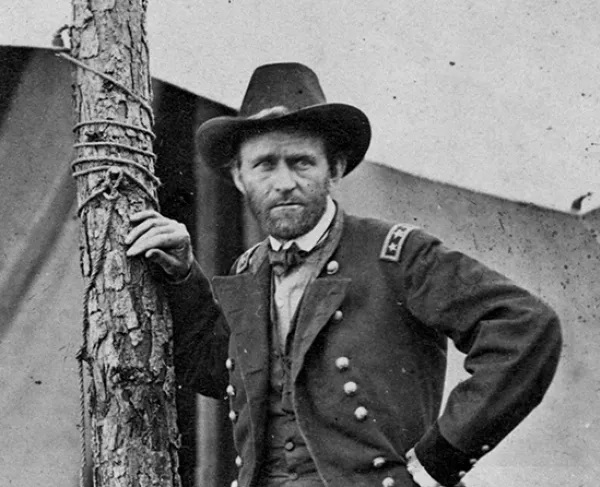
So goes the letter from General US Grant (USA) to General RE LEE (CSA) offering terms of surrender for the Army of Northern Virginia on April 9, 1865, 161 years ago today.

About that moment, Bruce Catton wrote:

It was Palm Sunday, and Lee rode to the house of a man named McLean to have a talk with Grant. He wore his best uniform and he had a sword buckled at his side, and there should have been lancers and pennons and trumpets going on before, for he was the last American knight and he had a grandeur about him, and when he rode out of the war something that will never come back rode out of American life with him.

Grant looked at the beaten army and he saw his own fellow Americans, who had made their fight and lost and now wanted to go back and rebuild. But the war had aroused much hatred and bitterness, especially among those who had done no fighting, and Grant knew very well that powerful men in Washington were talking angrily of treason and of traitors, and wanting to draw up proscription lists, so that leading Confederates could be jailed or hanged.

The sentence Grant had written would make that impossible. They could proceed against Robert E. Lee, for instance, only by violating the pledged word of U. S. Grant, who had both the will and the power to see his word kept inviolate. If they could not hang Lee they could hardly hang anybody. There would be no hangings. Grant had ruled them out.

— It did not strike the eye quite as quickly, but U. S. Grant had a certain grandeur about him, too.
Remember when all of us could live in this Country not to be disturbed by United States authority.

Who knew what it would take to make America great.
3.4.2026 – trivial effort

trivial effort
man can lie, does he believe
oh, probably not

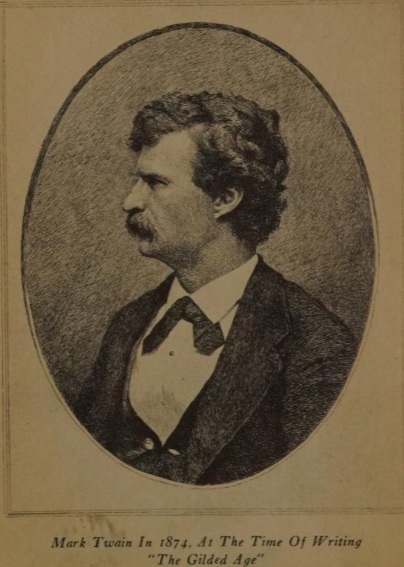
If we would learn what the human race really is, at bottom, we need only observe it in election times.

A Hartford clergyman met me in the street, and spoke of a new nominee – denounced the nomination, in strong, earnest words – words that were refreshing for their independence, their manliness.

He said, “I ought to be proud, perhaps, for this nominee is a relative of mine; on the contrary I am humiliated and disgusted; for I know him intimately – familiarly – and I know that he is an unscrupulous scoundrel, and always has been.”

You should have seen this clergyman preside at a political meeting forty days later; and urge, and plead, and gush – and you should have heard him paint the character of this same nominee.

You would have supposed he was describing the Cid, and Great-heart, and Sir Galahad, and Bayard the Spotless all rolled into one.

Was he sincere?

Yes – by that time; and therein lies the pathos of it all, the hopelessness of it all.

It shows at what trivial cost of effort a man can teach himself a lie, and learn to believe it, when he perceives, by the general drift, that that is the popular thing to do.

Does he believe his lie yet?

Oh, probably not;

From The Character of Man in The Autobiography of Mark Twain by Mark Twain (Berkeley : University of California Press, 2010).

2.22.2026 – in any instance

in any instance
violated the injunctions
incur punishment

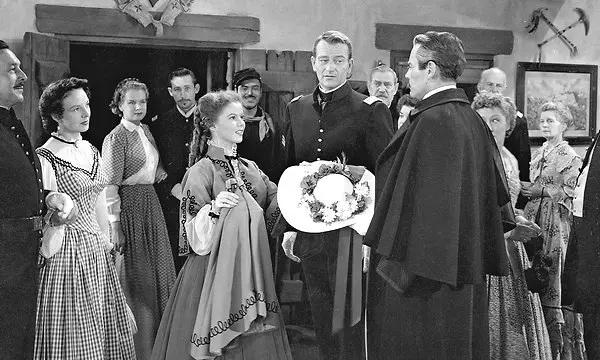
Not sure what you think about on February 22nd but I often think of the old black and white John Wayne movie, Fort Apache.

After a long journey of crummy trains, stage coaches and other hardships, the new Commanding officer (Henry Fonda) and his daughter (Shirley Temple … yes that Shirley Temple) arrive at Fort Apache to find that not only were the officers at the fort not one bit concerned about the trials their new Commanding officer might be experiencing but his officers were having a party!

When he walks in the music and dancing comes to a halt and Fonda, cold, correct and angry, is introduced and everyone stands around staring at the floor until Fonda says, “… I take it this dance is not in my honor.’

There is quiet and John Wayne speaks up, ‘It’s a birthday dance, sir.’

Birthday. Whose birthday?

General George Washington’s, sir.

And Fonda shrinks down into the floor.

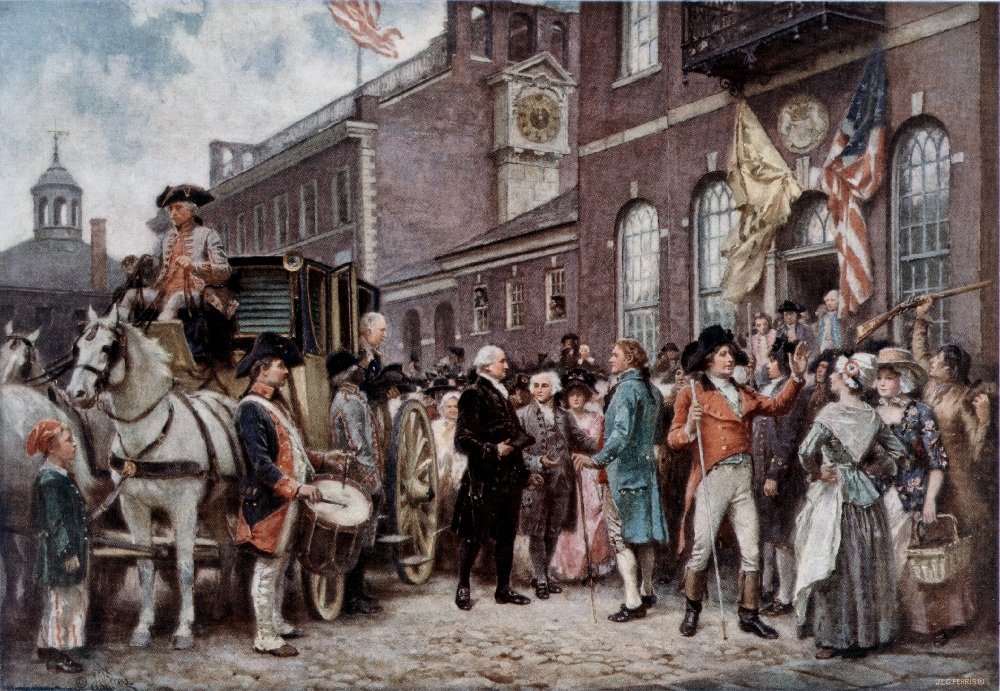
On Monday, March 4, 1793, George Washington was sworn in for the 2nd time as President of the United States.

He gave the shortest inaugural address on record.

With 135 words, General Washington said:

I am again called upon by the voice of my country to execute the functions of its Chief Magistrate. When the occasion proper for it shall arrive, I shall endeavor to express the high sense I entertain of this distinguished honor, and of the confidence which has been reposed in me by the people of united America.

Previous to the execution of any official act of the President the Constitution requires an oath of office. This oath I am now about to take, and in your presence: That if it shall be found during my administration of the Government I have in any instance violated willingly or knowingly the injunctions thereof, I may (besides incurring constitutional punishment) be subject to the upbraidings of all who are now witnesses of the present solemn ceremony.

After serving as a Virginia Delegate to the Continental Congress, then serving as Commander in Chief of the Army, then Chairman of the Constitution Convention and finally, the General said that, after all that if there was any … ANY … instance found where he violated his oath of office (preserve, protect and defend the Constitution of the United States) he deserved both Constitutional punishment and upbraidings or intense, formal, or severe criticism (according to the online dictionary).

Just something worth thinking about today.

Happy Birthday General.

George Washington arrives for his 2nd Inaugeral

11.18.2025 – democracy most

democracy most
fragile thing on earth, it rests
upon you and me

Democracy is the most fragile thing on earth, for what does it rest upon?

You and me, and the fact that we agree to maintain it.

The moment either of us says we will not, that’s the end of it.

It doesn’t rest on anything but us; it doesn’t rest on armed force, the moment it does it isn’t democracy.

It isn’t something to kick around or experiment with.

From the preface page to the 2017 Edition of the book, Advise and Consent by Allan Drury (WordFire Press: Colorado Springs, Colorado , 2017).

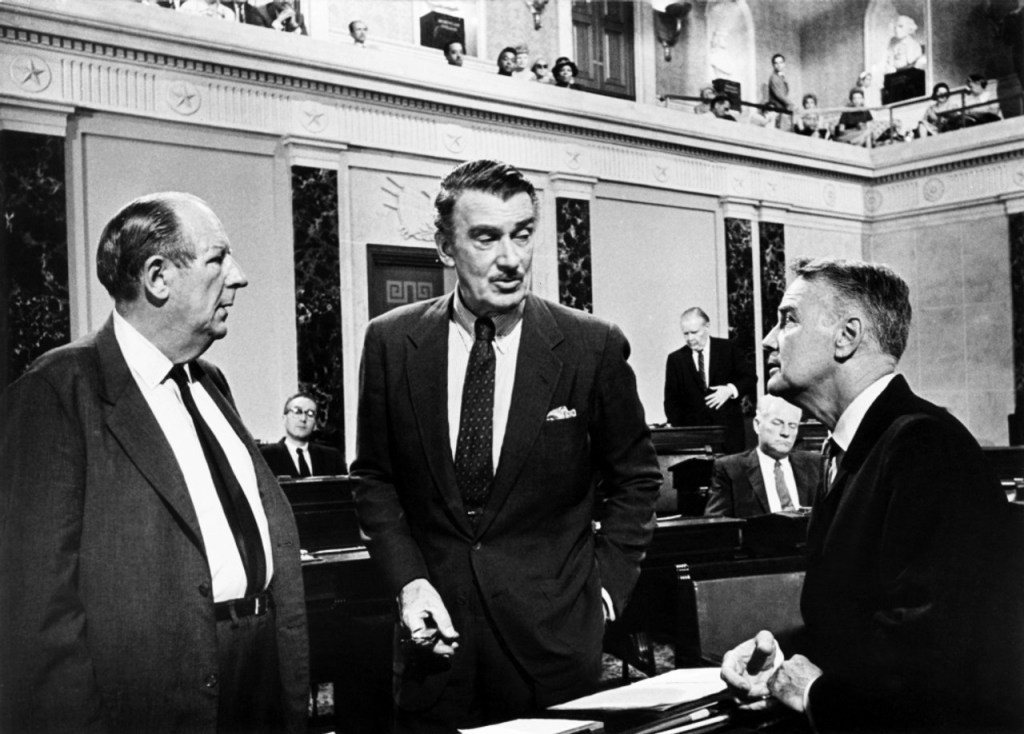
Advise and Consent is one of those books AND film adaptations that I can read or watch again and again.

Watching the movie today I have to laugh the Minority Whip of the Senate arrives a the Capitol Building in a cab, walks to a news stand and buys and paper and only then learns what the President did overnight.

In today’s instant news coverage, I marvel that anything got done back in 1959.

I mean the poor guy woke up, got dressed, had breakfast and got to work before he had any news on which to plan his day.

According to Wikipedia, “Advise and Consent is a 1959 political fiction novel by Allen Drury that explores the United States Senate confirmation of controversial Secretary of State nominee Robert Leffingwell, whose promotion is endangered due to growing evidence that the nominee had been a member of the Communist Party. The chief characters’ responses to the evidence, and their efforts to spread or suppress it, form the basis of the novel.”

A Mr. Tom Kemme, in his book, Political fiction, the spirit of the age, and Allen Drury (Bowling Green State University Popular Press: Bowling Green, Ohio. 1987), writes that, “The basic assumption underlying Drury fiction is that totalitarian Communism is intrinsically evil and that Communism’s ultimate goal is world domination, an end or goal that Communists will strive to achieve by whatever moral, immoral, or amoral means are expedient, including propaganda, lies, subversion, intimidation, infiltration, betrayal, and violence.”

Had anyone been able to tell Mr. Drury that such a threat would be coming, not from Communists buy from within the Government, he would have dismissed the plot as impossible to believe.

But if we make one slight change, that phrase can be read …

The current administration is intrinsically evil and that the current administration‘s ultimate goal is world domination, an end or goal that the current administration will strive to achieve by whatever moral, immoral, or amoral means are expedient, including propaganda, lies, subversion, intimidation, infiltration, betrayal, and violence.

Just that last bit is worth repeating.

The current administration will strive to achieve [its goals] by whatever moral, immoral, or amoral means are expedient, including propaganda,

lies,

subversion,

intimidation,

infiltration,

betrayal,

and violence.

It’s worth repeating Mr. Drury’s warning.

Democracy is the most fragile thing on earth, for what does it rest upon? You and me, and the fact that we agree to maintain it. The moment either of us says we will not, that’s the end of it. It doesn’t rest on anything but us; it doesn’t rest on armed force, the moment it does it isn’t democracy. It isn’t something to kick around or experiment with.

It isn’t something to kick around or experiment with.

11.11.2025 – obscurely fallen

obscurely fallen
by death, something that we can
look upon with pride

Adapted from the poem, Ode in Memory of the American Volunteers Fallen for France.

Ay, it is fitting on this holiday,
Commemorative of our soldier dead,
When—with sweet flowers of our New England May
Hiding the lichened stones by fifty years made gray—
Their graves in every town are garlanded,
That pious tribute should be given too
To our intrepid few
Obscurely fallen here beyond their seas.
Those to preserve their country’s greatness died;
But by the death of these
Something that we can look upon with pride
Has been achieved, nor wholly unreplied
Can sneerers triumph in the charge they make
That from a war where Freedom was at stake
America withheld and, daunted, stood aside.

As published in Poems By Alan Seeger, (New York Charles Scribner’s Sons: New York ,1918).

In the Introduction to the book, Poems, one William Archer, a Scottish author, theatre critic, wrote, “He had hoped to have been in Paris on Decoration Day, May 30th, to read, before the statue of Lafayette and Washington, the “Ode in Memory of the American Volunteers Fallen for France,” which he had written at the request of a Committee of American residents; but his “permission” unfortunately did not arrive in time. Completed in two days, during which he was engaged in the hardest sort of labour in the trenches, this Ode is certainly the crown of the poet’s achievement. It is entirely admirable, entirely adequate to the historic occasion. If the war has produced a nobler utterance, it has not come my way.”

Margraten in The Netherlands, one of 14 permanent overseas military cemeteries set aside for America’s World War II dead that the U.S. government maintains in perpetuity.

Today in the New York Times, is the opinion piece, If Only More Americans Could See This Place by Jonathan Darmen.

It is an article about visiting a cemetery in Holland for US servicemen who died in Europe in World War 2.

Mr. Darmen writes, The American service members buried in the soil of Europe grew up in a country where many respectable politicians claimed America had no business preserving peace on the European continent or promoting freedom in the world. There was no NATO, no United Nations, no American-led global order.

When you stoop down on European soil to read an American soldier’s name on a grave, you see how policies sold as “America First” can lead to unthinkable suffering and loss.

Travel through Europe today and you’ll see the war-forged American-European partnership embedded everywhere — in gleaming embassies and in hulking military bases, in ubiquitous English-language ads and in the YouTube clips streaming on teenagers’ phones. But nowhere does the tie between the people on both sides of the Atlantic feel more intimate as in the World War II cemeteries.

In today’s Europe, the need for such a partner remains. At Margraten that August morning, I spoke with a Dutch woman who’d come to visit the cemetery with her young son. He was learning at school about “the problems in the world,” she explained. He’s a little bit nervous, she said, about what would happen “if the Russians come.” She gestured at the rows of graves all around her: “So it’s very important to see everything.”

My son got blown up in Afghanistan and is banged up in lots of other ways.

I have an Uncle who was blown up in Europe with a lot more visible wounds.

I have a Great Uncle who was shot in France.

My Great Grand Father had a confederate bullet in his chest from the day he was shot in Virginia in 1862 until the day he died, 50 years later.

I take my hat off to their service and to all veterans on this day.

On Veterans Day it it good to remember what Mr. Lincoln said at Gettysburg.

 It is for us the living, rather, to be dedicated here to the unfinished work which they who fought here have thus far so nobly advanced.

As Mr. Darmen writes: But in their beauty, ambition and scale, the cemeteries have also always sent a message to Europeans, a reminder of the costs Americans were willing to pay to ensure the cause of liberty in the world.