5.27.2024 – their disillusion

their disillusion
was deep and they had to fall
farther to reach it

Based on :

Those fanciful old ideas about the glory of a waving flag, the shame of running from danger, the high importance of dying with one’s face to the foe — since that war they have come to seem as out of date as the muzzle-loaders that were used for weapons in those days.

The American soldier of later, more sophisticated eras may indeed die rather than retreat, and do it as courageously as any, but he never makes a song about it or strikes an attitude.

His heroism is without heroics, and fine phrases excite his instant contempt, because he knows even before he starts off to war that fine phrases and noble attitudes and flags waving in death’s own breeze are only so many forms of a come-on for the innocent; nor does he readily glimpse himself as a knight of the ancient chivalry.

But in the 1860s the gloss had not been worn off.

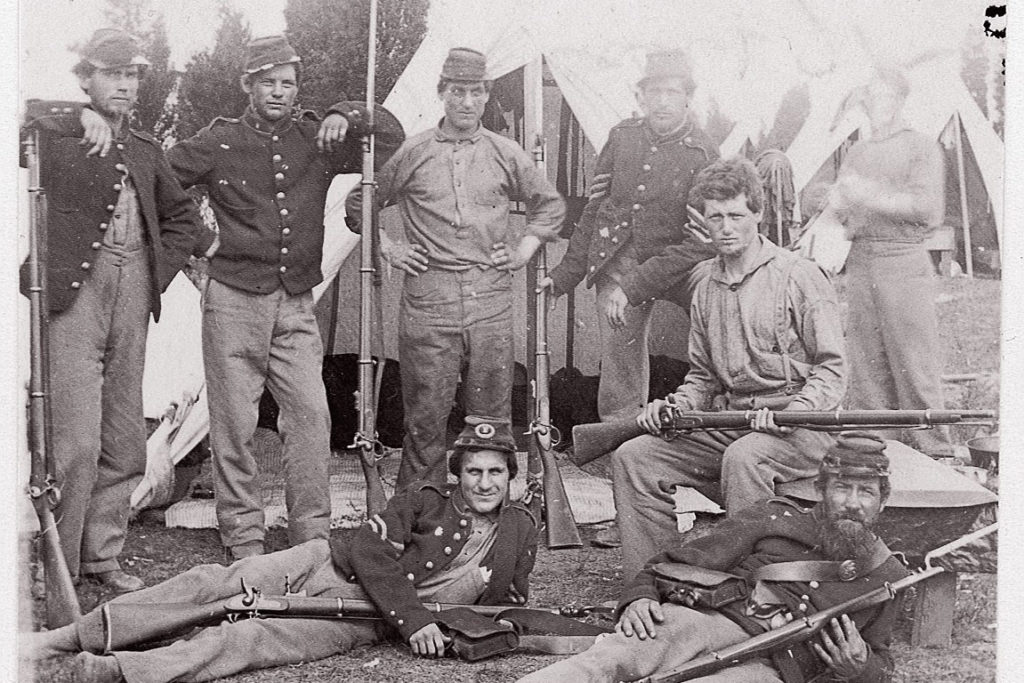
Young men then went to war believing all of the fine stories they had grown up with; and if, in the end, their disillusion was quite as deep and profound as that of the modern soldier, they had to fall farther to reach it.

From Mr. Lincoln’s Army by Bruce Catton, Doubleday & Co, Garden City, NY, 1951

It would be another two years before Mr. Lincoln said:

It is rather for us to be here dedicated to the great task remaining before us,

that from these honored dead we take increased devotion to that cause for which they gave the last full measure of devotion,

that we here highly resolve that these dead shall not have died in vain,

that this nation,

under God,

shall have a new birth of freedom,

and that government of the people, by the people,

for the people,

shall not perish from the earth.

And what kind of nation was Mr. Lincoln talking about?

A new nation,

conceived in liberty,

and dedicated to the proposition that all men are created equal.

On this Memorial Day, 2024 I close with this thought from Mr. Lincoln’s 1st Inaugeral Address, March 4, 1861.

 The mystic chords of memory, stretching from every battlefield and patriot grave to every living heart and hearthstone all over this broad land, will yet swell the chorus of the Union, when again touched, as surely they will be, by the better angels of our nature.

 The mystic chords of memory, stretching from every battlefield and patriot grave let us know that we didn’t get this far on our own.

We are standing on the shoulders of a lot of other folks.

To slip now …

Time to depend on those better angels of our nature.
5.25.2024 – whose bodies lie in

whose bodies lie in
city, village, and hamlet
church-yard in the land

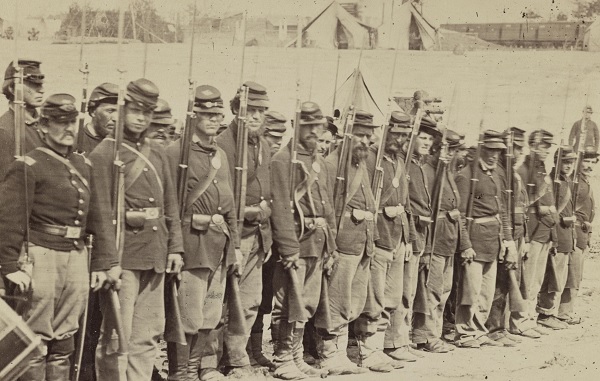
The 30th day of May, 1868, is designated for the purpose of strewing with flowers or otherwise decorating the graves of comrades who died in defense of their country during the late rebellion, and whose bodies now lie in almost every city, village, and hamlet church-yard in the land. In this observance no form of ceremony is prescribed, but posts and comrades will in their own way arrange such fitting services and testimonials of respect as circumstances may permit.

General Order No.11, WASHINGTON, D.C., May 5, 1868

On May 5, 1868, General John A. Logan, as Commander-in-Chief of the Grand Army of the Republic (GAR), issued General Order No. 11 designating May 30 “for the purpose of strewing with flowers or otherwise decorating the graves of comrades who died in defense of their country during the late rebellion.”

Logan’s General Order, his Memorial Day Order, established Memorial Day as a national holiday.

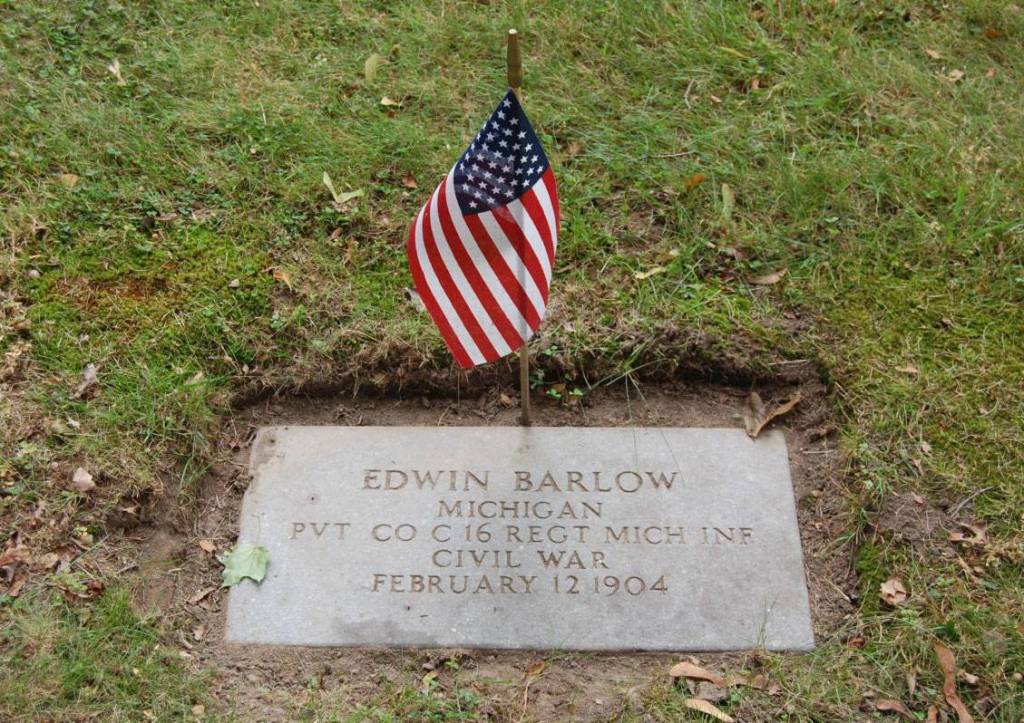
BTW, Private Edwin Barlow is my Great Great Grand Father.

You can read about him here.

5.19.2024 – after all homeless

after all homeless
have reason to cry – everything
pointed against them

At the highway woods I took one good look to make sure no cruisers were up or down the road and I dove right in the woods.

It was a lot of dry thickets I had to crash through, I didn’t want to bother finding the Boy Scout trail.

I aimed straight for the golden sands of the riverbottom I could see up ahead.

Over the thickets ran the highway bridge, no one could see me unless they stopped and got out to stare down.

Like a criminal I crashed through bright brittle thickets and came out sweating and stomped ankle deep in streams and then when I found a nice opening in a kind of bamboo grove I hesitated to light a fire till dusk when no one’d see my small smoke, and make sure to keep it low embers.

I spread my poncho and sleeping bag out on some dry rackety grove-bottom leaves and bamboo splitjoints.

Yellow aspens filled the afternoon air with gold smoke and made my eyes quiver.

It was a nice spot except for the roar of trucks on the river bridge.

My head cold and sinus were bad and I stood on my head five minutes.

I laughed. “What would people think if they saw me?”

But it wasn’t funny, I felt rather sad, in fact real sad, like the night before in that horrible fog wire-fence country in industrial L.A., when in fact I’d cried a little.

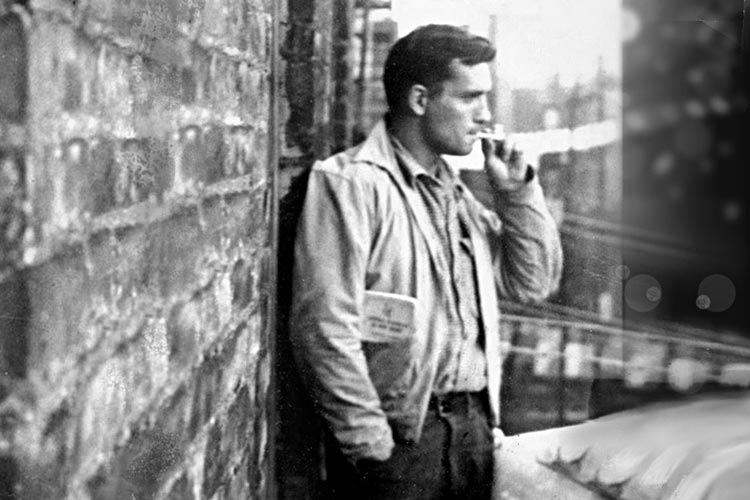
After all a homeless man has reason to cry, everything in the world is pointed against him.

From The Dharma Bums by Jack Kerouac, The Viking Press, 1958.

In the Bible we read, If anyone has material possessions and sees a brother or sister in need but has no pity on them, how can the love of God be in that person? (1 John 3:17).

According to Wikipedia, The First Epistle of John is the first of the Johannine epistles of the New Testament, and the fourth of the catholic epistles. There is no scholarly consensus as to the authorship of the Johannine works. The author of the First Epistle is termed John the Evangelist, who most modern scholars believe is not the same as John the Apostle. Most scholars believe the three Johannine epistles have the same author, but there is no consensus if this was also the author of the Gospel of John.

Then Wikipedia states: This epistle was probably written in Ephesus between 95 and 110 AD.

If anyone has material possessions and sees a brother or sister in need but has no pity on them, how can the love of God be in that person? was written almost 2000 years ago.

Mr. Kerouac wrote, After all a homeless man has reason to cry, everything in the world is pointed against him 66 years ago.

Seems like some part of the message is still not getting through.

As I asked the other day, where are we in our moral decision making?

5.5.2024 – The pessimist says

The pessimist says
it can’t get worse, optimist …
replies, yes it can

Just a quick review of some of the latest headlines today.

Trump trial live updates: Judge again holds Trump in contempt, threatens jail time
Boeing is set to launch NASA astronauts for the first time after years of struggle
Police issued an Amber Alert for 10-month-old Eleia Maria Torres, which was active Saturday morning.
Russia’s Defense Ministry says it plans to hold drills simulating the use of battlefield nuclear weapons
Body found in home of man who allegedly attempted to shoot pastor, police say
Israel-Gaza live updates: Warnings issued to 100,000 as Israel weighs Rafah invasion
A truck driver is accused of killing a Utah police officer by driving into him
14-year-old dead, 5 teens hurt, as gunfire erupts near scene of 2022 Buffalo massacre
Israel orders Al Jazeera to close its local operation and seizes some of its equipment
Driver killed as vehicle crashes at ‘high rate of speed’ into White House gate
Several injured in Long Beach shooting, police say
1 person killed and 23 injured in a bus crash in northern Maryland, police say
Russia has launched a barrage of drones on eastern Ukraine and claimed its troops took control of a village they had been targeting as Ukraine marks its third Easter at war

I repeat:

The pessimist says
it can’t get worse, optimist …
replies, yes it can

4.15.2024 – yet once, ages ago,

yet once, ages ago,
they had been everywhere and
had seen everything

The books which make up this trilogy began, very simply, as an attempt to understand the men who fought in the Army of the Potomac. As a small boy I had known a number of these men in their old age; they were grave, dignified, and thoughtful, with long white beards and a general air of being pillars of the community. They lived in rural Michigan in the pre-automobile age, and for the most part they had never been fifty miles away from the farm or the dusty village streets; yet once, ages ago, they had been everywhere and had seen everything, and nothing that happened to them thereafter meant anything much. All that was real had taken place when they were young; everything after that had simply been a process of waiting for death, which did not frighten them much—they had seen it inflicted in the worst possible way on boys who had not bargained for it, and they had enough of the old-fashioned religion to believe without any question that when they passed over they would simply be rejoining men and ways of living which they had known long ago.

Yet, in an odd way, the old veterans did leave one correct impression: the notion that as young men they had been caught up by something ever so much larger than themselves and that the war in which they fought did settle something for us—or, incredibly, started something which we ourselves have got to finish. It was not only the biggest experience in their own lives; it was in a way the biggest experience in our life as a nation, and it deserves all of the study it is getting.

From the preface to Mr. Lincoln’s Army, Book One of the Army of Potomac Trilogy by Bruce Catton, (Doubleday, Garden City, NY, 1962).

They lived in rural Michigan in the pre-automobile age, and for the most part they had never been fifty miles away from the farm or the dusty village streets;

yet once, ages ago, they had been everywhere and had seen everything, and nothing that happened to them thereafter meant anything much.

All that was real had taken place when they were young;

everything after that had simply been a process of waiting for death, which did not frighten them much —

they had seen it inflicted in the worst possible way on boys who had not bargained for it,

It was not only the biggest experience in their own lives; it was in a way the biggest experience in our life as a nation.

I am reminded of what Big Bill wrote in his play, Henry V.

And gentlemen in England now a-bed
Shall think themselves accursed they were not here,
And hold their manhoods cheap whiles any speaks
That fought with us upon Saint Crispin’s day.

In remembrance of Mr. Abraham Lincoln who died on April 15th, 1865.