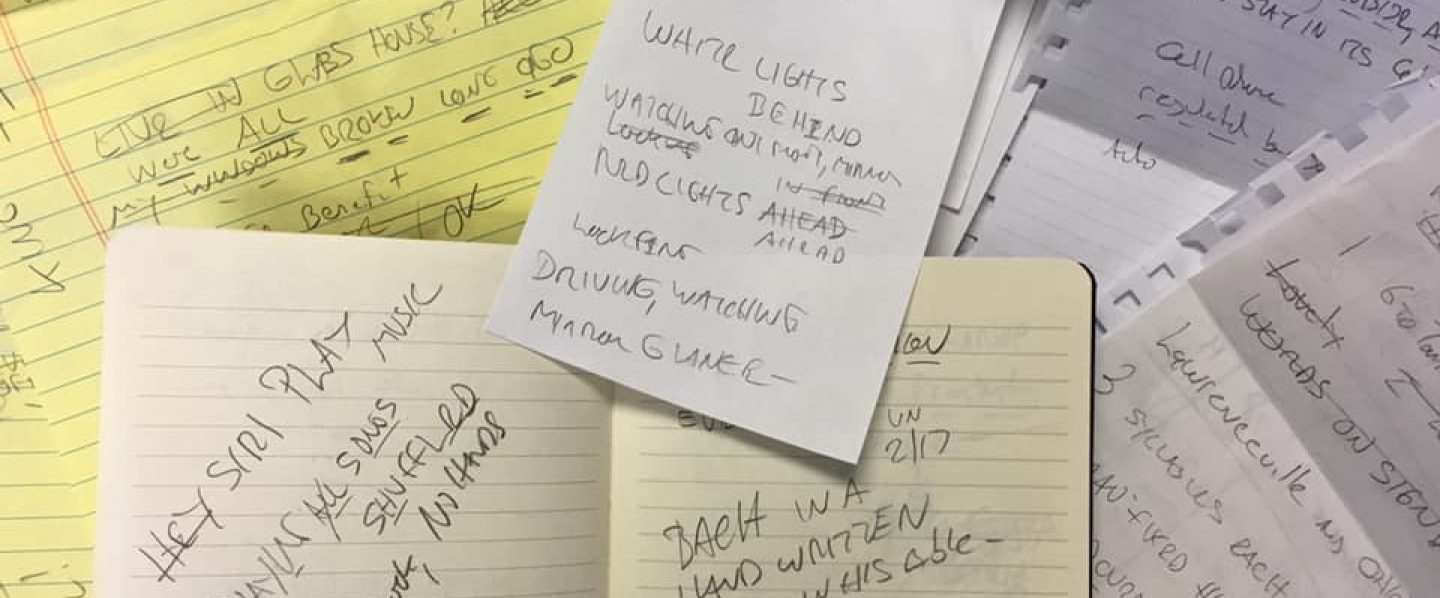
5.8.2021 – life might be a

life might be about
outside constraints of work and
struggle survival

Adapted from the book, The Architecture of Happiness (2009, Vintage Books) by Alain de Botton, and the passage:

If our lives are dominated by a search for happiness, then perhaps few activities reveal as much about the dynamics of this quest—in all its ardour and paradoxes—than our travels. They express, however inarticulately, an understanding of what life might be about, outside of the constraints of work and of the struggle for survival. Yet rarely are they considered to present philosophical problems—that is, issues requiring thought beyond the practical. We are inundated with advice on whereto travel to, but we hear little of why and how we should go, even though the art of travel seems naturally to sustain a number of questions neither so simple nor so trivial, and whose study might in modest ways contribute to an understanding of what the Greek philosophers beautifully termed eudaimonia, or ‘human flourishing’.

Adapted from the book, The Art of Travel (2002, Vintage Books) by Alain de Botton.

According to the website, GOOD READS, Any Baedeker will tell us where we ought to travel, but only Alain de Botton will tell us how and why.

As I said in the section on Architecture , what I find irresistible in reading Mr. de Botton is his use of language.

I get the feeling that if you made a spread sheet of all the words, adverbs and adjectives used by Mr. de Botton, you just might find that he used each word just once.

Neat trick in writing a book.

If I knew how to do that, hey, I would.

** More from the category TRAVEL — click here

5.7.2021 – surmount this state of

surmount this state of
sterile relativism with
eloquent remarks

Adapted from the book, The Architecture of Happiness (2009, Vintage Books) by Alain de Botton, and the passage:

However, there might be a way to surmount this state of sterile relativism with the help of John Ruskin’s provocative remark about the eloquence of architecture.

The remark focuses our minds on the idea that buildings are not simply visual objects without any connection to concepts which we can analyse and then evaluate.

Buildings speak – and on topics which can readily be discerned.

They speak of democracy or aristocracy, openness or arrogance, welcome or threat, a sympathy for the future or a hankering for the past.

What Ruskin is quoted as saying is:

‘A day never passes without our hearing our architects called upon to be original and to invent a new style,’ observed John Ruskin in 1849, bewildered by the sudden loss of visual harmony.

What could be more harmful, he asked, than to believe that a ‘new architecture is to be invented fresh every time we build a workhouse or parish church?

According the The New York Review of Books, this is “A perceptive, thoughtful, original, and richly illustrated exercise in the dramatic personification of buildings of all sorts.”

What I find irrestible in reading Mr. de Botton is his use of language.

I get the feeling that if you made a spread sheet of all the words, adverbs and adjectives used by Mr. de Botton, you just might find that he used each word just once.

Neat trick in writing a book.

If I knew how to do that, I would.

5.5.2021 – was restful to watch

was restful to watch
conversations without being
expected to join

Adapted from the book, Noah’s Compass (2009, Alfred A. Knopf) by Anne Tyler, and the passage:

He wondered if she liked movies. Liam really enjoyed a good movie. He found it restful to watch people’s conversations without being expected to join in. But he always felt sort of lonesome if he didn’t have someone next to him to nudge in the ribs at the good parts.

Part of the series of Haiku inspired by from Noah’s Compass (2009, Alfred A. Knopf) by Anne Tyler. Anne Tyler is an American novelist, short story writer, and literary critic. She has published twenty-three novels, including Dinner at the Homesick Restaurant (1982), The Accidental Tourist (1985), and Breathing Lessons (1988). I came across Noah’s Compass as an audio book when living in Atlanta I commuted 1 hour each way. As the book had to deal with memories and memory loss and it involved someone my age, I was taken with the book. I have enjoyed reading most of Ms. Tyler’s work. Accidental Tourist maybe better known for the movie which I also recommend.

5.4.2021 – beach walkers walking

beach walkers walking
barefoot, sandals, shoes and socks
strolling power walk

Part of a series based on afternoons spent at the beach on Hilton Head Island.

I wanted to see if I would be ‘inspired’ by what I saw, by what I heard, by what I smelled, by what I tasted, what I felt emotionally and what I felt tactilely.

Some turned out okay.

Some were too forced.

Some were just bad.

Some did involve some or all of those feelings.

As far as it goes, I guess I was inspired by by what I saw, by what I heard, by what I smelled, by what I tasted, what I felt emotionally and what I felt tactilely.

Click here for more Haiku from the BEACH

5.3.2021 – an intelligent

an intelligent
mind engaging effortlessly
with complexity

Adapted from the book, A Week at the Airport: A Heathrow Diary (2009, Vintage Books) by Alain de Botton, and the passage:

The undulating glass and steel structure was the largest building in the land, forty metres tall and 400 long, the size of four football pitches, and yet the whole conveyed a sense of continuous lightness and ease, like an intelligent mind engaging effortlessly with complexity. The blinking of its ruby lights could be seen at dusk from Windsor Castle, the terminal’s forms giving shape to the promises of modernity.

Part of the series of Haiku inspired by from A Week at the Airport: A Heathrow Diary by Alain de Botton. I discovered this book entirely by accident. When searching for books online, I will use the term ‘collections’ and see what turns up. I figure that someone who has taken the time to gather together the etexts of any one author to create a collected works folder is enough for me to see what this author might be all about.

In this case I came across the writing of Alain de Botton. I enjoyed his use of language very much. Much of the words he strings together lend themselves to what I do.

As for his book, I recommend it very much though written in 2009, it misses the added layer of travel under covid but still the picture of the modern airport is worth the read.