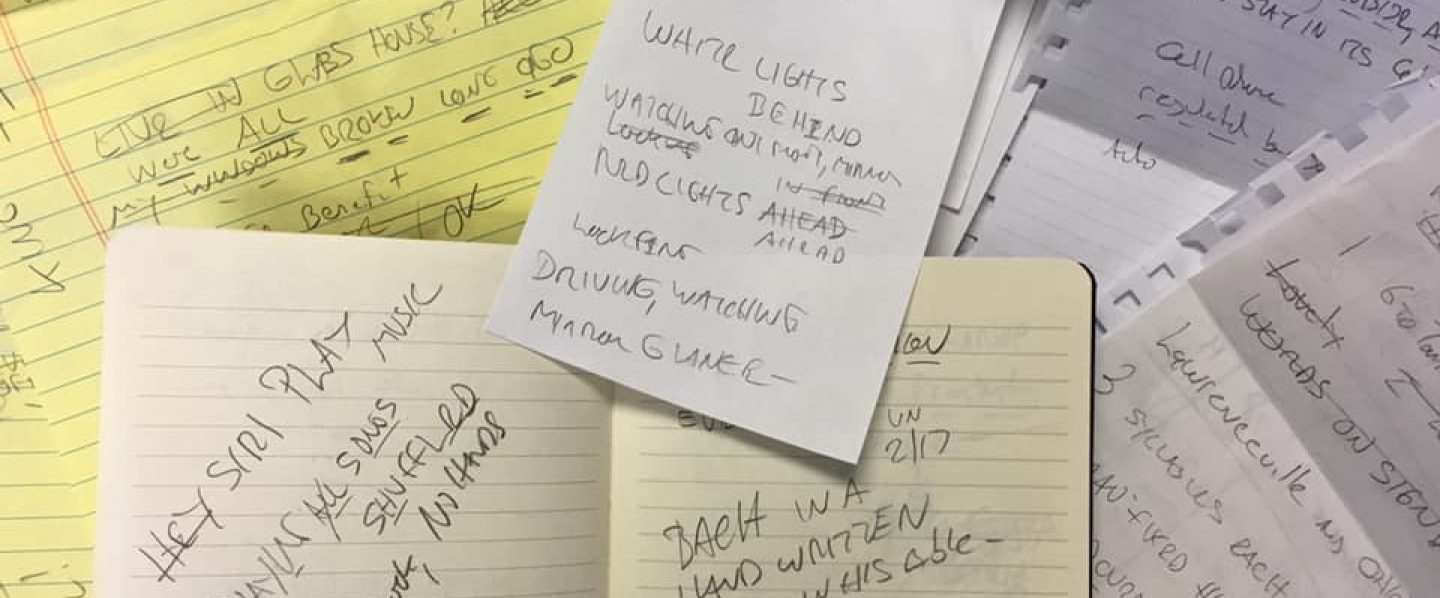
4.29.2026 – ignorant of how

ignorant of how
they see, don’t see unless work
very hard at it

Paul Cézanne – The Village of L’Estaque Seen from the Sea (Le village de l’Estaque vu de la mer)

Sprawled there by the creek and cautioning myself against my canteen whiskey I stared at the assortment of dead leaves that had gathered themselves in the spring, with some floating, a few suspended in the clear water, and the bottom of the spring pasted yellow and dull red with the others.

I had once tried to paint this phenomenon, unsuccessfully in the minds of others because it is not the sort of thing one can see clearly.

There was the odd thought, absent for years, that nearly everyone was ignorant of how they see, lost as they were in the attraction for the simplicity of photographs, which is not how anyone sees.

We don’t see all at once unless we work very hard at it.

When I first saw Cézanne’s work I was dumbstruck at his comprehension of true vision.

From True North by Jim Harrison (New York, Grove Press, 2004).

I think that is why I enjoy the beach.

I want to see it all at once.

I work very hard at it.

4.13.2026 – sense of proportion

sense of proportion
in good and bad experience
loses its appeal

Adapted from the passage in the book, The Road Home by Jim Harrison (Atlantic Monthly Press New York, 1998) where Mr. Harrison writes:

With age I need not make judgments about their comparative merits, having lost the impulse to be right.

One is one, and the other is another.

With age one loses all sense of the supposed inevitability of art and life.

Vivid moments are no longer strung together by imagined fate.

The sense of proportion in good and bad experience loses its appeal.

Bad is bad and you let it go.

Good you cherish as it whizzes by.

Mental struggles become lucid and muted with particular visual images attached to them, somewhat irrationally or beyond ordinary logic.

Money shrinks to money.

Fear is always recognizable rather than generalized.

It is sharp and its aim is very good indeed.

If there is wisdom as such, it is boiled down by fatigue.

The sense of proportion in good and bad experience loses its appeal.

When you have a man who sits in the office of president of the United States who post images of himself portrayed as Jesus Christ, all things, good and bad, lose their proportion on a level of good of bad.

Landing in the land of the unbelievable, I need not make judgments about their comparative merits, having lost the impulse to be right.

The sense of proportion in good and bad experience loses its appeal.

When there are no comparative merits, their is little effort needed to be right.

As I wrote the other day that I struggle mentally to become lucid and I feel muted with particular visual images attached to them, somewhat irrationally or beyond ordinary logic and ask how a man could become not immoral, not amoral but, somehow infinitely worse, morally extinguished and president.

The sense of proportion in good and bad experience loses its appeal.

Beyond belief.

I what for the outcry but where your treasure is, their your heart will be also.

3.25.2026 – I like fallacies …

I like fallacies …
the mistakes that men make … why …
was I against it

Adapted from the passage in the book, The Etiquette of Freedom and The Practice of the Wild by Gary Snyder, Jim Harrison (Counterpoint: Brooklyn, NY, 2016) where Mr. Snyder writes:

I like fallacies, the mistakes that men make.

For seventeen years, I had an open firepit in the center of my house.

The smoke was supposed to go out an opening in the gables, but a lot of the time it didn’t.

I was trying to live like I was in a Japanese farmhouse.

I even had a hook for the pot over the firepit.

But, you know, it takes a long time to realize certain things, and I realized, yeah, the stovepipe was a good invention.

So finally I boarded it over and started living with chairs and a table, like Americans do.

It’s like a friend of mine who did without electricity for fifteen years, and when he finally connected up to an electric line, he said to me, “You know, I can’t even remember why I was against it.”

3.24.2026 – small wonder that men

small wonder that men
hold boats in the secret place
cradle to the grave

Men who ache allover for tidiness and compactness in their lives often find relief for their pain in the cabin of a thirty-foot sailboat at anchor in a sheltered cove.

Here the sprawling panoply of The Home is compressed in orderly miniature and liquid delirium, suspended between the bottom of the sea and the top of the sky, ready to move on in the morning by the miracle of canvas and the witchcraft of rope.

It is small wonder that men hold boats in the secret place of their mind, almost from the cradle to the grave.

From the essay The Sea and the Wind that Blows by E. B. White and published in The Ford Times, June 1963 and re-published in The Essays of EB White by EB White (Harper and Row, New York, 1977).

3.20.2026 – boxes on beach are

boxes on beach are
empty shake ’em nails loosen
they have been somewhere

Adapted from the poem Sand Scribblings by Carl Sandburg in Smoke and Steel as published in The Complete Poems of Carl Sandburg, by Carl Sandburg, Harcourt, Brace, New York, 1950.

The wind stops, the wind begins.
The wind says stop, begin.

A sea shovel scrapes the sand floor.
The shovel changes, the floor changes.

The sandpipers, maybe they know.
Maybe a three-pointed foot can tell.
Maybe the fog moon they fly to, guesses.

The sandpipers cheep ‘Here’ and get away.
Five of them fly and keep together flying.

Night hair of some sea woman
Curls on the sand when the sea leaves
The salt tide without a good-by.

Boxes on the beach are empty.
Shake ’em and the nails loosen.
They have been somewhere.

This is special to me today as I know the boxes on the beach are empty.

They are empty because we emptied them.

We know they have been somewhere, because we filled them and moved them to the island … were we now live.

Got to go ride my bike to the NEARBY beach and scribble in the sand.