10.30.2022 – He literally

He literally
willed what was in his mind to
be reality

He felt that victory required belief.

As a boy, friends recall, “he was always repeating” the salesman’s credo that “You’ve got to believe in what you’re selling”; decades later, in his retirement, he would say: “What convinces is conviction. You simply have to believe in the argument you are advancing; if you don’t, you’re as good as dead.

The other person will sense that something isn’t there.”

And Lyndon Johnson could make himself believe in an argument even if that argument did not accord with the facts, even if it was clearly in conflict with reality.

He “would quickly come to believe what he was saying even if it was clearly not true,” his aide Joseph Califano would write.

“It was not an act,” George Reedy would say.

“He had a fantastic capacity to persuade himself that the ‘truth’ which was convenient for the present was the truth and anything that conflicted with it was the prevarication of enemies.

He literally willed what was in his mind to become reality.”

He would refuse to hear any facts which conflicted with that “reality,” to listen to anyone who disagreed with him.

(Robert A. Caro. The Passage of Power (2012). Knopf. Kindle Edition.)

Is there something in the water at the White House?

Or in Washington, DC, overall?

The author Jim Harrison once wrote something along the lines of asking that when you consider the buildings and such in Washington, DC, how could elected officials NOT become pompous?

Mr. Harrison recommended turning the Capitol into a museum and setting Congress up in a pole barn in Anacostia and then watch how long it took for the Government to make things happen.

I second the notion with the added stipulation of no air conditioning.

.
10.14.2022 – always expected

always expected
the worst, and it’s always worse
than I expected

I’ve always expected the worst, and it’s always worse than I expected.”, is attributed, by sources on the information highway, to the novelist Henry James.

While a great quote, I do like to find it’s context.

Stephen Fry talks about this need for attribution of quotes in his podcast, Fry’s English Delight, where Mr. Fry goes into the differing opinions on quotes.

Some think you should quote very little and always reference the original author.

Others felt the dubious practice of quoting however much you wanted, with no reference and even changing bits was okay.

It does bother me when I cannot find where a quote that the online world attributes to someone but cannot go any further than the quote itself.

So goes the thoughts on I’ve always expected the worst, and it’s always worse than I expected.

I ran across it yesterday in the New York Time.

Sadly, the writer attributed to Henry Adams.

Henry Adams.

Henry James.

Does it matter when no one reads either one anymore and all the name does is reawaken a slight echo that they might have been someone that at sometime was worth knowing something more about?

For Mr. James, I cannot say I know much about.

Wikipedia says that Henry James (15 April 1843 – 28 February 1916) was an American-born British author. He is regarded as a key transitional figure between literary realism and literary modernism, and is considered by many to be among the greatest novelists in the English language. He was the son of Henry James Sr. and the brother of philosopher and psychologist William James and diarist Alice James.

The highest thing I can say about Mr. James, with my limited knowledge, is that James Thurber once wrote how he gathered up his courage and wherewithall and called on an ex-wife so that he could re-claim his copies of the collected works of Henry James.

The worst thing I can say is to quote Mark Twain on Henry James and say, “Once you’ve put one of his books down … you simply can’t pick it up again.

I have to admit that quote has kept me, despite my respect for Thurber, from ever picking up The Bostonians and taking a mental whack at it.

Legend has it that Beethoven once said something along the line of, “I like Wagner. I do! I think someday I will set it to music.”

The importance of getting it right verus Vass you dere, Sharlie?

Regardless.

Regardless of who said it first.

I’ve always expected the worst, and it’s always worse than I expected.

And don’t forget.

Blessed are those who expect nothing.

They will never be disappointed.

To quote Ms. Parker, “What fresh hell IS this!”

10.6.2022 – no matter how thick

no matter how thick
or how thin you slice it, it
is still baloney

On August 23, 1936, a book review in the New York Times was headlined, “Carl Sandburg Writes in the True Accent of the People; His New Poem Displays and Develops the Popular Sayings That Americans Live By THE PEOPLE, YES.”

According to Wikipedia, The People, Yes is a book-length poem written by Carl Sandburg and published in 1936. The 300 page work is thoroughly interspersed with references to American culture, phrases, and stories (such as the legend of Paul Bunyan). Published at the height of the Great Depression, the work lauds the perseverance of the American people in notably plain-spoken language. It was written over an eight-year period. It is Sandburg’s last major book of poetry.

Written in 1936.

Containing the sayings that Americans live by.

One of those lines is “No matter how thick or how thin you slice it, it’s still baloney.”

Published almost 100 years ago.

In the words of that old Virginia Slims cigarette commercial, “We’ve come a long way, baby!”

I watch the news.

I read the papers.

I look at the magazines.

All I can think is, No matter how thick or how thin you slice it, it’s still baloney.

Who knew you could say such a fine line of words and be quoting Carl Sandburg.

I can go down to the beach and stand with my feet in the Atlantic Ocean waves and face Algeria across the water.

Looking out, the entire country is behind me.

Turning around and I face the entire country all the way to the Pacific Ocean.

I want scream, “WAKE UP CANTCHA!!! GEE WHIZ”

The next line in the poem is, “I would if I could and I could if I would but if I couldn’t how could I, could you?”

I guess I will just turn away and look out.

At least I can see the sun rise.

If I said the poem, The People, Yes, was a bit nonsensical, it would only serve to make it more fit for reading today.

9.20.2022 – occupational

occupational
citizenship behaviors
leaving work on time

In an article about the quiet quitting concept, Mr. James Tapper wrote:

Rather than working late on a Friday evening, organising the annual team-building trip to Slough or volunteering to supervise the boss’s teenager on work experience, the quiet quitters are avoiding the above and beyond, the hustle culture mentality, or what psychologists call “occupational citizenship behaviours”.

Instead, they are doing just enough in the office to keep up, then leaving work on time and muting Slack. Then posting about it on social media.

Occupational citizenship behaviours.

These, I think used to be called ‘Conventions‘ as in, “The conventions demand it.

In the movie Revenge (which is based on a Jim Harrison short story but achieved more fame when Kevin Costner told the story that he was signed up to do the movie ‘Revenge’ and the script went into re-write and Costner asked how long it would take as if there was enough time, he was going to go do this baseball movie in Iowa), the killer anti-hero says out loud something along the lines of , ‘I have to do this. The conventions demand it … I don’t even know what means.’

Occupational citizenship behaviours.

I do know what that means and while I am back in the office only two days a week so far, I just don’t want to have to follow through with them anymore.

Suffice it say, leaving work on time used to go against the conventions.

9.7.2022 – monarch of all he

monarch of all he
surveyed, but it didn’t seem
to mean anything

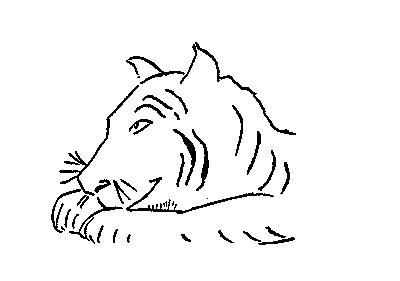
The Tiger Who Would Be King

One morning the tiger woke up in the jungle and told his mate that he was king of beasts.

“Leo, the lion, is king of beasts,” she said.

“We need a change,” said the tiger. “The creatures are crying for a change.”

The tigress listened but she could hear no crying, except that of her cubs.

“I’ll be king of beasts by the time the moon rises,” said the tiger. “It will be a yellow moon with black stripes, in my honor.”

“Oh, sure,” said the tigress as she went to look after her young, one of whom, a male, very like his father, had got an imaginary thorn in his paw.

The tiger prowled through the jungle till he came to the lion’s den. “Come out,” he roared, “and greet the king of beasts! The king is dead, long live the king!”

Inside the den, the lioness woke her mate. “The king is here to see you,” she said.

“What king?” he inquired, sleepily.

“The king of beasts,” she said.

“I am the king of beasts,” roared Leo, and he charged out of the den to defend his crown against the pretender.

It was a terrible fight, and it lasted until the setting of the sun. All the animals of the jungle joined in, some taking the side of the tiger and others the side of the lion. Every creature from the aardvark to the zebra took part in the struggle to overthrow the lion or to repulse the tiger, and some did not know which they were fighting for, and some fought for both, and some fought whoever was nearest, and some fought for the sake of fighting.

“What are we fighting for?” someone asked the aardvark.

“The old order,” said the aardvark.

“What are we dying for?” someone asked the zebra.

“The new order,” said the zebra.

When the moon rose, fevered and gibbous, it shone upon a jungle in which nothing stirred except a macaw and a cockatoo, screaming in horror. All the beasts were dead except the tiger, and his days were numbered and his time was ticking away. He was monarch of all he surveyed, but it didn’t seem to mean anything.

MORAL: You can’t very well be king of beasts if there aren’t any.

From Further Fables for Our Time by James Thurber (1956)

I might change the title of the book of essays to Further Fables OF Our Time.