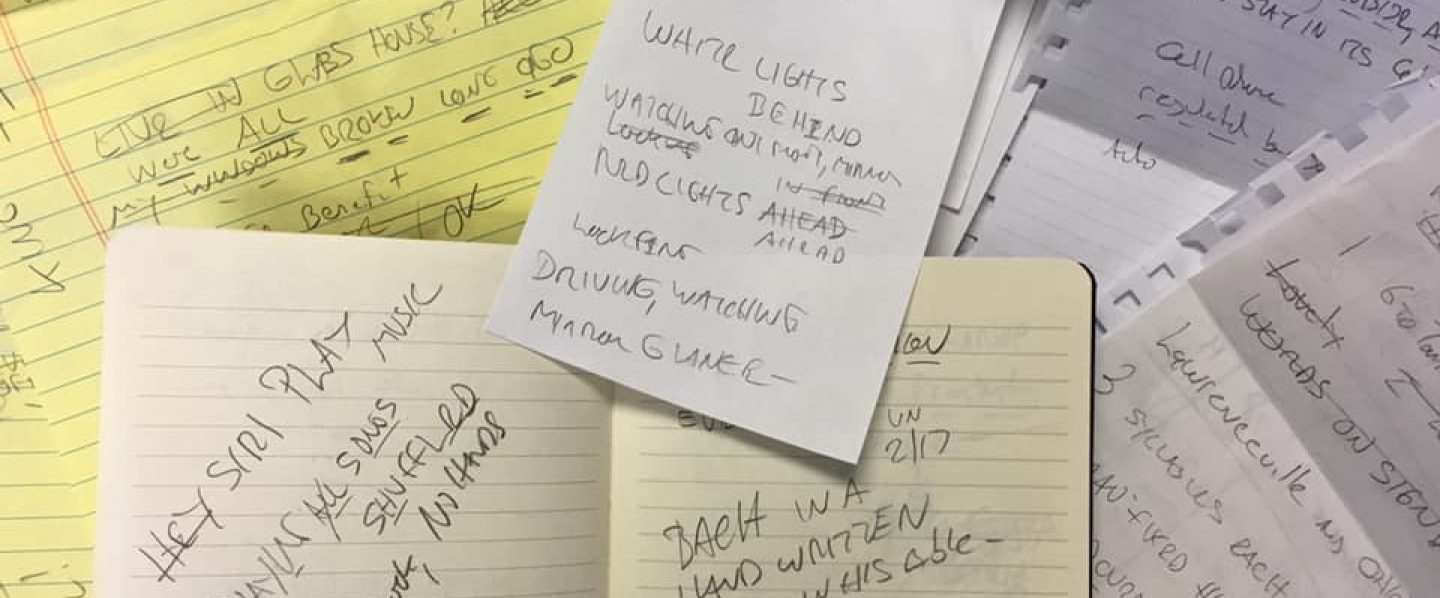
ate some burnt hoss flesh
ate some burnt hoss flesh, something
more elevating
What is the man in the picture doing?
What is the man in the picture, wearing a Michigan T Shirt in Downtown Columbus, Ohio doing?
Well.
I will tell you.
Some years, James Thurber wrote a short story titled, More Alarms at Night.
Mr. Thurber wrote:
Father was usually in bed by nine-thirty and up again by ten-thirty to protest bitterly against a Victrola record we three boys were in the habit of playing over and over, namely, “No News, or What Killed the Dog,” a recitation by Nat Wills.
The record had been played so many times that its grooves were deeply cut and the needle often kept revolving in the same groove, repeating over and over the same words.
Thus: “ate some burnt hoss flesh, ate some burnt hoss flesh, ate some burnt hoss flesh.” It was this reiteration that generally got father out of bed.
SOOOOO I was able to find a copy of this No News, or What Killed the Dog on You Tube and downloaded it.
I took the audio file and cropped it and pasted it to create an audio file that played ate some burnt hoss flesh, ate some burnt hoss flesh, ate some burnt hoss flesh over and over again.
I had this audio file on my phone.
In the photo, I am standing next to a Victrola.
I am standing in the front living of the house where the short story, More Alarms at Night, took place.
SO the sound of ate some burnt hoss flesh, ate some burnt hoss flesh, ate some burnt hoss flesh was heard once inside the walls of James Thurber’s Columbus, Ohio house.
Is that NOT THE COOLEST!!!
I thought it was great.
Since my son moved to Columbus some years ago, I have been planning this and it was worth the effort and I enjoyed the moment.
I had to explain what I did to the docent on duty.
She was excited as you folks.
ANYWAY, here is the story for us all to enjoy again.
Then, as Thurber’s mother said, We’ll go on to something more elevating.
More Alarms at Night
One of the incidents that I always think of first when I cast back over my youth is what happened the night that my father “threatened to get Buck.” This, as you will see, is not precisely a fair or accurate description of what actually occurred, but it is the way in which I and the other members of my family invariably allude to the occasion. We were living at the time in an old house at 77 Lexington Avenue, in Columbus, Ohio. In the early years of the nineteenth century, Columbus won out, as state capital, by only one vote over Lancaster, and ever since then has had the hallucination that it is being followed, a curious municipal state of mind which affects, in some way or other, all those who live there. Columbus is a town in which almost anything is likely to happen and in which almost everything has.
My father was sleeping in the front room on the second floor next to that of my brother Roy, who was then about sixteen. Father was usually in bed by nine-thirty and up again by ten-thirty to protest bitterly against a Victrola record we three boys were in the habit of playing over and over, namely, “No News, or What Killed the Dog,” a recitation by Nat Wills. The record had been played so many times that its grooves were deeply cut and the needle often kept revolving in the same groove, repeating over and over the same words. Thus: “ate some burnt hoss flesh, ate some burnt hoss flesh, ate some burnt hoss flesh.” It was this reiteration that generally got father out of bed.
On the night in question, however, we had all gone to bed at about the same time, without much fuss. Roy, as a matter of fact, had been in bed all day with a kind of mild fever. It wasn’t severe enough to cause delirium and my brother was the last person in the world to give way to delirium. Nevertheless, he had warned father when father went to bed, that he might become delirious.
About three o’clock in the morning, Roy, who was wakeful, decided to pretend that delirium was on him, in order to have, as he later explained it, some “fun.” He got out of bed and, going to my father’s room, shook him and said, “Buck, your time has come!” My father’s name was not Buck but Charles, nor had he ever been called Buck. He was a tall, mildly nervous, peaceable gentleman, given to quiet pleasures, and eager that everything should run smoothly. “Hmm?” he said, with drowsy bewilderment. “Get up, Buck,” said my brother, coldly, but with a certain gleam in his eyes. My father leaped out of bed, on the side away from his son, rushed from the room, locked the door behind him, and shouted us all up.
We were naturally reluctant to believe that Roy, who was quiet and self-contained, had threatened his father with any such abracadabra as father said he had. My older brother, Herman, went back to bed without any comment. “You’ve had a bad dream,” my mother said. This vexed my father. “I tell you he called me Buck and told me my time had come.” he said. We went to the door of his room, unlocked it, and tiptoed through it to Roy’s room. He lay in his bed, breathing easily, as if he were fast asleep. It was apparent at a glance that he did not have a high fever. My mother gave my father a look. “I tell you he did,” whispered father.
Our presence in the room finally seemed to awaken Roy and he was (or rather, as we found out long afterward, pretended to be) astonished and bewildered. “What’s the matter?” he asked. “Nothing,” said my mother. “Just your father had a nightmare.” “I did not have a nightmare,” said father, slowly and firmly. He wore an old-fashioned, “side-slit” nightgown which looked rather odd on his tall, spare figure. The situation, before we let it drop and everybody went back to bed again, became, as such situations in our family usually did, rather more complicated than ironed out. Roy demanded to know what had happened, and my mother told him, in considerably garbled fashion, what father had told her. At this a light dawned in Roy’s eyes. “Dad’s got it backward,” he said. He then explained that he had heard father get out of bed and had called to him. “I’ll handle this,” his father had answered. “Buck is downstairs.” “Who is this Buck?” my mother demanded of father. “I don’t know any Buck and I never said that,” father contended, irritably. None of us (except Roy, of course) believed him. “You had a dream,” said mother. “People have these dreams.” “I did not have a dream,” father said. He was pretty well nettled by this time, and he stood in front of a bureau mirror, brushing his hair with a pair of military brushes; it always seemed to calm father to brush his hair. My mother declared that it was “a sin and a shame” for a grown man to wake up a sick boy simply because he (the grown man: father) had got on his back and had a bad dream. My father, as a matter of fact, had been known to have nightmares, usually about Lillian Russell and President Cleveland, who chased him.
We argued the thing for perhaps another half-hour, after which mother made father sleep in her room. “You’re all safe now, boys,” she said, firmly, as she shut her door. I could hear father grumbling for a long time, with an occasional monosyllable of doubt from mother.
It was some six months after this that father went through a similar experience with me. He was at that time sleeping in the room next to mine. I had been trying all afternoon, in vain, to think of the name Perth Amboy. It seems now like a very simple name to recall and yet on the day in question I thought of every other town in the country, as well as such words and names and phrases as terra cotta, Walla-Walla, bill of lading, vice versa, hoity-toity, Pall Mall, Bodley Head, Schumann-Heink, etc., without even coming close to Perth Amboy. I suppose terra cotta was the closest I came, although it was not very close.
Long after I had gone to bed, I was struggling with the problem. I began to indulge in the wildest fancies as I lay there in the dark, such as that there was no such town, and even that there was no such state as New Jersey. I fell to repeating the word “Jersey” over and over again, until it became idiotic and meaningless. If you have ever lain awake at night and repeated one word over and over, thousands and millions and hundreds of thousands of millions of times, you know the disturbing mental state you can get into. I got to thinking that there was nobody else in the world but me, and various other wild imaginings of that nature. Eventually, lying there thinking these outlandish thoughts, I grew slightly alarmed. I began to suspect that one might lose one’s mind over some such trivial mental tic as a futile search for terra firma Piggly Wiggly Gorgonzola Prester John Arc de Triomphe Holy Moses Lares and Penates. I began to feel the imperative necessity of human contact. This silly and alarming tangle of thought and fancy had gone far enough. I might get into some kind of mental aberrancy unless I found out the name of that Jersey town and could go to sleep. Therefore, I got out of bed, walked into the room where father was sleeping, and shook him. “Um!” he mumbled. I shook him more fiercely and he finally woke up, with a glaze of dream and apprehension in his eyes. “What’s matter?” he asked, thickly. I must, indeed, have been rather wild of eye, and my hair, which is unruly, becomes monstrously tousled and snarled at night. “Wha’s it?” said my father, sitting up, in readiness to spring out of bed on the far side. The thought must have been going through his mind that all his sons were crazy, or on the verge of going crazy. I see that now, but I didn’t then, for I had forgotten the Buck incident and did not realize how similar my appearance must have been to Roy’s the night he called father Buck and told him his time had come. “Listen,” I said. “Name some towns in New Jersey quick!” It must have been around three in the morning. Father got up, keeping the bed between him and me, and started to pull his trousers on. “Don’t bother about dressing,” I said. “Just name some towns in New Jersey.” While he hastily pulled on his clothes–I remember he left his socks off and put his shoes on his bare feet–father began to name, in a shaky voice various New Jersey cities. I can still see him reaching for his coat without taking his eyes off me. “Newark,” he said, “Jersey City, Atlantic City, Elizabeth, Paterson, Passaic, Trenton, Jersey City, Trenton, Paterson–” “It has two names,” I snapped. “Elizabeth and Paterson,” he said. “No, no!” I told him, irritably. “This is one town with one name, but there are two words in it, like helter-skelter.” “Helter-skelter,” said my father, moving slowly toward the bedroom door and smiling in a faint, strained way which I understand now–but didn’t then–was meant to humor me. When he was within a few paces of the door, he fairly leaped for it and ran out into the hall, his coat-tails and shoelaces flying. The exit stunned me. I had no notion that he thought I had gone out of my senses; I could only believe that he had gone out of his or that, only partially awake, he was engaged in some form of running in his sleep. I ran after him and I caught him at the door of mother’s room and grabbed him, in order to reason with him. I shook him a little, thinking to wake him completely. “Mary! Roy! Herman!” he shouted. I, too, began to shout for my brothers and my mother. My mother opened her door instantly, and there we were at 3:30 in the morning grappling and shouting, father party dressed, but without socks or shirt, and I in pajamas.
“Now, what?” demanded my mother, grimly, pulling us apart. She was capable, fortunately, of handling any two of us and she never in her life was alarmed by the words or actions of any one of us.
“Look out for Jamie!” said father. (He always called me Jamie when excited.) My mother looked at me.
“What’s the matter with your father?” she demanded. I said I didn’t know; I said he had got up suddenly and dressed and ran out of the room.
“Where did you think you were going?” mother asked him, coolly. He looked at me. We looked at each other, breathing hard, but somewhat calmer.
“He was babbling about New Jersey at this infernal hour of the night,” said father. “He came to my room and asked me to name towns in New Jersey.” Mother looked at me.
“I just asked him,” I said. “I was trying to think of one and couldn’t sleep.”
“You see?” said father, triumphantly. Mother didn’t look at him.
“Get to bed, both of you,” she said. “I don’t want to hear any more out of you tonight. Dressing and tearing up and down the hall at this hour in the morning!” She went back into the room and shut her door. Father and I went back to bed. “Are you all right?” he called to me. “Are you?” I asked. “Well, good night,” he said. “Good night,” I said.
Mother would not let the rest of us discuss the affair next morning at breakfast. Herman asked what the hell had been the matter. “We’ll go on to something more elevating,” said mother.