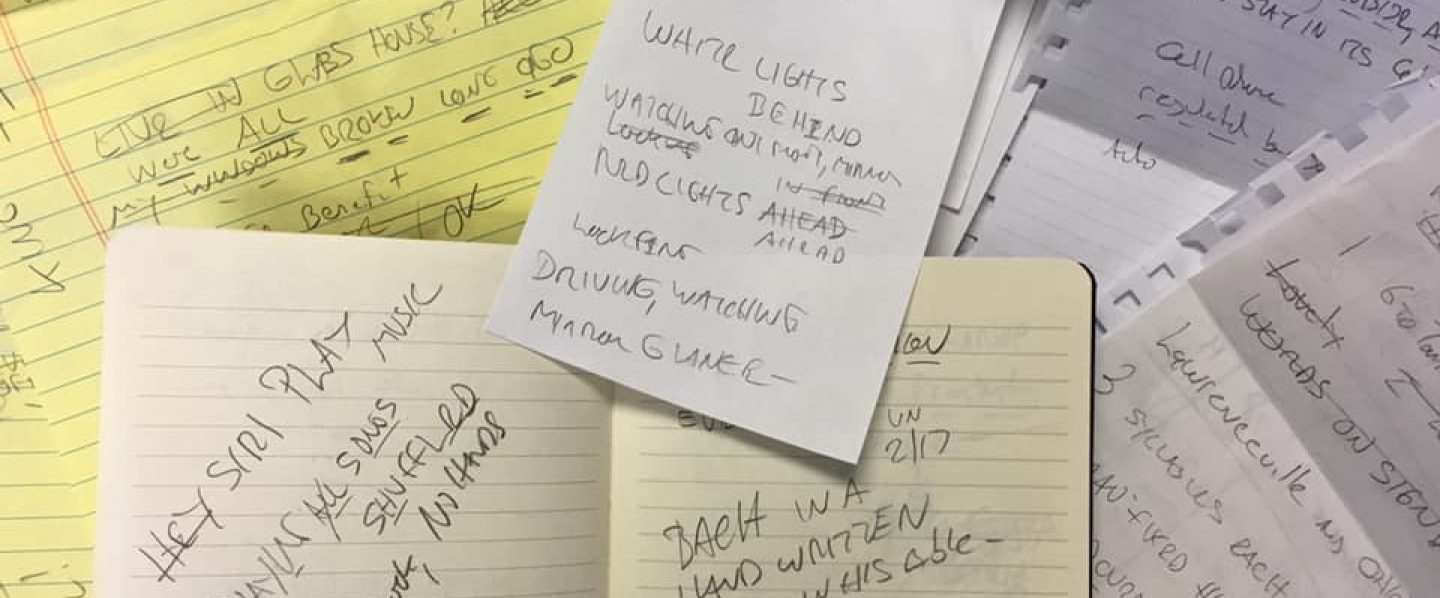
he wrote we have proved ourselves inept fools on so many mortal fronts
I suspect that it’s inappropriate to strand myself on a high horse when it comes to what people eat. We have proved ourselves inept fools on so many mortal fronts — from our utter disregard of the natural world to our notions of ethnic virtue to the hellish marriage of politics and war — that perhaps we should be allowed to pick at garbage like happy crows. When I was growing up in the Calvinist Midwest, the assumption that we eat to live, not live to eat, was part of the Gospels. (With the exception, of course, of holiday feasts. Certain women were famous for their pie-making abilities, while certain men, like my father, were admired for being able to barbecue two hundred chickens at once for a church picnic.) I recall that working in the fields for ten hours a day required an ample breakfast and three big sandwiches for lunch. At the time, I don’t think I believed I was all that different from the other farm animals.
Jim Harrison in A Really Big Lunch published in the New Yorker, Aug 29, 2004.
Garrison Keillor wrote in his 1991 book, WLT: A Radio Romance, “Don’t concern yourself with things you can’t change, I say. It’s more important to make a very good cup of coffee in the morning and a very good piece of toast than it is to worry about Josef Stalin, because I can do something about breakfast and I can’t do anything about Stalin, and I’m sure he’s having a wonderful breakfast.”
cannot read papers as they no longer reflect the world I perceive
Adapted from the passage:
“After twenty years of studying them I am no longer able to read newspapers.
Why?
It’s because they no longer reflect the world I perceive.
I will have to go along with the way I see it even if wrong.
And if they are right, it lacks interest.”
Written by Jim Harrison in the novella, The Man Who Gave Up His Name, published in the collection titled, “Legends of the Fall” by Jim Harrison, New York, Grove Press, 2016.
I still try to read The Guardian and the New York Times every morning with my morning coffee.
I used to try and read USA Today but it’s website defies any real effort to read the stories without a lot of perseverance.
I am speaking of perseverance, of course, from a technical point of view.
Oh to handle all the ads and popups and pop downs and such that make reading online news such a challange.
But of late I am having more and more issues with what I am reading.
I keep asking, what world are these people living in.
The world described more and more in newspapers does not reflect the world I percieve.
One side of the paper can decry the end of the world and those dire portents in the next elections and how if we all could really care about what was happening, we could stop it.
And on the other side of the paper are heart felt discussions of the clothes people wore on the red carpet of the Emmy’s and how the Emmy’s was rigged and whole lot of other stuff that is supposed to be of interest to me.
Maybe it is getting older.
I recently went to a major college football game and while there was much I recognized from when I went to this college as a student, there was much that did not reflect on college football as I perceived it.
I chatted with the lady next to me and she said that they were searching for ways to make if fun for kids.
I guess getting together with your friends along with a keg of beer and going someplace where you could drink in public and yell your head off is no longer fun enough.
Reading this as I type it I decided I better check my drivers license and it says I was born in 1960.
I was self-appointed surveyor of forest paths keeping them open
For many years I was self-appointed inspector of snow storms and rain storms, and did my duty faithfully; surveyor, if not of highways, then of forest paths and all across-lot routes, keeping them open, and ravines bridged and passable at all seasons, where the public heel had testified to their utility.
Sometimes the non conformity is living in the Hilton Head area … but wearing a Tybee Island T Shirt
In any weather, at any hour of the day or night, I have been anxious to improve the nick of time, and notch it on my stick too; to stand on the meeting of two eternities, the past and future, which is precisely the present moment; to toe that line. You will pardon some obscurities, for there are more secrets in my trade than in most men’s, and yet not voluntarily kept, but inseparable from its very nature. I would gladly tell all that I know about it, and never paint “No Admittance” on my gate.
Inspecting my salt marshes and the Broad River, looking towards Parris Island US Marine Corps Recruit Depot
For a long time I was reporter to a journal, of no very wide circulation, whose editor has never yet seen fit to print the bulk of my contributions, and, as is too common with writers, I got only my labor for my pains. However, in this case my pains were their own reward.
Path not taken … maybe – Lemon Island, South Carolina
For eighteen hundred years, though perchance I have no right to say it, the New Testament has been written; yet where is the legislator who has wisdom and practical talent enough to avail himself of the light which it sheds on the science of legislation.
All passages from Walden by Henry David Thoreau (Boston, Ticknor and Fields, 1854).
Wikipedia quotes EB White on Mr. Thoreau, that to write Walden, “Henry went forth to battle when he took to the woods, and Walden is the report of a man torn by two powerful and opposing drives— the desire to enjoy the world and the urge to set the world straight.”
Mr. Thoreau was in his mid 30’s when he went forth to battle.
I am in my mid 60’s and my urge to set the world straight is waning.
My desire to enjoy the world is growing.
That last line I quote from Walden happens to be the very last line of the book.
I can tweak it to read, “For over two thousand years, though perchance I have no right to say it, the New Testament has been written; yet where is the legislator who has wisdom and practical talent enough to avail himself of the light which it sheds on the science of legislation.“
It was Jim Harrison who once wrote along the lines that the United States had passed some 1.5 million laws … trying to enforce the 10 commandments.
It was Mr. Churchill who said in a speech in 1947, “Indeed it has been said that democracy is the worst form of Government except for all those other forms that have been tried from time to time.”
If Mr. Churchill is correct, BOY HOWDY, but do I feel sorry for all those other countries.
Is it any wonder that I embrace my role as a self-appointed inspector of snow storms and rain storms and reporter for my own journal of small circulation.
However, in this case my pains are their own reward.
PS: Thank you to my wife and co-self-appointed-inspector for the photos of our adventure on Widgeon Point, South Carolina.
bring all of your dreams wrap them in a blue cloud-cloth away from the world
Bring me all of your dreams, You dreamers. Bring me all of your Heart melodies That I may wrap them In a blue cloud-cloth Away from the too rough fingers Of the world.
The Dreamkeeper From The Weary Blues (Alfred A. Knopf, 1926) by Langston Hughes.
The image is of the Whale Branch, a river that winds northeasterly from the Broad River to the Coosaw River. The Branch crosses under US 21 at Seabrook, which has a broad marsh and grass islands along both of its shores in South Carolina. (NPSN … no photoshop needed)
never known woman who could weep about her age way men I know can
Well, the characteristic fear of the American writer is not so much that as it is the process of aging.
The writer looks in the mirror and examines his hair and teeth to see if they’re still with him.
“Oh my God,” he says, “I wonder how my writing is. I bet I can’t write today.”’
The only time I met Faulkner he told me he wanted to live long enough to do three more novels.
He was 53 then, and I think he has done them.
Then Hemingway says, you know, that he doesn’t expect to be alive after sixty.
But he doesn’t look forward not to being.
When I met Hemingway with John O’Hara in Costello’s Bar 5 or 6 years ago we sat around and talked about how old we were getting.
You see it’s constantly on the minds of American writers.
I’ve never known a woman who could weep about her age the way the men I know can.
From Interview: THE ART OF FICTION: JAMES THURBER. Paris Review, 3 (Fall, 1955), 34-49. Illustrated
This snippet made laugh.
I could picture Thurber in his mid 50’s, sitting in a bar with Mr. Hemingway and Mr. O’Hara and that alone is a picture to make me smile.
And that they were worrying about how old they were getting and that Mr. Thurber thought it was funny to the point of saying “I’ve never known a woman who could weep about her age the way the men I know can,” is but itself funny enough to make me laugh out loud.
For sure Mr. Thurber, who was being interviewed for this interview by George Plimpton, was having a great time tossing off the names of Faulkner, Hemingway and O’Hara with the confidence that he COULD toss off these names.
(I am reminded of the a story of Hollywood Movie Director John Ford going on a duck hunt with Clark Gable and William Faulkner and the conversation got around to writing and Gable says to Faulkner, ‘Who are the best writers right now?” Faulkner replies, “Oh Hemingway, Fitzgerald, Steinbeck … and myself.” Gable says “Oh, Mr. Faulkner, do you write?” “Yes,” says Faulkner, “Mr. Gable … what do you do?” … The kicker is John Ford swore both were on the level.)
BUT I DIGRESS …
As a kind of post script to the James Thurber story, The Paris Review included this photo.
Notice the caption.
Notice it says CONSIDERABLY REDUCED.
By 1961, James Thurber was pretty much blind in both eyes.
One eye was damaged playing William Tell when he was a kid and the other eye went due to sympathetic eye syndrome.
When he died, EB White wrote in his New Yorker Magazine Obituary:
I am one of the lucky ones; I knew him before blindness hit him, before fame hit him, and I tend always to think of him as a young artist in a small office in a big city, with all the world still ahead. It was a fine thing to be young and at work in New York for a new magazine when Thurber was young and at work, and I will always be glad that this happened to me.
His mind was never at rest, and his pencil was connected to his mind by the best conductive tissue I have ever seen in action. The whole world knows what a funny man he was, but you had to sit next to him day after day to understand the extravagance of his clowning, the wildness and subtlety of his thinking, and the intensity of his interest in others and his sympathy for their dilemmas — dilemmas that he instantly enlarged, put in focus, and made immortal, just as he enlarged and made immortal the strange goings on in the Ohio home of his boyhood.
He was both a practitioner of humor and a defender of it. The day he died, I came on a letter from him, dictated to a secretary and signed in pencil with his sightless and enormous “Jim.” “Every time is a time for humor,” he wrote. “I write humor the way a surgeon operates, because it is a livelihood, because I have a great urge to do it, because many interesting challenges are set up, and because I have the hope it may do some good.” Once, I remember, he heard someone say that humor is a shield, not a sword, and it made him mad. He wasn’t going to have anyone beating his sword into a shield. That “surgeon,” incidentally, is pure Mitty. During his happiest years, Thurber did not write the way a surgeon operates, he wrote the way a child skips rope, the way a mouse waltzes.
Thurber looked in the mirror and asked I bet I can’t write today and then spit in the mirror and said I am going to write anyway.