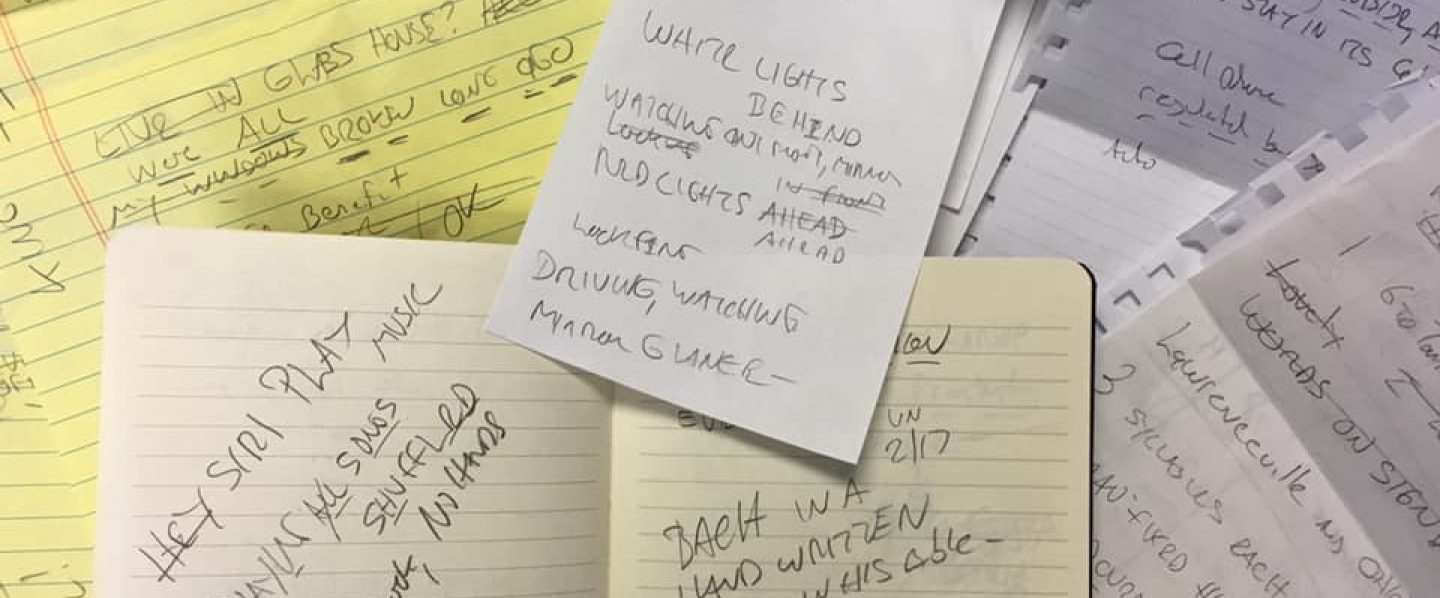
3.7.2023 – sometimes a crumb falls

sometimes a crumb falls
from the tables of joy some
times a bone is flung

Pretty cheeky of me but this is adapted from the poem, Luck, by Langston Hughes, word for word.

Sometimes a crumb falls

From the tables of joy

Sometimes a bone

Is flung

To some people

Love is given

To others

Only heaven.

Angst?

Despair?

Some times for some people things fall, are flung, are given or found.

How can so much be packed into so few words?

I wonder what others might have made of this.

I also wanted a further attribution so I put the phrase, Sometimes a crumb falls in the google and was rewarded with a story that appeared in the New York Times on March 2, 1994.

In the article by Joe Sexton, Mr. Sexton reports on the New York City Transit authority was using ad space in the New York Subway system to display poetry in a program called Poetry in Motion.

On that day, March 2nd, in 1994, this poem was on display and Mr. Sexton rode along on the subway to ask commuters if they had noticed the poem, if they would read it, and want they thought it meant.

It is a fascinating read and a fabulous snapshot of a moment in the lives of several people who I am sure never once thought they might be talking to a reporter about Langston Hughes on the New York Subway.

For me, the poem might have its roots in the Bible story in Matthew 15:

The woman came and knelt before him. “Lord, help me!” she said.

He [Jesus] replied, “It is not right to take the children’s bread and toss it to the dogs.”

“Yes it is, Lord,” she said. “Even the dogs eat the crumbs that fall from their master’s table.”

Then Jesus said to her, “Woman, you have great faith! Your request is granted.”

I could go one with this thought of crumbs that fall, a bone that is flung, love found on earth or in Heaven but I won’t.

That thought of Biblical roots does not show up in the thoughts listed by the reporter as he interviewed commuters.

“I can’t express it, but I get it,” Ms. McNeil says of the poem.

“A crumb? A bone?” she [another commuter] asked. “What’s it got to do with heaven?”

“… To me, the poem means that you are lucky if you even find just some happiness.”

The story was headlined, Langston Hughes On the IRT; A Poem Arouses Many Feelings.

Whatever the feelings, I have to feel that Mr. Hughes would have been happy to learn that his poem, posted in the subway, where people might have a few seconds to ponder its message, had many feelings.

One more thing.

Those tables of joy.

Simple phrase you can consider in your mind and find it is 20 minutes later in your day.

8.13.2022 – conscience, cowardice

conscience, cowardice
one in the same action from
not doing nothing

Mr. Oscar Wilde said in his novel, The Picture of Dorian Gray, that “Conscience and cowardice are really the same things.“

In the novel, Basil Hallward is talking with Lord Henry.

Basil says, “…it was not conscience that made me do so: it was a sort of cowardice. I take no credit to myself for trying to escape.”

Lord Henry replies, “Conscience and cowardice are really the same things, Basil. Conscience is the trade-name of the firm. That is all”

Conscience and cowardice are really the same things.

Conscience is the trade-name of the firm.

That is all.

Cannot say why this passage was on my mind of late.

But aren’t they interesting words?

Conscience.

Cowardice.

I looked up the words in the online Webster’s.

The sense or consciousness of the moral goodness or blameworthiness of one’s own conduct, intentions, or character together with a feeling of obligation to do right or be good.

Lack of courage or firmness of purpose.

Really the same things.

That is all.

As Big Bill put it:

Thus conscience does make cowards of us all;
And thus the native hue of resolution
Is sicklied o’er with the pale cast of thought,
And enterprises of great pith and moment
With this regard their currents turn awry,
And lose the name of action.

(Hamlet, Act III, Scene I)

Very deep stuff for a Saturday.

Thankfully there is always Langston Hughes’ Motto:

I play it cool
And dig all jive
That’s the reason
I stay alive.

My motto,
As I live and learn,
is:
Dig And Be Dug
In Return.

Dig And Be Dug In Return.

Can we get that on our money?

5.4.2022 – enhanced use of force

enhanced use of force
deescalation training
so who but the Lord

Deadly force “is always the last resort” and that philosophy, as well as de-escalation training, needs to be ingrained into the department’s policies, Grand Rapids Police Chief Eric Winstrom told The Detroit News Tuesday.

So starts an article in the Detroit News with the headline, “Grand Rapids police need enhanced use of force, de-escalation training, chief says” by Leonard N. Fleming.

The words, enhanced use of force, de-escalation training, strung together in a line, the syllables clicking in a row like the sound of the wheels of a train over gaps in the tracks, grabbed and held my attention.

The article details the efforts of the Police Chief of Grand Rapids, Michigan (where I grew up) to address publicly the death of Patrick Lyoya, 26, who was shot in the back of the head by officer Christopher Schurr on April 4 following a tussle on the ground … after a traffic stop.

Mr. Fleming quotes the Chief as saying, “From what I’m hearing from the community, a real vocal part of the community is there’s no rebuilding trust. You’ve got to build it because it was never there.

Chief Winstrom said that on April 26th, 2022.

In 1947, in the magazine, Poetry, Langston Hughes published this poem.

I looked and I saw
That man they call the Law.
He was coming
Down the street at me!
I had visions in my head
Of being laid out cold and dead,
Or else murdered
By the third degree.

I said, O, Lord, if you can,
Save me from that man!
Don’t let him make a pulp out of me!
But the Lord he was not quick.
The Law raised up his stick
And beat the living hell
Out of me!

Now, I do not understand
Why God don’t protect a man
From police brutality.
Being poor and black,
I’ve no weapon to strike back
So who but the Lord
Can protect me?

We’ll see.

The title of the poem is ‘Who but the Lord?

A footnote in the “The collected poems of Langston Hughes” (Knopf, 1994) says that the last line was added when the poem was reprinted in the book, The Panther and the Lash.

That was in 1967.

That last line again?

We’ll see.

I gots no real standing as a social critic so I will take refuge (hide) under the cover of saying I am only a social commentator.

I just hold up the mirror and you can see what you want to see.

The Rev. Al once said something along the lines of, “You can use a mirror to reflect yourself or you can use a mirror to correct yourself.”

You’ve got to build trust because it was never there.

We’ll see.

4.19.2022 – then, even before

then, even before
I was six, books began
to happen to me

Adapted from this passage in the book, The Big Sea, An Autobiography by Langston Hughes.

In Topeka, as a small child, my mother took me with her to the little vine-covered library on the grounds of the Capitol.

There I first fell in love with librarians, and I have been in love with them ever since- those very nice women who help you find wonderful books!

The silence inside the library, the big chairs, and long tables, and the fact that the library was always there and didn’t seem to have a mortgage on it, or any sort of insecurity about it – all of that made me love it.

And right then, even before I was six, books began to happen to me, so that after a while, there came a time when I believed in books more than in people – which, of course, was wrong.

That was why, when I went to Africa, I threw all the books into the sea.

The silence inside the library, the big chairs, and long tables, and the fact that the library was always there and didn’t seem to have a mortgage on it, or any sort of insecurity about it – all of that made me love it.

Not any sort of insecurity about it.

I’ll pass over any discussion about working at a library and being aware of tax-payer funding and other such insecurities to focus on the magic and wonderfulness of that line, ‘[didn’t have] any sort of insecurity about it.’

Mr. Bono sings, “But I still haven’t found what I’m looking for.”

Sometimes what you are looking for is right under your nose.

A place with out any sort of insecurity about it would check a lot of boxes on anyone’s search form.

My motto,
As I live and learn,
is:
Dig And Be Dug
In Return.

  • Langston Hughes

11.29.2020 – to be free, escape

to be free, escape
to be a man on my own
threw books in the sea

I’d left a box of books in Harlem in the fall, and before we sailed I went after them. I brought them aboard ship with me. But when I opened them up and looked at them that night off Sandy Hook, they seemed too much like everything I had known in the past, like the attics and basements in Cleveland, like the lonely nights in Toluca, like the dormitory at Columbia, like the furnished room in Harlem, like too much reading all the time when I was a kid, like life isn’t, as described in romantic prose; so that night, I took them all out on deck and threw them overboard. It was like throwing a million bricks out of my heart—for it wasn’t only the books that I wanted to throw away, but everything unpleasant and miserable out of my past: the memory of my father, the poverty and uncertainties of my mother’s life, the stupidities of color-prejudice, black in a white world, the fear of not finding a job, the bewilderment of no one to talk to about things that trouble you, the feeling of always being controlled by others—by parents, by employers, by some outer necessity not your own. All those things I wanted to throw away. To be free of. To escape from. I wanted to be a man on my own, control my own life, and go my own way. I was twenty-one. So I threw the books in the sea.

Whiffs of salt spray blew in my face. It was dark. Up on the poop, the wind smelt good, but I was sleepy, so I went down a pair of narrow steps into the cabin with George and Puerto Rico, and we laughed about George’s landlady, who didn’t know he had left Harlem for Africa that evening.

Then I went to bed.

From The Big Sea, An Autobiography by by Langston Hughes. (Hill and Wang – New York, 1940)