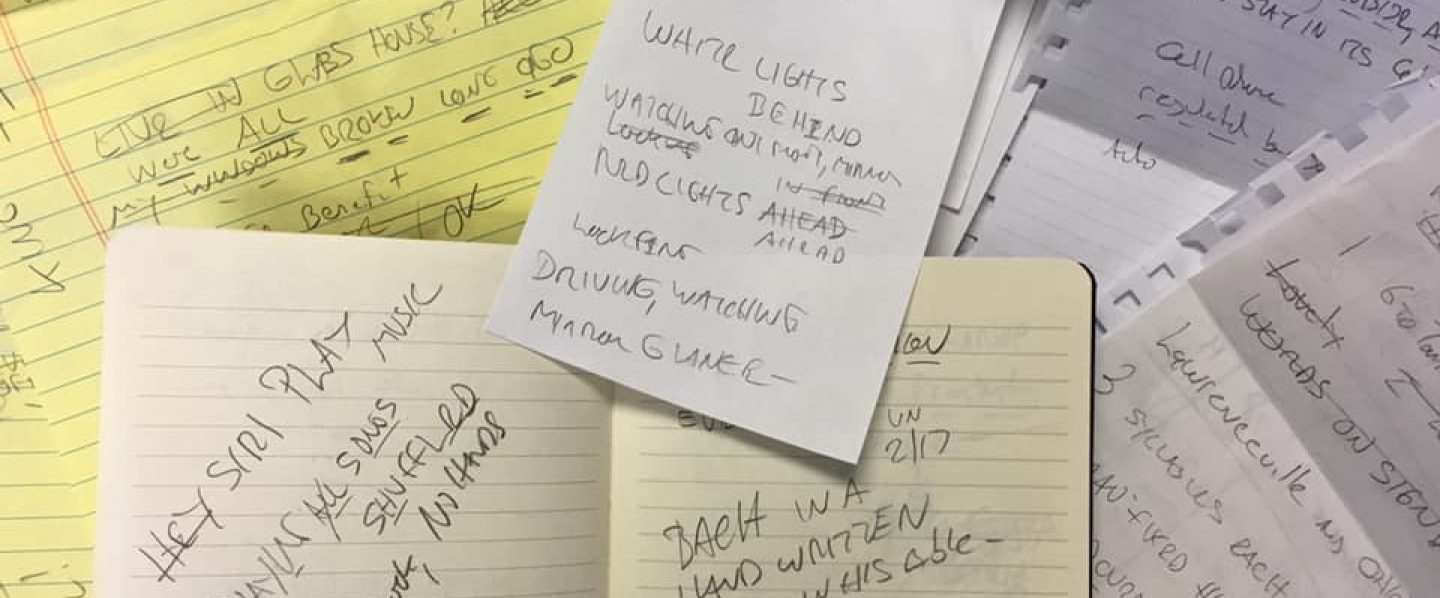
4.26.2023 – brought the sense of change

brought the sense of change
or irresponsibility
reckless as they were

I was going to write that if you read the books and essays of the 100 years ago, your know the phrase, “The Lost Generation” but as so few folks read books and essays of 100 years ago I am going to write that I came across an interesting comment on the people of the lost generation.

I came across a series of books published by George Plimpton’s Paris Review titled, Writers at Work.

There are 9 or 10 books in the series and they are collections of interviews with some of the great, well known and great mostly unknown writers of the 20th Century.

Certainly I have my favorites and I quickly searched out the interview Dorothy Parker.
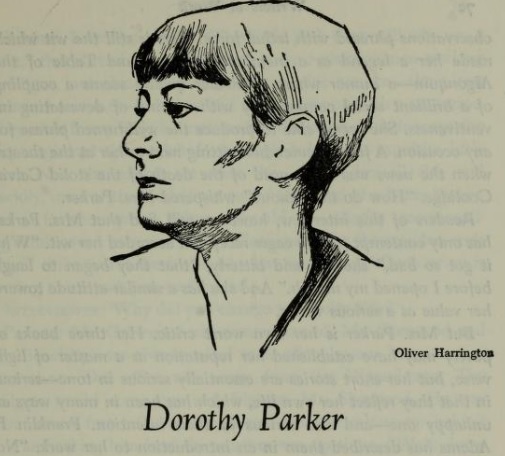
Hoping against hope for something good (Jim Harrison once wrote that in every interview he ever gave, he would just repeat the question and say, I AGREE, to get the interview over with IE Question: MR. Harrison, would you say that while Hemingway must be counted among the American Greats, today he is little read and has even less impact? – Mr. Harrison : “Yes I would say that while Hemingway must be counted among the American Greats, today he is little read and has even less impact!” Harrison said nothing made interviewers happier than responses like this – but I digress) and I was stunned to read this quote in the Dorothy Parker interview.

Gertrude Stein did us the most harm when she said, “You’re all a lost generation.” That got around to certain people and we all said, “Whee! We re lost.” Perhaps it suddenly brought to us the sense of change. Or irresponsibility. But don’t forget that, though the people in the twenties seemed like flops, they weren’t. Fitzgerald, the rest of them, reckless as they were, drinkers as they were, they worked damn hard and all the time.

Now to wikipedia, The Lost Generation was the social generational cohort in the Western world that was in early adulthood during World War I. The generation is generally defined as people born from 1883 to 1900. The term is also particularly used to refer to a group of American expatriate writers living in Paris during the 1920s. Gertrude Stein is credited with coining the term, and it was subsequently popularised by Ernest Hemingway, who used it in the epigraph for his 1926 novel The Sun Also Rises: “You are all a lost generation. Lost” in this context refers to the “disoriented, wandering, directionless” spirit of many of the war’s survivors in the early postwar period.

And I have ever been taught to regard the original statement by Ms. Stein the term as used by Mr. Hemingway as something sacred in American Literature.

See, these folks were lost.

See, these folks were hardened by their times.

See, though says Ms. Parker, we got a pass. We’re lost!

A sense of change.

A sense of irresponsibility.

See we’re boomers.

See we’re Gen X.

See we’re Gen Y.

See we’re Millennials.

See, it’s not our fault, WHEEEEEEEEEEEEEEEEEE.

Plus ça change, plus c’est la même chose.

4.3.2023 – when everyone is

when everyone is
gone, who is left, at what point
future merge with Death?

Who is left when everyone is gone?

He watched Diana’s yellow Volvo disappear toward Traverse City, the faulty muffler putting along after the car disappeared, somehow as lonely as a dog barking far away in the night.

Who is left but me standing on the porch on a June morning, and able to see a green leaf fall, for the first and last time, fifty yards away.

Am I here if I abolish the input of my five senses?

Sure.

There’s still two hundred pounds of standing meat ignorant of the leaf.

The sense of compactness alternated with the banality of worrying about one leaf out of trillions.

He had felt a similar sorrow when an area of forest had been flooded long enough to kill the trees — as a child he had talked to trees until a neighbor kid had caught him and told everyone.

Water had always been a question of too little, enough, too much.

His thought processes lamely trailed off, then returned to the porch.

At what point did changing his future merge with eternity itself?

Death?

From Warlock by Jim Harrison, (1937-2016) New York, Dell (1981).

3.30.2023 – suspicious neatness

suspicious neatness
spongelike ramshackle craftless
continuously vile

Adapted from the complete first sentence of Jim Harrison’s Wolf: A False Memoir.

The sentence describes upper lower Michigan as well as upper Michigan.

The sentence, one long sentence, the opening sentence of the Wolf, is two pages long.

Mr. Harrison admitted he did it that way because he could.

The sentence reads:

You could travel west out of Reed City, a small county seat in an unfertile valley with a small yellow brick courthouse and a plugged cannon on its lawn next to a marble slab with the names of the World War One and Two dead inscribed in gold and the not dead plainly inscribed with the suspicious neatness of cemetery script, those who served, farther west through fifty miles of pine barrens dotted with small farm settlements often of less than thirty people, or merely a grocery store and gas station adjoined by a shabby aluminum trailer or a basement house with the first and perhaps second stories awaiting more prosperous times, the stores themselves with little and aged stock — lunch meat, bologna pickled in a jar, Polish sausage, tinned foods covered with dust, plaquettes of fish lures, mosquito repellent in aerosol cans, live bait and a pop cooler outside the door — but not many of these — a narrow road through mixed conifers, cedar and jack pine, some stunted scrub oak, birch, and the short-lived poplar, a pulp tree usually living less than twenty years and clotting the woods floor with its rotting trunks and branches, and west through the low pelvic mysteries of swamps divided invisibly from the air by interlocking creeks and small rivers, made unbearable in spring and summer by mosquitoes and black flies, swamps dank with brackish water and pools of green slime, small knolls of fern, bog marshes of sphagnum, spongelike and tortuous to the human foot and bordered by impenetrable tamarack thickets: in short a land with no appreciable history and a continuously vile climate, lumbered off for a hundred years with few traces of the grand white pine which once covered it, an occasional charred almost petrified stump four feet in diameter, evidence of trees which rose nearly two hundred feet and covered the northern half of the state and the Upper Peninsula, razed with truly insolent completeness by the lumber barons after the Civil War with all the money going to the cities of the south — Saginaw, Lansing, Detroit — and east to Boston and New York; and the houses, even the large farmhouses on reasonably good land, sloppily built, ramshackle and craftless compared to Massachusetts or Vermont; west to Lake Michigan then to turn north along its coast to the Straits of Mackinac, cross the mammoth bridge, travel west another three hundred miles through the sparsely populated Upper Peninsula and then north again into the comparatively vast, the peopleless Huron Mountains.

From Wolf : a False Memoir by Jim Harrison, (1937-2016) New York : Dell, 1981

3.15.2013 – stacked against what we

stacked against what we
think we are: impossible
to surprise ourselves

From:

The days are stacked against
what we think we are:
it is nearly impossible
to surprise ourselves
I will never wake up
and be able to play the piano.

In the poem The Theory & Practice of Rivers as it appears in the book, The Theory & Practice of Rivers and New Poems by Jim Harrison, (1937-2016), Clark City Press, Livingston, Mont 1989.

While I have to agree with Mr. Harrison, I still wake up and hope to play the piano and I don’t even have a piano.

1.15.2023 – how did dare expect

how did dare expect
so much of life and how could
act so stupidly

I was in the library the other day and as I do in libraries, I walked down the H aisle of fiction to see how many Jim Harrison books were on the shelf.

I was pleased to see 8.

I looked them over and the book titled, “The Summer He Didn’t Die“, caught my eye.

I knew it was on the shelf at home among the remaining titles in my hard cover library and I also knew I hadn’t opened it in years.

To sidestep into the discussion of EBooks, EReaders and printed books, I am 100% in agreement with those who say there is something to the printed page and holding a book in your lap.

But I also say, move several times and your thoughts on a personal multi volume library will change.

I still say I love print, but am very THANKFUL for electronic versions of any and all books.

But I digress.

When I got home, I took The Summer He Didn’t Die off the shelf and sat in my rocking chair and opened it.

There are, as usual with Mr. Harrison, three long short stories in the book.

The first one was the title short story, The Summer He Didn’t Die, and it is part of the Brown Dog oeuvre.

If you never read anything else going forward, I ask you to find a copy of Brown Dog (what you don’t a free archive.org account?) which has all 6 of the Brown Dog stories anthologized in one volume, and enjoy the trip to world you never considered.

It’s the same world we live in, but it’s not the same world we live in at the same.

You won’t be in Kansas anymore.

The 2nd long short story is titled, “Republican Wives.”

I am sure I read the story when I got the book but I did not have any memory of it.

This was fabulous.

It was new ground or, at least, forgotten old ground, one of the few benefits of getting older.

Reading the long short story, on the 2nd page I hit this line:

How did I dare expect so much of life. And by contrast, how could I have acted so stupidly?

And I stopped reading.

30 minutes later I was still looking at that page.

In the book, The Caine Mutiny, Herman Wouk wrote about the hero, young Willie Keith, after a near death experience, sat back with a cigar and thought.

Wouk writes:

With the smoke of the dead sailor’s cigar wreathing around him, Willie passed to thinking about death and life and luck and God.

Philosophers are at home with such thoughts, perhaps, but for other people it is actual torture when these concepts – not the words, the realities – break through the crust of daily occurrences and grip the soul.

A half hour of such racking meditation can change the ways of a lifetime

How did I dare expect so much of life.

And by contrast, how could I have acted so stupidly?

More than saying, But for the Grace of God, go I.

Thank God, and I mean THANK GOD, for grace.

But daring to expect so much of life?

Deep in my soul I think of Prospero in the Tempest.

We are such stuff, as dreams are made on.

Dreams?

Expectations?

Dare to dream.

Dare to expect much.

But, don’t act so stupidly, can’tcha?

Gee Whiz.