9.8.2021 – the journey having

the journey having
shaken lethargy fresh eyes
rediscovery

I based this haiku and several others like it from the writing in the book, The Art of Travel (2002, Vintage Books) by Alain de Botton, and the and Mr. de Botton’s comments on the book, Journey around My Bedroom witten in 1790 by Xavier de Maistre.

de Maistre, de Botton writes in de book, “living in a modest room at the top of an apartment building in Turin, de Maistre pioneered a mode of travel that was to make his name: room travel”.

Millions of people who, until now, have never dared to travel, others who have not been able to travel and still more who have not even thought of travelling will be able to follow my example,’ explained Xavier as he prepared for his journey ‘The most indolent beings will no longer have any reason to hesitate before setting off to find pleasures that will cost them neither money nor effort.’ He particularly recommended room travel to the poor and to those afraid of storms, robbers and high cliffs.

Unfortunately de Maistre’s own pioneering journey rather like his flying machine, did not get very far.

The story begins well: de Maistre locks his door and changes into his pink-and-blue pyjamas. With no need of luggage, he travels to the sofa, the largest piece of furniture in the room. His journey having shaken him from his usual lethargy, he looks at it through fresh eyes and rediscovers some of its qualities. He admires the elegance of its feet and remembers the pleasant hours he has spent cradled in its cushions, dreaming of love and advancement in his career. From his sofa, de Maistre spies his bed. Once again, from a traveller’s vantage point, he learns to appreciate this complex piece of furniture. He feels grateful for the nights he has spent in it and takes pride in the fact that his sheets almost match his pyjamas. ‘I advise any man who can do so to get himself pink and white bedlinen,’ he writes, for these are colours to induce calm and pleasant reveries in the fragile sleeper.

*Adapted from the book, The Art of Travel (2002, Vintage Books) by Alain de Botton.

According to the website, GOOD READS, Any Baedeker will tell us where we ought to travel, but only Alain de Botton will tell us how and why.

As I said in the section on Architecture , what I find irresistible in reading Mr. de Botton is his use of language.

To also quote myself, I get the feeling that if you made a spread sheet of all the words, adverbs and adjectives used by Mr. de Botton, you just might find that he used each word just once.

And to reemphasize, neat trick in writing a book.

If I knew how to do that, hey, I would.
** More from the category TRAVEL — click here

8.29.2021 – things that can’t ever

things that can’t ever
be replaced or re-created
real personal loss

Based on a passage from My Life Through Food, (Gallery Books, New York, 2021).

The passage reads:

Losing a beloved family heirloom is a very real personal loss; they’re things that cannot ever be replaced or re-created.

But perhaps the most precious heirlooms are family recipes.

Like a physical heirloom, they remind us from whom and where we came and give others, in a bite, the story of another people from another place and another time.

Yet unlike a lost physical heirloom, recipes are a part of our history that can be re-created over and over again.

The only way they can be lost is if we choose to lose them.

For more on this book, please see the post 11.8.2021 – our history’s parts.

Please note, this post was NOT created on the date in the title.

8.26.2021 – had one job to do

had one job to do
just the one job but did not
get it right, come on!

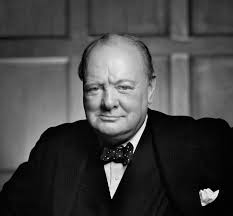
Winston Churchill once said of his opponent, the right honorable Clement Attlee that, “He was a modest man.”

Then Mr. Churchill added, “He had much to be modest about.”

Mr. Churchill’s image today is that he smoked cigars, drank whisky and also decided early on, that Adolf Hitler was bad and that any and all steps to get rid of Mr. Hitler should be taken and taken sooner rather than later.

There are times when I think that that is just about right.

To be sure Mr. Churchill did much much more.

Just enter Tonypandy into the google for another side of the great man.

But lets hit those three things.

By most counts he managed to smoke, in his lifetime, over 300,000 cigars.

That comes out to about 8 a day.

One time, Franklin Roosevelt announced his plans to leave a meeting the next day early at 6AM.

Mr. Churchill announced he would say goodbye now as no sane person was up at that hour.

At 6AM as FDR was being hauled aboard his plane, a limo pulled up.

Mr. Churchill got out.

He was wearing his sleep vest pajamas (tops only say the books) a bathrobe and slippers.

Photographers came out in mass.

Mr. Churchill, smoking a cigar of course, gestured them away saying with a smile, “You simply cannot do this to me.”

Later that day he was asked what it was like to get up at 6AM and he replied it was wonderful as he had “time for another cigar.”

A word about his whisky drinking can be said by quoting Mr. Churchill’s quote that, “He had taken more out of Whisky than Whisky had taken out of him.”

“Everything in moderation” was what Mr. Churchill said.

Which led one admirer to comment, “I must say, if the way Winston drinks is ‘moderation’, then he drinks an awful lot in moderation.”

On Mr. Hitler, Mr. Churchill said simply, “If Hitler invaded hell I would make at least a favourable reference to the devil in the House of Commons.”

So why all this Churchill stuff.

For one its fun.

As a writer, he made sure he got all the best lines.

NANCY ASTOR: “Winston, if you were my husband, I would put poison in your coffee.”

WINSTON: “Nancy, if you were my wife, I would drink it.”

The other reason Mr. Churchill was on my mind is that the BBC recently produced a 6 hour documentary titled, Churchill.

What can you say?

Even Spielberg titled Lincoln, Lincoln. (and Jaws, Jaws)

This documentary promised to be in the best tradition of Ken Burns at his best, which if you read this blog, you will know I find barely above a passing grade.

Mr. Burns does quality work.

And he is smart enough to get quality people both in writing and narration to carry him along.

But in his directorial use and selection of source material, video and photographs he falls far short of the mark and in my opinion is quite the historical humbug.

I was trained in a tough school of historiography in Ann Arbor, Michigan.

Historiography is the study and CRITICAL REVIEW of historical writing.

I would complain to my Professors that they were often too tough, their standards too high when they would blast a colleague on some minor error.

NO ERROR IS MINOR they would reply.

If you catch that ONE, how many did you NOT CATCH due to your lack of depth on the subject.

So I was taught.

So I hold Mr. Burns to that standard.

So when Mr. Burns uses photographs to illustrate events in the narrative THAT TOOK PLACE 10 YEARS before the photograph was taken, and knowingly crops or alters the photo so it fits into the narrative, well then.

I have to close that door.

But back to the new Churchill Documentary.

It has got some good reviews.

I told myself to give it chance.

Watch it through.

Then make up my mind on.

So was the plan.

It is on You Tube to make it easy to watch.

6 episodes at 1 hour per episode from the BBC.

I am sorry I have to announce I got through less than 30 seconds.

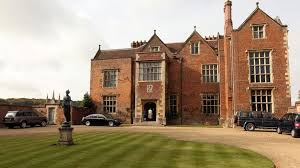
In the bit I saw, the narrative said, “Churchill was spending the weekend at the PM’s country estate, Chequers.

The video however showed Mr. Churchill’s country estate, Chartwell.

OH COME ON.

One job.

One job to do.

One job to do to tell the story of Winston Churchill and you can’t keep his house straight from the house of the British Prime Minister.

OH

GIVE

ME

A

BREAK.

I shut off YouTube and reached for my blog.

I happily typed out this paean to myself and my self admitted genius.

Then I went looking for pictures of the two house to show how dumb these folks were.

CHARTWELL – Churchill’s Home

AND

CHEQUERS – British Prime Minister’s Country Home (Like Camp David)

THEN I checked YouTube to be sure I was right.

Ahhhhhhhhhhh.

Oops?

I had one job to do.

One job.

TO watch and comment on the passing show and be correct in my assertions.

And I blew it.

So mark this down.

I was wrong.

I admit it.

I aplogogize.

I was wrong.

This isn’t like the time in the WZZM13 Newsroom when I stood on a desk a yelled, “I WAS WRONG.”

I really did that.

I stood up and yelled, “I APOLOGIZE. WRITE TODAY DOWN. I WAS WRONG … NOT ONE OF YOU IS AS SMART AS I THOUGHT YOU WERE.”

This one is all on me.

The show was correct.

They had the right house.

I will get back to you as soon as I make up my mind to watch the show.

One job to do.

And I cannot do it.

GEEEE WHIZ.

8.23.2021 – ordinary life

ordinary life,
simplicity, respect for
triviality

Adapted from the passage:

“… it was the caring about little things — the faith in ordinary life;

the simplicity that made you break up a bit of bread into a paper bag, walk down to the beach, and throw it to the gulls.

It was this respect for triviality which he had never been allowed to possess; whether it was bread for the seagulls or love,

whatever it was he would go back and find it

Written by John le Carré in The Spy Who Came in From the Cold: A George Smiley Novel. Penguin Books (Kindle Edition).

I should point out that the word triviality, from trivial from trivia does not have to mean small or meaningless even though the Online Merriam Webster states, “unimportant matters : trivial facts or details”.

I was taught that the word trivia is a Latin word, the plural of trivium.

The related Latin trivialis, meant “common or ordinary.”

But the literal meaning of the Latin trivium is “a place where three roads meet.”

Some sources then state that as three roads came together, there was lots of odd little bits of knowledge or trivia exchanged between people on the roads.

Thus crossroads came to be known as distinctly public, or common places where inconsequential or trivial things were said and done.

I was taught the ‘place where three roads meet’ were NOT real roads, but the three paths of study of grammar, rhetoric, and logic.

If you take in everything covered by grammar, rhetoric, and logic, you will have lots of odd little facts.

All this really for nothing really because all I want to say is that I like is what le Carré may have been going for with the line respect for triviality.

I love that.

A respect for triviality.

And …

Faith in ordinary life.

At this time in the world, these two concepts may be more important than the city shining on a hill.

More important and harder to get.

Whatever these are, where ever these are, faith, respect, ordinary, triviality, I going to go find them.

8.22.2021- breath sweet-smelling air

breath sweet-smelling air
contentedly smoked
evening cigar

At some point in my Mother’s remarkable life she decided to expand her horizons and join the book of the month club.

The books she received over the years were packed up moved from house to house until the time when I showed up.

I liked to read.

I realized that when I was reading I was anywhere and everywhere in the world.

And where ever that was it wasn’t were I was which for me, and for those around me, was a good thing.

I suffer from bibliophobia.

The fear of being stuck without something to read.

My bibliophobia drove to discover and examine my Mom’s book of the month club books and that was how I discovered Clarence Day.

At some point in time, the Book of the Month Club sent my Mom a copy of Life with Mother which contained all four Clarence Day short story collection.

I picked up and read his collected short stories in the book ‘Life with Mother’ at some time most boys were reading Boys Life.

Let me tell that God and My Father was NOT a book I should have read at that age.

But from that book I have lots of fond thoughts and I distinctly remember the short story, “Father Wakes up a Village.”

The story details how Clarence Day Junior’s father, Clarence Day Senior, came home from work to discover there was no ice in the house to chill his evening wine or ice water.

Clarence Day, Senior made his way to the local ice house and the local ice box distributor and, in his own way, he rectified the situation.

It was the last paragraphs that really struck me with romance.

Father’s soul was at peace. He dined well, and he had his coffee and cognac served to him on the piazza. The storm was over by then. Father snuffed a deep breath of the sweet-smelling air and smoked his evening cigar.

Clarence,” he said, “King Solomon had the right idea about these things. ‘Whatsoever thy hand findeth to do,’ Solomon said, ‘do thy damnedest.'”

I heard Father saying contentedly on the piazza, “I like plenty of ice.”

It may have been at this point in my young life I fell for cigars.

Truly, does anything else sound so civilized as “Father snuffed a deep breath of the sweet-smelling air and smoked his evening cigar.

At some point in my later life I began smoking cigars.

I was most likely also influenced by the life of General Grant but another time for that.

One time I ordered a box and had it delivered to me when I still lived at home.

I watched the mail and the day they arrived I made sure I grabbed the box as soon as I could so I could hide it.

That night after dinner as we sat around the table, my Dad says, “Go get me a cigar.”

My Mom didn’t say anything.

I got up and came back with my box of cigars and handed it to my Dad.

He looked over the cigars and selected and called for a match.

My Mom says, “Bob!” and kind of looked at him across the table.

But my Dad just say there with a cigar so I got the matches.

My Dad lit the cigar with the motions of Winston Churchill and sat back blowing thick clouds of smoke over the table.

We were all speechless.

When we didn’t think anything could top this, my Dad started blowing smoke rings.

My mind truly exploded.

You can’t learn to blow smoke rings by reading a book.

My Dad sat back.

He held the cigar to one side and said, “I don’t smoke cigars.”

There was a pause.

“But if I did, I would smoke cigars like this.”

As I remember it, my Dad finished the cigar and life went on.

I took my box of cigars back to my room.

I wasn’t told to throw them away.

I wasn’t told to not smoke them.

But I was told, without words, don’t be a dummy, dummy.

If asked today I will say I don’t smoke.

I don’t smoke but I enjoy a cigar from time to time.

Tonight I sat out on the two bit balcony of our apartment in South Carolina.

A storm was coming with all the wonder and fun of thunder and lightning.

I snuffed a deep breath of the sweet-smelling air and smoked my evening cigar.

It was satisfactory.

It seemed so civilized in a messed uncivilized world.

A little bit of escape without leaving anywhere or anything.

I thought of my Dad.

I thought of Clarence Day’s Dad.

My soul, with their souls, was at peace.