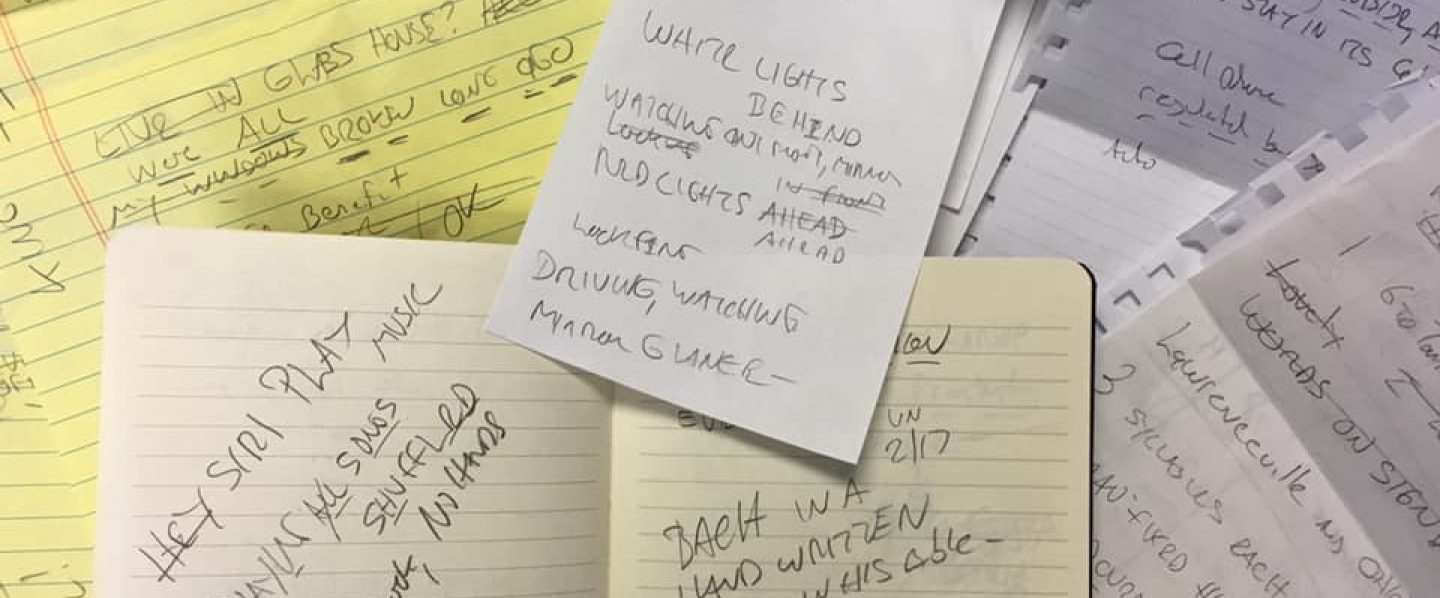
2.23.2026 – once made, no step could

once made, no step could
ever retraced; once headed
path would never bend

The horse plodded stumble-footedly up the hill and the old man walked beside it.

In the lowering sun their giant shadows flickered darkly behind them.

The grandfather was dressed in a black broadcloth suit and he wore kid congress gaiters and a black tie on a short, hard collar. He carried his black slouch hat in his hand.

His white beard was cropped close and his white eyebrows overhung his eyes like mustaches.

The blue eyes were sternly merry.

About the whole face and figure there was a granite dignity, so that every motion seemed an impossible thing.

Once at rest, it seemed the old man would be stone, would never move again.

His steps were slow and certain.

Once made, no step could ever be retraced; once headed in a direction, the path would never bend nor the pace increase nor slow.

From The Red Pony by John Steinbeck with illustrations by Wesley Dennis, (New York: Viking, 1945).

Once made, no step could ever be retraced.

Once headed in a direction, the path would never bend nor the pace increase nor slow.

I like to think of a feller named Potiphar.

For those of my readers who didn’t have the benefit of a Sunday School education, Potiphar was the captain of the guard for Pharaoh and when caravans arrived in Egypt with a slave for sale named Joseph, a poor kid sold off by his brothers up in Canaan land, Potiphar bought Joseph and put him to work in his household.

The story of Joseph takes off from there but its Potiphar I think about.

There is so so so much in the news today about money money money and wealth wealth wealth.

In the days of Julius Caesar, the richest man in the world at the time, a feller named Crassus, said the sign of true wealth was your own private army.

Crassus owned the major fire departments in Rome and when you needed them, they would arrive and then tell you how much it would cost to put the fire out.

Closer to our time, the financier John Pierpont Morgan was asked how much his new private yacht cost. This is the Morgan who put together the syndicate that formed US Steel as well as the ship building conglomerate that launched the Titanic and her sister ships Olympic and Britannic. Anyway, when asked about his yacht, the Corsair (which was later converted by the US Navy into a warship for the Spanish-American War) what it cost, Morgan said if you have to ask how much, you can’t afford it.

Today the fellers have private air fleets, private islands and private homes all over the world that proving, each day to be less private then these rich people ever thought.

Back to Potiphar.

Fitting into my definition of the rich person, the Bible tells us that Joseph turned out to be a good purchase and Potiphar turned over his household operations to Joseph and with a good man running his affairs and his position as Captain of guard for Pharaoh, Potiphar …did not concern himself with anything except the food he ate.

All Potiphar had to do each day was think, ‘what do I want for lunch?’, with full expectation that anything he wanted for lunch today is what he was going to have for lunch today.

How can having $1 Million or $100 Billion in the bank improve on that?

You can’t eat more than one lunch today.

I had a Bacon, Lettuce and Tomato sandwich for lunch yesterday.

A sandwich made on bread I baked the day before.

How can having $1 Million or $100 Billion in the bank improve on that?

I am as well off as Mr. Morgan, Crassus or Potiphar.

So you ask, what does this have to do with the quote from the Red Pony?

As I recall, the Red Pony was one of the books read to my sixth grade class by our teacher who started the day with 10 or 15 minutes of reading.

I don’t often think of our teacher, Mr. Vanderwheel, as a liberal type but to read the Steinbeck to a bunch of 6th graders …

But I digress.

Here is the point for today.

I put it to you that the truly well off are those folks who do not concern himself with anything except the food they eat.

What will I have for lunch?

And I put it to you that the only real decision anyone can make each day is what you will have for lunch.

We are all there, because, truly, all the other decisions have been made.

The steps are slow and certain.

Once made, no step could ever be retraced.

Once headed in a direction, the path would never bend nor the pace increase nor slow.

To think we have any control … well Boy Howdy.

All I can say is I hope you enjoy your lunch as this is way too much to think about for a Monday morning.

Oh and BTW … I cannot write about how happy I might be without enormous wealth without thinking of an interview I saw between Dick Cavet and Orson Welles. Mr. Cavet asked Mr. Welles what he would do if he was given a fabulous amount of money, millions of dollars, and Mr. Welles immediately responded, ‘Give it all away!‘ There was a pause and the camera stayed on Mr. Welles and he tucked his chin into his chest, smiled and said very quietly something along the lines of, “… of course my answer would probably be different if it ever actually happened.

2.20.2026 – never thought Christians

never thought Christians
would lead attack on Christian
fundamentals, but …

But here we are is the way the sentence ends.

Based on the New York Times Opinion Piece, Christians Against Empathy Aren’t Who They Think They Are by David French

… put another way, our problem isn’t with too much empathy, but too little. We’re unwilling to place ourselves in other people’s shoes, to try to understand who they are and what their lives are like.

It’s hard to talk about this issue without recognizing a fundamental truth of the moment: The attack on empathy would have gained very little traction in the church if Donald Trump weren’t president. He delights in vengeance, and he owes his presidency to the evangelical church.

Given the sharp differences between Trump and every other Republican president of the modern era, in my experience evangelicals are desperate to to rationalize their support for a man who gratuitously and intentionally inflicts unnecessary suffering on his opponents.

That’s exactly how empathy becomes a sin.

And because empathy is a sin, virtually any appeal to consider the suffering of Trump’s opponents becomes yet more proof that Christians are being manipulated, that their emotions are used against them.

I never thought it would be Christians who led the attack on fundamental Christian values, but here we are. The Book of Hebrews says, “For we do not have a high priest who is unable to empathize with our weaknesses, but we have one who has been tempted in every way, just as we are — yet he did not sin.”

In Christian theology, Christ engaged in the ultimate act of empathy. He didn’t imagine what it would be like to live as a man — he became one.

Our own desire for empathy, for ourselves and our friends, is almost primal. There is a deep human need to feel truly seen.

Viewed through one lens, America before Trump had its share of problems. We were fighting long wars overseas, we were still dealing with the economic overhang of the Great Recession, and we faced the kind of sharp cultural conflicts that always arise when people of different faiths and different ideologies share the same national home.

Zoom out just a bit, and you could see our abundant national blessings. In an imperfect world, the United States was a very good place to be. The American experiment was working. Our nation was free. It was secure. It enjoyed immense prosperity and power. It afforded a degree of religious toleration and economic opportunity that was the envy of most of the world.

In other words, we really did have it all, didn’t we?

The image above is of what is thought to be the first masterpiece painted by the dutch artist Rembrandt van Rijn.

The New York Times, in a review of a Rembrandt show in back in 2016 stated:

Titled “Judas Returning the Thirty Pieces of Silver,” it depicts a scene that appears in only one of the four gospels, and then as a mere footnote to the Passion narrative.

At the Last Supper, Jesus announces that one of his disciples would betray him into enemy hands.

The culprit is Judas, who has already been paid by the chief priest and elders of the Jerusalem temple to lead soldiers to the doomed man and identify him by a kiss.

Once the deed is done, however, Judas is crushed by remorse.

He rushes to the temple and throws the payment money down in front of those who hired him, as if that might absolve his guilt, though he is beyond believing it will.

In the painting, we see him kneeling and wailing with grief, his clothes disheveled, his scalp bloody where he has torn out his hair.

The elders back off in shock; the chief priest holds up one hand as if to block out the sight of the man, push him away, disappear him.

Judas will leave the temple and hang himself.

Mr. French wrote, “… in my experience evangelicals are desperate to to rationalize their support for a man who gratuitously and intentionally inflicts unnecessary suffering on his opponents.”

And when an accounting comes due for the support for a man who gratuitously and intentionally inflicts unnecessary suffering on his opponents?

What will absolve you?

Thank God for grace.

Which I need as much as anybody else but there are some things I can do to avoid adding to the load on my back.

Good thing, there is always enough grace.

2.19.2026 – governments live die

governments live die
by their ability to
sustain corruption

Mr. Trump is apparently profiting from these cases: The Times estimates that he has made more than $1.4 billion since he was elected to his second term, in part from supplicants seeking his clemency. But his subordinates, too, have benefited from the broader rollback of white-collar prosecutions.

His border czar, Tom Homan, for instance, accepted $50,000 in cash in a paper bag from undercover F.B.I. agents in September 2024 in exchange for promising to secure government favors if Mr. Trump returned to office. (Mr. Homan has denied taking the money.) Such a scheme would have ordinarily resulted in a scandal, and quite likely a prosecution. But the office that would have investigated Mr. Homan has been largely gutted — just five attorneys reportedly remain — and Mr. Homan himself remains in office.

All this self-dealing is a threat to our democracy. Illiberal governments tend to live or die by their ability to sustain corruption. That’s because they rely for support on a network of oligarchs, who in turn are tied to the administration’s success. It happened in Hungary, in Turkey, in Russia and increasingly, it is happening here.

We don’t have to end up that way. As other countries’ experience shows, when bribery is risky, rich criminals are less likely to try it, and less likely to feel bound to a regime’s success. When corruption is revealed, voters often realize that the strongman they elected cares more for a small group of rich cronies than he does about them. That’s why it’s often the corruption that is key to toppling autocratic leaders, like Joseph Estrada in the Philippines, Alberto Fujimori in Peru, Viktor Yanukovych in Ukraine and Otto Pérez Molina in Guatemala.

In a world where the Department of Justice and the president are either indifferent to or actively support rich criminals, what can be done?

Adapted from the opinion piece, One Man Stole $660 Million. He’ll Never Pay It Back By Brendan Ballou, a former federal prosecutor and the founder of the Public Integrity Project.

In this high powered world of corruption at the highest levels of government, something to remember is the words of Silvio Dante when he said, “You’re only as good as your last envelope.

One day, that bill is going to come due.

2.16.2026 – most enviable

most enviable
of titles, the character
of an honest man

In a letter to Alexander Hamilton dated 28 August 1788, George Washington wrote:

Still I hope I shall always possess firmness and virtue enough to maintain (what I consider the most enviable of all titles) the character of an honest man, as well as prove (what I desire to be considered in reality) that I am …

The character of an honest man.

The headline comes to mind, “Channel 4 to mark Trump’s UK visit with ‘longest uninterrupted reel of untruths’”.

The occassion for the show was the current man in office and his visit tot he UK in Ocotber of 2025.

Another columnist for the Guardian wrote: “Channel 4 will be marking Donald Trump’s visit to the UK with what it describes as “the longest uninterrupted reel of untruths, falsehoods and distortions ever broadcast on television”. It will play more than 100 of Trump’s lies or misleading statements in a segment called Trump v The Truth. All his greatest hits, from false claims about the price of eggs to disgusting lies about the US spending millions on condoms for Hamas, packaged together.

Obviously we’ve got to be fair and balanced here, though, haven’t we? Gotta show both sides. So I think it’s only right that Channel 4 also broadcast a 10-second segment covering all of the truthful and astute things the president has said”

(It’s not all lies, lies, lies with Trump – sometimes he’s unnervingly honest by Arwa Mahdawi. How was that feller unnervingly honest your ask? Like when he said, “Smart people don’t like me, you know?”)

What was it that the General wrote?

Still I hope I shall always possess firmness and virtue enough to maintain (what I consider the most enviable of all titles) the character of an honest man, as well as prove (what I desire to be considered in reality) that I am …

The character of an honest man.

Washington’s letter came at the time when the new country was discussing the adoption the new Constitution that had been pulled together in 1787.

It was during the discussion about the Executive and its powers that Dr. Ben Franklin said:

“The first man put at the helm will be a good one.

No body knows what sort may come afterwards.“*

Just some thoughts for Presidents Day, 2026.

*Notes on the Debates in the Federal Convention, Monday June 4, 1787 – The Question was resumed on motion of Mr. PINKNEY 2ded. by WILSON, “shall the blank for the number of the Executive be filled with a single person?”

2.15.2026 – worst of times, age of

worst of times, age of
foolishness, the epoch of
incredulity

La barricade ferme la rue mais ouvre la voie!

It was the best of times, it was the worst of times,

it was the age of wisdom,

it was the age of foolishness,

it was the epoch of belief,

it was the epoch of incredulity,

it was the season of Light,

it was the season of Darkness,

it was the spring of hope,

it was the winter of despair,

we had everything before us,

we had nothing before us,

we were all going direct to Heaven,

we were all going direct the other way –

in short, the period was so far like the present period,

that some of its noisiest authorities insisted on its being received, for good or for evil,

in the superlative degree of comparison only.

The opening to A Tale of Two Cities by Charles Dickens.

Mr. Dickens was trying to portray life in the era of the French Revolution.

Something the Brits must have viewed with a bit of relief.

See the French had a law about leaving France to go to the new world.

You had support the government, had to support the King and you had to be a Catholic in good standing with the Church.

The Brits took the line of ‘if you don’t like it here, you can go to America and complain there.’

So those PROTESTing PROTESTants did and when the time came for a British revolution, it was far from home.

In France, they kept all the rabble rousers home and when they had their revolution it was in the front yard.

Mr. Dickens was writing a little more than 50 years after the events of revolution in France.

Here is almost 225 years later.

And it is the worst of times …

The age of foolishness …

The epoch of incredulity …

The season of Darkness …

The winter of despair …

Nothing before us …

We were all going direct not to Heaven, but the other way …

Still …

Remember, the barricade blocks the street but opens the way.

PS: By chance I put this haiku together from the book and was thinking about a picture to use and I checked my Thurber database to see that this drawing with the caption, See you at the barricades, Mr. Whitsonby! was first published in the New Yorker Magazine on February 15, 1936. 90 years ago today! And as we all remember, to the barricades is the motto of the French Revolution or as history has it, La barricade ferme la rue mais ouvre la voie! or The barricade blocks the street but opens the way.