2.4.2021 – her ways are ways of

her ways are ways of
pleasantness, and all her paths,
silently, are peace

I still start my day with the newspapers.

And what a depressing way to start your day.

I understand most folks when they get older feel this way about the current age.

I ask, was it like this when I was a kid?

My brother Paul will recount that when he was in college the world was also going to pieces, demonstrations had taken over college campuses and the National Guard had killed 4 students and the hippie culture was destroying the America that the world had come to know.

In his book, the Winds of War, Herman Wouk comments on the world through the voice of his center character, Victor Henry.

Mr. Wouk talks through Captain Henry and says, “Our moral climate does seem to be going to hell in a handbasket – I am writing in 1970, the “counterculture” era – but my superiors were making that complaint in the 1920s, the “flaming youth” era, which then more less included me.

Maybe so.

Maybe this happens to everyone.

Doesn’t make it less of a shock.

While I dislike bringing up Bill Cosby, I think of his story called the Chickenheart that tells how scared he could make himself listening to horror theater radio.

Cosby’s story of the Chickenheart depicts himself in real terror due to the radio program.

Then Cosby’s Dad yells, TURN IT OFF STUPID!.

If I stop reading the newspapers and stop watching the news on TV, will it all stop?

Will what I don’t know not bother me?

Can I really believe what I see, hear and read?

Truly the TV News has got to the point that you can write the stories before you watch them just by know what channel you have on.

Pondering such I walked in the other room to go to work and turned on my computers.

One the first things to do is set up the background music for the day and click on Classic FM from London.

I like this online station for lots of reasons and that they are 5 hours ahead (GMT) lets me know someone somewhere in the world has made it through the next 5 hours.

Yes that is dumb but it is useful in its dumbness.

Today when the station come online, Jupiter by Gustave Holst was playing.

You may not know the tune off hand but I would bet you would recognize it if you heard it.

The music was set to the hymn, I Vow to Thee, My Country, made famous by Diana Spencer as it was included as one of her favorites at both her wedding and her funeral.

And there’s another country, I’ve heard of long ago,
Most dear to them that love her, most great to them that know;
We may not count her armies, we may not see her King;
Her fortress is a faithful heart, her pride is suffering;
And soul by soul and silently her shining bounds increase,
And her ways are ways of gentleness, and all her paths are peace.

Wikipedia states that “The origin of the hymn’s text is a poem by diplomat Sir Cecil Spring Rice, written in 1908 or 1912, entitled “Urbs Dei” (“The City of God”) or “The Two Fatherlands”. The poem described how a Christian owes his loyalties to both his homeland and the heavenly kingdom.”

The last person I expected to show up was Cecil Spring Rice.

‘Springy’ was a great friend of Theodore Roosevelt and was the Best Man at TR’s second wedding.

Everyone knows that TR’s first wife Alice, and the mother of THE Alice Roosevelt (Longworth … if you can’t say something nice about someone … come sit be me), died after giving birth.

But I digress.

The wikipedia line, “The poem described how a Christian owes his loyalties to both his homeland and the heavenly kingdom.”

Let’s repeat that, “A Christian owes his loyalties to both his homeland and the heavenly kingdom.”

Hmmmmmmmmmmmmmmmmmmmmm.

Somehow I wish I had let this one alone and just enjoyed the music.

Seems like this morning I am back where I started.

The thought of taking the path of no news beckons.

1.29.2021 – unconnected goal

unconnected goal
outside all is darkness, all
is invisible

I based this haiku and several others like it from the writing in the book, The Art of Travel (2002, Vintage Books) by Alain de Botton, and the passage:

On entering a new space, our sensitivity is directed towards a number of elements, which we gradually reduce in line with the function we find for the space. Of the four thousand things there might be to see and reflect on in a street, we end up being actively aware of only a few: the number of humans in our path, perhaps, the amount of traffic and the likelihood of rain. A bus that we might at first have viewed aesthetically or mechanically—or even used as a springboard to thoughts about communities within cities—becomes simply a box to move us as rapidly as possible across an area that might as well not exist, so unconnected is it to our primary goal, outside of which all is darkness, all is invisible.

*Adapted from the book, The Art of Travel (2002, Vintage Books) by Alain de Botton.According to the website, GOOD READS, Any Baedeker will tell us where we ought to travel, but only Alain de Botton will tell us how and why.

As I said in the section on Architecture , what I find irresistible in reading Mr. de Botton is his use of language.

To also quote myself, I get the feeling that if you made a spread sheet of all the words, adverbs and adjectives used by Mr. de Botton, you just might find that he used each word just once.

And to reemphasize, neat trick in writing a book.

If I knew how to do that, hey, I would.

** More from the category TRAVEL — click here

1.28.2021 – classic example

classic example
someone who rediscovers
joy on their own terms

I am not a fan or follower of the sport of gymnastics.

Like most of us I am aware of this sport every four years because the Olympics are on in my face.

That being said I am AMAZED and AWED by Simone Arianne Biles and have no problem saying she is the greatest athlete I have ever seen.

I also find it easier to believe that her routines are created in movie maker or photoshop as I cannot understand how a human body can be trained to do what she does.

Watching a floor exercise by Ms. Biles is like being at a fireworks display when you say WOW then WOW WOW then WOW WOW WOW then … just watch because you are out of wows.

So I was intrigued when a video filtered into the Information Highway that was billed as MUST SEE VIDEO – GYNMASTIC ROUTINE.

I was able to avert my eyeballs and not watch but this clip kept popping up in the oddest of places.

Not just the those link farms and such but New York Times, ESPN and Wired.

Today when it popped up on the Guardian I gave in and said OKAY lets see how great this was.

By the way you could tell I was reading a paper from Britain as the first line read “The latest entry in the surprisingly robust YouTube subgenre of viral college gymnastics routines dropped over the weekend, flooding timelines everywhere and generating national media attention rare for the parochial sport.”

Truly when I write I wish the words came out that way on their own.

But I digress.

It is a very very very cool clip.

It is NOT Ms. Biles and this is in no way a slam on Ms. Biles.

It IS Nia Dennis,

It is not the Olympics, where the world balance of good vs. … well, the other guys, hangs on every misstep.

This was college.

This was UCLA vs ASU.

This was … fun to watch.

It seems the sport in college is a lot differnet.

There are rules about Olympic Gymnastics.

The article stated “College gymnastics, which operates under different and more accessible rules than what you see in the Olympics, is a step down from the elite circuit, but the fewer difficulty requirements leave gymnasts more time (and stamina) for choreography and showmanship. The gulf between the two classes has only become more pronounced since Simone Biles came along and raised the bar for everyone: these days every single thing an Olympic gymnast does on the floor has to add difficulty. It’s almost a different sport altogether.

And, “There’s also a less restrained, more team-oriented culture in NCAA gymnastics that permits the athletes to express themselves more.”

If you watch the clip, watch the team and Ms. Dennis’ teammates.

They are having a good time.

They are having a great time.

This was … fun to watch.

Feeling this way it was also fun to read the article about Ms. Dennis.

Dennis, a former US national team member whose own dreams of competing in Rio were undone by an achilles injury.

The article talked about another gymnast at UCLA, Katelyn Ohashi

Ms. Ohashi had been “earmarked for Olympic stardom as a 14-year-old junior gymnast before injuries and burnout intervened.”

Ms. Ohashi, the article said, is a classic example of someone who rediscovered the joy of enjoying the sport on her own terms.

Ms. Dennis is following the same path according the article, but, doing it her own way.

Rediscovering joy your own way.

Can there be a better meme?

All together now, “BOY! HOWDY!”

Okay so maybe you never lost your joy so there is no need to rediscover it and that is great and I am happy for you.

But for everyone else in the room the chance to rediscover joy on your own terms?

Not by following a book or a plan but your own terms!

Recent changes in my life have let me rediscover so much joy.

And life is letting me do it my way.

So much to be happy about.

So much to enjoy.

I am just glad to be along for the ride.

1.26.2021 – there is nothing more

there is nothing more
draining, exhausting than hate
meannesses of life

I came across a biography of Winston Churchill by Mr. Paul Johnson.

A small quick overview of Mr. Churchill’s life but Mr. Johnson included an epilogue with 5 lessons that he segued into saying, ” Winston Churchill led a full life, and few people are ever likely to equal it – its amplitude, variety, and success on so many fronts. But all can learn from it, especially in five ways.”

“The first lesson is: always aim high.”

“Lesson number two is: there is no substitute for hard work.”

“Third, and in its way most important, Churchill never allowed mistakes, disaster—personal or national—accidents, illnesses, unpopularity, and criticism to get him down.”

It the fourth lesson I want to focus on.

Mr. Johnson wrote:

“Fourth, Churchill wasted an extraordinarily small amount of his time and emotional energy on the meannesses of life: recrimination, shifting the blame onto others, malice, revenge seeking, dirty tricks, spreading rumors, harboring grudges, waging vendettas.

Having fought hard, he washed his hands and went on to the next contest.

It is one reason for his success.

There is nothing more draining and exhausting than hatred.

And malice is bad for the judgment.

Churchill loved to forgive and make up.

His treatment of Baldwin and Chamberlain after he became prime minister is an object lesson in sublime magnanimity.

Nothing gave him more pleasure than to replace enmity with friendship, not least with the Germans.”

Let me go over that first line again.

“Churchill wasted an extraordinarily small amount of his time and emotional energy on the meannesses of life:

recrimination,

shifting the blame onto others,

malice,

revenge seeking,

dirty tricks,

spreading rumors,

harboring grudges,

waging vendettas.

Some one could take that sentence and easily turn it into a list of charges against the current time.

I don’t expect there are more Churchill’s around as much I don’t expect anymore Lincoln’s or Washington’s or Groucho Marx’s.

BUT GOOD NIGHT MOON, isn’t there anyone anybody that even aspires to this outlook in public life anymore?

God help us all.

One last bit on Churchill though I may have told this story before.

Mr. Churchill’s public image is one of a gruff, grumbling crusty old man.

A curmudgeon.

Yet if you read the book that written by his official biographer ABOUT writing the 9 volume official biography, that was not the impression either he ( Martin Gilbert ) got or the impression he got from those who worked closest and knew him best.

They all swear Mr. Curchill was fun and fun filled.

In fact the fifth lesson Mr. Johnson lists is “Finally, the absence of hatred left plenty of room for joy in Churchill’s life.”

There is much talk in the Churchill historiography about Mr. Churchill’s “Black Dog” and dealing with depression.

Mr. Gilbert’s research shows that Having a Black Dog or a Black Dog Day or Kicking the Black Dog was a common saying among British Nannies of the Victorian Period.

Can’t you just hear Mary Poppins saying, “Having a bit of a black dog day are we?”

Mr. Gilbert says he truly can only find one occasion where Mr. Churchill used the term, My Black Dog and Mr. Gilbert says it caught fire and started a whole school of interpretation of Mr. Churchill’s life as a Functioning Manic Depressive all authored by a bunch of people whose education missed the lecture on Words of the Victorian Nursery.

Mr. Gilbert tells this story in his book, “In Search of Churchill.

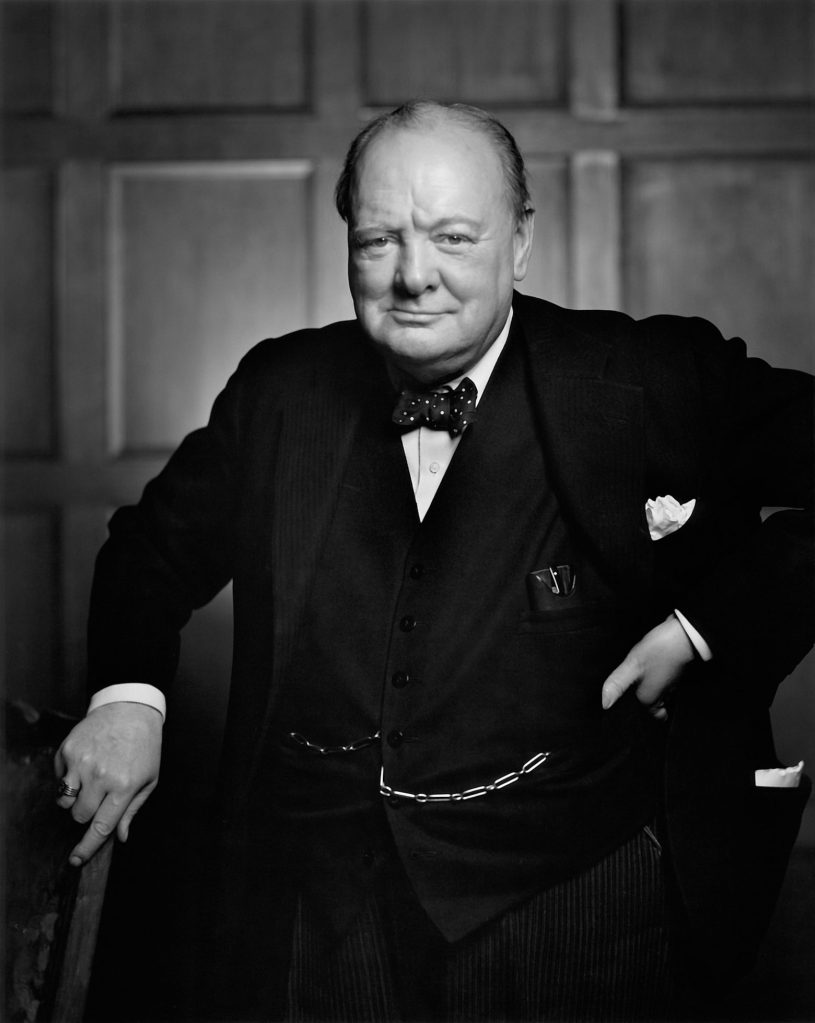
Mr. Gilbert says that perhaps the most famous photo of Churchill was taken in Ottawa, Canada by Yousuf Karsh.

Mr. Gilbert thought it was a photo of grumbling crusty old man.

Mr. Gilbert also says that it was man he did not recognize.

Mr. Gilbert also knew of a less famous photograph that had been taken just a minute earlier.

This was the man Mr. Gilbert knew.

Years later, Mr. Gillber met Mr. Karsh and Mr. Gilbert asked how did he achieve such a quick change of expression and temperament?

“I took away his cigar,” said, Mr. Karsh.

1.21.2021 – President cannot

President cannot
remake society – good thing –
definitely!

In a an interview with David Remnick for an article that appeared in the January 27, 2014, issue of the New Yorker Magazine, President Barack Obama said:

I just wanted to add one thing to that business about the great-man theory of history. The President of the United States cannot remake our society, and that’s probably a good thing.

Mr Remnick wrote that, “He paused yet again, always self-editing.”

“Not ‘probably,’ ” he said. “It’s definitely a good thing.”

Definitely a good thing.

Lets hope President Obama was right.

The quote also reminds of story that goes the other way.

The way I remember it President Eisenhower was asked at his final press conference if he, the President, felt that any reporter had hurt or harmed the office.

The story goes that Eisenhower paused for a moment and looked at the crowd and then said, “Well, I don’t think so. And when you come right down to it, there isn’t much a reporter COULD DO to the President.”

Are these two stories illustrations of the separation of powers or checks and balances or maybe that it just how a democracy should behave.